
- Why “clear views” in Sapa is never guaranteed (and how to plan anyway)
- Best times to visit Sapa for clear views and great weather
- September–November: the “most reliable” window for views and outdoor days
- March–May: the best spring clarity and trekking comfort
- Shoulder picks: March and November for fewer crowds
- When to avoid Sapa for clear views (or visit with realistic expectations)
- May through summer: wetter weather, higher fog risk, and slippery trails
- December–February: cold, misty, cinematic—less reliably panoramic
- Choose the best month by travel style
- Best for photographers (terraces + visibility)
- Best for trekking and outdoor comfort
- Best for the “classic terrace wow”
- Best for families (low disruption, comfortable days)
- Best for budget travelers
- Month-by-month cheat sheet (quick scan)
- How to plan your days for clearer views (the tactics that actually work)
- The “morning-first” rule
- A simple 2-day plan for clear views
- A smarter 3-day plan (with a buffer day)
- What to pack by season (weather-smart, not generic)
- March–May (spring)
- September–November (autumn)
- Wetter months (May–September)
- December–February (winter)
- FAQs
- FtripAsia services (ready to paste)
- Conclusion
Sapa can be breathtaking—or completely swallowed by mist. If your priority is clear mountain views, you’ll get the best odds by timing your trip around Sapa’s clearer windows and planning viewpoints for mornings rather than gambling on “maybe the clouds will open.” For the best chance of clear views + pleasant weather, plan around spring (March–May) or autumn (September–November), which are widely seen as the most comfortable periods for highland travel and sightseeing; these same windows are also your best bet if Fansipan is on the list. Expect more rain and cloud/fog risk from May into summer, and a colder, mistier (more cinematic but less reliably panoramic) feel from December to February. For rice terraces, aim for late summer–autumn when fields turn golden, or late spring/early summer for lush green—timing can shift slightly year to year.
Why “clear views” in Sapa is never guaranteed (and how to plan anyway)
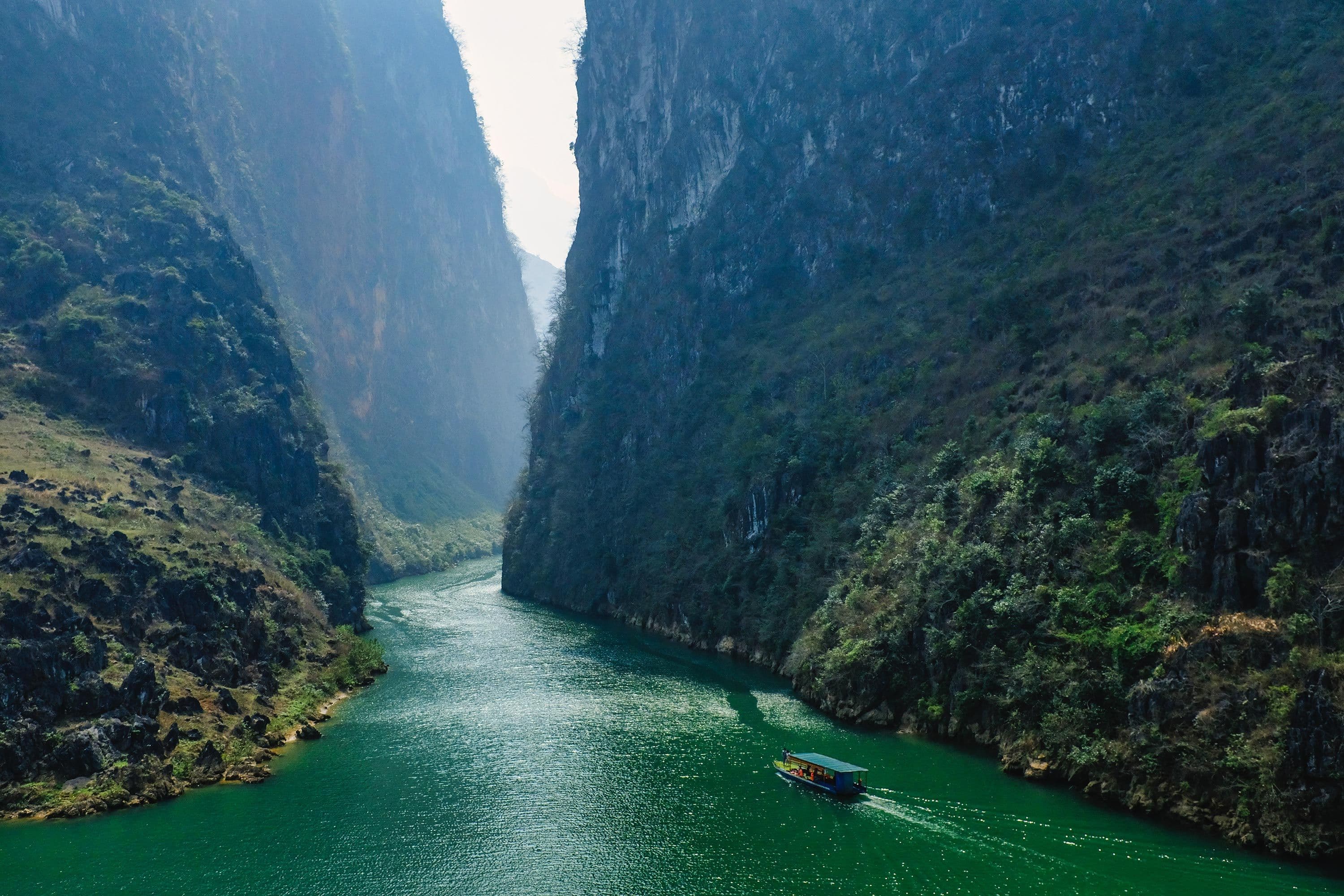
Sapa sits high in the mountains, and that elevation creates a true microclimate. You can wake up to a postcard sunrise and still end up in thick mist by lunchtime. The goal isn’t to “guarantee” clear views—it’s to stack the odds in your favor with the right month and the right daily rhythm.
The biggest visibility killers are usually high humidity, rain-driven cloud build-up, and cold-season mist. In practice, that means you should treat Sapa like a morning destination: schedule your highest viewpoints early, and leave afternoons for flexible plans.
Best times to visit Sapa for clear views and great weather
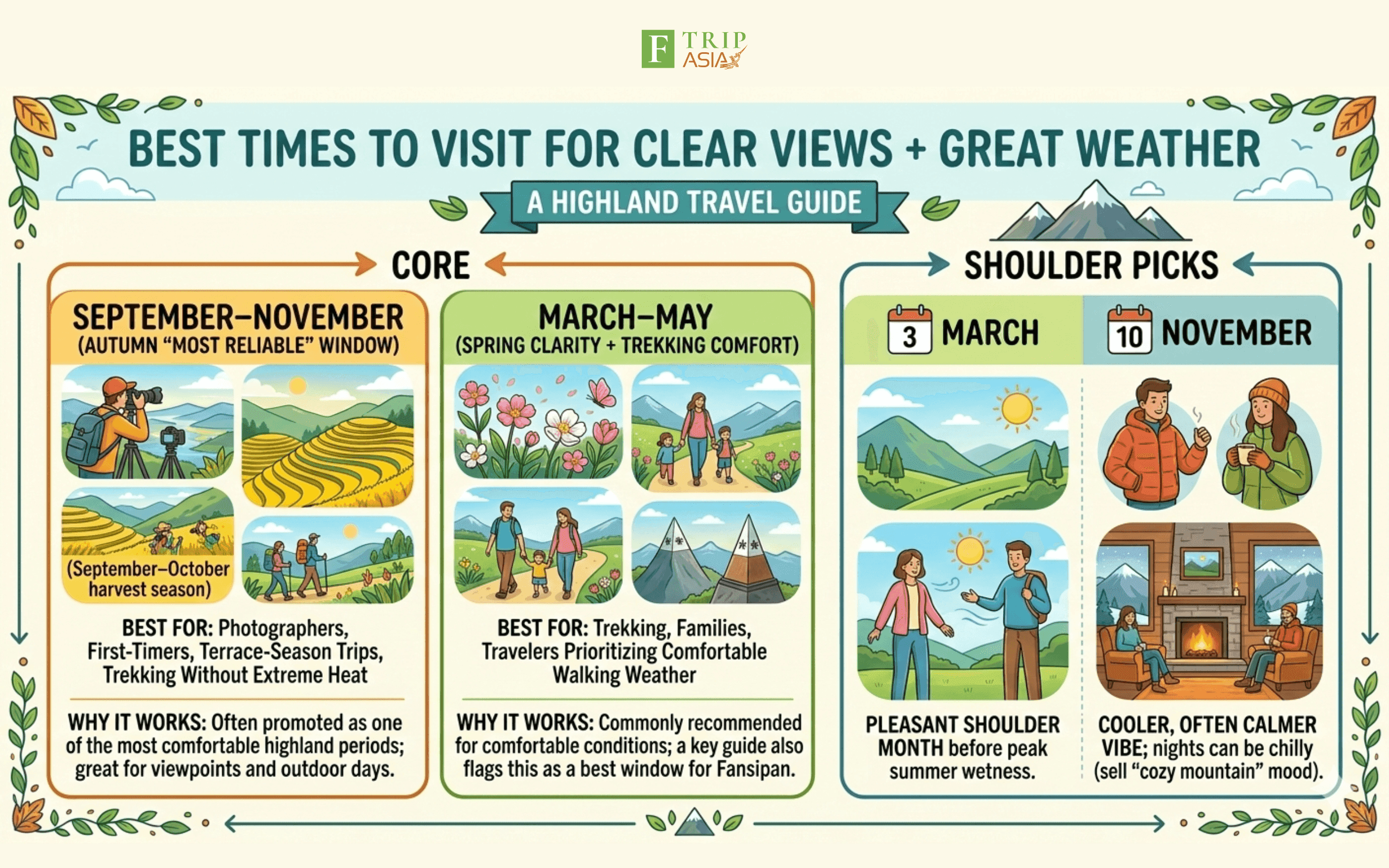
September–November: the “most reliable” window for views and outdoor days
Autumn is the period many travelers love for Sapa’s crisp air and stronger chances of mountain visibility. It’s comfortable for walking, and it’s also when Sapa begins to look most cinematic—cooler mornings, better trekking conditions, and fewer “sweaty” hikes.
This season is ideal for photographers, first-time visitors, and anyone who wants a classic Sapa feel without the worst rain risk. September and October also overlap with peak terrace season in many valleys, which is why this window is often the easiest “best of everything” choice.
March–May: the best spring clarity and trekking comfort
Spring is another top pick for clear skies and comfortable hiking temperatures. Trails feel easier, viewpoints are more enjoyable, and you can do a full day outdoors without the heavy humidity that builds later in the year.
This window is especially good for trekkers, families, and travelers who want balanced days: village walks, viewpoint breaks, and a Fansipan day without battling midsummer weather.
Shoulder picks: March and November for fewer crowds
If you want the benefits of spring/autumn but prefer a calmer vibe, March and November are smart shoulder months. March can feel fresh and energetic with fewer peak-season crowds, while November often brings cozy evenings and quieter trails. Just plan warmer layers for nights in November.
When to avoid Sapa for clear views (or visit with realistic expectations)
May through summer: wetter weather, higher fog risk, and slippery trails
From May onward, Sapa’s weather typically becomes wetter and more humid. That doesn’t mean you can’t travel—it means you should expect more days where the mountains stay hidden behind cloud or rain, and trekking routes can get muddy or slick.
If these are your only dates, you can still have a great trip by committing to the morning-first strategy, shortening hikes, choosing safer trails, and building a flexible schedule that doesn’t depend on one “perfect viewpoint day.”
December–February: cold, misty, cinematic—less reliably panoramic
Winter in Sapa can be stunning in a different way: fog drifting through the valley, moody mountains, warm cafés, and quiet streets. But if your main goal is clear, far-reaching panoramas, winter is less dependable. Nights are cold, mornings can be misty, and visibility can come and go.
Travelers who love winter Sapa usually come for the atmosphere more than the views. If you go in these months, choose accommodation with solid heating and plan for slower, cozier days.
Choose the best month by travel style
Best for photographers (terraces + visibility)
The strongest overall bet is September–November, especially if you want rice terraces and clear mountain layers in the same trip. If you prefer spring color, March–May offers excellent trekking access and often clearer days for wide landscape shots.
Best for trekking and outdoor comfort
The easiest hiking windows are typically March–May and September–November. You’ll get cooler temperatures, better comfort, and fewer weather disruptions than late spring–summer.
Best for the “classic terrace wow”
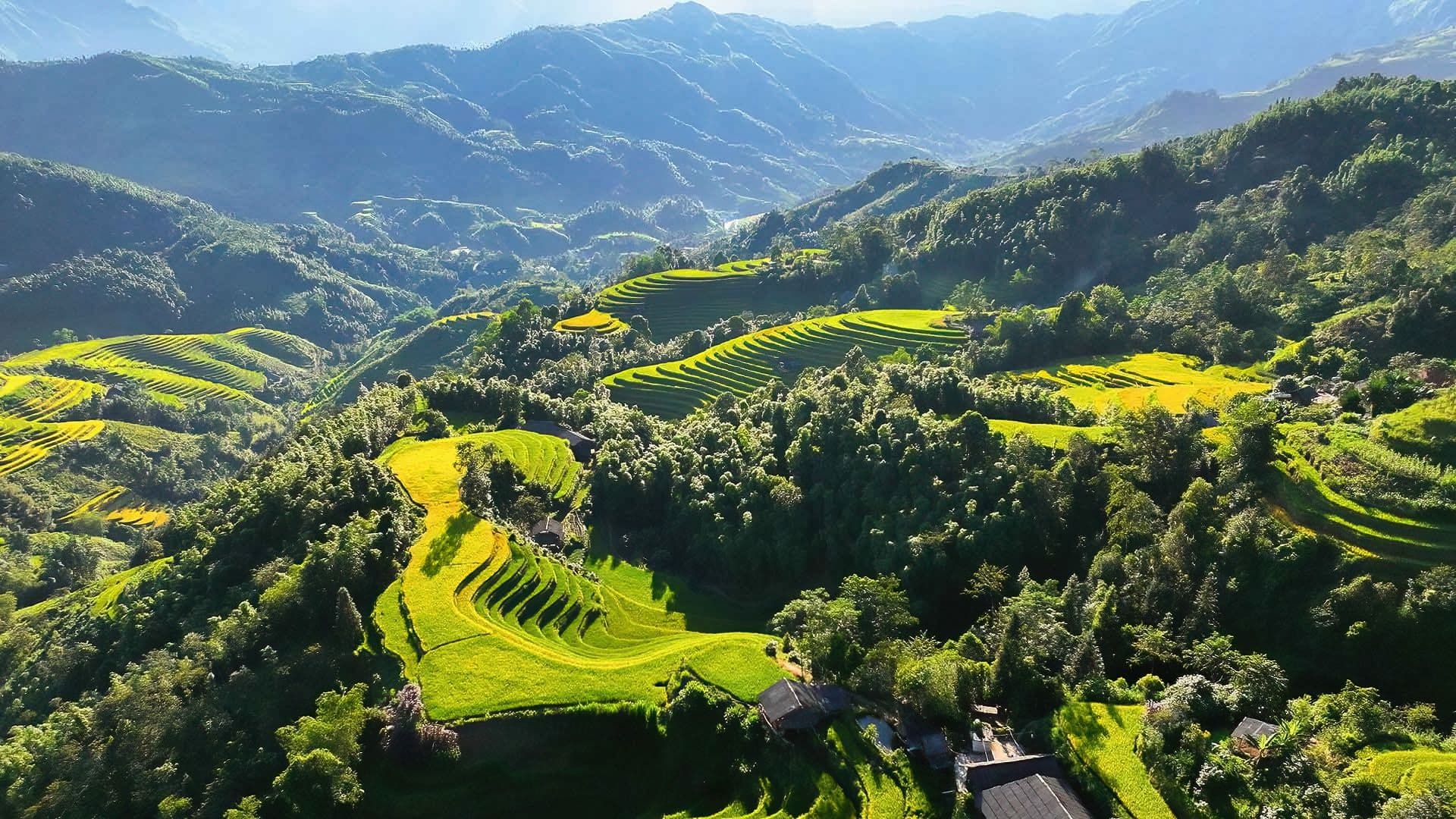
For the golden terrace look, late summer into autumn is the most common peak, with September–October frequently delivering the most iconic visuals. Harvest timing can shift each year, so it’s worth checking local conditions when you arrive.
Best for families (low disruption, comfortable days)
Families tend to enjoy April–May or October–November because days are comfortable and plans are less likely to be derailed by heavy rain. These months also support a relaxed pace: short village walks, viewpoints, and a calm Fansipan day.
Best for budget travelers
If you want better value and fewer crowds, consider March or November. They often sit just outside the busiest windows while still offering strong chances for good conditions.
Month-by-month cheat sheet (quick scan)
- March: strong shoulder month; comfortable trekking, decent visibility odds
- April–May: spring comfort; excellent for active itineraries (rain risk starts rising later)
- June–August: greener landscapes, but higher rain/fog risk; plan flexibility and mornings
- September–October: terrace highlight season; great overall odds for views + scenery
- November: cool, calm shoulder; quieter feel, colder nights
- December–February: cold, misty, cinematic; less reliable panoramas, but cozy mood
How to plan your days for clearer views (the tactics that actually work)
The “morning-first” rule
Do your biggest viewpoints before 10:00 AM. That includes Fansipan, high passes, and ridge lookouts. Save afternoons for lower-risk activities: cafés, markets, local food, museums, and massage time.
A simple 2-day plan for clear views
Day 1: terrace/village walk + golden-hour viewpoint
Day 2: early Fansipan or a high pass viewpoint, then depart
A smarter 3-day plan (with a buffer day)
Add one flexible day so you’re not forced into Fansipan or a major viewpoint on the foggiest day. Use that buffer for villages, short walks, and relaxed town time while waiting for a clearer morning.
What to pack by season (weather-smart, not generic)
March–May (spring)
Bring light layers, a thin rain shell, and shoes with grip. Trails can be damp even on good-weather days.
September–November (autumn)
Pack a light jacket for evenings, sun protection, and a simple rain cover for your camera/phone. This season is comfortable but still changeable.
Wetter months (May–September)
Prioritize a waterproof outer layer, quick-dry clothing, and a waterproof phone pouch or dry bag. Expect muddy paths and sudden showers.
December–February (winter)
Bring thermal base layers, warm socks, and gloves/hat if you’re sensitive to cold. Choose accommodation with dependable heating and hot water.
FAQs
What is the best month to visit Sapa for clear views?
Most travelers get the best odds in October or November, with April also a strong option for comfort and clarity.
Is September or October better for Sapa rice terraces?
Both can be excellent, but September–October tends to align best with the golden terrace window in many areas. Exact timing can shift by year.
When is the rainy season in Sapa?
Sapa typically sees higher rain and humidity from May into summer, which increases fog and trail slipperiness.
Is Sapa cold in December and January?
Yes. Nights can be cold and misty; plan warm layers and lodging comfort.
What months are best for trekking in Sapa?
March–May and September–November are the easiest for comfortable trekking.
FtripAsia services (ready to paste)
Plan Sapa for clear views—without guessing. FtripAsia helps you choose the best travel window based on your priorities (terraces, trekking comfort, photography, or quiet shoulder-season value), then builds a weather-smart itinerary that follows the morning-first rule for viewpoints. We coordinate the right transport from Hanoi, schedule your Fansipan day in the most recommended seasons, and include backup plans (short treks, cultural stops, café viewpoints) so your trip still feels perfect even if mist rolls in.
Conclusion
For the best odds of clear views and great weather in Sapa, aim for spring (March–May) or autumn (September–November), then treat visibility as a strategy: do viewpoints early, keep afternoons flexible, and build at least one buffer option into your itinerary. Sapa’s weather is part of its magic—but with the right timing and pacing, you’ll see the landscape at its best instead of waiting for clouds to move.

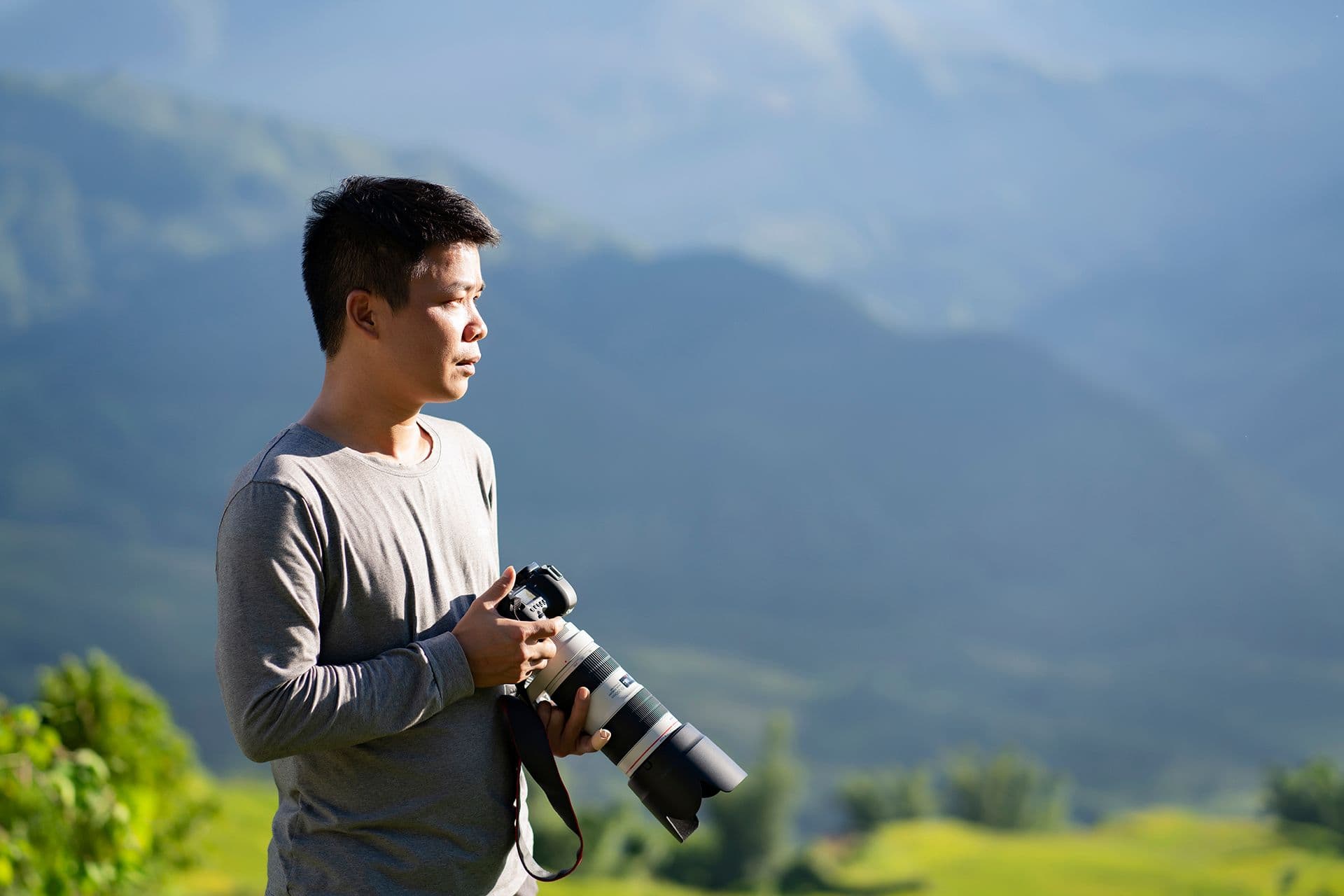
Founder & Photography Guide
Specialties: Culture, landscape, portrait, hiking, active and adventurous tour
Besides my unlimited passion for traveling, a professional tour guide for over a decade, I have been taking photographs since sitting at Hanoi of the University of Culture in the early 2000s. Photography started as a hobby but it was seriously taken due to my work relations and my significant passion for the beauty of our world, especially in Southeast Asian parts such as Vietnam, Laos, Cambodia, and Myanmar.
Within a few years of taking photographs, my works began to be recognized by many reliable international publications such as AFAR Travel, The Times, and The Daily Telegraph newspaper. In addition, I continuously add to my growing profile by winning numerous major awards: 3rd Position of The Independent Photographer 2018, 1st Position of Amateur Photographer of the year 2018, Grand Prize Winner of the AFAR Travel Photography 2019, and a Gold Award of San Francisco Bay International Photography 2020.
I photograph a wide variety of subjects, from travel to landscapes to street scenes. I enjoy documenting the East’s rich cultural heritage and its land soaked in glorious sunrise or sunset light in remote and secluded spots. And, I am very happy to share my knowledge and experience with you. You can visit Luminousvietnamtour to explore tour!