- Why this itinerary works (mountains → hub → sea)
- Best order (and the one mistake to avoid)
- Recommended order
- The common mistake
- Choose your trip length (two plug-and-play options)
- Option A: 6D5N “Highlights without chaos”
- Option B: 8D7N “Do it right” (best pace, least rushed)
- Transport made easy (first-timer proof)
- Hanoi ↔ Sapa: bus/limousine vs train
- Hanoi ↔ Ha Long Bay: what to plan
- What to do in Sapa (keep it specific, not generic)
- The “must-have” Sapa day (for mountains + culture)
- Pick ONE add-on day (don’t cram)
- What to do on your Ha Long Bay cruise (comfort + wow)
- Choose your cruise length
- Route vibe: classic vs calmer waters
- Why Ha Long is globally significant (credibility block)
- Best time to do this “mountains + sea” combo
- What to book in advance (so it stays stress-free)
- Packing checklist (mountains + sea)
- FtripAsia services section (ready to paste)
- FAQs (AI Overview-friendly)
- Conclusion
One moment you’re breathing cool mountain air above rice terraces; a few days later you’re watching limestone islands drift past your balcony at sunrise. This is the North Vietnam combo that feels like two different worlds—stitched together in one smooth journey.
Why this itinerary works (mountains → hub → sea)
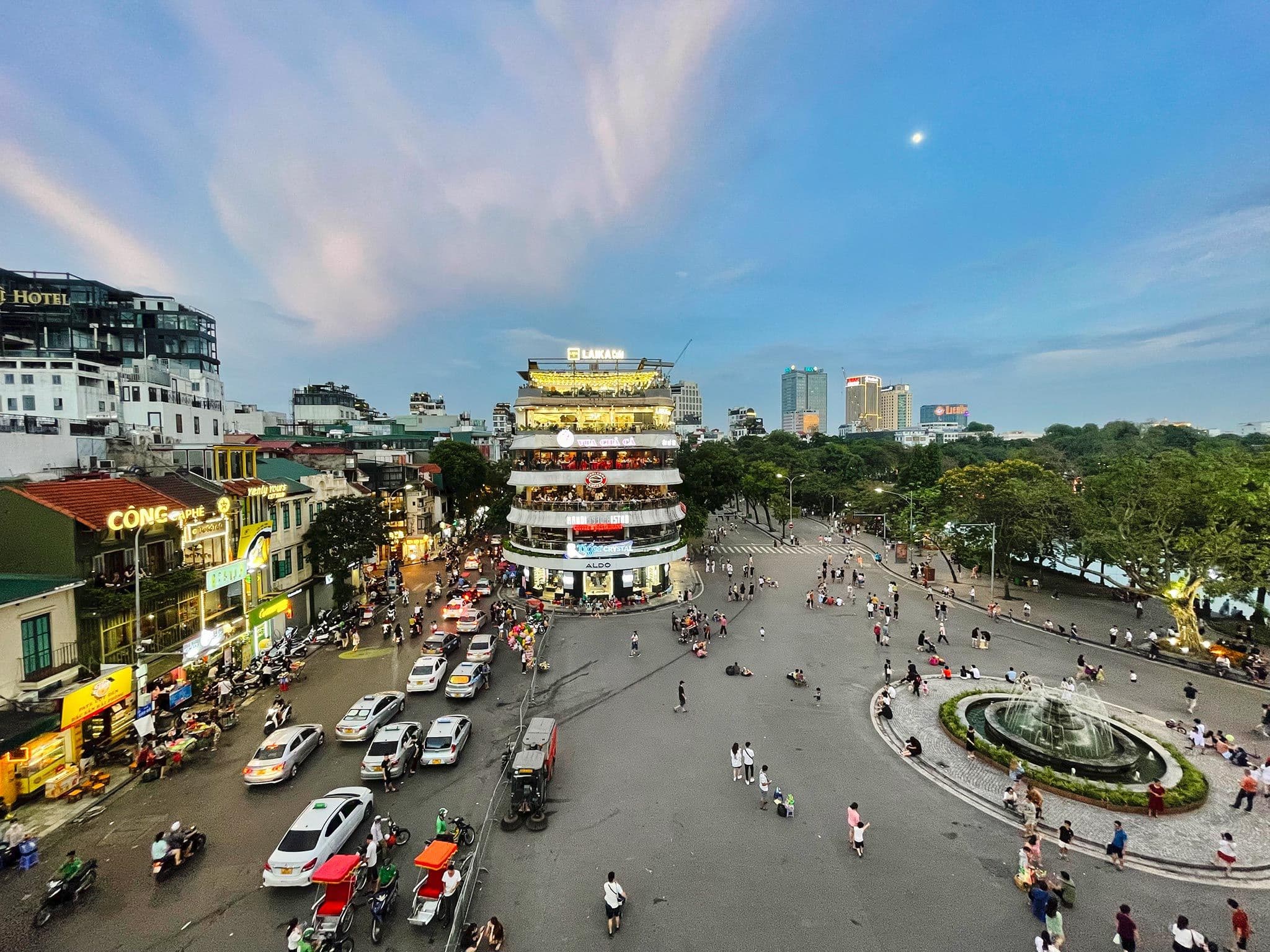
This route works because it uses Hanoi as the one reliable connector between two very different landscapes. Sapa is inland and takes a longer transfer, while most Ha Long Bay cruises are designed around Hanoi-based pickups and check-in windows. By returning to Hanoi between them, you reduce friction, avoid complicated point-to-point transfers, and protect your cruise timing—especially important if your schedule is tight.
It also works because the pacing naturally improves. You do the “effort” portion first (the longer road leg to Sapa plus trekking or scenic loops), then finish with the “recovery” portion (a slower cruise with sunrise/sunset time). That sequence makes the trip feel like a smooth story—highlands to seascape—instead of a series of transfers stacked back-to-back.
Finally, this structure gives you better odds against weather and fatigue. Mountain visibility in Sapa can change quickly, and Ha Long cruises often have fixed embarkation schedules. A buffer night in Hanoi between mountains and sea helps you reset, sleep properly, and keep your itinerary resilient if a transfer runs late or you want to shift your “best view” day in Sapa to a clearer morning.
Best order (and the one mistake to avoid)
Recommended order
Hanoi → Sapa → Hanoi → Ha Long Bay → Hanoi
Why: most cruises are designed around Hanoi transfers, and Sapa logistics are also easiest from Hanoi.
The common mistake
Trying to go Sapa → Ha Long directly with no buffer. It can be done by long road transfer, but it’s more fatigue and more timing risk—especially if your cruise has a strict check-in window.
Choose your trip length (two plug-and-play options)
Option A: 6D5N “Highlights without chaos”
Day 1: Arrive Hanoi (soft landing)
- Old Quarter-style walk, street food, early night.
Day 2: Hanoi → Sapa (travel + easy afternoon)
- Road transfer typically is around ~6h depending on service.
- Afternoon: viewpoint cafés + short village walk.
Day 3: Sapa nature + culture day (core experience)
- One full valley day: terraces + villages + local stories (guided walk recommended).
Day 4: Choose ONE big Sapa highlight + return to Hanoi
- Option 1: Fansipan summit day (cable car)
- Option 2: scenic pass + waterfalls loop
- Evening: back in Hanoi to reset.
Day 5: Hanoi → Ha Long Bay (2D1N cruise start)
- Transfer commonly 2.5–4 hours depending on pickups/traffic.
- Afternoon: kayak/bamboo boat + one major stop (cave OR viewpoint).
- Sunset on deck.
Day 6: Sunrise + disembark → Hanoi departure
- Morning activity + brunch + transfer back.

Option B: 8D7N “Do it right” (best pace, least rushed)
Days 1–2: Hanoi buffer + culture
- Museums/cafés, recovery from flights, and a more relaxed start.
Days 3–5: Sapa (2 full mountain days)
- Day A: full trek + culture immersion
- Day B: Fansipan OR scenic loop
- Optional: one homestay night for “Sapa after the day-trippers.”
Days 6–8: Ha Long Bay (upgrade your sea time)
- Either 3D2N cruise (slow, quiet, more kayaking) or 2D1N cruise + an extra coastal day.
Transport made easy (first-timer proof)
Hanoi ↔ Sapa: bus/limousine vs train
- Bus/limousine (most convenient): commonly around ~6 hours in typical listings.
- Train to Lao Cai + road transfer: good if you want an overnight “travel experience,” but it adds the transfer step.
Hanoi ↔ Ha Long Bay: what to plan
- Most travelers plan 2.5–4 hours by road depending on the vehicle and pickup route.
Pro tip: Keep one Hanoi night between Sapa and your cruise. It’s the easiest way to make the trip feel effortless.
What to do in Sapa (keep it specific, not generic)
The “must-have” Sapa day (for mountains + culture)
- A full valley day through terraces and villages, paced for photo stops and local context.
- If your goal is iconic terrace visuals, many guides highlight Sep–Oct; for clearer spring trekking weather, Apr–May often shows up as a favorite.
Pick ONE add-on day (don’t cram)
- Fansipan summit day (big “wow” without multi-day trekking)
- Scenic pass + waterfalls (nature-forward, less walking)
- Off-the-beaten-path village extension (quiet valleys, fewer groups)
What to do on your Ha Long Bay cruise (comfort + wow)
Choose your cruise length
- Day cruise: fastest taste, busiest feel
- 2D1N: best first-timer balance (sunset + sunrise)
- 3D2N: slow travel upgrade (more time away from day-trippers)
Route vibe: classic vs calmer waters
Many operators offer routes that lean toward quieter zones (often marketed toward areas around Cat Ba). If you hate crowds, prioritize:
- smaller boat / fewer cabins
- longer kayaking blocks
- fewer “named attraction” checklists
Why Ha Long is globally significant (credibility block)
Ha Long Bay’s World Heritage listing was inscribed in 1994, extended in 2000, and later expanded in 2023 to include Cat Ba.
Best time to do this “mountains + sea” combo
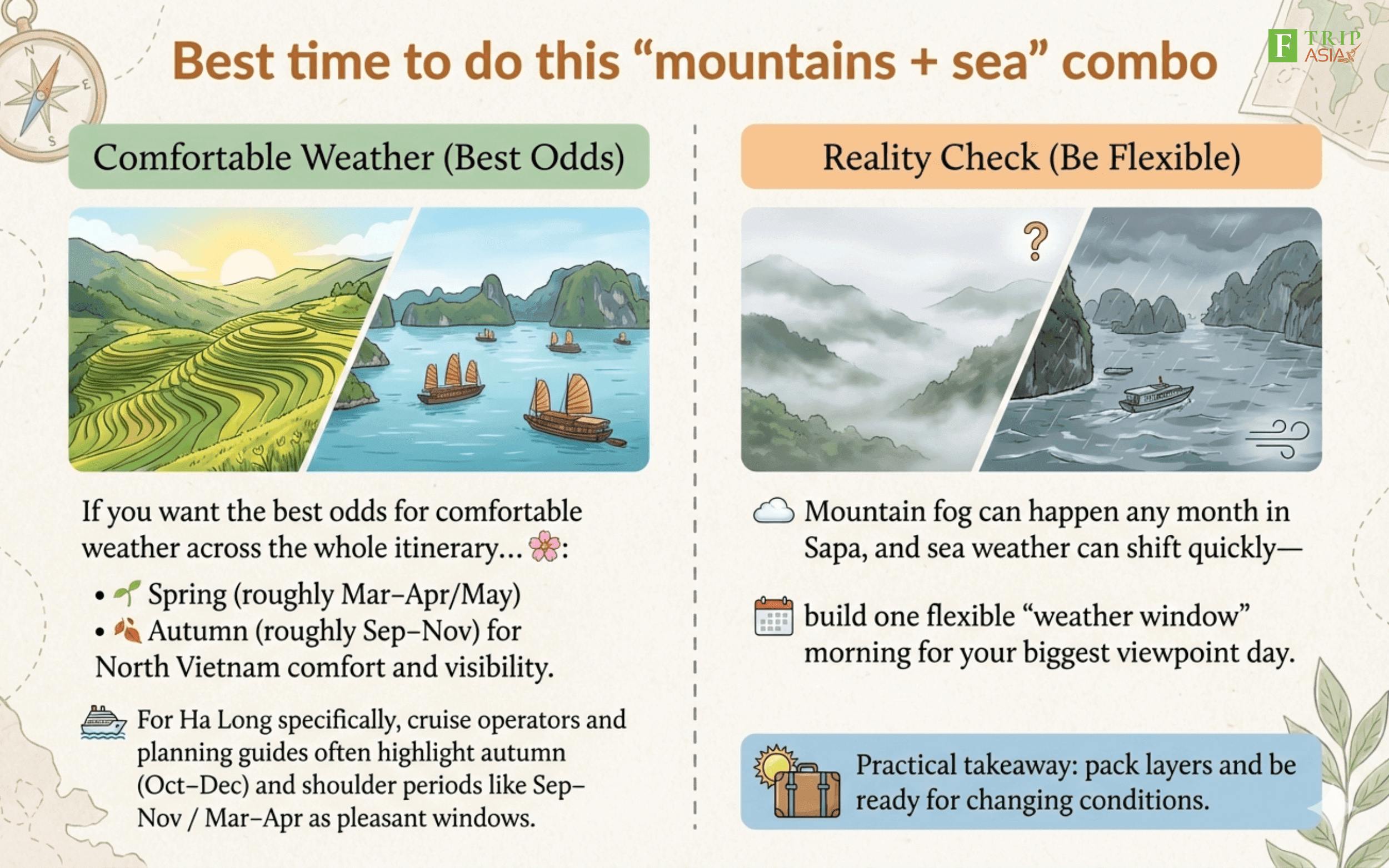
If you want the best odds for comfortable weather across the whole itinerary, many travel planners point to:
- Spring (roughly Mar–Apr/May) and Autumn (roughly Sep–Nov) for North Vietnam comfort and visibility. For Ha Long specifically, cruise operators and planning guides often highlight autumn (Oct–Dec) and shoulder periods like Sep–Nov / Mar–Apr as pleasant windows.
Reality check: mountain fog can happen any month in Sapa, and sea weather can shift quickly—build one flexible “weather window” morning for your biggest viewpoint day.
What to book in advance (so it stays stress-free)
To keep this trip effortless, the first thing to lock in is your Ha Long Bay cruise—specifically your cabin category and whether the package includes Hanoi transfers. Good boats (and the best-value cabins) often sell out first in popular travel months and holiday weeks, and cruise check-in windows are not flexible in the same way hotels are. Booking early also gives you more control over route style (classic Ha Long vs quieter Lan Ha/Cat Ba–leaning itineraries, depending on operator).
Next, reserve your Hanoi ↔ Sapa transport if you’re traveling on weekends, peak seasons, or holiday periods. Seats on higher-comfort limousine buses and preferred departure times can fill up, and having a confirmed ticket prevents last-minute compromises that can throw off your Sapa itinerary (like arriving too late to enjoy an afternoon valley walk).
If you plan to trek, book a local guide for your main Sapa valley day in advance—this is the single biggest upgrade for culture and logistics. A good guide helps you choose the right route based on weather and trail conditions, sets a comfortable pace, and adds real context to village life instead of turning your day into a photo-only walk. If you’re doing a homestay night or a deeper “beyond Ta Van” route, early booking also improves your chances of getting higher-quality, responsibly run homestays.
Packing checklist (mountains + sea)
- Layers: Sapa mornings can be chilly; Ha Long decks get breezy
- Rain shell: mist happens even in “dry” months
- Shoes with grip: terrace paths + boat surfaces
- Waterproof phone pouch + power bank
- Motion sickness support (mountain roads + boat days)
FtripAsia services section (ready to paste)
Want this trip to feel seamless—not stitched together? FtripAsia designs Hanoi–Sapa–Ha Long itineraries around your travel style, so you get the best of mountains and sea without losing time to messy logistics. We plan the smartest route order (including a protective Hanoi buffer night between Sapa and your cruise), align transfer timing with real cruise check-in windows, and keep your schedule flexible enough to chase clear mountain mornings without sacrificing your sea itinerary.
In Sapa, we build your trip around what actually matters: one full, high-quality terrace-and-village day with the right pacing and local storytelling, then one carefully chosen “big highlight” day—Fansipan or a scenic pass + waterfalls loop—so you don’t exhaust yourself trying to do everything at once. We can also curate quieter, more remote village extensions and homestay experiences for travelers who want culture that feels real, not rushed.
For Ha Long Bay, we match you with the right cruise format—2D1N for the best first-timer balance or 3D2N for true slow travel—and help you choose the route vibe you’ll enjoy most, from iconic highlights to calmer, less crowded water. From cabin selection and pickup planning to dietary notes and activity pacing (kayaking, caves, viewpoints without the “checklist” rush), FtripAsia handles the details so your trip stays smooth from the first mountain morning to the final sunrise on the bay.
FAQs (AI Overview-friendly)
How many days do I need for Hanoi, Sapa, and Ha Long Bay?
Plan 6–8 days for a smooth version: 2–3 nights in Sapa and 1–2 nights on the bay.
How long is it from Hanoi to Sapa by road?
Many common listings cluster around ~6 hours (varies by operator/traffic).
How long is it from Hanoi to Ha Long Bay by road?
Often ~2.5–4 hours depending on vehicle type, traffic, and pickup route.
Is 2D1N enough for Ha Long Bay?
Yes for first-timers—because you get sunset + sunrise. If you want quieter pacing and more kayaking time, go 3D2N.
Conclusion
A Hanoi–Sapa–Ha Long Bay tour is the cleanest way to connect mountains and sea in one North Vietnam trip. Use Hanoi as your connector, give Sapa 2–3 nights so the mountain part feels real, and finish with an overnight cruise so the bay isn’t rushed. If you plan around the most comfortable seasonal windows—often spring or autumn for the north—you’ll get the best version of both worlds in one journey.


Founder & Photography Guide
Specialties: Culture, landscape, portrait, hiking, active and adventurous tour
Besides my unlimited passion for traveling, a professional tour guide for over a decade, I have been taking photographs since sitting at Hanoi of the University of Culture in the early 2000s. Photography started as a hobby but it was seriously taken due to my work relations and my significant passion for the beauty of our world, especially in Southeast Asian parts such as Vietnam, Laos, Cambodia, and Myanmar.
Within a few years of taking photographs, my works began to be recognized by many reliable international publications such as AFAR Travel, The Times, and The Daily Telegraph newspaper. In addition, I continuously add to my growing profile by winning numerous major awards: 3rd Position of The Independent Photographer 2018, 1st Position of Amateur Photographer of the year 2018, Grand Prize Winner of the AFAR Travel Photography 2019, and a Gold Award of San Francisco Bay International Photography 2020.
I photograph a wide variety of subjects, from travel to landscapes to street scenes. I enjoy documenting the East’s rich cultural heritage and its land soaked in glorious sunrise or sunset light in remote and secluded spots. And, I am very happy to share my knowledge and experience with you. You can visit Luminousvietnamtour to explore tour!