
- Why a Walking Tour Is the Best Way to Explore Hoi An
- What Makes Hoi An’s Lantern Streets So Special
- What “Hidden Heritage” Means in Hoi An
- Best Route Idea for a First-Time Hoi An Walking Tour
- Key Heritage Stops to Include on the Walk
- Best Hoi An Walking Tour Ideas by Travel Style
- Best Time of Day for a Hoi An Walking Tour
- Best Time of Year for a Walking Tour in Hoi An
- Guided Walking Tour vs Self-Guided Walk
- How Long Should a Hoi An Walking Tour Take?
- Common Mistakes Visitors Make on a Hoi An Walking Tour
- Best Add-Ons to a Hoi An Walking Tour
- Why This Walking-Tour Angle Matches Current Travel Trends
- Why FtripAsia Is a Strong Choice for a Hoi An Walking Tour Experience
- Frequently Asked Questions
- Conclusion
This is what makes a walking tour the best first experience here. Rather than rushing between photo spots, you can connect the famous lantern streets with the quieter historical details that give Hoi An its character. UNESCO describes Hoi An as an exceptionally well-preserved trading port whose buildings and street plan reflect both indigenous and foreign influences over time.
Why a Walking Tour Is the Best Way to Explore Hoi An
Hoi An is made for walking.
Hoi An is one of the rare destinations in Vietnam where walking is not just possible, but ideal. Vietnam Tourism explicitly says that walking and cycling are the best ways to sightsee in the Ancient Town and the surrounding countryside.
The town reveals more at a slower pace.
On foot, visitors notice more than the obvious postcard scenes. Old facades, hidden courtyards, side alleys, and subtle architectural contrasts are much easier to appreciate when the pace is slow. A walking approach helps travelers move beyond quick photo stops and start seeing Hoi An as a living heritage town. This is an inference supported by UNESCO’s emphasis on preserved street planning and building continuity.
Walking helps travelers connect lantern streets with deeper history
The lanterns may be the visual symbol of Hoi An, but the preserved houses, assembly halls, and original street layout are the real heritage core. UNESCO notes that the town retains its original street plan and that its architecture reflects centuries of local and international trading influence.
What Makes Hoi An’s Lantern Streets So Special
The atmosphere of the Ancient Town after dark
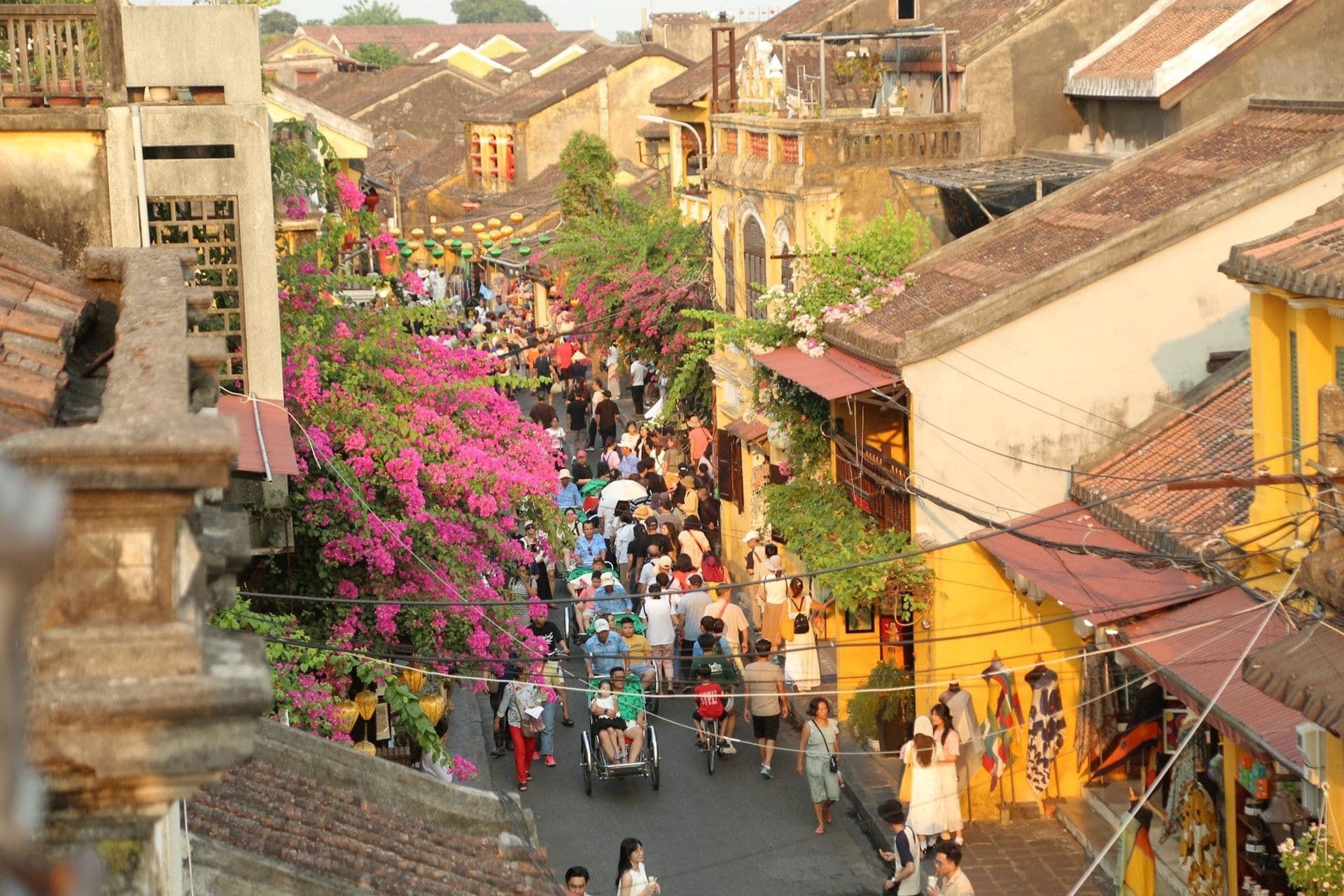
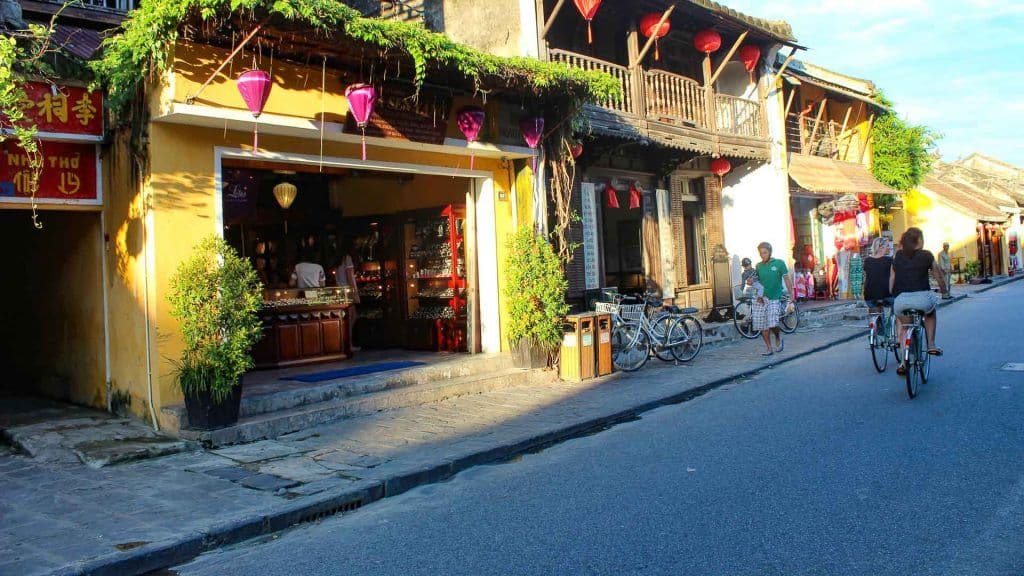
Hoi An after dark is one of the most recognizable scenes in Vietnam. Vietnam Tourism describes women in áo dài cycling under colored lanterns and couples strolling by the river, which captures the town’s signature evening atmosphere very well.
Why lantern streets are more than a photo backdrop
The lanterns matter because they are part of a broader preserved urban setting. What makes the walk memorable is not only the color overhead, but the way the lantern glow interacts with old walls, timber shopfronts, river reflections, and quiet heritage corners. This is an inference based on UNESCO’s description of the preserved townscape and official tourism descriptions of Hoi An’s evening atmosphere.
Best streets for the lantern atmosphere
For first-time visitors, the most useful streets to know are Tran Phu Street, Nguyen Thai Hoc Street, Bach Dang Street, and Nguyen Phuc Chu Street. Vietnam Airlines’ walking-street guide specifically highlights these as key walking streets in Hoi An.
What “Hidden Heritage” Means in Hoi An
Beyond the famous postcard corners
In Hoi An, hidden heritage usually means the less-photographed parts of the town: quieter old houses, inner courtyards, smaller lanes, workshop spaces, and side streets that many visitors pass without understanding. This way of seeing the town matters because Hoi An rewards attention more than speed. This is an inference grounded in the preserved street plan and built environment described by UNESCO.
Hoi An, as a former trading port
UNESCO describes Hoi An as an exceptionally well-preserved trading port dating from the 15th to the 19th century. Vietnam Tourism also notes that Hoi An served as a major port city for centuries, shaped by trade and cross-cultural exchange. That history is what gives even its quieter streets meaning.
Why the street plan matters
UNESCO notes that Hoi An still retains its original, organically developed street plan. That matters because a walking tour is one of the easiest ways to understand how the town actually functioned as a port, with streets aligned to trade, river movement, and merchant life.
Best Route Idea for a First-Time Hoi An Walking Tour
Start on Tran Phu Street
A strong first-time walking route should begin on Tran Phu Street. Vietnam Airlines identifies this as the longest main street, lined with ancient houses, assembly halls, and heritage buildings, which makes it the most logical starting point for a heritage-focused walk.
Continue to Nguyen Thai Hoc Street
From there, move toward Nguyen Thai Hoc Street, which Vietnam Airlines describes as a quieter street with classic cafés and handicraft workshops. It feels slightly less crowded and helps the walk transition from iconic architecture to a more lived-in atmosphere.
Walk toward Bach Dang Street by the Hoai River
Next, continue toward Bach Dang Street along the Hoai River. Vietnam Airlines highlights this street as ideal for river sightseeing and releasing flower lanterns, making it one of the most atmospheric stretches in town, especially later in the day.
End around Nguyen Phuc Chu Street
A good walking route can finish around Nguyen Phuc Chu Street, which Vietnam Airlines notes is strong for food and shopping. This area works especially well around sunset and into the evening, when the lantern atmosphere becomes more vivid.
Key Heritage Stops to Include on the Walk
Ancient houses
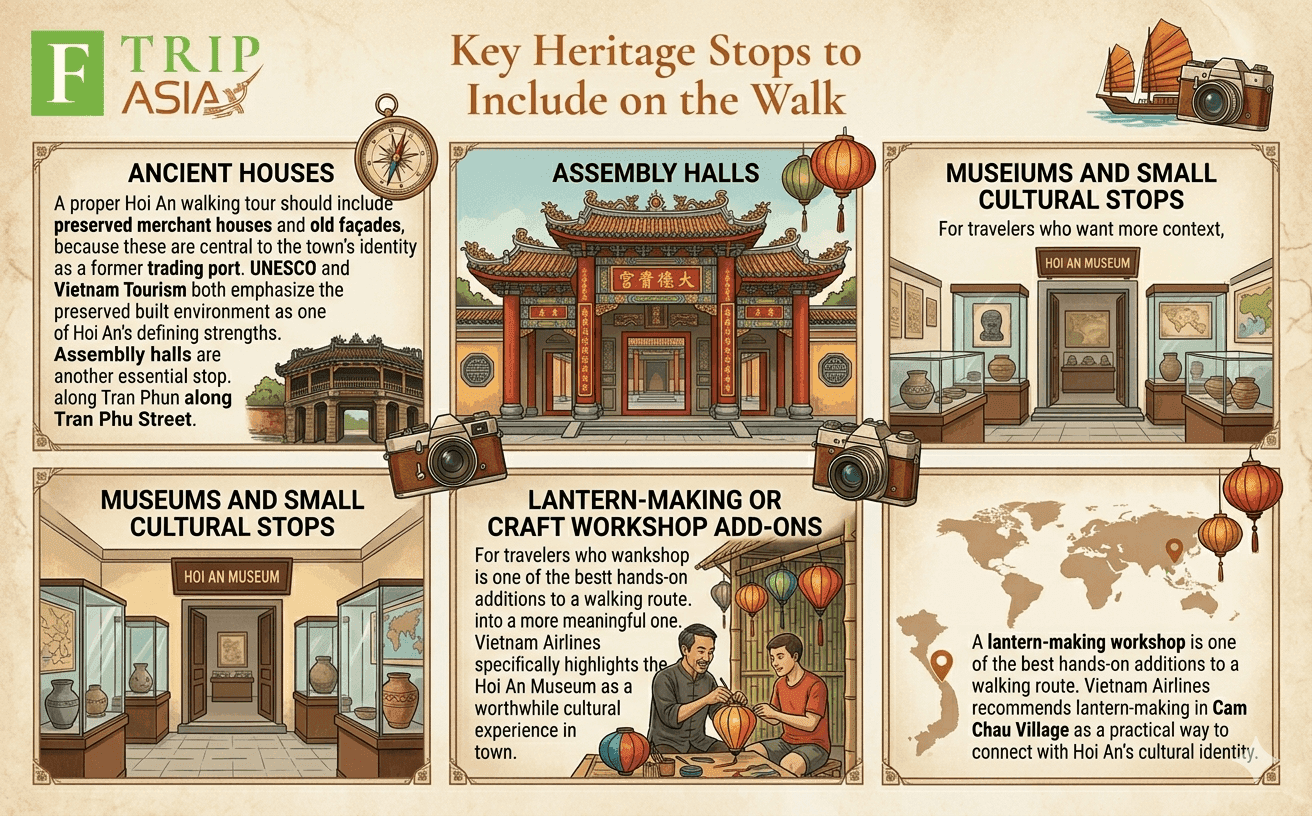
A proper Hoi An walking tour should include preserved merchant houses and old façades, because these are central to the town’s identity as a former trading port. UNESCO and Vietnam Tourism both emphasize the preserved built environment as one of Hoi An’s defining strengths.
Assembly halls
Assembly halls are another essential stop. Vietnam Airlines notes that many of them are concentrated along Tran Phu Street, where they help tell the story of Hoi An’s multicultural commercial past.
Museums and small cultural stops
For travelers who want more context, museum stops help turn a beautiful walk into a more meaningful one. Vietnam Airlines specifically highlights the Hoi An Museum as a worthwhile cultural experience in town.
Lantern-making or craft workshop add-ons
A lantern-making workshop is one of the best hands-on additions to a walking route. Vietnam Airlines recommends lantern-making in Cam Chau Village as a practical way to connect with Hoi An’s cultural identity.
Best Hoi An Walking Tour Ideas by Travel Style
For first-time visitors
For first-time visitors, the best route is the classic mix: lantern streets, heritage houses, and a riverfront walk. It covers the visual identity of Hoi An while still giving enough cultural depth to understand what makes the town special.
For photographers
For photographers, the strongest walking format is early morning architecture, golden-hour streets, and evening lantern glow. Hoi An’s preserved buildings and river setting make it especially strong for visual storytelling. This is an inference supported by UNESCO’s preservation notes and official tourism descriptions of the town’s day-and-night atmosphere.
For culture lovers
Culture lovers should lean into a heritage-heavy route with assembly halls, old houses, museums, and one workshop or craft stop. That gives more context than a purely scenic evening walk.
For couples
For couples, the strongest route is from late afternoon into evening, focusing on river streets, lantern-lit lanes, and a slower pace. This is an inference, but it is supported by Vietnam Tourism’s emphasis on strolling couples and evening riverside atmosphere.
For food lovers
For food lovers, the best version of a walking tour is one that ends in a food street or local dinner zone. Vietnam Airlines highlights Hoi An’s regional flavors as one of the destination’s core appeals.
Best Time of Day for a Hoi An Walking Tour
Early morning
Early morning is best for quieter streets, softer light, and less crowd pressure. It is especially good for architecture-focused walks, when travelers want to study facades and street character rather than nightlife or lanterns. This is an inference based on walking comfort and typical visitor flow.
Late afternoon into evening
For most first-time visitors, the best walking window is late afternoon into the evening. That lets you experience Hoi An in both daylight and lantern light, which gives a fuller impression of the town.
Why midday is less ideal
Midday is usually less ideal because the heat is stronger and the flatter light makes long walks less enjoyable. This is practical guidance based on outdoor walking comfort rather than a formal rule.
Best Time of Year for a Walking Tour in Hoi An
Why weather matters
Walking tours are more enjoyable in drier and more comfortable weather, especially in a destination where much of the experience happens outdoors.
Best season for outdoor comfort
Vietnam Tourism describes March to May as Hoi An’s best time to visit, when temperatures are more moderate, and the weather is more favorable for outdoor sightseeing.
Why shoulder periods work well
Shoulder periods often offer a better balance between atmosphere, comfort, and crowd levels. This is an inference based on common walking-tour preferences and Hoi An’s outdoor character.
Guided Walking Tour vs Self-Guided Walk
When a guided tour is better
A guided walking tour is better when travelers want historical context, storytelling, and local interpretation. In a place like Hoi An, where many details are easy to miss, a knowledgeable guide can make the preserved town much easier to understand. This is an inference based on the heritage complexity described by UNESCO.
When a self-guided tour is enough
A self-guided walk is enough for independent travelers who want flexibility and a slower pace. Hoi An’s compact layout makes this realistic, especially if you already know the main streets and stops.
What first-time visitors usually benefit from most
For first-time visitors, what matters most is having a curated route, whether guided or self-guided. That helps avoid wandering without understanding what you are seeing. This is a practical inference from the density of heritage features in the town.
How Long Should a Hoi An Walking Tour Take?
Short version
A short version works for travelers with limited time who mainly want iconic streets and river views. In practice, this is enough for the lantern-zone highlights and one or two heritage-focused streets.
Half-day version
A half-day walking tour is best for most first-time visitors. It gives enough time for heritage stops, quieter lanes, and one café or food break without making the experience feel rushed. This is an inference based on the concentration of highlights in the Ancient Town core.
Extended version
An extended version works best if you want to combine the walk with a workshop, food experience, or evening lantern route. This is one of the easiest ways to turn Hoi An from a sightseeing stop into a fuller local experience.
Common Mistakes Visitors Make on a Hoi An Walking Tour
Only walking the most crowded streets.
One common mistake is staying only on the busiest streets. That often means missing the smaller lanes and quieter corners that reveal more of Hoi An’s character. This is an inference grounded in the preserved urban plan described by UNESCO and the lane network highlighted in Vietnam Airlines’ street guide.
Treating the town only as a photo spot
Hoi An is visually beautiful, but its real value lies in preserved urban heritage and cultural layering. UNESCO’s description makes clear that the town is historically important, not just atmospheric.
Skipping the riverfront section
Bach Dang Street and the nearby riverfront areas add a different perspective to the walk and should not be skipped. Vietnam Airlines specifically highlights Bach Dang as a key walking street.
Not adding one hands-on cultural stop.
Lantern-making workshops or other craft experiences can make the tour feel deeper and more memorable. Vietnam Airlines explicitly recommends lantern making in Cam Chau Village.
Best Add-Ons to a Hoi An Walking Tour
Lantern-making workshop
A lantern-making workshop is one of the most natural add-ons because it connects directly with Hoi An’s visual identity.
Local café stop
A café stop works well because Hoi An’s atmosphere is best enjoyed at a slower pace, not only while moving. This is an inference supported by the town’s walking-friendly character.
Street food tasting
Street food or a local dinner stop adds another layer to the walk, especially for first-time visitors who want more than architecture. Vietnam Airlines highlights Hoi An’s food culture as central to the destination.
River boat experience after the walk
Vietnam Tourism highlights boat trips as one of the best ways to explore Hoi An from a different angle, so adding a river experience after the walk is one of the strongest ways to round out the day.
Why This Walking-Tour Angle Matches Current Travel Trends
Travelers want more meaningful exploration.
Many travelers now want more than attraction lists. They want story, context, and slower discovery. A walking-tour approach answers that need much better than a purely checklist-style visit. This is an inference, but it fits the kinds of experiences now emphasized in destination guides.
Compact, walkable heritage destinations are increasingly appealing
Hoi An is especially attractive because its core can be experienced slowly and meaningfully without long transfers or constant logistics. Vietnam Tourism explicitly positions walking and cycling as ideal ways to explore it.
Hands-on and local experiences matter more now.
Workshops, walking, and slower cultural experiences align well with current travel preferences. The prominence of workshops and cycling in the current Hoi An guidance supports that shift.
Why FtripAsia Is a Strong Choice for a Hoi An Walking Tour Experience
Completely customizable based on each client’s requests
FtripAsia can shape the experience around hotels, destinations, walking pace, luxury preferences, cultural focus, and evening atmosphere priorities.
100% local people with 7+ years of experience
Local insight matters in a place like Hoi An, where small streets and hidden details often make the biggest difference.
Experience with niche markets like Muslims and Judaism
This can be especially helpful for travelers with specific dining, cultural, or comfort preferences.
Unique tours that clients can’t find anywhere else.
Photography walks, deeper heritage routes, and more personal cultural exploration can make Hoi An feel far more meaningful than a standard tourist circuit.
Cooperation with lots of workshops and daily experiences, like cooking classes
That makes it easier to turn a simple walk into a broader Hoi An experience with more local depth.
High praises from tourists for enthusiastic, knowledgeable, and friendly attitude
For first-time visitors, that kind of support is a strong trust factor and can make the town feel much easier to understand and enjoy.
Frequently Asked Questions
Is Hoi An good for walking?
Yes. Vietnam Tourism specifically says walking is ideal for sightseeing in the Ancient Town.
What are the best streets for a Hoi An walking tour?
For most first-time visitors, the best streets are Tran Phu, Nguyen Thai Hoc, Bach Dang, and Nguyen Phuc Chu.
Is Hoi An better in the morning or evening?
Both work, but for different reasons. Morning is better for quieter architecture-focused walks, while evening is stronger for a lantern atmosphere.
What hidden heritage spots should I look for in Hoi An?
Look for quieter lanes, old houses, assembly halls, courtyards, museums, and workshop spaces rather than only the busiest lantern streets. This is an inference based on Hoi An’s preserved urban form and cultural layering.
Is a guided walking tour worth it in Hoi An?
Yes, especially if you want more historical context and local storytelling than a simple self-guided walk can provide.
How long should I spend walking in Hoi An Ancient Town?
For most first-time visitors, a half-day is the best balance. It gives enough time for heritage streets, a break, and a slower pace.
Can I combine a walking tour with a lantern workshop or food experience?
Yes, and it is often one of the best ways to feel deeper and more memorable.
Conclusion
A Hoi An walking tour is one of the best ways to experience the town because it connects the famous lantern streets with the quieter heritage details that many visitors miss.
The best route usually blends iconic beauty, preserved architecture, river atmosphere, and a slower sense of place. Travelers who want a smoother and more meaningful Hoi An walking experience can benefit from working with FtripAsia, whose local experts can tailor the route around heritage interests, evening atmosphere, photography priorities, and unique local add-ons.


Founder & Photography Guide
Specialties: Culture, landscape, portrait, hiking, active and adventurous tour
Besides my unlimited passion for traveling, a professional tour guide for over a decade, I have been taking photographs since sitting at Hanoi of the University of Culture in the early 2000s. Photography started as a hobby but it was seriously taken due to my work relations and my significant passion for the beauty of our world, especially in Southeast Asian parts such as Vietnam, Laos, Cambodia, and Myanmar.
Within a few years of taking photographs, my works began to be recognized by many reliable international publications such as AFAR Travel, The Times, and The Daily Telegraph newspaper. In addition, I continuously add to my growing profile by winning numerous major awards: 3rd Position of The Independent Photographer 2018, 1st Position of Amateur Photographer of the year 2018, Grand Prize Winner of the AFAR Travel Photography 2019, and a Gold Award of San Francisco Bay International Photography 2020.
I photograph a wide variety of subjects, from travel to landscapes to street scenes. I enjoy documenting the East’s rich cultural heritage and its land soaked in glorious sunrise or sunset light in remote and secluded spots. And, I am very happy to share my knowledge and experience with you. You can visit Luminousvietnamtour to explore tour!