- Why Join a Hoi An Tropical Cooking Tour?
- What a Hoi An Tropical Cooking Tour Usually Includes
- What Local Dishes You May Learn to Cook
- Why Hoi An Is an Ideal Place for a Cooking Tour
- Best Types of Hoi An Cooking Tours for Different Travelers
- Who Should Join a Hoi An Tropical Cooking Tour?
- What Makes a Good Cooking Tour in Hoi An?
- Best Time to Join a Hoi An Cooking Tour
- How to Combine a Cooking Tour with a Hoi An Itinerary
- Common Mistakes Travelers Make When Booking a Hoi An Cooking Tour
- Why This Experience Matches Current Travel Trends
- Why FtripAsia Is a Strong Choice for a Hoi An Food Experience
- Frequently Asked Questions
- Conclusion
Joining a tropical cooking tour is one of the easiest ways to move from sightseeing into a real cultural experience. Instead of only eating the food, you learn where ingredients come from, how flavors are balanced, and why certain dishes matter so much in Hoi An. Vietnam Airlines’ Hoi An guide says cooking classes help visitors understand the traditions and stories behind local cuisine, not just the recipes.
This guide explains what a Hoi An cooking tour usually includes, which dishes you may learn, and why it is one of the most rewarding add-ons for a first trip.
Why Join a Hoi An Tropical Cooking Tour?
It is more than just a meal.
A good cooking tour does more than feed you. It gives context. Vietnam Airlines notes that many Hoi An cooking classes include a guided market visit beforehand, where travelers learn about local herbs, spices, and produce while gaining a better understanding of Vietnamese food culture.
Hoi An is one of Vietnam’s best food destinations.
Hoi An is widely promoted for its strong culinary identity. Vietnam Tourism highlights walking food tours in Hoi An and specifically points to regional specialties such as cao lầu, along with food-making experiences linked to rice paper, fish sauce, and other local staples.
It fits current travel trends.
Cooking classes also fit what many travelers now want most: hands-on, local, experience-led activities rather than passive sightseeing. That trend is reflected in how both official and major travel guides increasingly highlight workshops, market visits, and participatory food experiences in Hoi An.
What a Hoi An Tropical Cooking Tour Usually Includes
Market visit
Many Hoi An cooking tours begin at a local market. This is one of the most valuable parts of the experience because it helps travelers understand ingredients in context, from herbs and vegetables to noodles, sauces, and seafood. Vietnam Airlines specifically notes that many cooking classes include a market visit beforehand.
Basket boat or river add-on
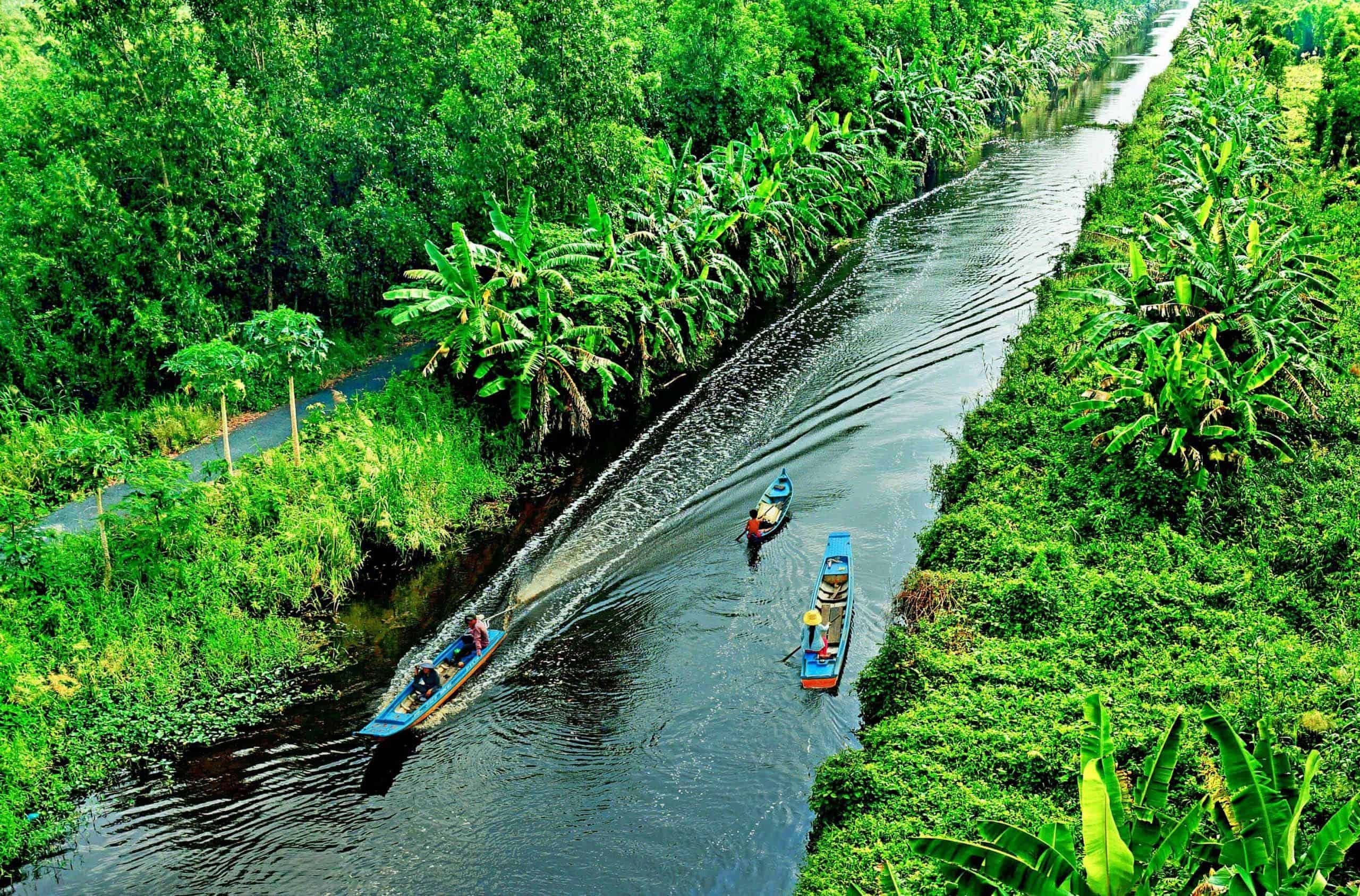
Some cooking tours in Hoi An also include a basket-boat ride or another water-based segment before the class. While this is not universal, it is common in more immersive eco-style cooking tours in the Hoi An area. This is an inference based on the way cooking experiences in Hoi An are often bundled with local village and water activities across destination guidance.
Hands-on cooking session
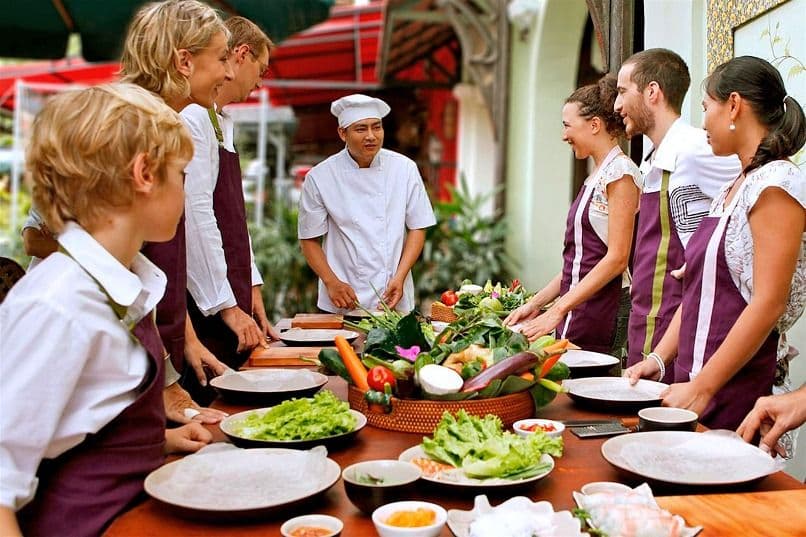
The main part of the experience is, of course, the cooking itself. Travelers are usually guided through several Hoi An or Vietnamese dishes step by step, then eat what they make. Vietnam Airlines describes these classes as a hands-on and meaningful connection to local life.
Meal and cultural storytelling
The best cooking tours do not stop at recipes. They also explain local flavor balance, food habits, and how dishes fit into daily life in Hoi An. That storytelling element is one reason cooking classes feel much deeper than a standard restaurant meal.
What Local Dishes You May Learn to Cook
Cao lầu
Cao lầu is the dish most closely associated with Hoi An. Vietnam Tourism calls it “Hoi An in a bowl” and explains that it is unique to the town, with roots tied to local ingredients and tradition.
Bánh xèo
Bánh xèo is another dish commonly featured in Hoi An food experiences and cooking programs. It is popular partly because it is approachable for travelers but still strongly rooted in Vietnamese cooking culture. This is an inference based on how frequently it appears in Hoi An culinary experiences and broader Vietnam cooking-tour formats.
Fresh spring rolls
Fresh spring rolls are often included because they are beginner-friendly, visually appealing, and strongly associated with Vietnamese cooking classes. They also work well in hands-on sessions where guests are new to local cuisine. This is an inference based on the common structure of introductory Vietnamese cooking experiences.
Other local or tropical dishes
Depending on the host kitchen and format, travelers may also cook papaya salad, rice pancakes, chicken noodles, or family-style recipes. The exact menu varies, but Hoi An’s broader food identity clearly supports this kind of diverse, local-ingredient cooking experience.
Why Hoi An Is an Ideal Place for a Cooking Tour
Strong culinary identity
Hoi An stands out not only for its architecture but also for its food. Its cuisine reflects a blend of Vietnamese, Chinese, and Japanese influences, which Vietnam Airlines also notes when discussing Hoi An’s signature dishes and restaurants.
Walkable heritage setting
Because Hoi An is compact and easy to explore, cooking tours fit naturally into a half-day or full-day itinerary. Vietnam Tourism specifically says walking is one of the best ways to experience the town.
Easy mix of food and culture
Hoi An is especially attractive to first-time visitors because a cooking class can be combined easily with Ancient Town exploration, a river experience, or countryside time on the same day. That flexibility is one of the destination’s biggest strengths. This is an inference supported by official Hoi An activity guidance.
Best Types of Hoi An Cooking Tours for Different Travelers
Market-to-table cooking tour
This is often the best choice for food lovers and first-time visitors because it gives ingredient insight as well as culinary context. Vietnam Airlines’ guide strongly supports the value of the market component.
Basket boat and cooking combo
This format is best for travelers who want a more playful, immersive experience rather than only kitchen time. It tends to suit couples, families, and travelers who want more local atmosphere around the cooking session. This is an inference based on how Hoi An’s eco and culinary experiences are commonly paired.
Local family cooking class
A local family-style class is often best for travelers seeking a more personal and home-based experience. It may feel more culturally intimate than a larger group class. This is an inference based on the nature of small-scale cooking experiences rather than a claim from one specific official source.
Luxury or private cooking experience
For premium travelers, a private or luxury-format cooking class offers more comfort, flexibility, and customization. That makes it a strong fit for higher-end Central Vietnam itineraries. This is an inference based on how private experiences generally differ from group formats.
Who Should Join a Hoi An Tropical Cooking Tour?
First-time visitors
For first-time visitors, a cooking tour is one of the easiest ways to understand Hoi An beyond lantern streets and photo spots. It adds cultural depth without requiring complicated logistics.
Food lovers
For travelers who care deeply about cuisine, the tour is valuable because it moves beyond sampling dishes and explains how Hoi An food is made and why it matters.
Couples
Cooking tours can also work very well for couples because they are interactive, memorable, and easy to pair with an evening in the Ancient Town. This is an inference based on the nature of the experience and Hoi An’s atmosphere.
Families
Many cooking classes are also practical for mixed-age groups, especially those with market visits or basket-boat components. Families usually get more from classes that are participatory rather than demonstration-only. This is an inference based on the structure of these experiences.
Travelers looking for cultural depth
Cooking classes reveal ingredients, habits, and everyday traditions in a way that standard sightseeing often cannot. That is why they often become one of the most memorable parts of a Hoi An trip.
What Makes a Good Cooking Tour in Hoi An?
Real local food focus
The best classes feel rooted in Hoi An or Central Vietnam cuisine, not generic tourist cooking. A good sign is when the menu includes dishes strongly linked to the town, especially cao lầu or other regional specialties.
Hands-on participation
A strong tour lets guests actually prepare dishes instead of mostly watching. Vietnam Airlines frames the experience as a hands-on connection to local life, which is part of what makes it meaningful.
Good ingredient storytelling
The most valuable tours explain ingredients well, especially when they begin in a market. That layer of storytelling usually makes the experience far more memorable than recipe-only sessions.
Flexible format and hospitality
A good class should also feel welcoming, easy to follow, and comfortable for beginners. That is especially important for first-time travelers who may not cook often. This is an inference based on what makes introductory cooking experiences effective.
Best Time to Join a Hoi An Cooking Tour
Morning classes
Morning classes are often best for market visits and cooler temperatures. They work especially well for travelers who want to cook first, then sightsee later.
Afternoon classes
Afternoon classes suit visitors who want to explore Hoi An first, then shift into a food experience later in the day. This can be a very comfortable rhythm for short stays. This is an inference based on how half-day sightseeing and cooking activities fit together.
Why cooking tours work year-round
Unlike fully outdoor activities, cooking classes can remain rewarding in many weather conditions. That makes them especially useful in hotter or wetter periods, when travelers may want something more sheltered but still meaningful. Vietnam Airlines’ rainy-season guide also highlights Vietnamese cooking classes as one of the educational and enjoyable activities during less ideal weather.
How to Combine a Cooking Tour with a Hoi An Itinerary
Cooking class plus Ancient Town walk
This is one of the best combinations for a first-time Hoi An day: heritage first, food second, or the reverse. It creates a strong cultural overview without requiring too much movement.
Cooking class plus lantern evening
For couples or slower travelers, a cooking class followed by a lantern-lit evening in the Old Town is one of the most satisfying ways to structure the day.
Cooking class plus a basket boat or countryside route
This works well for travelers who want a fuller half-day or full-day local experience rather than only time in the kitchen. This is an inference based on the common Hoi An activity design.
Cooking class plus beach or café time
This combination suits travelers balancing culture and relaxation, especially in a short Hoi An stay. This is an inference based on Hoi An’s compact layout and mixed travel appeal.
Common Mistakes Travelers Make When Booking a Hoi An Cooking Tour
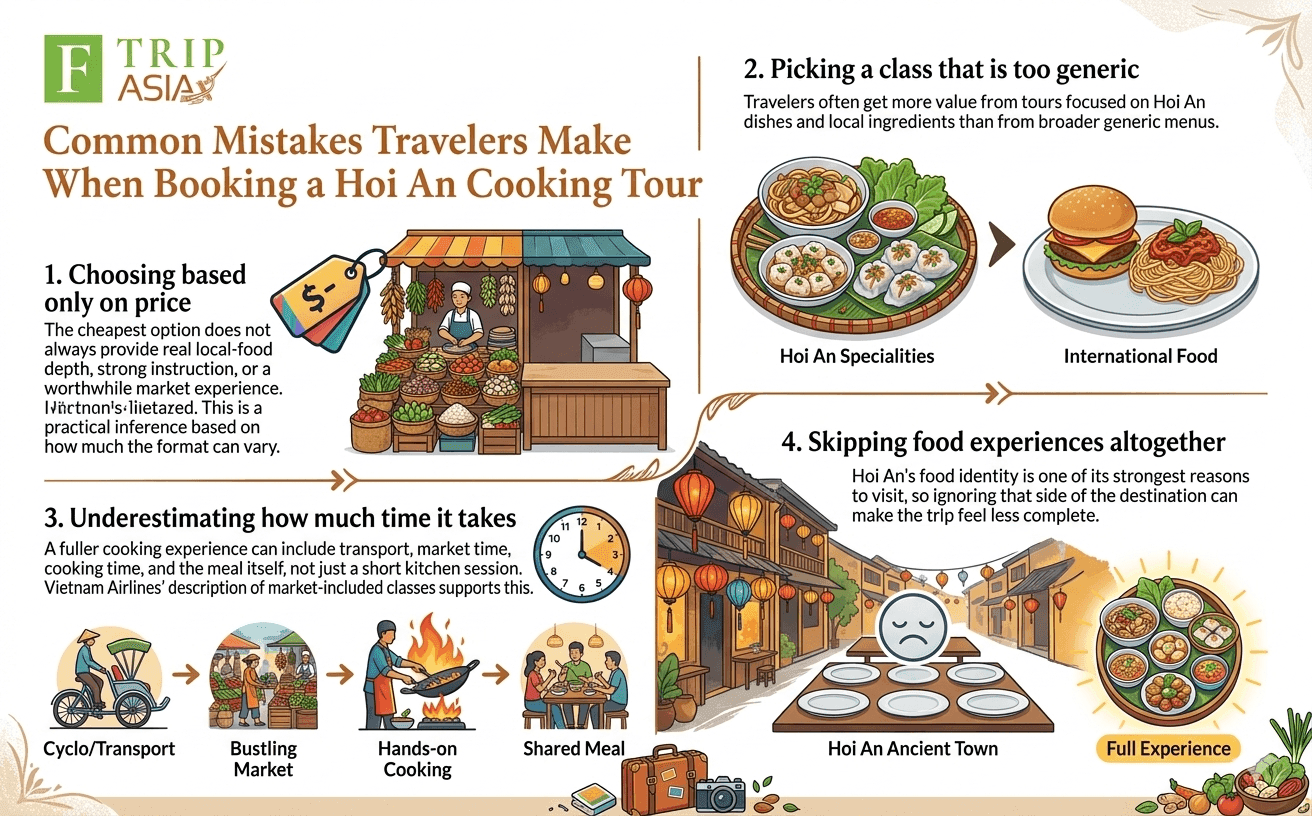
Choosing based only on price
The cheapest option does not always provide real local-food depth, strong instruction, or a worthwhile market experience. This is a practical inference based on how much the format can vary.
Picking a class that is too generic
Travelers often get more value from tours focused on Hoi An dishes and local ingredients than from broader generic menus.
Underestimating how much time it takes
A fuller cooking experience can include transport, market time, cooking time, and the meal itself, not just a short kitchen session. Vietnam Airlines’ description of market-included classes supports this.
Skipping food experiences altogether
Hoi An’s food identity is one of its strongest reasons to visit, so ignoring that side of the destination can make the trip feel less complete.
Why This Experience Matches Current Travel Trends
Travelers want local and hands-on experiences.
Cooking classes fit the growing demand for participation and cultural connection rather than passive tourism. That trend is reflected in how destination guides increasingly feature workshops and hands-on activities.
Food tourism is growing.
Travelers now see cuisine as part of destination identity, not just a side activity. Hoi An is a strong example of that shift because its signature dishes are promoted as central to the town’s appeal.
Experience-rich short activities are popular.
A cooking tour fits well into a short stay while still feeling meaningful and memorable. That makes it especially attractive for travelers with only one or two days in Hoi An. This is an inference based on the half-day format and the depth of the experience.
Why FtripAsia Is a Strong Choice for a Hoi An Food Experience
Completely customizable based on each client’s requests
FtripAsia can tailor the experience around hotels, destinations, luxury travel style, food preferences, sightseeing pace, and private or small-group design.
100% local people with 7+ years of experience
That local expertise matters in food experiences, where hosts, ingredients, and context shape the quality of the tour.
Experience with niche markets like Muslims and Judaism
This can be especially helpful for travelers with specific dining, cultural, or comfort requirements.
Unique tours that clients can’t find anywhere else.
Photography tours, more personal culinary routes, and less-generic local experiences can make a Hoi An trip feel more memorable than a standard group program.
Cooperation with lots of workshops and daily experiences, like cooking classes
That is a strong fit in Hoi An, where hands-on cultural experiences are among the destination’s biggest highlights.
High praises from tourists for enthusiastic, knowledgeable, and friendly attitude
For first-time travelers, that kind of support can be a major trust factor and can make the experience much smoother.
Frequently Asked Questions
Is a Hoi An cooking tour worth it?
Yes. For many travelers, it is one of the best ways to experience Hoi An beyond sightseeing because it combines food, culture, and hands-on learning in one activity.
What dishes do you learn in a Hoi An cooking class?
Menus vary, but common dishes include cao lầu, bánh xèo, spring rolls, and other local or family-style recipes depending on the class.
Do Hoi An cooking tours include market visits?
Many do. Vietnam Airlines specifically notes that many classes include a guided market visit before cooking.
Is a basket boat and cooking tour better than a standard cooking class?
Not necessarily better for everyone, but it can be more immersive for travelers who want a fuller local experience. This is an inference based on travel style and preference.
Are Hoi An cooking tours good for first-time visitors?
Yes. They are one of the easiest ways to understand local culture without needing specialist knowledge or a long trip.
Can cooking tours accommodate dietary needs?
Many can, but that depends on the host and format. Travelers with specific dietary or cultural needs should confirm this when booking. This is practical advice rather than a fact from one source.
What is the best time of day to join a Hoi An cooking tour?
Morning is often best for market-focused classes, while the afternoon works well for travelers combining the class with earlier sightseeing.
Conclusion
A Hoi An tropical cooking tour is one of the best ways to experience local food because it combines flavor, culture, and hands-on learning in one memorable activity. The best tours do more than teach recipes. They help travelers understand why Hoi An’s cuisine feels so distinctive, from ingredient choices to cultural history.
Travelers who want a smoother and more personalized Hoi An food experience can benefit from working with FtripAsia, whose local experts can tailor the journey around local cuisine, comfort, workshop style, and unique cultural add-ons.

Founder & Photography Guide
Specialties: Culture, landscape, portrait, hiking, active and adventurous tour
Besides my unlimited passion for traveling, a professional tour guide for over a decade, I have been taking photographs since sitting at Hanoi of the University of Culture in the early 2000s. Photography started as a hobby but it was seriously taken due to my work relations and my significant passion for the beauty of our world, especially in Southeast Asian parts such as Vietnam, Laos, Cambodia, and Myanmar.
Within a few years of taking photographs, my works began to be recognized by many reliable international publications such as AFAR Travel, The Times, and The Daily Telegraph newspaper. In addition, I continuously add to my growing profile by winning numerous major awards: 3rd Position of The Independent Photographer 2018, 1st Position of Amateur Photographer of the year 2018, Grand Prize Winner of the AFAR Travel Photography 2019, and a Gold Award of San Francisco Bay International Photography 2020.
I photograph a wide variety of subjects, from travel to landscapes to street scenes. I enjoy documenting the East’s rich cultural heritage and its land soaked in glorious sunrise or sunset light in remote and secluded spots. And, I am very happy to share my knowledge and experience with you. You can visit Luminousvietnamtour to explore tour!