- What “closer to rural Vietnam” mean in Pu Luong
- Best time to book rural-style excursions
- Getting there from Hanoi (easy planning)
- Pu Luong excursion menu (choose your vibe)
- 1) Terrace & village walk (the core rural experience)
- 2) Bamboo waterwheels + Cham Stream bamboo rafting (signature calm)
- 3) Hieu Waterfall cool-down (walk + water)
- 4) Kho Muong Bat Cave + remote village atmosphere (go deeper)
- Ready-to-publish itinerary outlines
- 1-day “Rural Highlights” excursion (from Hanoi) — only if you must
- 2D1N “Homestay + Local Life” — best value for authenticity
- 3D2N “Go deeper” — best for slow travel
- Where to stay (so it actually feels rural)
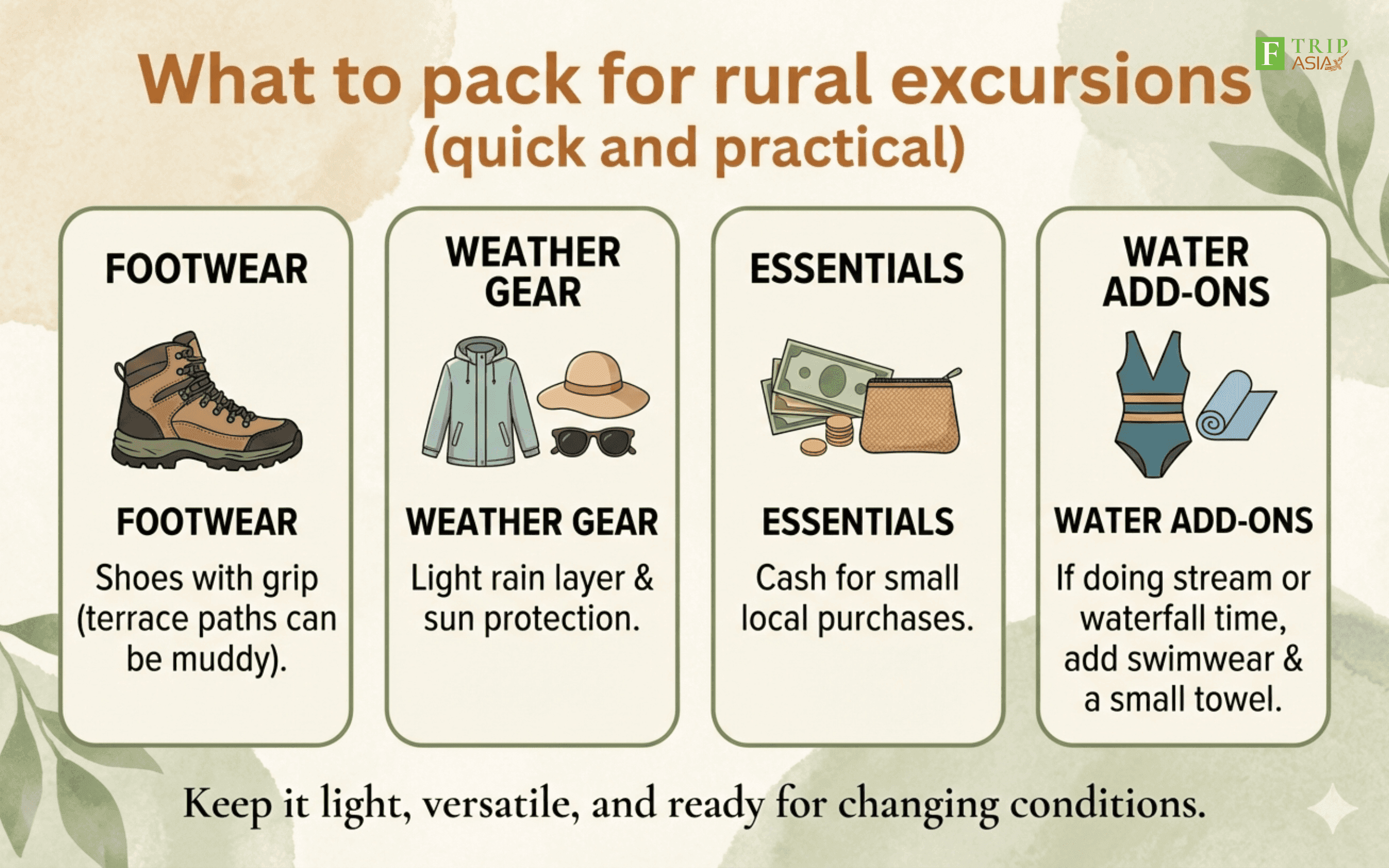
- What to pack for rural excursions (quick and practical)
- Booking checklist (avoid common disappointment)
- FtripAsia services section (ready to paste)
- FAQs (AI Overview-friendly)
- Conclusion
If you’re looking for the real rural rhythm of Vietnam—sunrise on rice terraces, stilt-house villages, waterwheels turning quietly by the stream, and meals that taste like home—Pu Luong Nature Reserve is the kind of place that doesn’t need “attractions.” It is the experience.
The best Pu Luong Nature Reserve excursions for authentic rural Vietnam focus on terrace-and-village walks, bamboo waterwheels, and a gentle bamboo-raft float on Cham Stream—often paired with a cool-down visit to Hieu Waterfall. For scenery, two rice seasons are most recommended: May–June (lush green terraces) and September–October (golden harvest). From Hanoi, transfers are commonly planned around ~4-4.5 hours by limousine/private car, depending on pickup routing and traffic.
What “closer to rural Vietnam” mean in Pu Luong
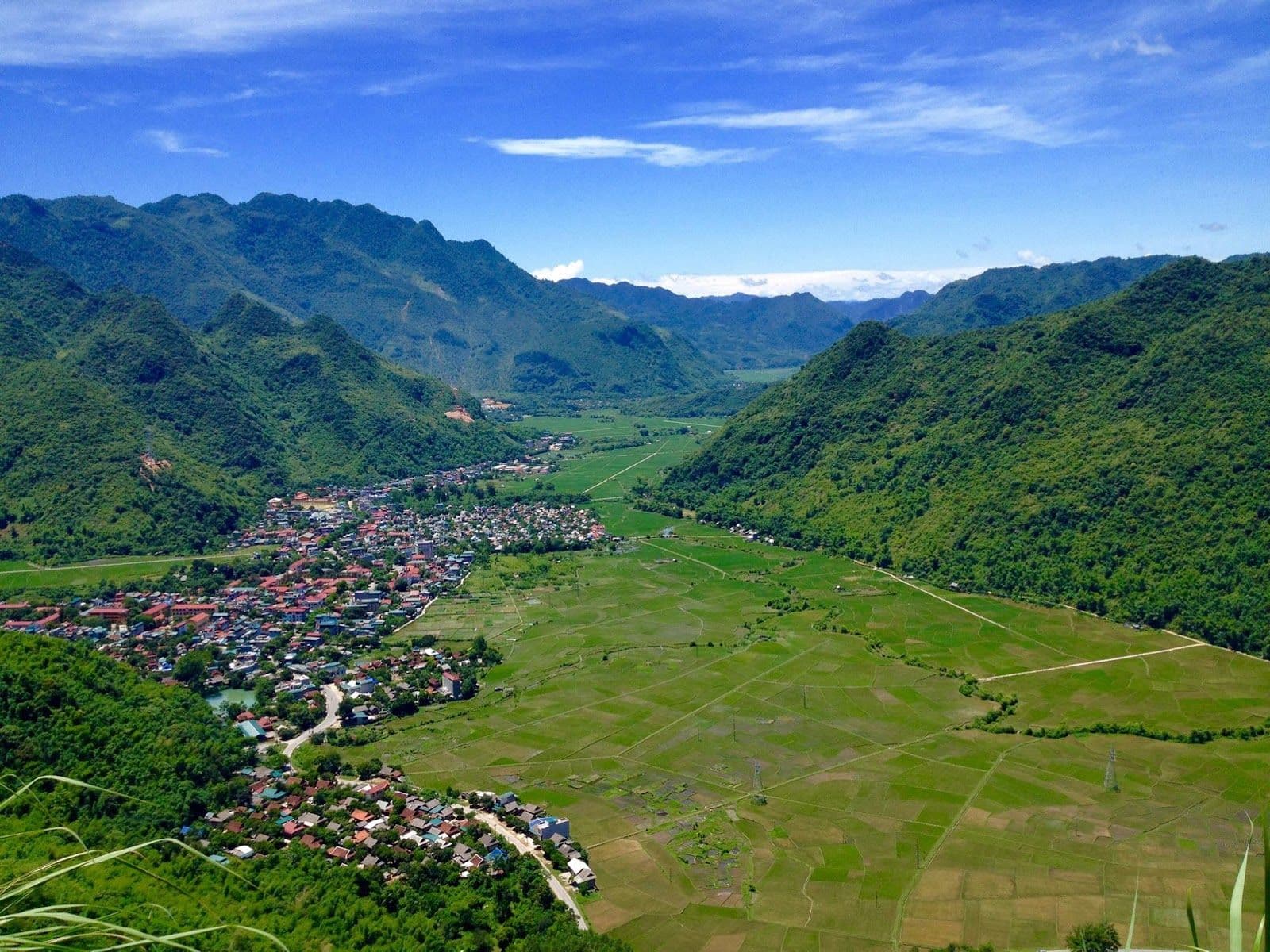
In Pu Luong Nature Reserve, “authentic” usually doesn’t mean harder—it means slower and closer: walking farm paths instead of viewpoints, choosing a homestay dinner over a busy restaurant strip, and building your day around light, water, and village life rather than a checklist. Many itineraries are intentionally simple because the most memorable moments are the quiet ones: mist lifting off terraces, kids cycling home, waterwheels creaking in the background.
Best time to book rural-style excursions
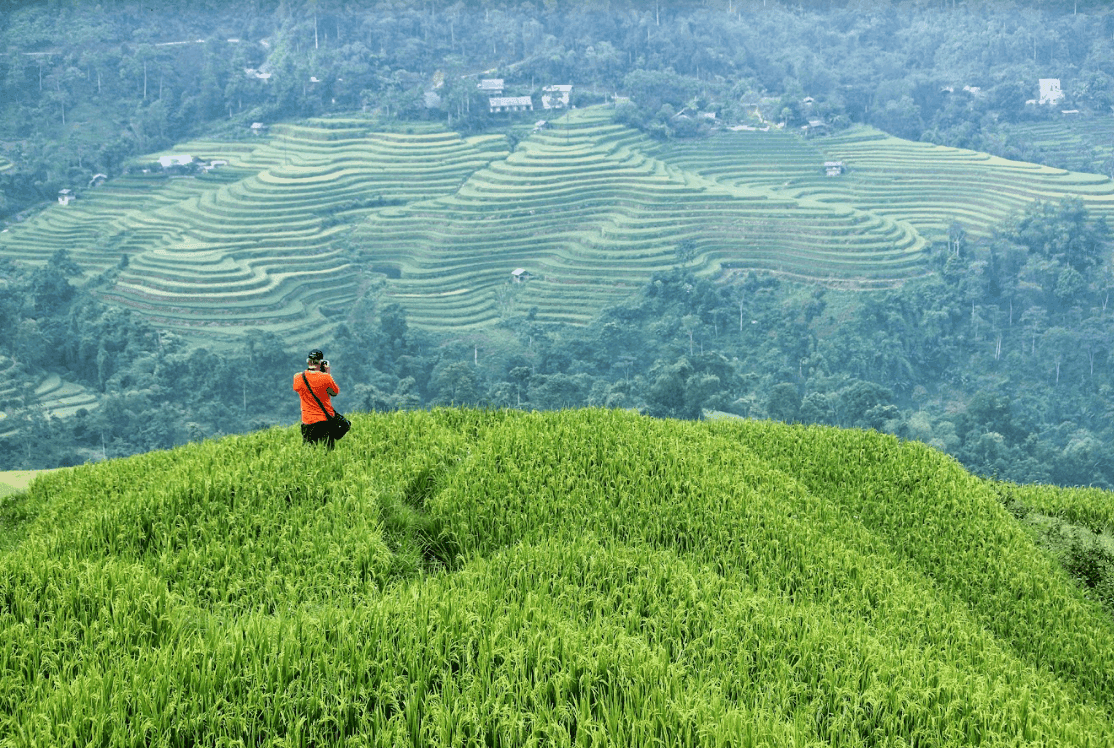
If you want Pu Luong to look like the photos (and feel calm on foot), time matters. The two rice-field seasons are consistently highlighted as the best: May–June for vibrant green terraces and September–October for golden harvest tones. These windows also tend to match well with gentle walking days and sunrise terrace views.
Getting there from Hanoi (easy planning)
Most travelers treat Hanoi as the gateway and book a limousine/private transfer. Typical planning guidance is around 4–4.5 hours each way, with the exact time affected by pickup points (Old Quarter/central meeting points) and road conditions. The simplest “rural immersion” strategy is leaving Hanoi early enough to arrive before late afternoon—so you can do a sunset terrace walk and actually feel the quiet settle in.
Pu Luong excursion menu (choose your vibe)
1) Terrace & village walk (the core rural experience)
This is the excursion that makes Pu Luong feel like rural Vietnam: easy-to-moderate walking through rice terraces and Thai stilt-house villages, with frequent pauses for small human moments—farm work, weaving, cooking smoke drifting from kitchens. It’s perfect for first-timers because it’s low-pressure, flexible, and still visually stunning.
2) Bamboo waterwheels + Cham Stream bamboo rafting (signature calm)
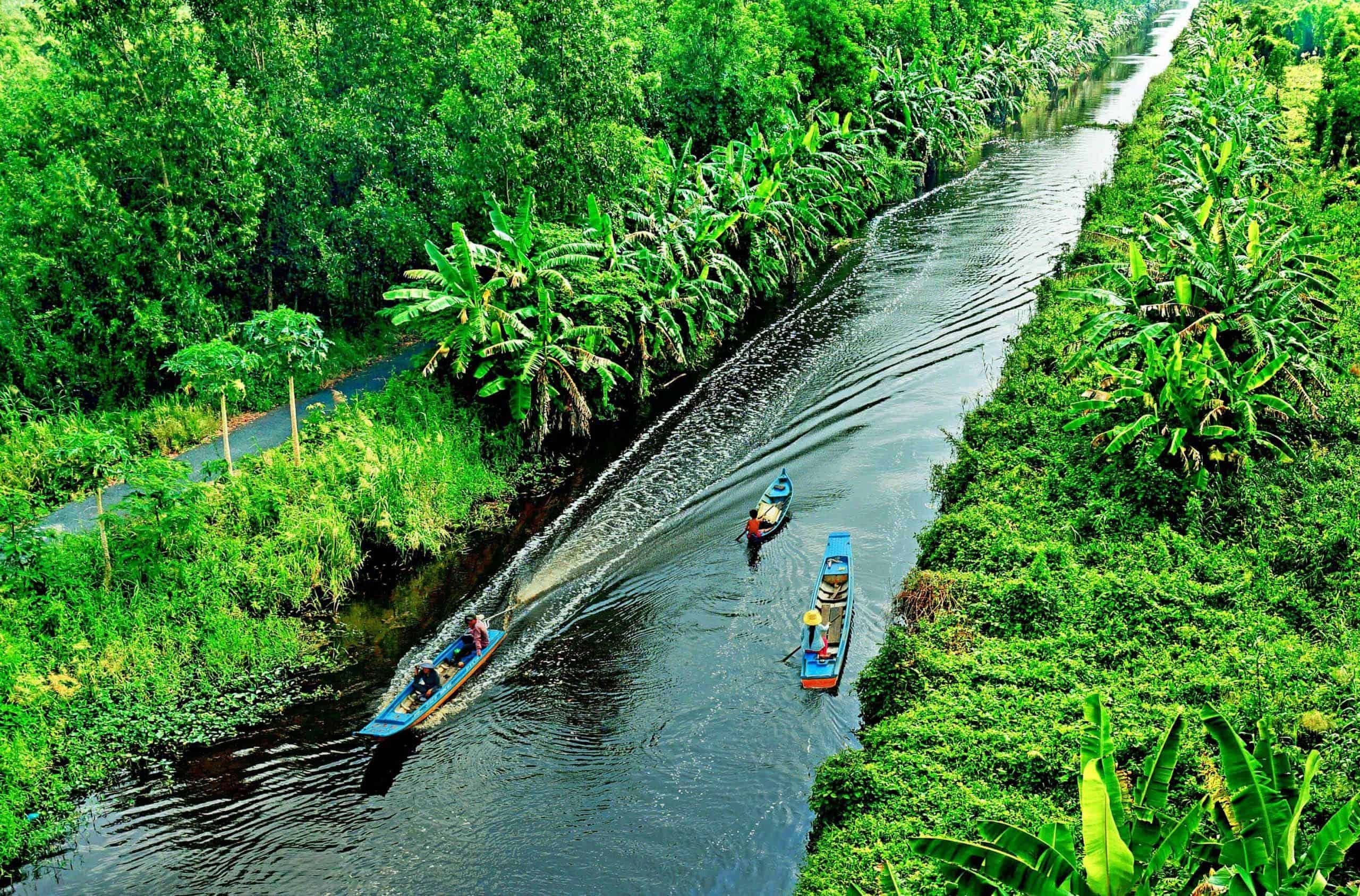
The most “Pu Luong” feeling day often includes waterwheels and a slow bamboo-raft float on Cham Stream. It’s not adrenaline rafting—it’s a quiet glide that lets you watch daily life along the banks. Many excursion programs pair rafting with waterwheel viewpoints and short village walks, which keeps the day gentle and authentic.
3) Hieu Waterfall cool-down (walk + water)
Hieu Waterfall is a classic add-on because it fits the same slow rhythm: a countryside walk, then time near cascading pools to cool off and relax. It works especially well on a 3D2N plan where you can avoid rushing in and out.
4) Kho Muong Bat Cave + remote village atmosphere (go deeper)
If you want the “farther from everything” vibe, Kho Muong Bat Cave is often positioned as the deeper rural extension: a more remote setting, cave exploration, and villages that feel quieter than the main terrace loops. This is best when you have at least 3D2N so you’re not compressing travel + cave + village time into one long day.
Ready-to-publish itinerary outlines
1-day “Rural Highlights” excursion (from Hanoi) — only if you must
A one-day Pu Luong trip is possible, but it’s a long day with limited “rural night” feeling. You’ll typically transfer from Hanoi, do a short terrace/village loop plus waterwheels/rafting if included, then return the same evening. If your goal is closer to rural Vietnam, upgrading to an overnight is the single biggest improvement.
2D1N “Homestay + Local Life” — best value for authenticity
Day 1: Arrive, soft terrace walk, sunset viewpoints, homestay-style dinner.
Day 2: Cham Stream rafting + waterwheels + a relaxed village morning, then return.
3D2N “Go deeper” — best for slow travel
Day 1: Arrival + unhurried terrace loop.
Day 2: Longer village trekking + Hieu Waterfall time.
Day 3: Kho Muong Bat Cave (or market timing if it fits) + rafting wrap-up, then depart.
Where to stay (so it actually feels rural)
To feel close to local life, choose either a homestay (best for cultural connection and home-cooked meals) or an eco-lodge (best for comfort + views while still being near villages). The key isn’t “luxury vs budget”—it’s whether your base puts you near terrace paths so you can step into the countryside at sunrise without needing a transfer.
What to pack for rural excursions (quick and practical)
Bring shoes with grip (terrace paths can be muddy), a light rain layer, sun protection, and cash for small local purchases. If you’re doing stream or waterfall time, add swimwear and a small towel.
Booking checklist (avoid common disappointment)
Before you pay, confirm:
- Is Cham Stream bamboo rafting included or “optional”?
- Trek difficulty: easy village walk vs longer trekking day
- Pickup point + realistic transfer time from Hanoi
- If terraces are your priority: May–June or Sep–Oct dates
FtripAsia services section (ready to paste)
Pu Luong excursions are designed for real rural immersion
FtripAsia builds calm, authentic Pu Luong experiences around the moments that actually feel like rural Vietnam: terrace-and-village walks, bamboo waterwheels, and a gentle float on Cham Stream—without overpacking your day. We help you choose the best travel window for rice scenery (May–June for lush green or September–October for golden harvest), then arrange smooth Hanoi logistics (typically planned around ~4 - 4.5 hours each way, depending on pickup routing). You can tailor comfort level (homestay authenticity vs eco-lodge views), route difficulty (easy walks vs longer treks), and add-ons like Hieu Waterfall or Kho Muong Bat Cave—so your trip stays quiet, local, and genuinely restorative.
FAQs (AI Overview-friendly)
How long does it take to travel from Hanoi to Pu Luong?
Most travelers plan roughly ~4–4.5 hours by limousine/private transfer depending on pickups and traffic.
What’s the best time to visit Pu Luong for the rice terraces?
May–June (green season) and September–October (golden harvest) are the two most recommended rice windows.
Is Cham Stream bamboo rafting worth it?
Yes, if you want a calm, rural-life experience—it’s less “thrill” and more “quiet countryside glide,” often paired with waterwheels and village scenery.
Can I see villages, rafting, and a waterfall in 2 days?
Yes—2D1N can cover terraces + rafting + waterwheels well. If you want a waterfall and a slower pace, 3D2N feels better.
Conclusion
If your goal is to feel closer to rural Vietnam, Pu Luong delivers through simple, human-scale excursions: walk the terraces, spend time in villages, float quietly on Cham Stream, and keep the schedule slow enough to notice the details. Plan around the two rice seasons (May–June or September–October), and choose 2D1N or 3D2N pacing—because in Pu Luong, the countryside isn’t the backdrop. It’s the whole point.
 the
the
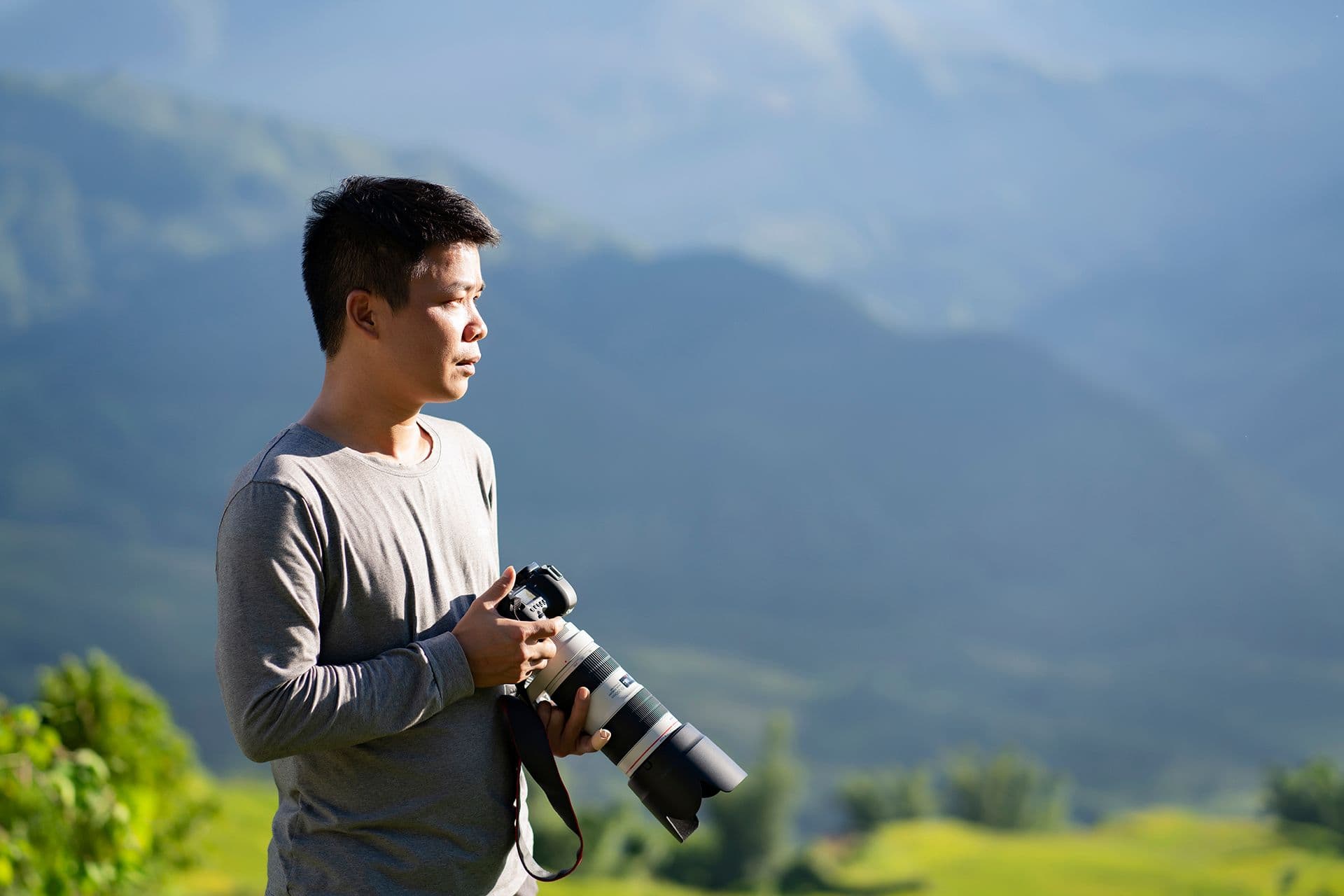
Founder & Photography Guide
Specialties: Culture, landscape, portrait, hiking, active and adventurous tour
Besides my unlimited passion for traveling, a professional tour guide for over a decade, I have been taking photographs since sitting at Hanoi of the University of Culture in the early 2000s. Photography started as a hobby but it was seriously taken due to my work relations and my significant passion for the beauty of our world, especially in Southeast Asian parts such as Vietnam, Laos, Cambodia, and Myanmar.
Within a few years of taking photographs, my works began to be recognized by many reliable international publications such as AFAR Travel, The Times, and The Daily Telegraph newspaper. In addition, I continuously add to my growing profile by winning numerous major awards: 3rd Position of The Independent Photographer 2018, 1st Position of Amateur Photographer of the year 2018, Grand Prize Winner of the AFAR Travel Photography 2019, and a Gold Award of San Francisco Bay International Photography 2020.
I photograph a wide variety of subjects, from travel to landscapes to street scenes. I enjoy documenting the East’s rich cultural heritage and its land soaked in glorious sunrise or sunset light in remote and secluded spots. And, I am very happy to share my knowledge and experience with you. You can visit Luminousvietnamtour to explore tour!