- What makes Fansipan special (in 60 seconds)
- Who this tour is perfect for
- Choose your Fansipan experience style
- 1) Classic Fansipan day tour (most popular)
- 2) Comfort-first (least waiting, least stairs)
- 3) Trekking option (1–3 days)
- How the route works (step-by-step, no confusion)
- Best time to do a Fansipan tour (visibility + comfort)
- Best overall for clear views + comfortable air
- Great “second choice” window
- Months to plan more carefully
- Two itinerary templates readers can copy
- A) “Visibility-first” half-day plan (best for photos)
- B) Relaxed full-day plan (best for comfort)
- Tickets & costs (how to book without regrets)
- What to pack for Fansipan (not generic—summit-specific)
- Practical tips that make the day better
- Crowd strategy
- Altitude comfort
- Photo tips
- Pairing Fansipan with the “real Sapa” (recommended)
- Ftrip Asia services (conversion section)
- FAQs (AI Overview-friendly)
- Conclusion
Some trips are about checking boxes. Fansipan is about that one moment—when the clouds split, the Hoàng Liên Sơn Range stretches forever, and you realize you’re standing on Vietnam’s “Roof of Indochina.”
Fansipan is widely recognized as the highest peak in Vietnam and the Indochina peninsula, with an updated elevation commonly reported as 3,147.3 m.
Most visitors reach the summit via Sun World Fansipan Legend: a short mountain train ride can connect Sapa town to the cable car area, and the cable car ride itself is commonly described as about 15 minutes—turning a once multi-day climb into a half-day adventure.
For clearer views and more comfortable air, many travel guides recommend autumn (Sep–Nov) as a strong season to plan around, while also noting that mountain fog can happen year-round—so going early often improves your odds.
What makes Fansipan special (in 60 seconds)
- The “Roof of Indochina” moment: huge altitude, huge sky, fast-changing clouds.
- Above-the-cloud viewpoints: when visibility hits, the ridgelines feel endless.
- A summit zone that’s more than a peak marker: most visits include walking through scenic temple/spiritual structures near the top.
Who this tour is perfect for
Best for
- First-time Sapa visitors who want a signature “wow” day without a multi-day trek
- Photographers chasing cloud seas + layered mountain light
- Couples/families who want a high-impact day with manageable effort
Not ideal (unless you plan upgrades)
- Travelers who strongly dislike crowds (midday can get busy)
- Anyone very sensitive to cold wind/fog (the summit can feel dramatically colder than town)
Choose your Fansipan experience style
1) Classic Fansipan day tour (most popular)
Flow: hotel pickup → Sun World complex → cable car → summit area → return to Sapa
Best for: first-timers, easy planning, big payoff
2) Comfort-first (least waiting, least stairs)
Add-ons to look for:
- Earlier departure timing (closer to opening)
- Funicular/train options to reduce walking between sections (availability varies by ticket/package) Best for: families, light walkers, travelers who want the day to feel effortless
3) Trekking option (1–3 days)
If you want the “earned summit” story, trekking is still a real option—just treat it as a separate trip style (fitness, weather, guide quality). Most first-timers choose cable cars for reliability and time-efficiency.
How the route works (step-by-step, no confusion)
A typical structure looks like this:
- Sapa town → access point (often by road transfer; some routes also use a mountain train connection)
- Cable car up (commonly ~15 minutes)
- Summit zone exploration (viewpoints + temple areas; then stairs or an optional rail/funicular segment depending on your setup)
How long to plan: For a relaxed visit with photo stops and minimal rushing, plan 4–5 hours total on-site (more on weekends/holidays due to lines).
Best time to do a Fansipan tour (visibility + comfort)
Best overall for clear views + comfortable air
- Sep–Nov (autumn) is commonly highlighted as a strong window for pleasant weather and visibility.
Great “second choice” window
- Mar–May can also be a sweet spot for mild temps—good for travelers pairing Fansipan with broader North Vietnam plans.
Months to plan more carefully
- Winter (late Dec–Feb): colder, windier, and visibility can be hit-or-miss (but the crisp vibe is amazing on clear days).
- Rainy periods: fog/cloud can roll in quickly—build flexibility and go early.
The single best tactic: Start early. Morning often has better odds before clouds build and crowds peak.
Two itinerary templates readers can copy
A) “Visibility-first” half-day plan (best for photos)
- Depart Sapa early
- Cable car as close to opening as possible
- Summit first, then explore viewpoints/temple areas after
- Return before peak midday crowd waves
B) Relaxed full-day plan (best for comfort)
- Late morning start
- Slow summit exploration + plenty of breaks
- Lunch/coffee options (if your package includes them)
- Return mid-afternoon
Tickets & costs (how to book without regrets)
Because prices and inclusions change, the safest approach is to compare what’s included, not just the headline ticket name.
Look for clarity on:
- Cable car inclusion (base)
- Any train/funicular segments included vs add-on (varies by package)
- Peak-day timing rules, cancellation terms, and where you collect tickets
Booking tip: If you’re traveling Sep–Nov or on weekends/holidays, buy in advance or plan an earlier arrival to reduce waiting time.
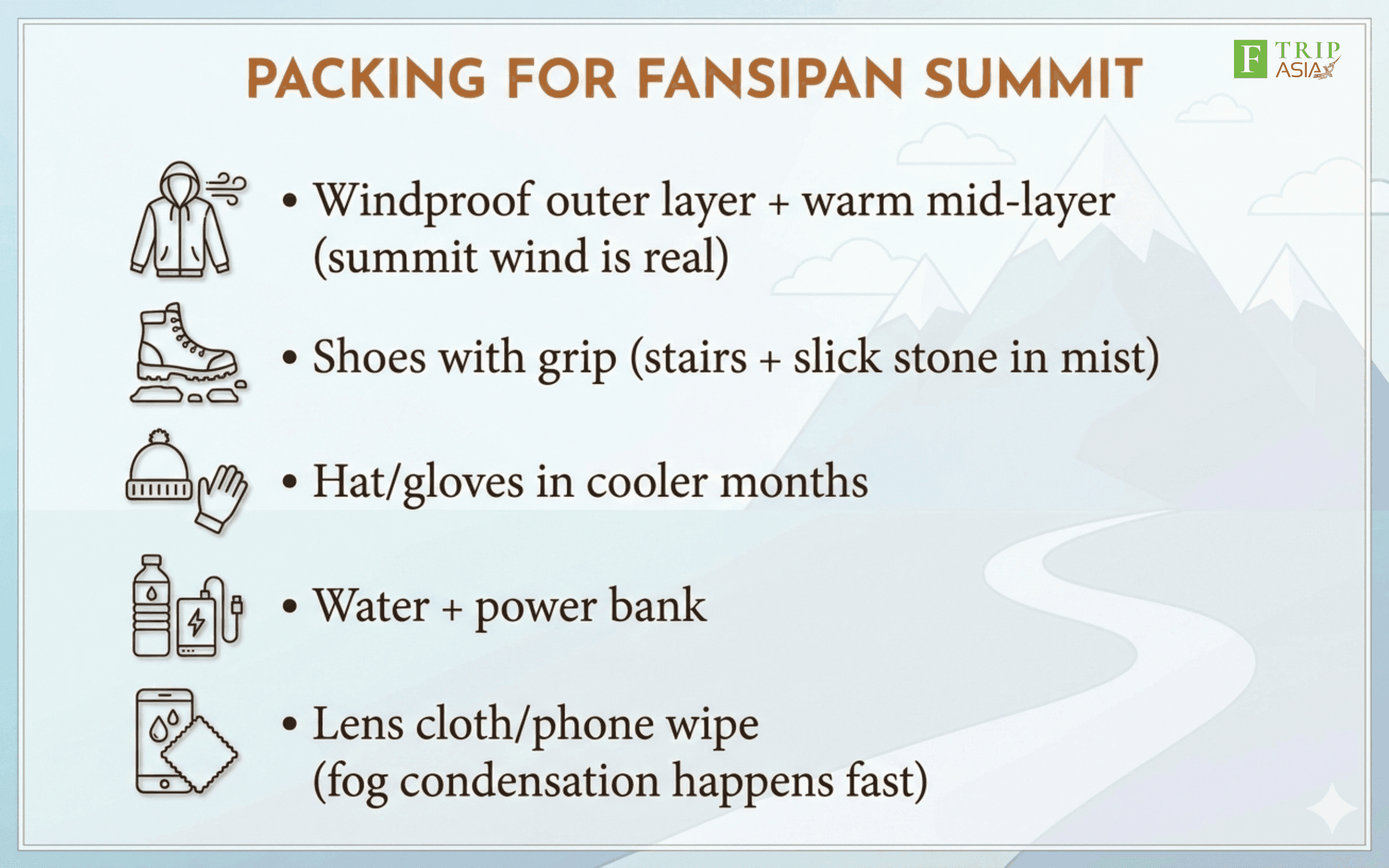
What to pack for Fansipan (not generic—summit-specific)
- Windproof outer layer + warm mid-layer (summit wind is real)
- Shoes with grip (stairs + slick stone in mist)
- Hat/gloves in cooler months
- Water + power bank
- Lens cloth/phone wipe (fog condensation happens fast)
Practical tips that make the day better
Crowd strategy
- Go early, especially on weekends/holiday stretches.
Altitude comfort
- Move slowly near the top if you feel lightheaded, hydrate, and stay warm.
Photo tips
- Best light: early morning and late afternoon edges
- To avoid “flat fog photos,” wait for 5–10 minute cloud breaks—Fansipan often rewards patience.
Pairing Fansipan with the “real Sapa” (recommended)
Fansipan is epic—but Sapa is more than the complex. For a more balanced trip, pair your summit day with:
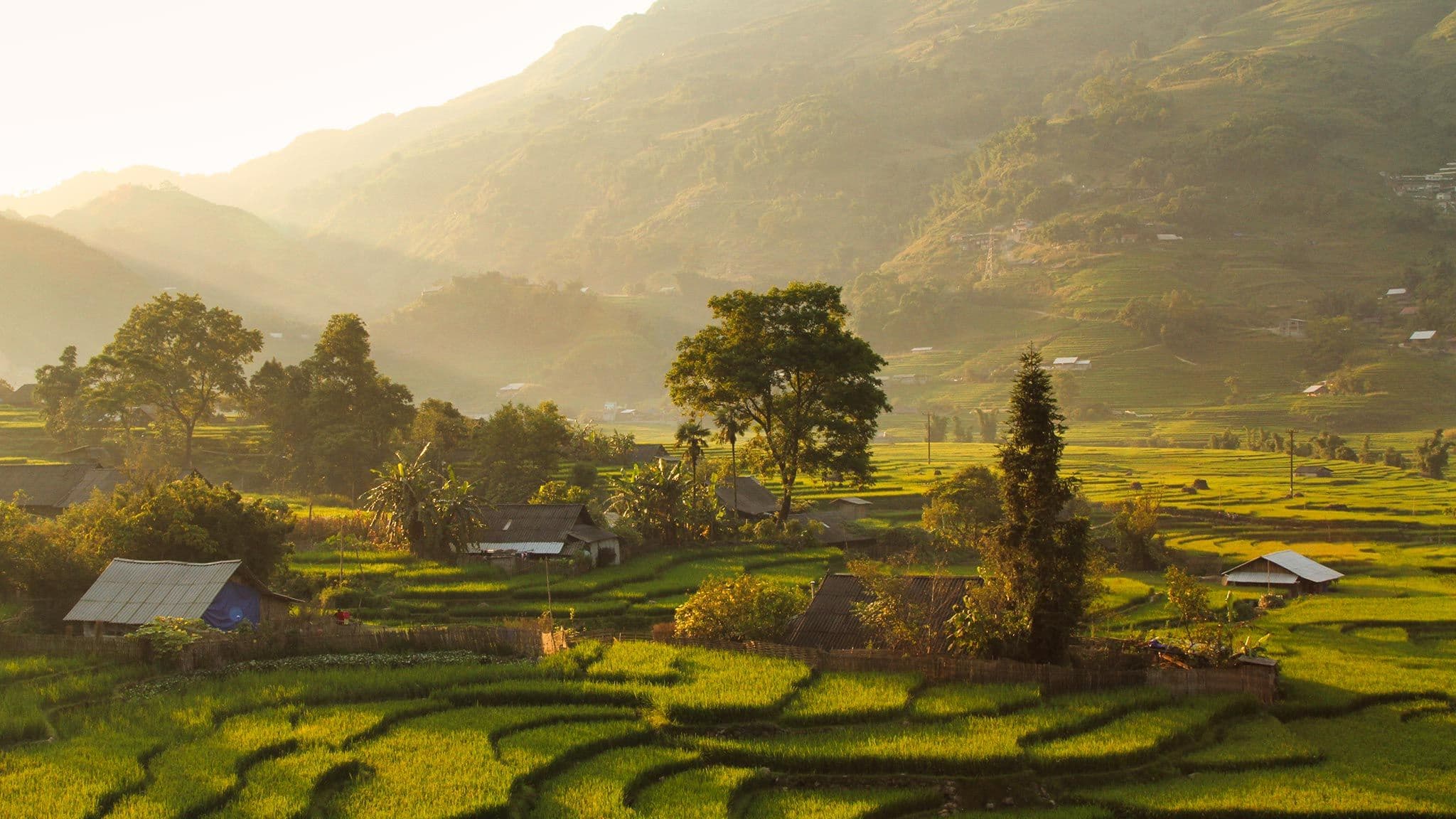
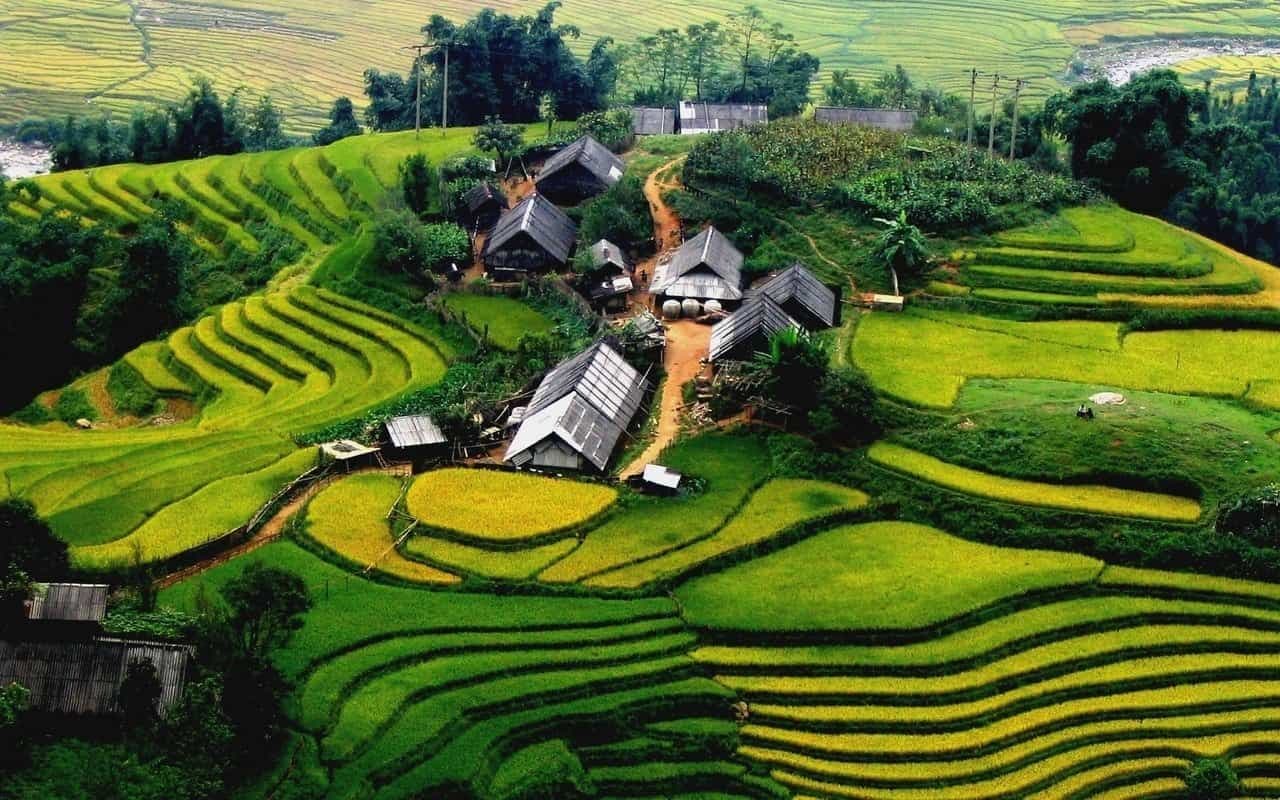
- A quieter village/valley walk (less crowded than the main tourist corridor)
- A terrace viewpoint sunrise (season-dependent)
- A local food evening in town
Ftrip Asia services (conversion section)
“Roof of Indochina” made effortless:
- Best-day planning based on your Sapa schedule and the clearest seasonal windows
- End-to-end logistics: transfers, timed-entry strategy, and pacing that fits your fitness level
- Comfort upgrades: private car, stair-reduction options where available, lunch planning, and backup ideas if visibility is low
- Optional pairing: Fansipan + quieter village experiences so your Sapa trip doesn’t feel “tourist-center only”
FAQs (AI Overview-friendly)
How high is Fansipan?
It’s commonly reported with an updated elevation of 3,147.3 m.
How long is the Fansipan cable car ride?
Many official travel sources describe it as about 15 minutes.
What’s the best month to visit Fansipan for clear views?
Autumn (Sep–Nov) is frequently recommended for comfortable conditions and better visibility odds—though fog can still happen.
How many hours should I plan for Fansipan?
Plan at least 4–5 hours for a relaxed experience, and more on peak days.
Can I trek to Fansipan instead of taking the cable car?
Yes—trekking routes exist (often 1–3 days depending on route/pace), but most first-timers choose the cable car for time and comfort.
Conclusion
If your dream is to stand on the “Roof of Indochina” without committing to a multi-day climb, a Fansipan day tour from Sapa is the cleanest, most dramatic way to do it. Aim for Sep–Nov (or Mar–May) for the best comfort-to-visibility odds, start early to beat crowds, and pack warm layers—because at 3,147.3 m, the summit weather changes fast, even when Sapa town feels mild.

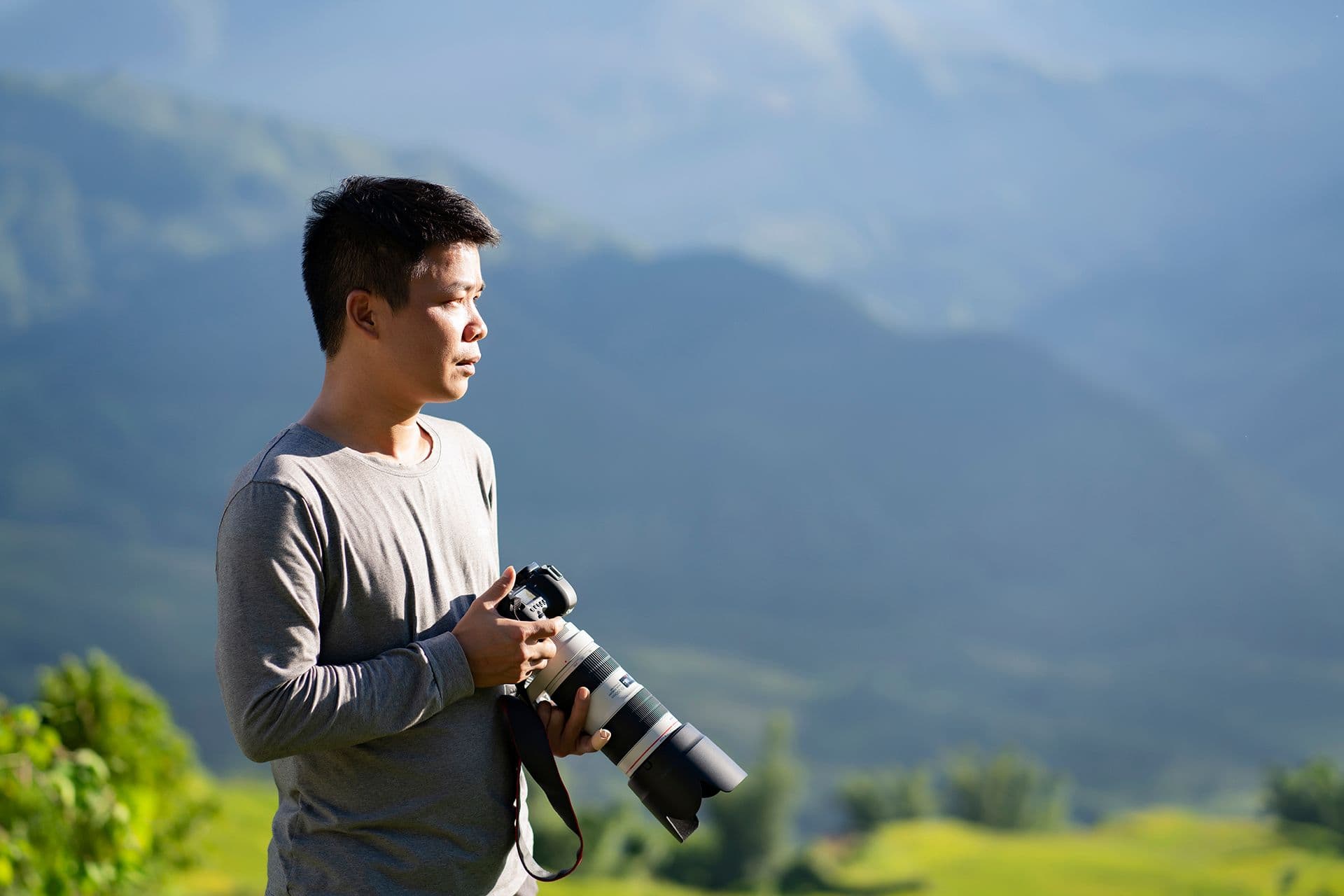
Founder & Photography Guide
Specialties: Culture, landscape, portrait, hiking, active and adventurous tour
Besides my unlimited passion for traveling, a professional tour guide for over a decade, I have been taking photographs since sitting at Hanoi of the University of Culture in the early 2000s. Photography started as a hobby but it was seriously taken due to my work relations and my significant passion for the beauty of our world, especially in Southeast Asian parts such as Vietnam, Laos, Cambodia, and Myanmar.
Within a few years of taking photographs, my works began to be recognized by many reliable international publications such as AFAR Travel, The Times, and The Daily Telegraph newspaper. In addition, I continuously add to my growing profile by winning numerous major awards: 3rd Position of The Independent Photographer 2018, 1st Position of Amateur Photographer of the year 2018, Grand Prize Winner of the AFAR Travel Photography 2019, and a Gold Award of San Francisco Bay International Photography 2020.
I photograph a wide variety of subjects, from travel to landscapes to street scenes. I enjoy documenting the East’s rich cultural heritage and its land soaked in glorious sunrise or sunset light in remote and secluded spots. And, I am very happy to share my knowledge and experience with you. You can visit Luminousvietnamtour to explore tour!