- Why Sapa feels like a living painting
- Best time to see Sapa at its most “painted”
- The “living painting” must-do list
- Terrace valley day (Muong Hoa vibes)
- Fansipan: the “above-the-clouds” scene
- O Quy Ho Pass viewpoint (big ridge drama)
- Practical planning for first-timers
- How many days you need
- Getting to Sapa from Hanoi
- Where to stay for the “painting effect”
- Photography-friendly tips (that actually help)
- Sample itineraries you can copy-paste
- 2D1N “Living Painting Highlights”
- 3D2N “Slow Landscape”
- FtripAsia services section
- FAQs
- Conclusion
Sapa doesn’t just look beautiful—it moves. Mist drifts across terraced steps, sunlight repaints the valley every hour, and village paths stitch the mountainside together like brushstrokes. If you want North Vietnam’s scenery to feel alive (not static), Sapa is the place where the landscape changes faster than your camera roll.
Sapa’s “living painting” effect comes from three signature scenes: rice terraces, cloud-and-mountain viewpoints, and Fansipan’s “above the clouds” experience. For the most photogenic terraces, Vietnam’s official tourism site recommends mid-August to early September for Sapa, when skies are often clearer and rice fields are at peak beauty.
For a first visit, plan 2–3 days: one terrace-and-village day plus one high-viewpoint day (Fansipan or O Quy Ho Pass). Getting to Sapa from Hanoi by bus takes 6 hours, with train options via Lao Cai plus a road transfer to Sapa.
Why Sapa feels like a living painting
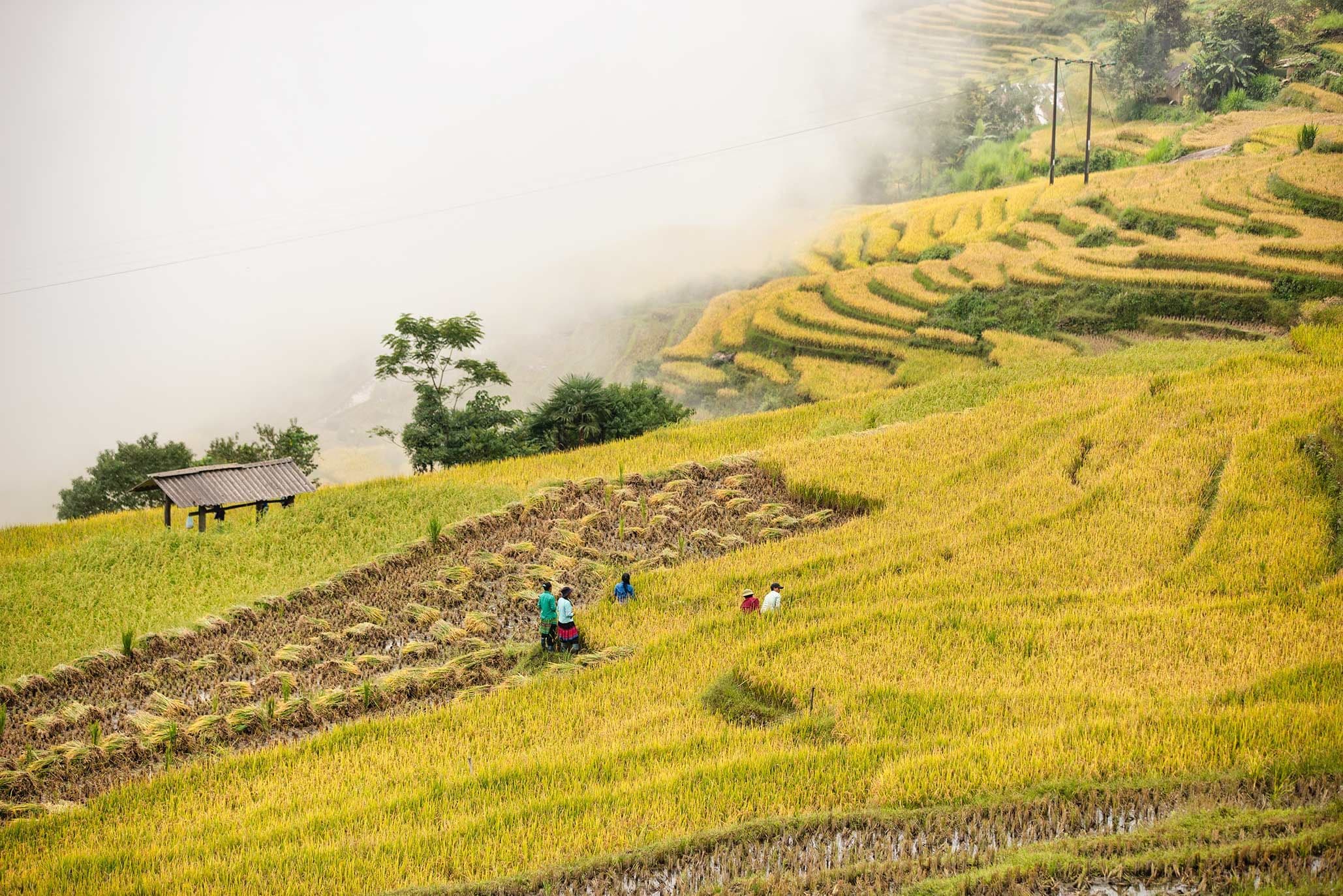
Sapa’s beauty isn’t one “wow viewpoint”—it’s the way the valley constantly shifts. Terraces curve like contour lines, but the real magic is the motion: fog rolling in and out, shadows sliding across fields, and sudden sunbeams turning greens into gold. That’s why Sapa rewards slow travel. When you give it even one unhurried morning, the landscape starts to feel like a scene being painted in real time.
What makes the scene feel layered is the natural composition: terrace curves in the foreground, village life in the middle distance, and the Hoàng Liên Sơn ridgelines in the background. Even on cloudy days, Sapa doesn’t disappoint—mist adds depth and drama, and the valley becomes softer, more cinematic, and (ironically) more “painted.”

Best time to see Sapa at its most “painted”
If you’re chasing the most iconic terrace visuals, Vietnam’s official tourism site points to mid-August to early September as Sapa’s peak window—often clearer skies and terraces looking their best. That period can deliver the classic look: layered fields, clean ridgelines, and high contrast between terraces and mountains.
If your priority is mood over postcard perfection, consider shoulder periods when misty mornings are common. You may trade some “golden terrace” intensity for atmosphere—soft light, fog ribbons, and that dreamy watercolor look Sapa does so well.
The “living painting” must-do list
Terrace valley day (Muong Hoa vibes)
Your most important Sapa day is the one spent in the valley, not just in town. Choose an easy-to-moderate terrace walk with village stops and unhurried viewpoint pauses. The goal isn’t distance—it’s letting the scenery change around you. Sunrise and late afternoon are the most rewarding times, when the light rakes across terrace curves and the valley looks dimensional.
Fansipan: the “above-the-clouds” scene
Fansipan is Sapa’s dramatic contrast shot: you leave the terrace world and rise into a colder, cloud-level viewpoint zone. On a clear day, it’s a wide-open mountain panorama. On a foggy day, it’s a moody “sea of clouds” experience. Either way, it gives you the second half of the painting: Sapa from above, with scale and altitude.
O Quy Ho Pass viewpoint (big ridge drama)
If you want sweeping mountain perspective without committing a full day to trekking, O Quy Ho Pass is a classic. The “Heaven Gate” viewpoint area sits at roughly ~2,035 meters altitude, which explains the colder air and dramatic cloud behavior. It’s one of the easiest ways to get that layered-ridges, cloud-sea look—especially in the early morning.
Practical planning for first-timers
How many days you need
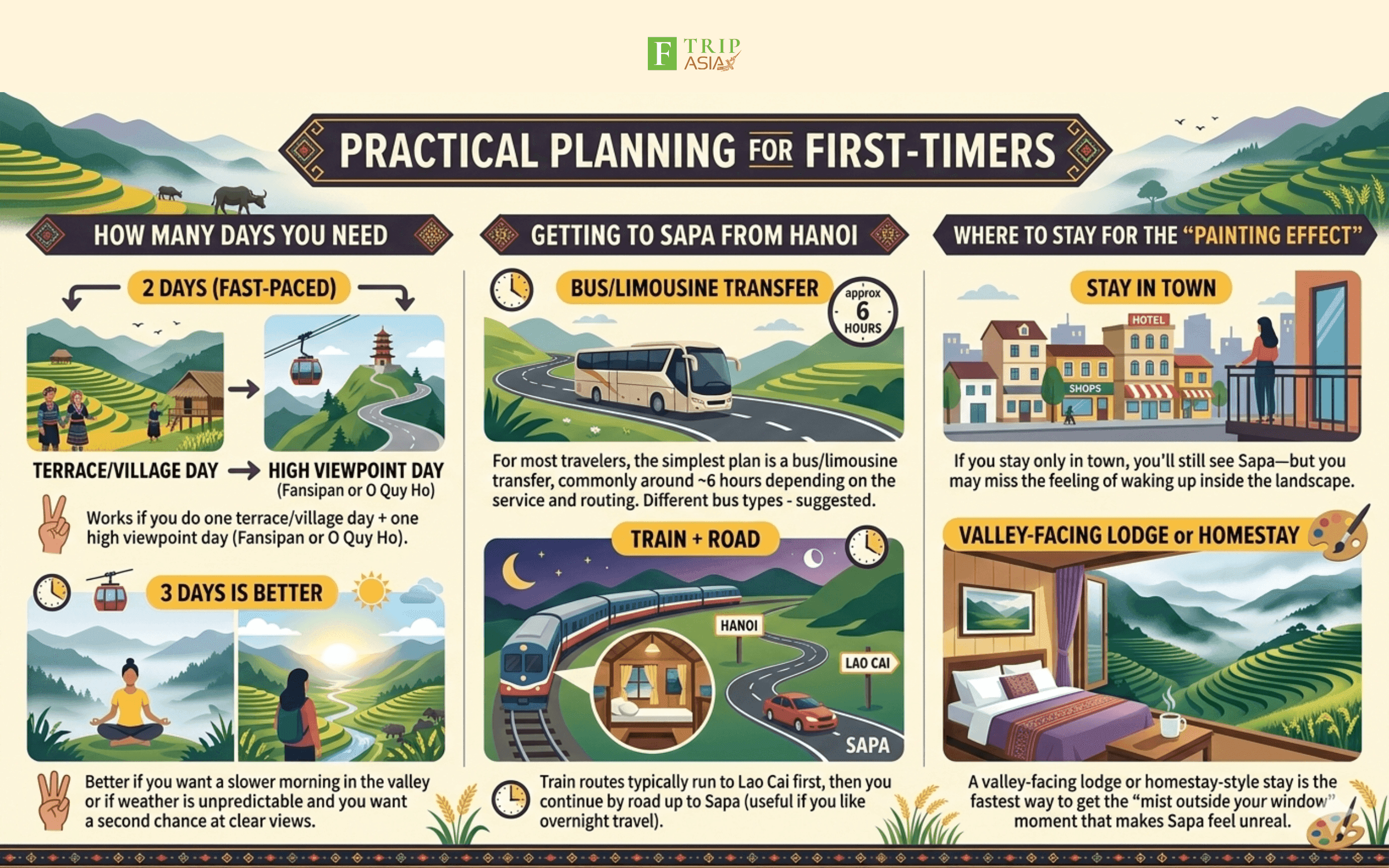
2 days works if you do one terrace/village day + one high viewpoint day (Fansipan or O Quy Ho). 3 days is better if you want a slower morning in the valley or if weather is unpredictable and you want a second chance at clear views.
Getting to Sapa from Hanoi
For most travelers, the simplest plan is a bus/limousine transfer, commonly around ~6 hours depending on the service and routing. Train routes typically run to Lao Cai first, then you continue by road up to Sapa (useful if you like overnight travel).
Where to stay for the “painting effect”
If you stay only in town, you’ll still see Sapa—but you may miss the feeling of waking up inside the landscape. A valley-facing lodge or homestay-style stay is the fastest way to get the “mist outside your window” moment that makes Sapa feel unreal.
Photography-friendly tips (that actually help)
Sapa photographs best when you plan around light rather than attractions. Aim for sunrise for mist and soft contrast, and late afternoon for warm highlights on terrace curves. Bring shoes with grip—paths can be slick—and keep a light rain layer handy because weather can flip quickly. If you want instant composition prompts, look for terrace S-curves, layered ridgelines from higher viewpoints, and small “human scale” details like footpaths, bridges, and farmers at work.
Sample itineraries you can copy-paste
2D1N “Living Painting Highlights”
Arrive and spend your first afternoon in the terrace valley with a gentle village walk, then take a sunset viewpoint moment without rushing dinner. The next morning, go early for your “above the clouds” shot—Fansipan or O Quy Ho—then depart after lunch.
3D2N “Slow Landscape”
Use Day 1 as a soft landing: golden-hour terrace time and an early night. Dedicate Day 2 to a longer valley experience with plenty of stops. Day 3 is for Fansipan or a pass viewpoint, timed early so you have the best odds of clear layers.
FtripAsia services section
If you want Sapa to feel like a living painting—not a rushed checklist—FtripAsia designs the trip around light, season, and pacing. We plan your dates around the most photogenic terrace windows (Vietnam Tourism highlights mid-August to early September for Sapa’s peak terrace scenery), build a valley day that prioritizes the best sunrise/afternoon timing, and add one “above the clouds” day via Fansipan or O Quy Ho for the full mountains-and-mist contrast.
We also handle transport planning from Hanoi (bus/limousine commonly ~6 hours) and match stays to your style—town convenience or valley immersion—so you spend less time coordinating and more time inside the landscape.
FAQs
What’s the best time to see Sapa’s rice terraces?
Vietnam’s official tourism site highlights mid-August to early September as an ideal window for Sapa’s terraces.
How long does it take to travel from Hanoi to Sapa?
Many bus routes are commonly cited at around ~6 hours (service-dependent).
Is Fansipan worth it for first-timers?
Yes if you want the “above the clouds” contrast—especially when the weather cooperates.
Where can I get big viewpoint photos without a long trek?
O Quy Ho Pass is a popular option, with a high point around ~2,035 meters near the Heaven Gate viewpoint area.
Conclusion
Sapa feels like a living painting because it refuses to stay still—terraces shift with the seasons, mist reshapes the valley hour by hour, and high viewpoints reveal new layers every time clouds open. Plan around peak terrace timing, give yourself 2–3 days, and pair one slow valley day with one “above the clouds” day. That’s how Sapa turns from “a scenic place” into a landscape you remember like a moving image.

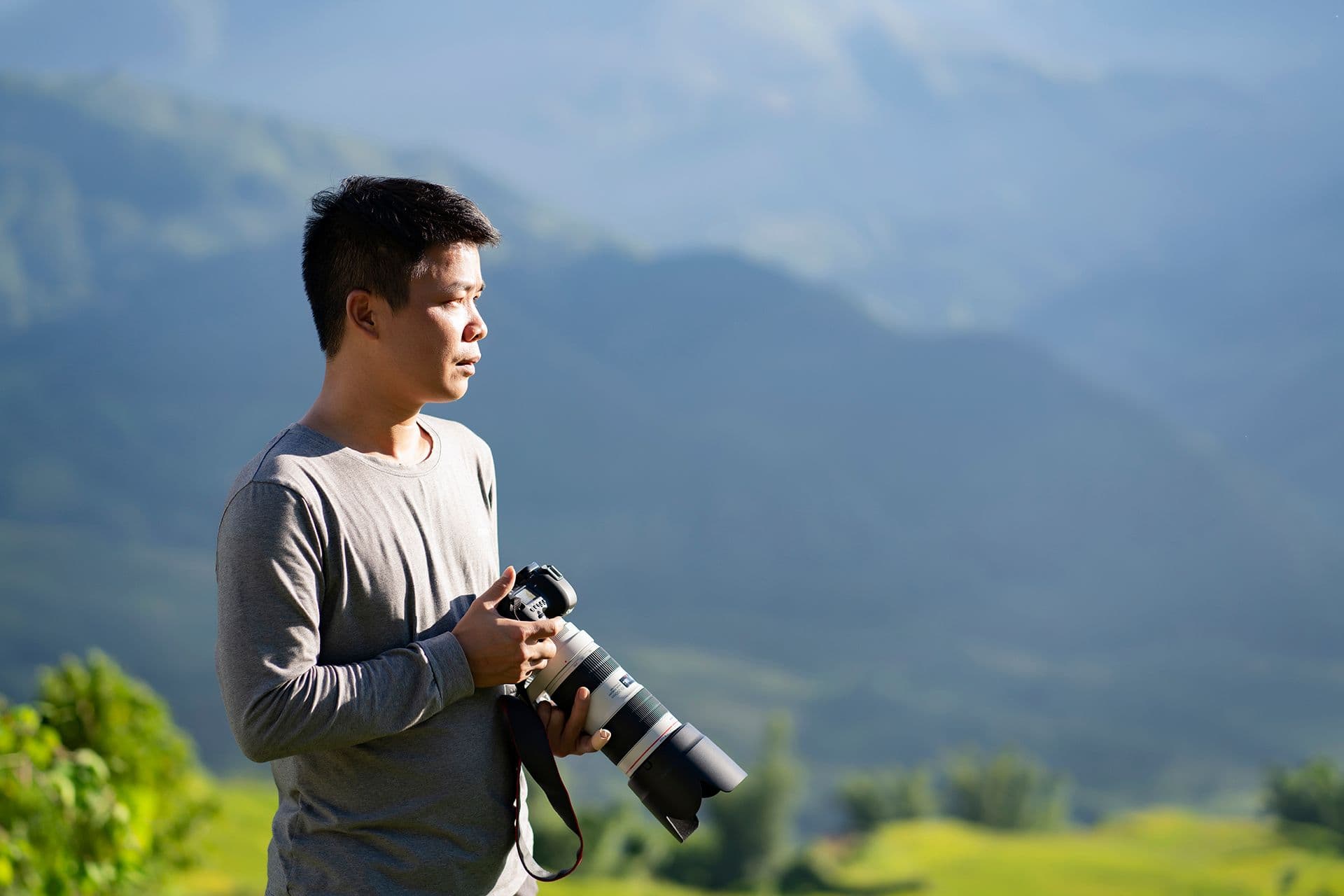
Founder & Photography Guide
Specialties: Culture, landscape, portrait, hiking, active and adventurous tour
Besides my unlimited passion for traveling, a professional tour guide for over a decade, I have been taking photographs since sitting at Hanoi of the University of Culture in the early 2000s. Photography started as a hobby but it was seriously taken due to my work relations and my significant passion for the beauty of our world, especially in Southeast Asian parts such as Vietnam, Laos, Cambodia, and Myanmar.
Within a few years of taking photographs, my works began to be recognized by many reliable international publications such as AFAR Travel, The Times, and The Daily Telegraph newspaper. In addition, I continuously add to my growing profile by winning numerous major awards: 3rd Position of The Independent Photographer 2018, 1st Position of Amateur Photographer of the year 2018, Grand Prize Winner of the AFAR Travel Photography 2019, and a Gold Award of San Francisco Bay International Photography 2020.
I photograph a wide variety of subjects, from travel to landscapes to street scenes. I enjoy documenting the East’s rich cultural heritage and its land soaked in glorious sunrise or sunset light in remote and secluded spots. And, I am very happy to share my knowledge and experience with you. You can visit Luminousvietnamtour to explore tour!