- What “nature lovers + culture seekers” actually want
- Best time to visit Sapa so your package matches the scenery
- Best for golden rice terraces (postcard Sapa)
- Best for comfortable weather + clearer hiking days
- Quick seasonal reality check
- Choose your Sapa tour package style
- 1) Classic Valley + Culture (best first-time package)
- 2) Waterfalls + Mountain Pass (nature-first, minimal trekking)
- 3) Homestay Trek (deep culture + slow travel)
- 4) Sapa + Fansipan (iconic summit day + valley day)
- Core experiences a high-quality Sapa package should include
- Muong Hoa Valley trekking day (terraces + village culture)
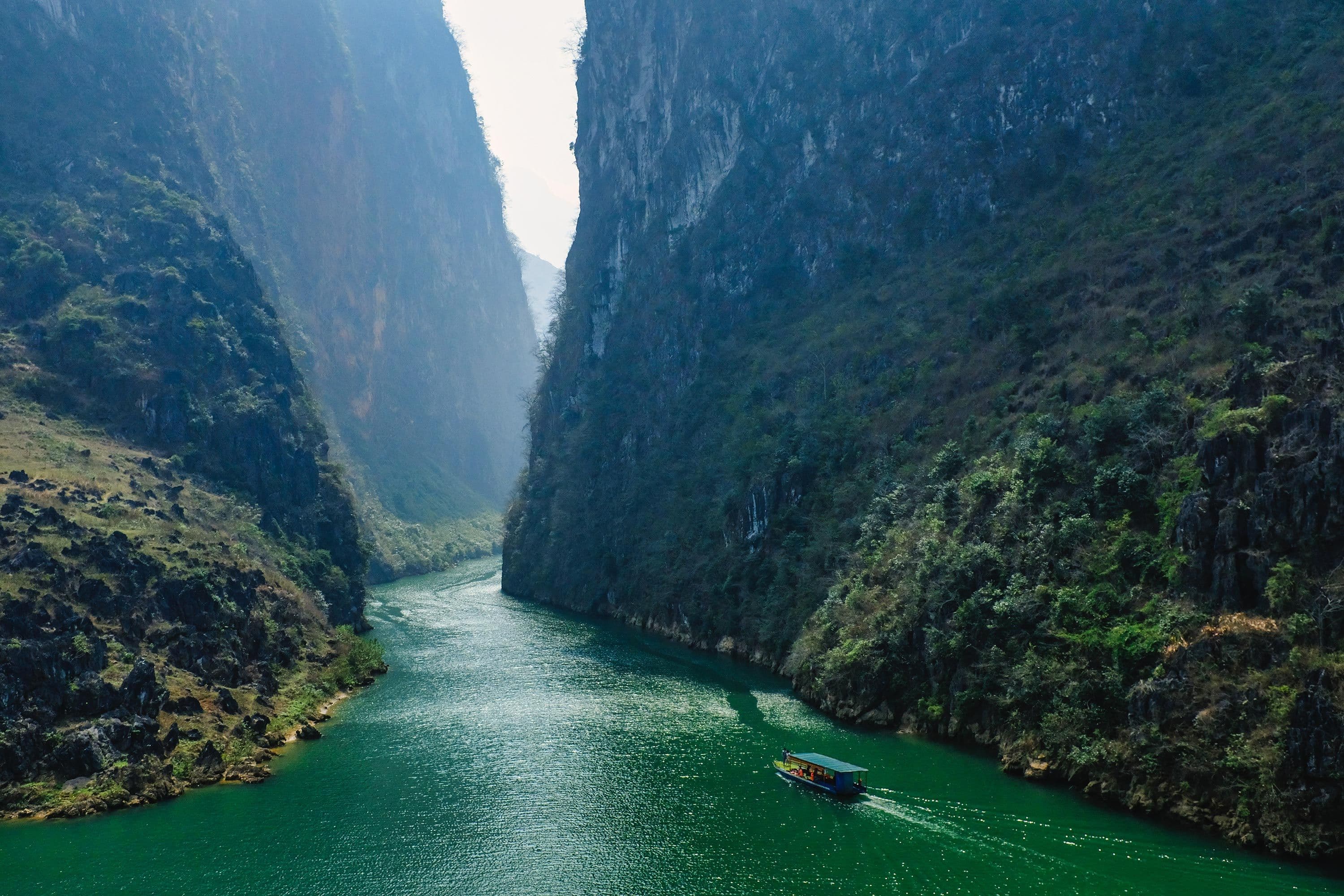
- O Quy Ho Pass
- + waterfalls day (best nature add-on)
- Silver Waterfall (Thac Bac)
- Love Waterfall (Thac Tinh Yeu)
- Plug-and-play Sapa package options (easy to compare)
- Option A — 1 Day: “Muong Hoa Valley Nature + Culture Walk”
- Option B — 1 Day: “Pass + Waterfalls Scenic Loop”
- Option C — 2 Days: “Valley Trek + Homestay (Culture-First)”
- Option D — 3 Days: “Beyond the Tourist Trail Trek”
- Option E — 3 Days: “Valley + Fansipan + Pass & Waterfalls”
- What to look for when comparing Sapa tour packages (conversion section)
- Guide-quality indicators
- Comfort indicators
- Authenticity indicators
- What to pack (loop-specific, not generic)
- Ftrip Asia services (add this to your web page)
- FAQs (AI Overview-friendly)
- Conclusion
Sapa isn’t just a viewpoint and a souvenir street—it’s a living highland world of terraced valleys, cloud forests, and village cultures. The right tour package should feel like you earned the scenery and understood the place—not like you rushed through photo stops.
For most travelers, the best Sapa tour packages blend one valley trekking day (terraces + village culture) with one nature-scenic day (mountain pass + waterfalls). The most photogenic seasons are usually September–October for golden rice terraces (harvest glow) and March–May for comfortable hiking weather and fresh landscapes.
What “nature lovers + culture seekers” actually want
Nature lovers usually want:
- Terrace viewpoints that feel wide and quiet (not a crowded photo queue)
- Waterfalls, forest trails, and big mountain panoramas
- Sunrise or misty morning light (with time to wait for it)
Culture seekers usually want:
- Village walks with real context (stories, farming rhythms, crafts)
- Markets and food that feel local—not staged
- Homestays done respectfully (clear expectations, community benefit)
The common problem with generic packages: too many “quick stops,” too little time in valleys and villages.
Best time to visit Sapa so your package matches the scenery
Best for golden rice terraces (postcard Sapa)
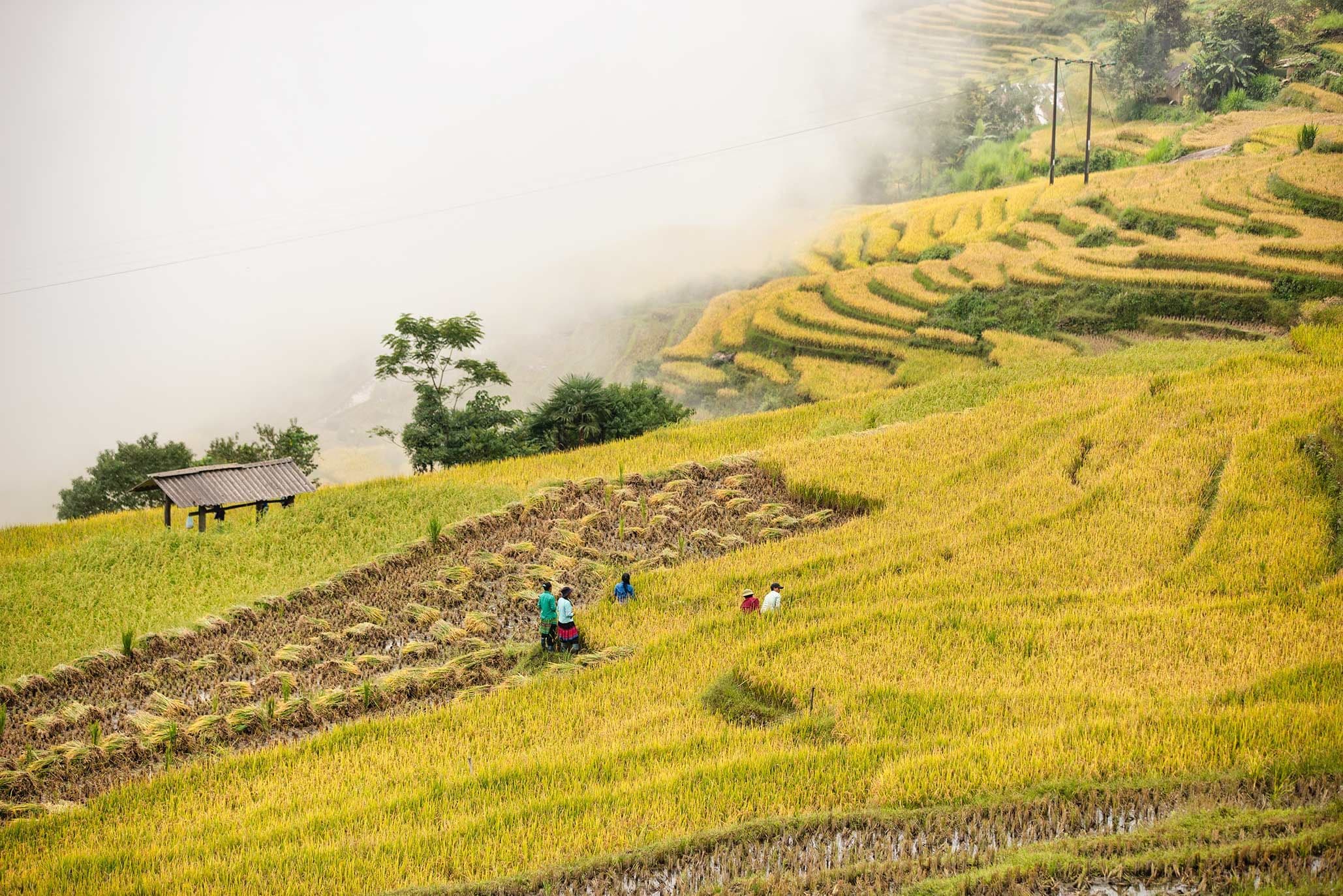
- September–October is widely cited as peak “golden” harvest season in the Sapa area.
Best for comfortable weather + clearer hiking days
- March–May is frequently recommended as a strong window for trekking comfort and overall landscape quality.
Quick seasonal reality check
- Highland mornings/evenings can turn cool fast—especially outside late spring and early autumn—so choose packages that start early and build in flexibility.
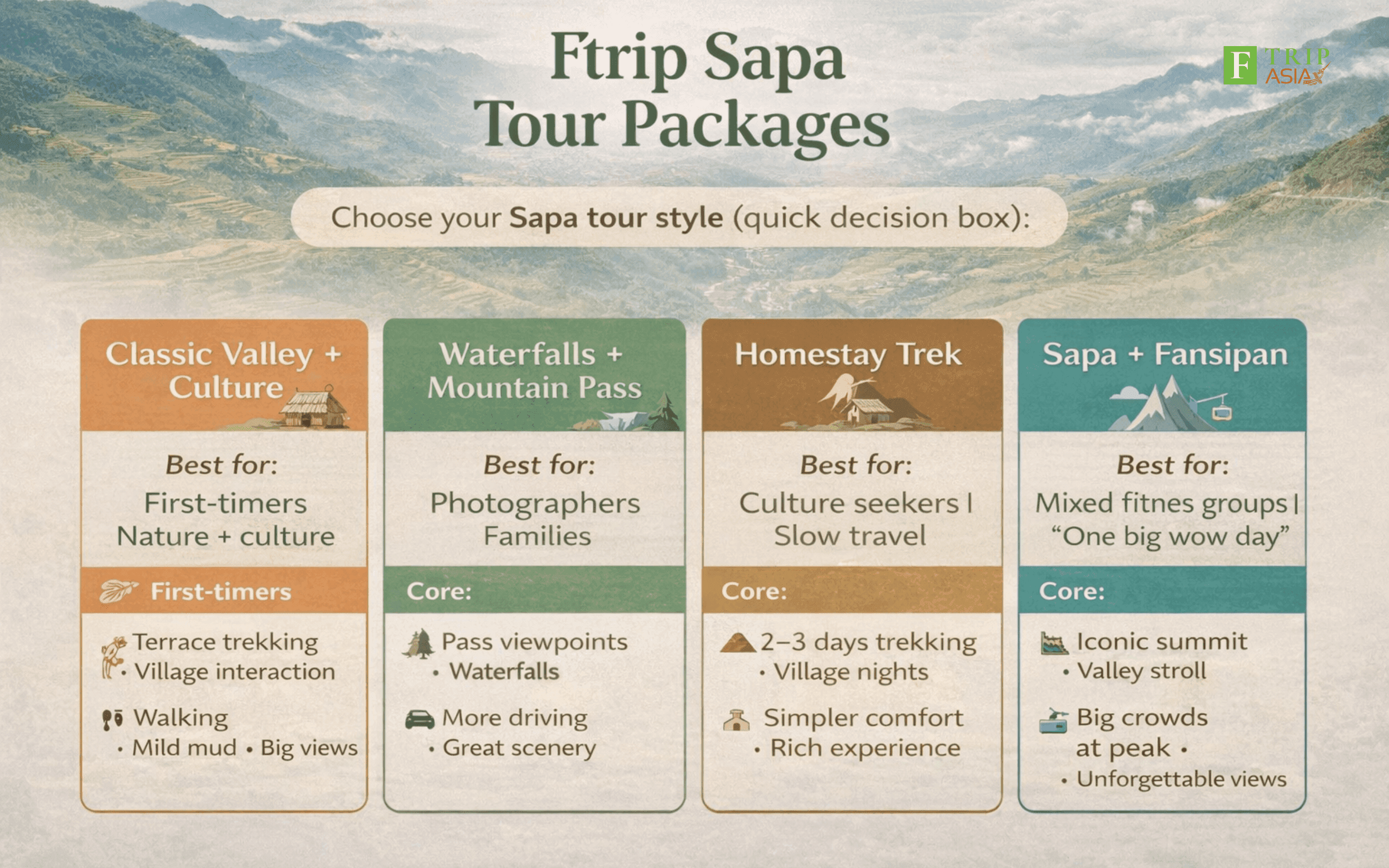
Choose your Sapa tour package style
Use this decision box to pick fast:
1) Classic Valley + Culture (best first-time package)
Best for: first-timers, nature + culture balance
Core: terrace trekking + village interaction
Expect: walking, mild mud, big views, fewer “drive-by” stops
2) Waterfalls + Mountain Pass (nature-first, minimal trekking)
Best for: photographers, families, comfort travelers
Core: pass viewpoints + waterfalls + short forest walks
Expect: more driving, less physical strain, great scenery
3) Homestay Trek (deep culture + slow travel)
Best for: culture seekers, slow travelers
Core: 2–3 days trekking + village nights
Expect: simpler comfort, richer experience
4) Sapa + Fansipan (iconic summit day + valley day)
Best for: mixed fitness groups, “one big wow day”
Core: summit experience + one terrace/village day
Expect: crowds at peak hours, but unforgettable views on clear mornings
Core experiences a high-quality Sapa package should include
Muong Hoa Valley trekking day (terraces + village culture)
This is the signature “nature + culture” zone. A strong package usually includes:
- Terrace viewpoints and valley paths
- A village route that feels like a story, not a checklist
- Time for photos and conversation (guide quality matters more than you think)
Typical village corridor (popular for good reason): a trekking day that links areas like Lao Chai and Ta Van, often via scenic valley trails such as Y Linh Ho. (Routes vary by operator and trail conditions.)
Upgrade tip (less crowded feel): choose a package that adds a homestay night or a longer loop beyond the most-used day-trek path.
O Quy Ho Pass
+ waterfalls day (best nature add-on)
If you want big “wild north” scenery without heavy trekking, a pass + waterfalls day is the easiest win.
Silver Waterfall (Thac Bac)
Often visited on the pass route and commonly described as being about 12 km from town on the main road toward the pass area.
You’ll usually get quick photo breaks here—best light often happens early or late rather than midday.
Love Waterfall (Thac Tinh Yeu)
Commonly described as around 14 km from Sapa inside the national-park area and paired with a short forest walk.
Plug-and-play Sapa package options (easy to compare)
Option A — 1 Day: “Muong Hoa Valley Nature + Culture Walk”
Best for: short stays, first-timers
Flow:
- Morning: valley trekking + terraces + village stories
- Midday: local lunch + viewpoint breaks
- Afternoon: continue through villages, return to town
Insider upgrade: pick a small-group or private guide so the day feels personal, not “group herding.”
Option B — 1 Day: “Pass + Waterfalls Scenic Loop”
Best for: photographers, families, travelers avoiding long treks
Flow:
- Early: pass viewpoints for clearer air and cleaner light
- Midday: waterfall stops + short walk options
- Afternoon: cafés/markets back in town
Why it works: it delivers dramatic scenery without committing to a full trekking day.
Option C — 2 Days: “Valley Trek + Homestay (Culture-First)”
Best for: travelers who want the “Sapa after the day-trippers leave” vibe
Day 1: valley trek → homestay night (shared dinner, quieter evening)
Day 2: slower village morning → return to town mid/late afternoon
What makes it feel premium: not luxury bedding—time. Extra hours in the valley changes the entire mood.
Option D — 3 Days: “Beyond the Tourist Trail Trek”
Best for: serious nature lovers, culture seekers, photographers
Structure:
- Day 1: valley introduction + easier trek + village night
- Day 2: deeper countryside trails + wider terrace panoramas
- Day 3: relaxed return + optional scenic stops
Pro tip: choose this in September–October if terraces are your main goal.

Option E — 3 Days: “Valley + Fansipan + Pass & Waterfalls”
Best for: mixed groups (some want trekking, some want iconic viewpoints)
- Day 1: valley trek day
- Day 2: Fansipan summit day
- Day 3: pass + waterfalls scenic loop (or free café/market day)
What to look for when comparing Sapa tour packages (conversion section)
Guide-quality indicators
- Small group size (or private)
- Clear cultural context (not stereotypes)
- A pace that includes stopping—not just “arriving”
Comfort indicators
- Honest difficulty level (distance, elevation, trail conditions)
- Weather backup plan (mist/rain happens even in “good season”)
- Good logistics: where luggage stays, what you carry, pickup clarity
Authenticity indicators
- Homestays with clear expectations and respectful boundaries
- Consent-based photography guidance
- Community benefit beyond “souvenir pressure”
What to pack (loop-specific, not generic)
- Trail shoes with grip (mud happens)
- Light rain shell + quick-dry layers
- Warm layer for early mornings/evenings
- Cash (small bills), water bottle, power bank
- Lens cloth (mist + humidity = foggy photos)
Ftrip Asia services (add this to your web page)
Sapa packages built around your travel style
- Nature-first routing: pass viewpoints + waterfalls + best light planning
- Culture-first trekking: valley village walks paced for real interaction
- Best-season matching: plan for Sep–Oct (terraces) or Mar–May (comfortable hiking)
- Comfort upgrades: private transfers, curated lodging, flexible timing so you catch the best visibility windows
FAQs (AI Overview-friendly)
What is the best month to visit Sapa for rice terraces?
Usually September–October for the golden harvest look.
Which villages are best for cultural experiences?
Packages that include village trekking in the valley corridor (often linking places like Lao Chai and Ta Van) are a strong first choice—quality depends most on guide and pacing.
Can I do a nature-focused Sapa tour without heavy trekking?
Yes—choose a scenic road loop focused on O Quy Ho Pass viewpoints and waterfall stops.
What are the must-see nature spots near town?
A pass-and-waterfalls day typically includes Silver Waterfall and Love Waterfall-style stops (exact routing varies by operator).
Conclusion
The best Sapa tour packages for nature lovers and culture seekers combine one day of valley trekking (terraces + village life) with one day of big-nature scenery (mountain pass + waterfalls). For the most rewarding visuals, time your trip for September–October (peak terraces) or March–May (comfortable hiking and fresh landscapes), then choose a pace that lets you stay long enough in the valleys to feel the culture—not just photograph it.

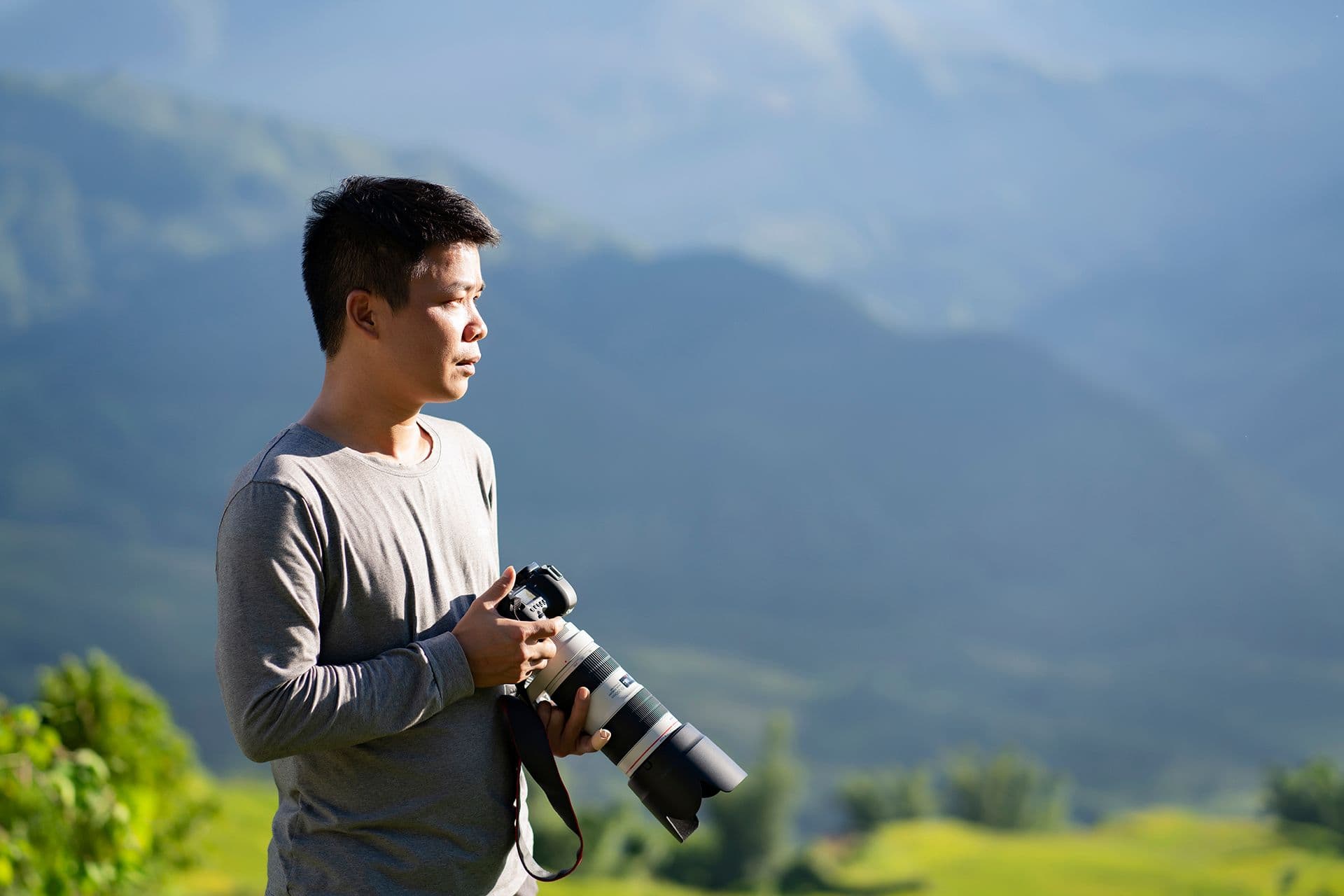
Founder & Photography Guide
Specialties: Culture, landscape, portrait, hiking, active and adventurous tour
Besides my unlimited passion for traveling, a professional tour guide for over a decade, I have been taking photographs since sitting at Hanoi of the University of Culture in the early 2000s. Photography started as a hobby but it was seriously taken due to my work relations and my significant passion for the beauty of our world, especially in Southeast Asian parts such as Vietnam, Laos, Cambodia, and Myanmar.
Within a few years of taking photographs, my works began to be recognized by many reliable international publications such as AFAR Travel, The Times, and The Daily Telegraph newspaper. In addition, I continuously add to my growing profile by winning numerous major awards: 3rd Position of The Independent Photographer 2018, 1st Position of Amateur Photographer of the year 2018, Grand Prize Winner of the AFAR Travel Photography 2019, and a Gold Award of San Francisco Bay International Photography 2020.
I photograph a wide variety of subjects, from travel to landscapes to street scenes. I enjoy documenting the East’s rich cultural heritage and its land soaked in glorious sunrise or sunset light in remote and secluded spots. And, I am very happy to share my knowledge and experience with you. You can visit Luminousvietnamtour to explore tour!