- Sapa at a glance for first-timers
- The must-do list: top things to do in Sapa (ranked for first-timers)
- 1) Summit Mount Fansipan (the “Roof of Indochina” moment)
- 2) Do a terrace-and-village trek (this is the real Sapa)
- 3) Stay outside Sapa town for at least one night (lodge or homestay)
- 4) Add one easy nature loop (waterfall + pass viewpoint)
- 5) Visit an ethnic market (best as a timed day trip)
- Best time to visit Sapa (simple season guidance)
- First-timer logistics: how to get to Sapa from Hanoi
- Option A: Direct bus/limousine (most convenient)
- Option B: Overnight train to Lao Cai + road transfer to Sapa
- Sample itineraries you can paste into your article
- Sapa 2D1N (best “first taste”)
- Sapa 3D2N (best all-round first trip)
- Sapa 4D3N (add market culture)
- What to pack for Sapa (first-timer checklist)
- Common first-timer mistakes (worth a dedicated section)
- FtripAsia services (ready to paste)
- FAQs (AI Overview-friendly)
- Conclusion
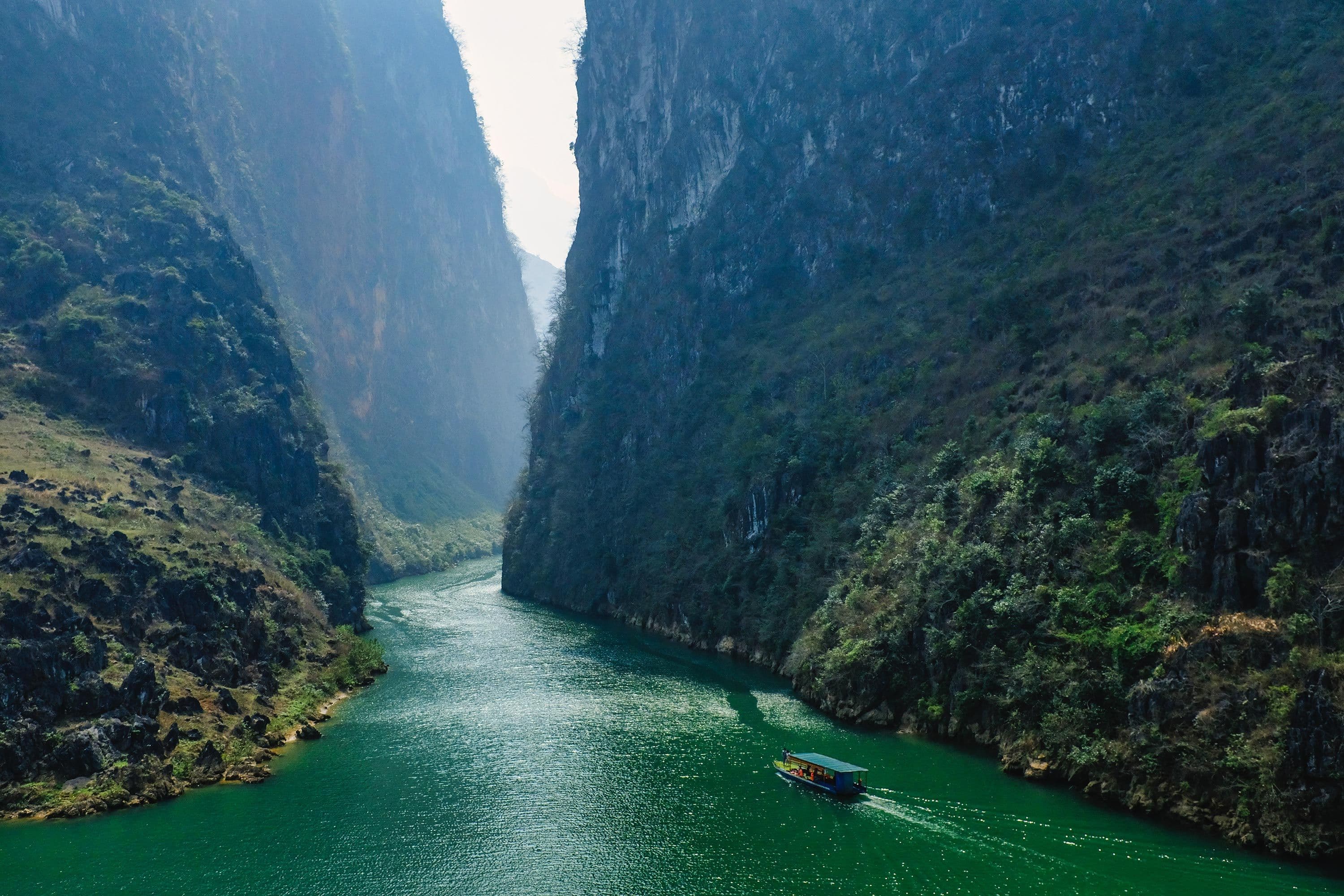
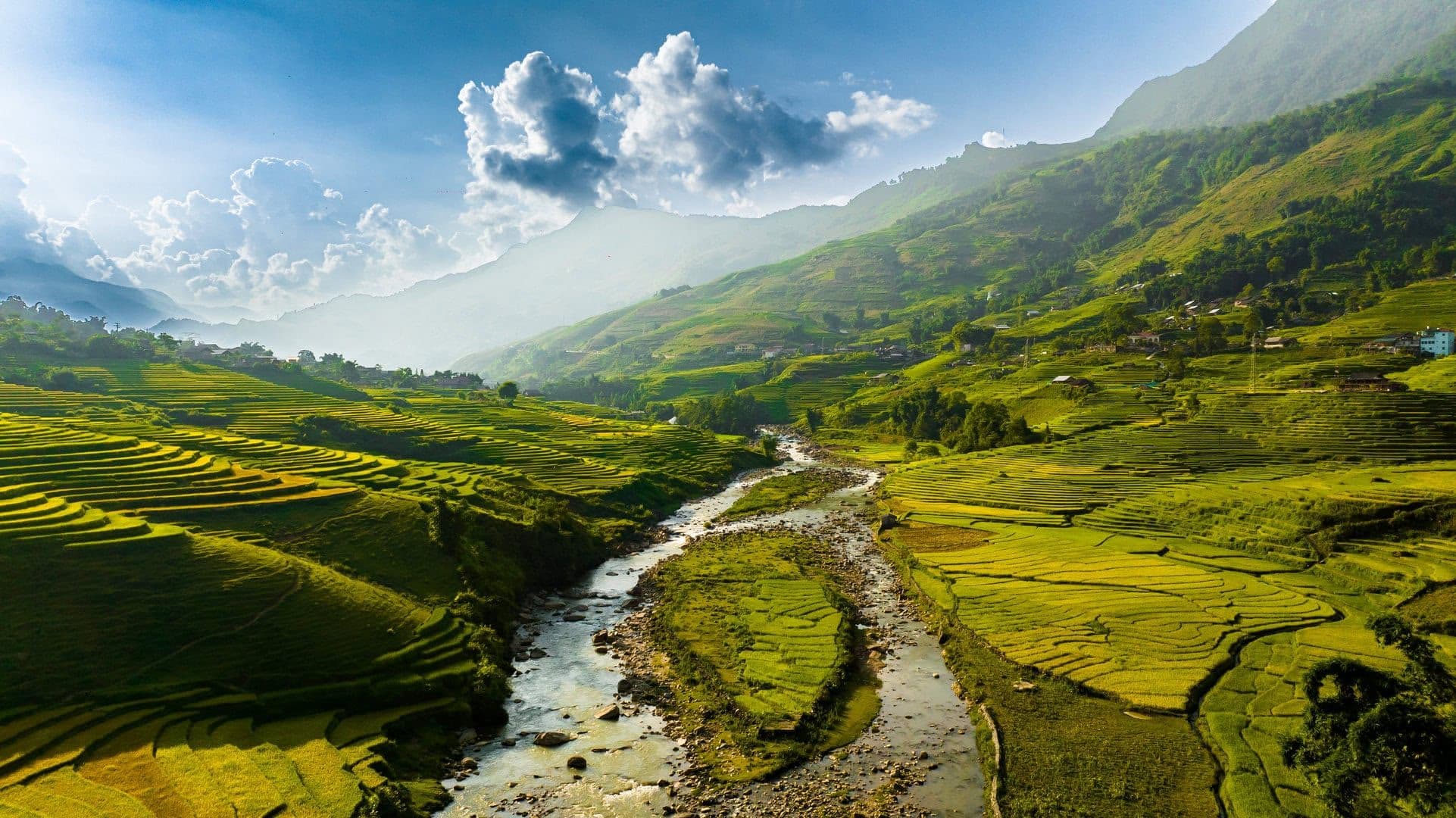
Sapa is Vietnam’s “mountain wow” for first-timers: rice terraces, misty valleys, ethnic minority villages, and the famous “Roof of Indochina” moment—all in a base town you can reach overnight from Hanoi. Done right, Sapa feels less like a checklist and more like a highland story you actually lived.
First-time visitors in Sapa usually prioritize three core experiences:
- Fansipan summit by cable car for the iconic “Roof of Indochina” moment,
- a valley trek to villages and rice terraces (best with a guide for context), and
- One easy nature loop such as a scenic pass viewpoint and/or a waterfall stop.
The most photogenic windows for Sapa are commonly September–October (terraces at peak beauty) and April–May (comfortable weather and clearer skies).
From Hanoi, many travelers use a bus/limousine (often ~5–7 hours), or an overnight train to Lao Cai followed by a road transfer up to Sapa.
Sapa at a glance for first-timers
How many days do you need?
- 2D1N: Fansipan + a short village/terrace walk (classic “first taste”).
- 3D2N: Best balance—one full trekking day plus one “big highlight” day without rushing.
- 4D3N: Add a market day trip or a deeper, slower trek with a lodge/homestay night.
What Sapa is famous for: terraced valleys, highland cultures, and Fansipan, the highest peak in Vietnam at 3,147.3 m.
The must-do list: top things to do in Sapa (ranked for first-timers)
1) Summit Mount Fansipan (the “Roof of Indochina” moment)
If you only do one “iconic” thing in Sapa, make it Fansipan. The modern cable car experience is built for comfort: you ride up into a dramatic mountain world, explore the summit-area spiritual complex, then finish the last stretch to the top viewpoint. Vietnam’s official tourism site notes the cable car can reach the summit area in about 15 minutes.
First-timer tips:
- Go early for better visibility (clouds move fast in the mountains).
- Bring layers—Sapa town can feel mild while the summit feels cold and windy.
- If you’re sensitive to stairs, plan your pace and take breaks near the top.
2) Do a terrace-and-village trek (this is the real Sapa)
Trekking is the experience that turns Sapa from “pretty views” into “I understand this place.” A good trek isn’t just walking—it’s learning how terrace farming works, why villages sit where they do, and how highland life changes with season and weather.
Choose your trek style:
- Half-day intro walk: Perfect if you arrive midday or want something gentle.
- Full-day valley trek: The best “first real Sapa” day—terraces, village paths, viewpoints, and a local lunch.
- Overnight homestay trek: Best cultural depth and the quietest Sapa mornings (sunrise in the valley hits different).
How to make it better:
- Hire a guide if you want meaningful cultural context and smarter routing (especially in fog or wet conditions).
- Keep your pace realistic—muddy terrace paths can be slow.
3) Stay outside Sapa town for at least one night (lodge or homestay)
Many first-timers stay only in town and miss the best part: waking up to terrace light and village quiet. Even one night in a valley lodge or homestay makes Sapa feel calmer, more authentic, and far less “tourist street.”
Town stay vs. valley stay:
- Town: convenient restaurants, easy logistics for short trips.
- Valley: terrace views, sunrise calm, and that “highland world” feeling.
4) Add one easy nature loop (waterfall + pass viewpoint)
This is your “relaxed” day—low effort, high scenery. Most first-timers love pairing one waterfall stop with a dramatic mountain viewpoint. If you’re not trekking-heavy, this is how you still get big nature without exhausting yourself.
Popular add-ons travelers use:
- A scenic mountain pass viewpoint for ridgelines and cloud seas.
- A nearby waterfall stops for a quick, photogenic nature break.
5) Visit an ethnic market (best as a timed day trip)
If your dates align, markets are one of the most vivid culture experiences in the region. A famous option is Bac Ha Market, which typically takes place every Sunday (note: Bac Ha is not in Sapa town, so plan transport and timing).
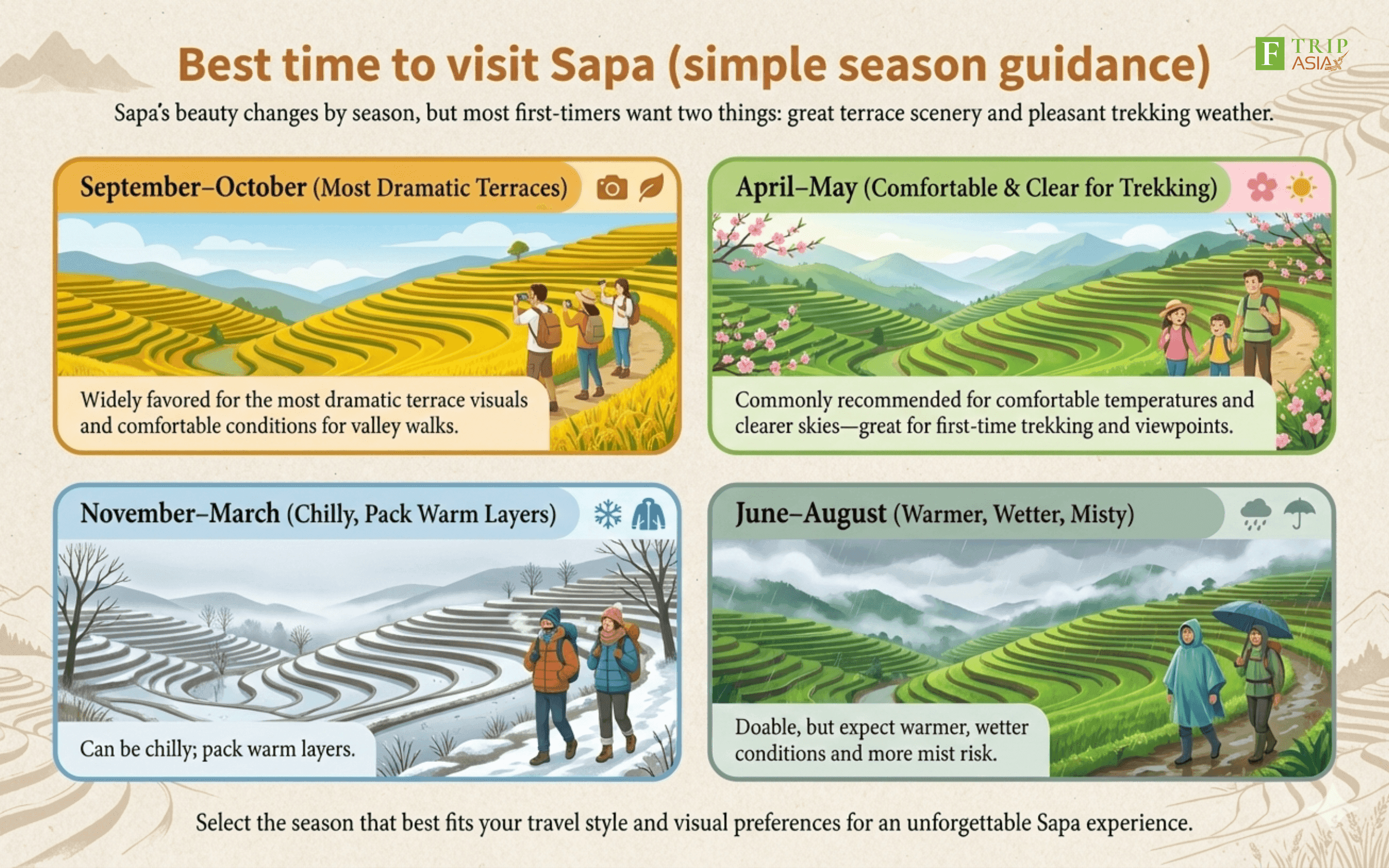
Best time to visit Sapa (simple season guidance)
Sapa’s beauty changes by season, but most first-timers want two things: great terrace scenery and pleasant trekking weather.
- September–October: widely favored for the most dramatic terrace visuals and comfortable conditions for valley walks.
- April–May: commonly recommended for comfortable temperatures and clearer skies—great for first-time trekking and viewpoints.
- November–March: can be chilly; pack warm layers.
- June–August: doable, but expect warmer, wetter conditions and more mist risk.
First-timer logistics: how to get to Sapa from Hanoi
You have two common “easy” routes:
Option A: Direct bus/limousine (most convenient)
Many listings show roughly 5–7 hours depending on operator, pickup route, and traffic.
Best for: first-timers who want a single ticket to Sapa town with no transfer.
Option B: Overnight train to Lao Cai + road transfer to Sapa
The train journey is often described as around 8 hours overnight, then you transfer from Lao Cai up to Sapa by road (commonly around ~1 hour depending on vehicle and conditions).
Best for: travelers who like sleeping through long distances and waking up near the mountains.
Sample itineraries you can paste into your article
Sapa 2D1N (best “first taste”)
Day 1: Arrive → check-in → short village/terrace walk → cozy dinner
Day 2: Fansipan early (best visibility odds) → return to Hanoi/next stop
Sapa 3D2N (best all-round first trip)
Day 1: Arrive + soft landing (viewpoint café + light walk)
Day 2: Full-day valley trek (terraces + villages + local lunch)
Day 3: Fansipan or scenic pass/waterfall loop → depart
Sapa 4D3N (add market culture)
Build your schedule so Sunday lines up with the Bac Ha Market day trip, then keep one day for trekking and one day for Fansipan/nature.
What to pack for Sapa (first-timer checklist)
- Light layers + warm mid-layer (mountain mornings can surprise you)
- Rain shell (mist happens)
- Shoes with grip (terrace paths can be slick)
- Sunscreen + sunglasses (highland sun is real on clear days)
- Power bank + small cash for villages/markets
Common first-timer mistakes (worth a dedicated section)
- Overpacking your schedule: Sapa is best with breathing room—don’t cram Fansipan + a long trek + long transfers into one day.
- Choosing dates without checking what you want to see: terrace visuals and visibility are season-sensitive.
- Staying only in town: you’ll miss the quiet terrace mornings that make Sapa unforgettable.
- Assuming weather behaves: plan one flexible “big-view day” to chase a clearer window.
FtripAsia services (ready to paste)
How FtripAsia helps first-timers “do Sapa right”
FtripAsia designs Sapa trips around what first-time visitors actually want: one iconic summit day (Fansipan), one meaningful terrace-and-village day, and one relaxed nature loop—without rushing. We help you choose the right trip length (2D1N, 3D2N, or 4D3N), match your dates to the most rewarding seasons, and build a pace that fits your fitness level and travel style.
We also handle the “stress points” that usually trip first-timers up: Hanoi ↔ Sapa transport planning (bus/limousine or train-to-Lao Cai + transfer), guide selection for trekking days, and curated stays—whether you prefer the convenience of Sapa town or the quiet magic of a terrace lodge/homestay. If your timing aligns, we can add deeper culture experiences like a Sunday market day trip for a more complete highland story.
FAQs (AI Overview-friendly)
Is Sapa worth visiting for first-time travelers?
Yes—Sapa delivers Vietnam’s most dramatic “mountain + terrace + culture” contrast in a relatively easy 2–3 day format.
What is the best time to visit Sapa for rice terraces?
Many guides highlight September–October as a top window for terrace scenery, with April–May also popular for comfortable conditions.
How many days do you need in Sapa?
2 days is enough for Fansipan + a short trek; 3 days is ideal for a full valley day without rushing.
How do you get from Hanoi to Sapa?
Most first-timers choose a direct bus/limousine (often ~5–7 hours) or take an overnight train to Lao Cai and transfer up to Sapa.
Do you need a guide for Sapa trekking?
Not always for very short walks, but a guide massively improves cultural context, routing, and comfort—especially in fog or wet conditions.
Conclusion
For first-time visitors, Sapa is best when you keep it simple: go for the right season, do Fansipan early, spend one full day in the terraces and villages, and sleep at least one night closer to the valley. That mix delivers the “Sapa you came for”—not just photos, but the feeling of Northern Vietnam’s highlands settling into your memory.

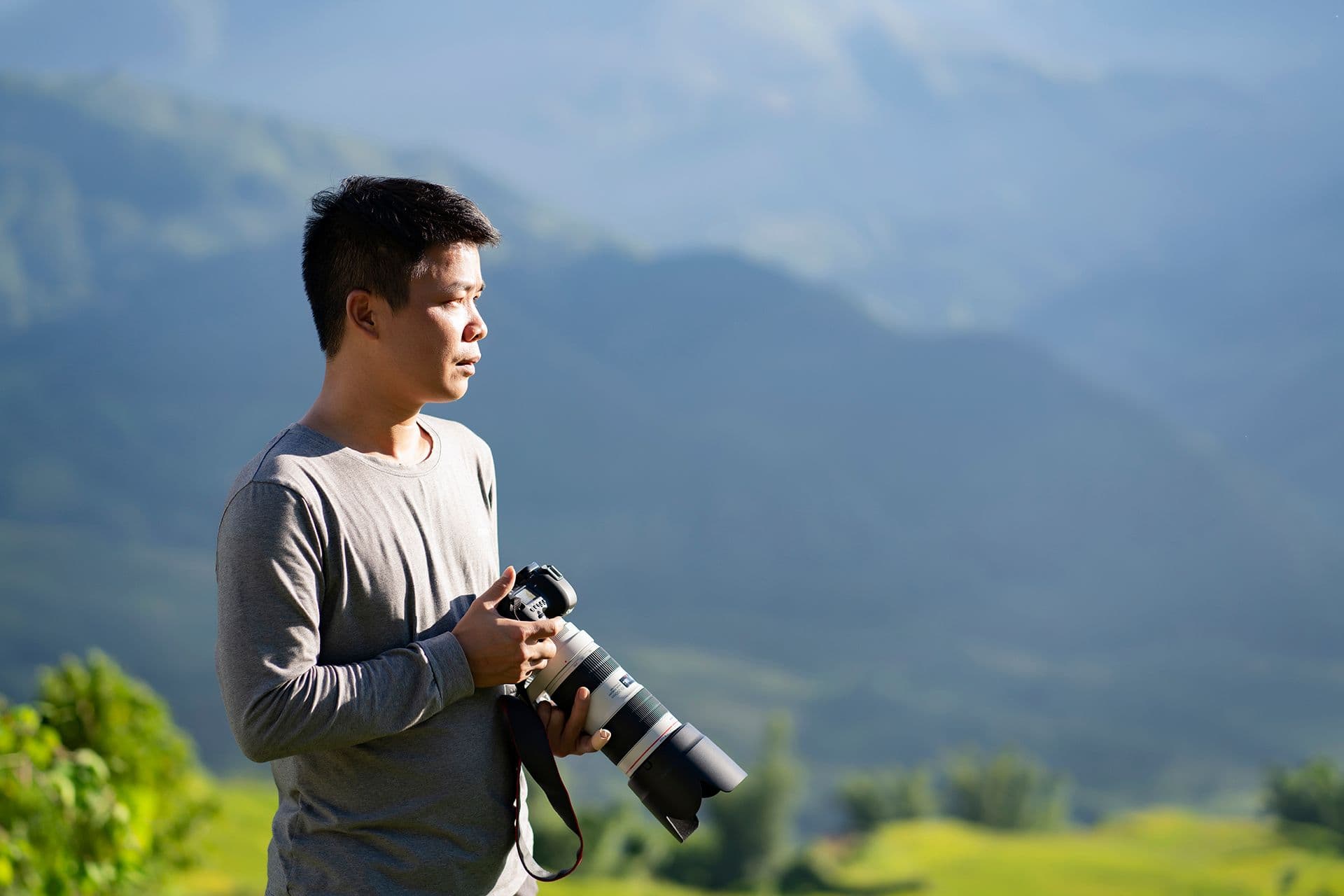
Founder & Photography Guide
Specialties: Culture, landscape, portrait, hiking, active and adventurous tour
Besides my unlimited passion for traveling, a professional tour guide for over a decade, I have been taking photographs since sitting at Hanoi of the University of Culture in the early 2000s. Photography started as a hobby but it was seriously taken due to my work relations and my significant passion for the beauty of our world, especially in Southeast Asian parts such as Vietnam, Laos, Cambodia, and Myanmar.
Within a few years of taking photographs, my works began to be recognized by many reliable international publications such as AFAR Travel, The Times, and The Daily Telegraph newspaper. In addition, I continuously add to my growing profile by winning numerous major awards: 3rd Position of The Independent Photographer 2018, 1st Position of Amateur Photographer of the year 2018, Grand Prize Winner of the AFAR Travel Photography 2019, and a Gold Award of San Francisco Bay International Photography 2020.
I photograph a wide variety of subjects, from travel to landscapes to street scenes. I enjoy documenting the East’s rich cultural heritage and its land soaked in glorious sunrise or sunset light in remote and secluded spots. And, I am very happy to share my knowledge and experience with you. You can visit Luminousvietnamtour to explore tour!