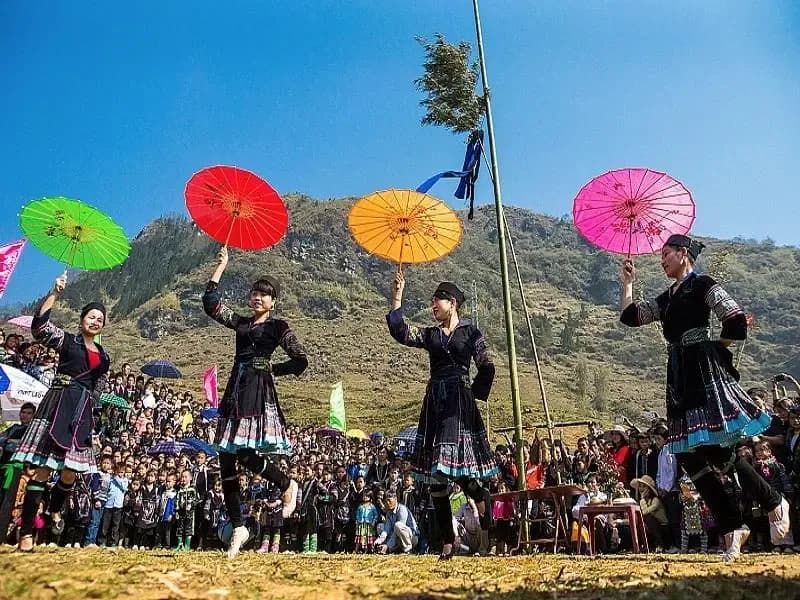
- Why Sapa is the “different side of Vietnam” (set expectations)
- The easiest route from TPHCM to Sapa (simple travel chain)
- Option A (fastest + simplest): Fly → Hanoi → direct bus/limousine to Sapa
- Option B (sleep-your-way option): Fly → Hanoi → overnight train → Lao Cai transfer → Sapa
- Bus vs train: the quick decision box
- Best time to visit Sapa (so your tour looks like the photos)
- Best for landscapes + rice terraces (postcard Sapa)
- Best for comfortable weather + clearer skies (hiking-friendly)
- Cool-season note (don’t get surprised)
- Pick your ideal Sapa tour duration (from TPHCM)
- 3D2N “First-Time Easy Sapa” (most recommended)
- 4D3N “Different Side of Vietnam” (best for culture seekers + slower pace)
- What to include in a great Sapa package (nature + culture checklist)
- Nature must-haves
- Culture must-haves
- “Wow” add-on (if your group wants it)
- Packing + comfort tips (southern travelers always underestimate this)
- Booking tips that save first-timers (and prevent the “why are we so tired?” problem)
- Ftrip Asia services section (conversion-ready)
- FAQs
- Conclusion
If your Vietnam image is beaches, scooters, and tropical heat—Sapa flips the script. From TPHCM, you can reach a world of cool mountain air, terraced valleys, and highland cultures in one smooth travel chain (flight + express transfer). Done right, it feels like you visited a completely different country—without wasting days on logistics.

Why Sapa is the “different side of Vietnam” (set expectations)
What feels different from the south
- Cooler temperatures, misty mornings, and mountain viewpoints
- Terraced valleys and village trekking (more nature, less city energy)
- A slower rhythm—especially if you include a homestay-style day
What first-timers should know
- Visibility can change fast (fog happens). Build one flexible “weather window” block.
- The best Sapa experience is usually 1 real culture/trekking day + 1 scenic/summit day (not just staying in town).
The easiest route from TPHCM to Sapa (simple travel chain)
Option A (fastest + simplest): Fly → Hanoi → direct bus/limousine to Sapa
- Fly from Tan Son Nhat International Airport to Noi Bai International Airport
- Average flight time is about 2 hours 10 minutes.
- Bus/limousine from Hanoi to Sapa
- Commonly ~5–6 hours, depending on operator and stops.
Best for: first-timers who want the least complicated plan (one flight + one road leg).
Option B (sleep-your-way option): Fly → Hanoi → overnight train → Lao Cai transfer → Sapa
- Fly to Hanoi
- Take an overnight train Hanoi → Lao Cai, then a road transfer (~1h15) up to Sapa.
Best for: travelers who like the romance of overnight rail or want to reduce daytime road time (but note: you still have a winding transfer after the train).
Bus vs train: the quick decision box
Choose bus/limousine if you want:
- Most direct arrival to Sapa town
- Easier planning (fewer moving parts)
- Typically the fastest “door-to-door” flow after you land
Choose overnight train if you want:
- Sleeping while you travel (save a hotel night)
- A calmer “journey experience” (especially if you sleep well on trains)
- A slower pace (and you’re fine with the extra transfer step)
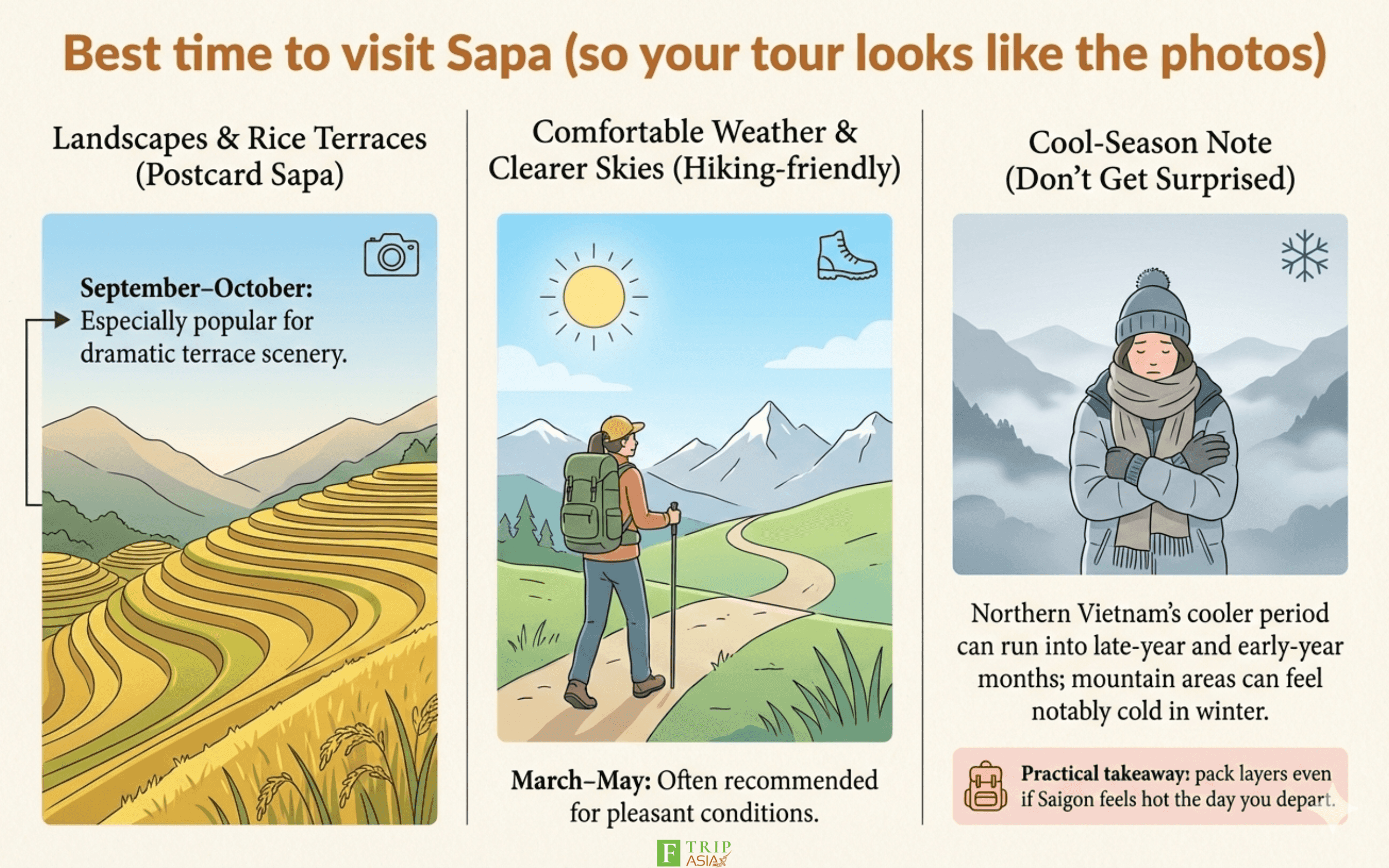
Best time to visit Sapa (so your tour looks like the photos)
Sapa is seasonal—and timing changes what you’ll feel and see.
Best for landscapes + rice terraces (postcard Sapa)
- September–October is especially popular for dramatic terrace scenery.
Best for comfortable weather + clearer skies (hiking-friendly)
- March–May is often recommended for pleasant conditions.
Cool-season note (don’t get surprised)
Northern Vietnam’s cooler period can extend into late fall and early spring; mountain areas can feel notably cold in winter.
Practical takeaway: pack layers even if Saigon feels hot the day you depart.
Pick your ideal Sapa tour duration (from TPHCM)
3D2N “First-Time Easy Sapa” (most recommended)
This is the sweet spot if you want real Sapa without overpacking.
Day 1 — TPHCM → Hanoi → Sapa (arrival + soft landing)
- Morning or midday flight to Hanoi
- Continue to Sapa by bus/limousine
- Evening: viewpoint cafés + gentle town walk + early night
Day 2 — Nature + culture day (the reason you came)
- Guided trek in Muong Hoa Valley (villages + terraces + local stories)
- Slow lunch and photo stops (don’t rush this day)
Day 3 — Choose ONE big highlight + return
- Option A: Fansipan (cable car summit day)
- Option B: Scenic pass + waterfall loop (easy, nature-first)
- Return to Hanoi → fly back to TPHCM
4D3N “Different Side of Vietnam” (best for culture seekers + slower pace)
Day 1: Travel day + rest
Day 2: Full trek + deeper village time (consider a homestay-style experience)
Day 3: Scenic loop day (pass/waterfalls) or summit day
Day 4: Flexible morning buffer → return
Why it’s better: you get one extra buffer for fog/visibility and you’re not forced to cram trekking + summit into the same energy level.
What to include in a great Sapa package (nature + culture checklist)
Nature must-haves
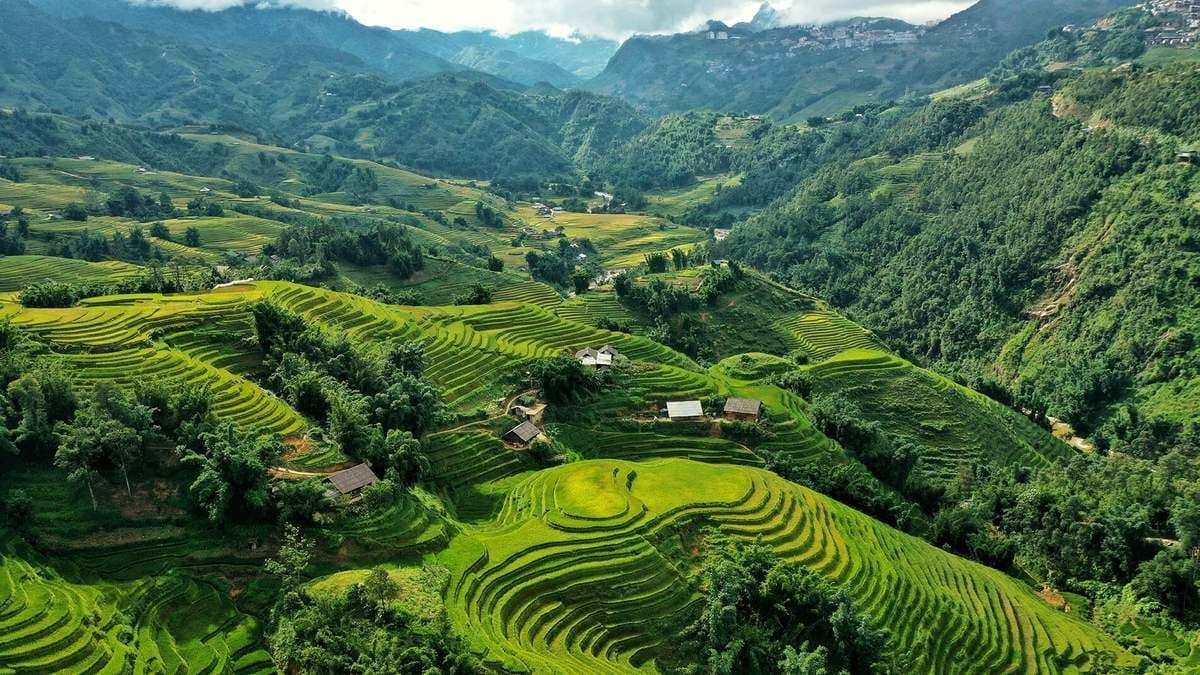
- Terrace viewpoints (best in peak terrace months)
- High mountain panoramas from O Quy Ho Pass
- Waterfall nature stops like Silver Waterfall and Love Waterfall
Culture must-haves
- One proper village walk with a guide who explains context (not just photo stops)
- Market timing if it fits (best as a morning add-on)
“Wow” add-on (if your group wants it)
- Fansipan via Sun World Fansipan Legend cable car (often described as ~15–20 minutes for the ride, then more time exploring at the top).
Packing + comfort tips (southern travelers always underestimate this)
- Layers + light jacket (mountain mornings/evenings can be cold)
- Rain shell + grip shoes (mist and slick paths happen even in “good season”)
- Small daypack + power bank (long photo days)
- Motion-sickness support if you’re sensitive to winding roads
Booking tips that save first-timers (and prevent the “why are we so tired?” problem)
Timing hacks
- Arrive in Sapa the evening before your trekking day
- Keep your summit/viewpoint day flexible for visibility (fog can wipe out the “wow”)
Common mistakes
- Trying to do: arrive Sapa + long trek + Fansipan in one day
- Booking train without planning the Lao Cai → Sapa transfer step
- Not leaving any buffer for weather
What to book in advance
- Flights during weekends/holiday periods
- A guide for your trekking/culture day (the experience upgrade)
- If doing Fansipan: consider going early to reduce queues (especially peak periods)
Ftrip Asia services section (conversion-ready)
Sapa from TPHCM—planned end-to-end, zero stress
- Smart routing: SGN → Hanoi flights + the best Hanoi → Sapa option (direct bus/limousine vs overnight train + transfer)
- Season matching: schedule for terrace peak (Sep–Oct) or comfortable hiking (Mar–May)
- Tour design: 1 true trekking/culture day + 1 scenic/summit day + buffer time for visibility
- Comfort upgrades: private transfers, curated stays, guide quality control, and backup plans if fog hits
FAQs
How do you get from TPHCM to Sapa easiest?
Fly to Hanoi (about 2h10m average) and continue by direct bus/limousine to Sapa.
How long does Hanoi to Sapa take by bus?
Commonly around 5–6 hours, depending on operator and stops.
Is the overnight train to Lao Cai worth it vs bus?
It can be, if you sleep well on trains and like overnight travel—but you’ll still need a road transfer from Lao Cai to Sapa.
What is the best month to see golden rice terraces in Sapa?
September–October is a top pick for terrace scenery in many guides.
Conclusion
A Sapa tour from TPHCM is absolutely doable—and it’s one of the best ways to experience a totally different Vietnam in a short time. Fly to Hanoi, then choose the simplest transfer chain (direct bus/limousine) or the sleep-friendly version (overnight train + transfer). Time your trip for September–October if terraces are your priority, or March–May for comfortable trekking weather, and build the itinerary around one real culture/trekking day—that’s what makes Sapa feel worlds away from the south.


Founder & Photography Guide
Specialties: Culture, landscape, portrait, hiking, active and adventurous tour
Besides my unlimited passion for traveling, a professional tour guide for over a decade, I have been taking photographs since sitting at Hanoi of the University of Culture in the early 2000s. Photography started as a hobby but it was seriously taken due to my work relations and my significant passion for the beauty of our world, especially in Southeast Asian parts such as Vietnam, Laos, Cambodia, and Myanmar.
Within a few years of taking photographs, my works began to be recognized by many reliable international publications such as AFAR Travel, The Times, and The Daily Telegraph newspaper. In addition, I continuously add to my growing profile by winning numerous major awards: 3rd Position of The Independent Photographer 2018, 1st Position of Amateur Photographer of the year 2018, Grand Prize Winner of the AFAR Travel Photography 2019, and a Gold Award of San Francisco Bay International Photography 2020.
I photograph a wide variety of subjects, from travel to landscapes to street scenes. I enjoy documenting the East’s rich cultural heritage and its land soaked in glorious sunrise or sunset light in remote and secluded spots. And, I am very happy to share my knowledge and experience with you. You can visit Luminousvietnamtour to explore tour!