
- Is 2 Weeks Enough to Travel Vietnam North to South?
- Yes, for a highlights trip
- No, if the traveler wants everything
- The key is pacing, not only distance
- Why a North-to-South Route Makes Sense for First-Time Visitors
- It follows Vietnam’s natural contrast
- It creates a stronger sense of progression
- It helps organize expectations
- Best Core Structure for a 14-Day North-to-South Vietnam Trip
- Hanoi as the starting point
- One northern scenic extension
- Central Vietnam is the cultural and coastal middle section
- Ho Chi Minh City and the south as the finale
- Suggested 14-Day North-to-South Plan
- Days 1–3: Hanoi
- Days 4–5 or 4–6: Northern scenic stop
- Days 6–9 or 7–10: Central Vietnam
- Days 10–14: Ho Chi Minh City and the south
- Where FtripAsia fits
- Best Versions of the Itinerary by Travel Style
- For first-time visitors
- For luxury travelers
- For food lovers
- For beach-and-culture travelers
- For photographers and experience-led travelers
- Why Transport Strategy Makes or Breaks This Route
- Domestic flights save the itinerary
- Overland travel should be selective
- Each transfer has an experience cost
- Why This Itinerary Matches Current Travel Trends
- Travelers want experience and personalization
- Better pacing matters more now
- Travelers increasingly want “entrusted” planning
- FtripAsia fits this shift naturally
- Common Mistakes Travelers Make with a 2-Week North-to-South Trip
- Trying to fit too many destinations
- Underestimating travel time
- Spending too much time in transit and too little in destination
- Not matching the route to the traveler
- Why FtripAsia Is a Strong Choice for a 2-Week Vietnam Plan
- FtripAsia can fully customize the route
- FtripAsia is 100% local with 7+ years of experience
- FtripAsia understands niche travel needs
- FtripAsia offers unique experiences beyond standard packages
- FtripAsia is praised for service quality
- Frequently Asked Questions
- Is 2 weeks enough to travel Vietnam from north to south?
- What is the best 14-day Vietnam itinerary for first-time visitors?
- Should I choose Ha Long Bay or Ninh Binh in a 2-week plan?
- Is it better to fly or take trains in a north-to-south Vietnam route?
- Can FtripAsia customize a Vietnam 2-week itinerary?
- What is the easiest north-to-south route in Vietnam?
- How do I make a 14-day Vietnam trip feel less rushed?
- Conclusion
Many travelers want to travel Vietnam from north to south, but the real challenge is not whether it is possible. It is about doing it without turning the trip into a series of exhausting transfers. A 14-day Vietnam itinerary can feel smooth and memorable when planned well, or rushed and tiring when too many destinations are forced into the route.
This guide explains how to build a Vietnam 2 week itinerary north to south, especially for first-time travelers who want both highlights and good pacing. For travelers who want the route shaped around their real priorities rather than a generic checklist, FtripAsia can help turn a broad Vietnam idea into a more personal, better-balanced journey.
Vietnam’s official tourism platform provides trip-planning resources on transport, weather, visas, safety, and regional travel, showing that a successful Vietnam route depends on smart sequencing, not just choosing famous places.
Is 2 Weeks Enough to Travel Vietnam North to South?
Yes, for a highlights trip
Two weeks is enough for a strong north-to-south Vietnam highlights trip if the route is selective and uses transport wisely. This length is especially suitable for travelers who want a broad first introduction rather than deep coverage of every region.
A good 14-day route can include Hanoi, one northern scenic stop, central Vietnam, Ho Chi Minh City, and possibly one southern extension. The key is to choose the right highlights instead of trying to cover every famous destination.
No, if the traveler wants everything
A north-to-south route in 14 days cannot fully cover every mountain region, beach, bay, heritage town, national park, island, and southern extension in depth.
Trying to include Hanoi, Ha Long Bay, Ninh Binh, Sapa, Ha Giang, Hue, Da Nang, Hoi An, Nha Trang, Ho Chi Minh City, the Mekong Delta, and Phu Quoc in one 2-week itinerary will usually create too much movement and too little real experience.
A good Vietnam plan is not about doing everything. It is about choosing the right combination.
The key is pacing, not only distance
A 14-day Vietnam itinerary can feel either smooth or exhausting depending on how destinations are sequenced and how many long transfers are included.
Vietnam is long, and every transfer has a cost. Domestic flights, trains, private transfers, and overnight travel can all be useful, but they need to be chosen carefully. Vietnam’s official transport guidance notes that with planning, travelers can move around the country comfortably using options such as domestic flights, trains, buses, taxis, and ferries.
This is where FtripAsia can add value by shaping a route around travel rhythm, not just geography.
Why a North-to-South Route Makes Sense for First-Time Visitors
It follows Vietnam’s natural contrast
A north-to-south route helps travelers understand Vietnam through its major regional shifts: north, central, and south. The north offers Hanoi culture, limestone scenery, and mountain or bay options. Central Vietnam adds heritage towns, coastal life, and a slower travel mood. The south brings Ho Chi Minh City energy, food, and optional river-region extensions.
Vietnam’s official tourism site structures destination discovery by regions and provides planning resources across transport, weather, and places to go, which supports this region-based way of building a trip.
It creates a stronger sense of progression
Many travelers enjoy seeing Vietnam evolve from the capital and northern culture into central heritage and then southern energy.
This creates a natural travel story. Hanoi introduces the old-quarter atmosphere, local food, and northern rhythm. Central Vietnam gives the trip balance with architecture, beaches, and slower days. Ho Chi Minh City ends the route with modern energy, nightlife, markets, and food.
It helps organize expectations
A north-to-south route gives travelers a clearer framework for understanding weather, transport, and destination style. Instead of thinking of Vietnam as one single destination, travelers can plan around regional contrasts.
This is another place where FtripAsia can help, especially for travelers who are unsure how to balance iconic stops with personal interests such as food, luxury, photography, beaches, history, or family comfort.
Best Core Structure for a 14-Day North-to-South Vietnam Trip
Hanoi as the starting point
Hanoi is the natural northern gateway and one of Vietnam’s strongest cultural and culinary starting points. It is a good city for arrival, recovery, food exploration, and understanding the country before moving into the scenic north.
Travelers can use Hanoi for Old Quarter walks, street food, cafés, lakeside atmosphere, museums, and local markets. It sets the tone for the rest of the journey.
One northern scenic extension
After Hanoi, travelers should usually choose one northern scenic extension rather than trying to include all of them.
Good options include:
| Northern Extension | Best For |
|---|---|
| Ha Long Bay | Scenic cruise, limestone seascape, overnight experience |
| Ninh Binh | Countryside, boat rides, cycling, limestone landscapes |
| Sapa | Mountain scenery, trekking, terraces |
| Ha Giang | Road-trip adventure, dramatic northern landscapes |
For a first-time 2-week north-to-south itinerary, Ha Long Bay or Ninh Binh is often the easiest choice because they fit more smoothly into a classic route. Sapa or Ha Giang can work, but they require more time and should reduce the number of other stops.
Central Vietnam is the cultural and coastal middle section
Central Vietnam gives balance to the itinerary through heritage cities, beaches, food, architecture, and a softer pace. This is where the north-to-south route becomes more than just big cities and transfers.
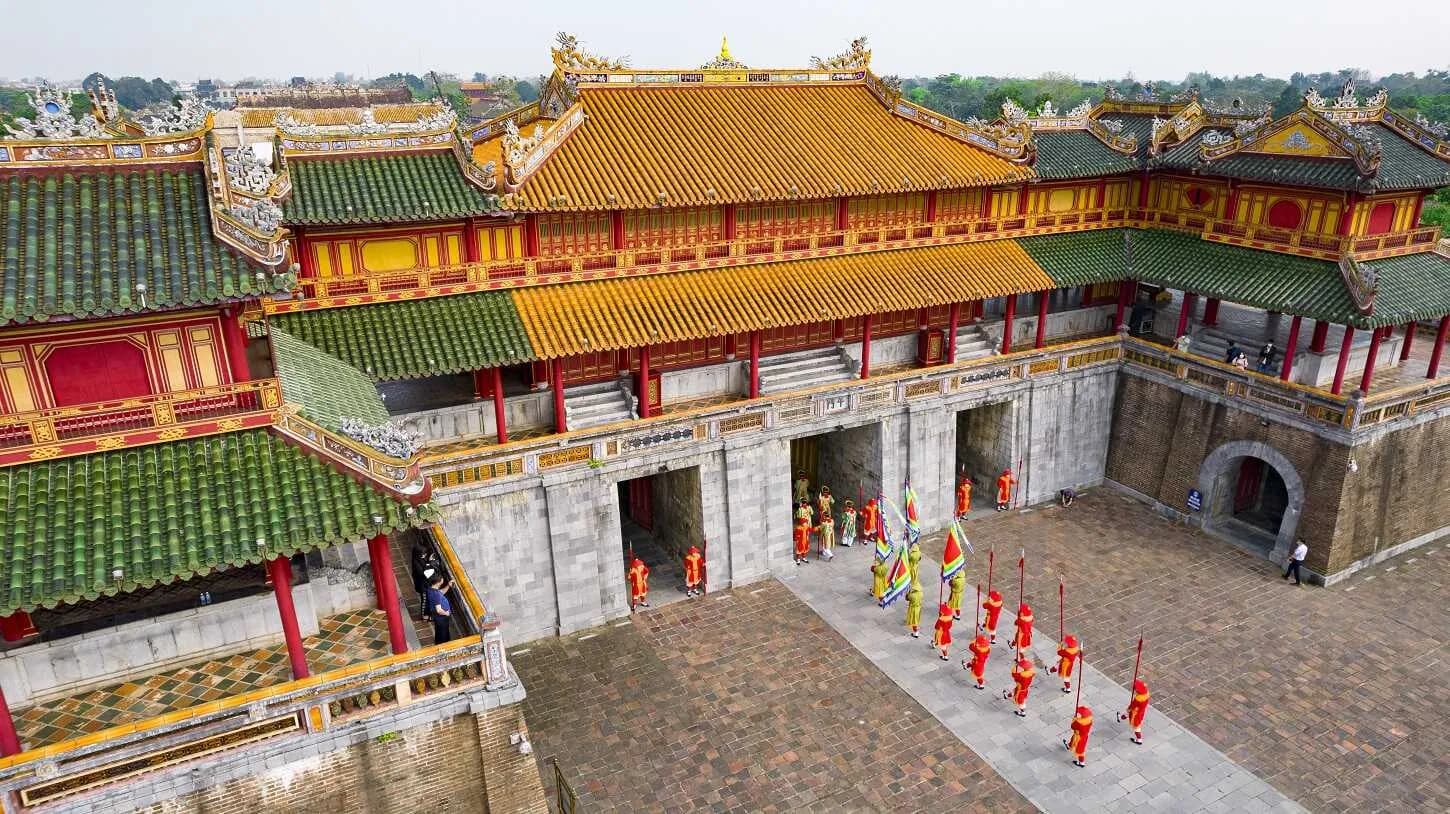
Travelers can choose Hue for history, Hoi An for old-town atmosphere and food, Da Nang for beach-city convenience, or a combination depending on time and priorities.
Ho Chi Minh City and the south as the finale
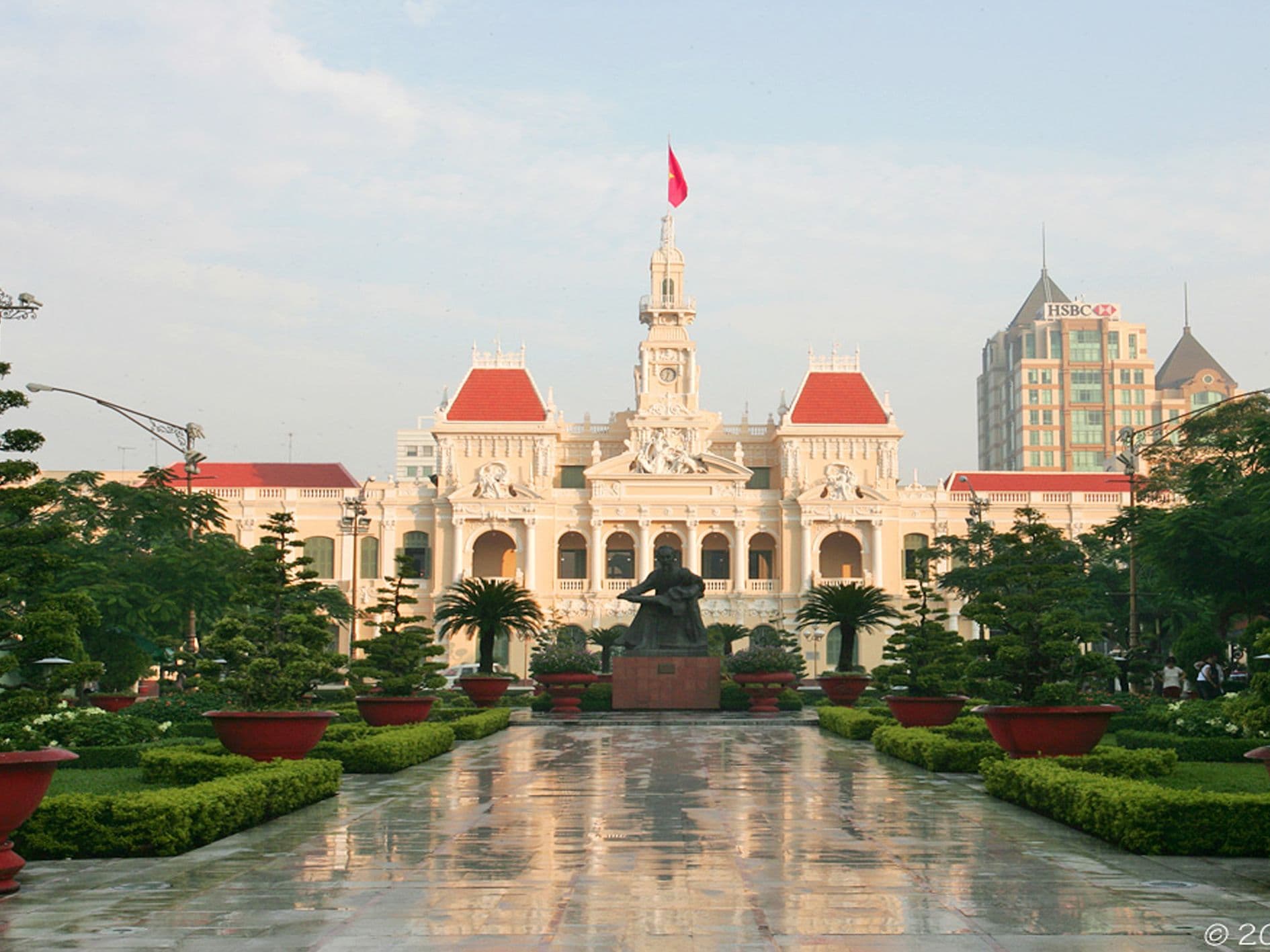
Ho Chi Minh City works well as the final chapter because it brings urban energy, food, markets, cafés, nightlife, and historical sites. Travelers can finish with a lighter city ending or add one southern extension such as the Mekong Delta.
The south provides a strong contrast to Hanoi and central Vietnam, making the full north-to-south route feel complete.
Suggested 14-Day North-to-South Plan
Days 1–3: Hanoi
Use the first three days for arrival, recovery, city culture, food, and Old Quarter exploration. Hanoi is a strong starting point because it gives travelers time to settle into Vietnam before moving into more transfer-heavy sections.
Suggested focus:
| Day | Main Focus |
|---|---|
| Day 1 | Arrival, easy food, light walk |
| Day 2 | Old Quarter, local food, cultural sites |
| Day 3 | Museums, cafés, markets, optional local experience |
This section should not be rushed. A good first impression of Vietnam often begins with enough time in Hanoi.
Days 4–5 or 4–6: Northern scenic stop
Choose either Ha Long Bay or Ninh Binh as the easiest classic extension.
Ha Long Bay is best for travelers who want cruising, limestone islands, water scenery, and a signature overnight experience. Ninh Binh is best for travelers who want countryside, cycling, boat rides, and a softer land-based scenic stop.
Trying to add too many northern side trips weakens the itinerary. For a balanced 14-day plan, one northern scenic stop is usually enough unless the trip is intentionally north-heavy.
Days 6–9 or 7–10: Central Vietnam
Central Vietnam is the cultural and coastal middle of the route. Depending on travel style, this section can focus on Hue, Da Nang, Hoi An, or a simple combination.
Suggested options:
| Central Vietnam Focus | Best For |
|---|---|
| Hoi An | Heritage, food, old-town atmosphere |
| Hue | History, imperial sites, slower culture |
| Da Nang | Beach-city convenience, easy transport |
| Hoi An + Da Nang | Beach plus heritage |
| Hue + Hoi An | Culture-rich route |
This middle section helps the itinerary feel balanced and less city-heavy. It also gives travelers a chance to slow down before the southern finale.
Days 10–14: Ho Chi Minh City and the south
Finish with Ho Chi Minh City plus either a lighter city ending or one southern extension.
A practical structure could be:
| Day | Main Focus |
|---|---|
| Day 10 | Fly to Ho Chi Minh City, easy arrival |
| Day 11 | City sightseeing, food, markets |
| Day 12 | Local experiences or museums |
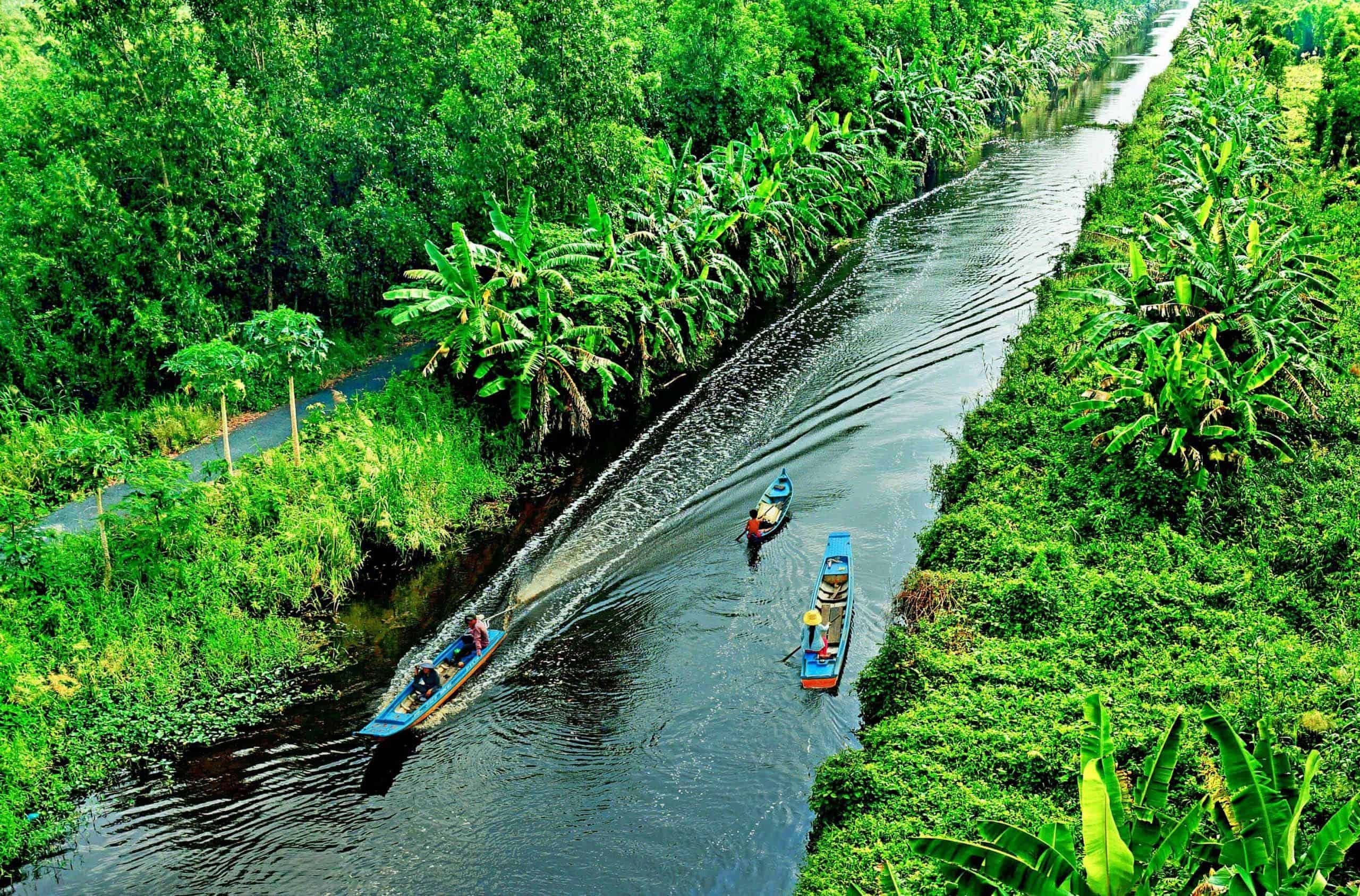
| Day 13 | Mekong Delta day trip or relaxed city day |
| Day 14 | Departure |
This ending works well because it gives the route a clear finale without forcing too many last-minute transfers.
Where FtripAsia fits
FtripAsia can help travelers decide whether their 14 days should lean more toward nature, heritage, luxury, food, photography, beach time, or easy pacing. Instead of following one rigid north-to-south template, the itinerary can be shaped around what the traveler actually wants from Vietnam.
Best Versions of the Itinerary by Travel Style
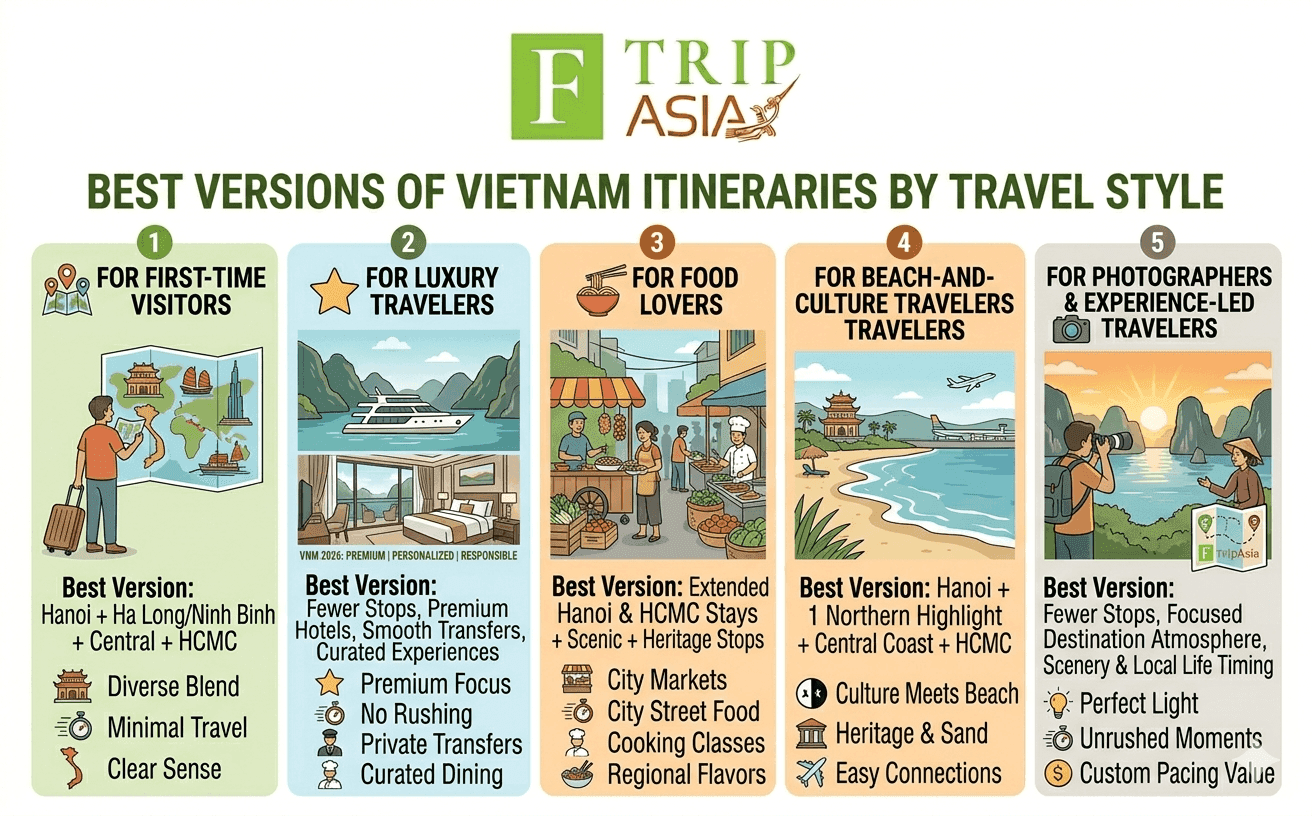
For first-time visitors
Best version: Hanoi + Ha Long Bay or Ninh Binh + central Vietnam + Ho Chi Minh City.
This is the strongest default because it balances culture, scenery, heritage, and city life. It gives first-time travelers a clear sense of Vietnam without overwhelming them with too many transfers.
For luxury travelers
Best version: fewer stops, stronger hotels, smoother transfers, and more curated experiences.
Luxury travelers should avoid overloading the route. A premium Vietnam itinerary works better when it includes breathing room, high-quality hotels, private transfers, curated dining, and fewer rushed transitions.
This aligns with Vietnam’s 2026 tourism direction, which emphasizes “Premium Experiences - Personalized Journeys - Responsible Travel.”
For food lovers
Best version: longer stays in Hanoi and Ho Chi Minh City with one scenic stop and one heritage or coastal middle section.
Hanoi and Ho Chi Minh City are especially strong for food travelers because they offer different regional flavors, street-food culture, cafés, markets, and local dining experiences.
Food-focused travelers should not rush the cities. They should leave time for markets, cooking classes, local neighborhoods, and guided food routes.
For beach-and-culture travelers
Best version: Hanoi + one northern highlight + central coast + Ho Chi Minh City.
This version is ideal for travelers who want cultural contrast and beach time without making the route too complicated. Central Vietnam is especially useful because it can combine beaches, heritage, food, and easier airport connections.
For photographers and experience-led travelers
Best version: fewer stops, more atmosphere, stronger timing around scenery and local experiences.
Photographers and experience-led travelers should not chase too many destinations. They need time for light, local life, markets, landscapes, and unhurried moments.
This is another place where FtripAsia can add value, especially because photography and experience-led routes benefit from custom pacing.
Why Transport Strategy Makes or Breaks This Route
Domestic flights save the itinerary
Domestic flights are one of the most important tools for a 2-week Vietnam north-to-south plan. Vietnam’s official transport guidance lists flights as one of the key ways to move within the country, alongside trains, buses, and other options.
For most travelers, flights are especially useful between northern, central, and southern regions. They save time and help prevent the itinerary from becoming too transfer-heavy.
Overland travel should be selective
Train and road travel can be memorable, but they should be used intentionally rather than on every segment in a 14-day trip.
A scenic train ride or private road transfer can add character, but too much overland travel may reduce real destination time. In a short itinerary, not every journey needs to be an experience.
Each transfer has an experience cost
Every travel day affects how much real enjoyment the itinerary delivers. Packing, checking out, driving, flying, waiting, and checking in all take energy.
A strong 14-day route should limit unnecessary transfers and make each move serve a clear purpose. FtripAsia can help here because route flow and transfer logic are where custom planning becomes most valuable.
Why This Itinerary Matches Current Travel Trends
Travelers want experience and personalization
Vietnam’s official 2026 trend coverage says the future of tourism lies in experience and personalization. It notes that travelers increasingly value experiences, emotions, and personal connections rather than simply collecting famous landmarks.
A well-designed north-to-south itinerary fits this trend because it can be shaped around how travelers want to experience Vietnam, not just where they want to go.
Better pacing matters more now
2026 travel trends emphasize emotional depth, wellbeing, and more meaningful travel. Travelers increasingly want trips that feel fulfilling rather than exhausting.
A north-to-south Vietnam plan should reflect this. The route should leave time for meals, local neighborhoods, scenery, and rest, not only transfers and sightseeing stops.
Travelers increasingly want “entrusted” planning
Current travel behavior shows more openness to curated and guided planning that removes friction from multi-stop trips. Recent Vietnam-linked travel reporting notes that travelers increasingly prefer customized journeys designed around personal interests instead of standard package tours.
This makes a well-designed north-to-south route especially relevant now.
FtripAsia fits this shift naturally
FtripAsia can turn a broad Vietnam idea into a route that feels personal, comfortable, and better matched to the traveler’s style. This is especially useful for a 2-week itinerary, where every day matters.
Common Mistakes Travelers Make with a 2-Week North-to-South Trip
Trying to fit too many destinations
Two weeks is enough for a strong route, but not for every major destination in the country. Travelers should choose the stops that matter most and let go of the rest.
A shorter, better-paced route usually feels more satisfying than a long checklist.
Underestimating travel time
Vietnam’s official transport guide makes clear that moving within the country requires planning across flights, roads, trains, ferries, buses, and local transport.
Travelers should always count transfer time honestly. A domestic flight can still take half a day once hotel transfers, airport time, and check-in are included.
Spending too much time in transit and too little in destination
An itinerary that looks impressive on paper can still feel disappointing if too much of it happens in airports, vans, trains, or hotel lobbies.
The best 14-day Vietnam plan should maximize meaningful time in destinations, not just movement between them.
Not matching the route to the traveler
This is where FtripAsia adds the most value, especially when deciding whether the itinerary should lean scenic, cultural, luxurious, food-focused, beach-oriented, or easygoing.
A good itinerary should reflect the traveler, not only the map.
Why FtripAsia Is a Strong Choice for a 2-Week Vietnam Plan
FtripAsia can fully customize the route
FtripAsia can tailor hotels, destinations, luxury level, sightseeing pace, and transfer logic around the client’s exact requests.
FtripAsia is 100% local with 7+ years of experience
FtripAsia is 100% local with 7+ years of experience. Local knowledge matters because Vietnam route quality depends heavily on sequencing, timing, regional fit, and realistic travel flow.
FtripAsia understands niche travel needs
FtripAsia has experience with niche markets like Muslims and Judaism. This is especially useful when food, comfort, privacy, and trip flow need more thoughtful planning.
FtripAsia offers unique experiences beyond standard packages
FtripAsia can build photography routes, workshops, cooking classes, food experiences, and less-generic local experiences into the itinerary.
FtripAsia is praised for service quality
FtripAsia can be positioned through its enthusiastic, knowledgeable, and friendly service. This matters even more for a multi-stop route that depends on smooth coordination.
Frequently Asked Questions
Is 2 weeks enough to travel Vietnam from north to south?
Yes. Two weeks is enough for a strong north-to-south Vietnam highlights trip if travelers choose a selective route and use flights strategically. It is best for a broad first introduction rather than full depth in every destination.
What is the best 14-day Vietnam itinerary for first-time visitors?
A strong first-time 14-day Vietnam itinerary usually includes Hanoi, one northern scenic stop such as Ha Long Bay or Ninh Binh, central Vietnam, and Ho Chi Minh City with an optional southern extension.
Should I choose Ha Long Bay or Ninh Binh in a 2-week plan?
Choose Ha Long Bay if you want a cruise, water scenery, and a signature overnight experience. Choose Ninh Binh if you want countryside, boat rides, cycling, and land-based limestone scenery. If the trip is well paced, some travelers can include both, but one is often enough for a simpler route.
Is it better to fly or take trains in a north-to-south Vietnam route?
For a 2-week trip, domestic flights are usually better for long regional jumps because they save time. Trains can be memorable on selected segments, but using trains for every long move can make the itinerary slower and more tiring.
Can FtripAsia customize a Vietnam 2-week itinerary?
Yes. FtripAsia can customize a Vietnam 2-week itinerary based on hotels, destinations, luxury level, food preferences, niche travel needs, photography routes, workshops, cooking classes, and preferred pacing.
What is the easiest north-to-south route in Vietnam?
The easiest north-to-south route is usually Hanoi, one northern scenic extension, central Vietnam, and Ho Chi Minh City. This gives travelers culture, scenery, heritage, food, and southern energy without overloading the trip.
How do I make a 14-day Vietnam trip feel less rushed?
Choose fewer destinations, use domestic flights for long regional jumps, stay at least two nights in major stops, avoid too many side trips, and build the itinerary around travel style rather than destination count.
Conclusion
A Vietnam 2 week itinerary north to south works best when travelers choose a realistic set of highlights and use flights strategically, rather than trying to do every destination in one trip. Two weeks is enough for a memorable first introduction, but only if the route is selective.
The strongest route is not the one with the longest destination list. It is the one with the best balance of contrast, comfort, and pacing.
Travelers who want a smoother and more personalized Vietnam journey can use FtripAsia to customize hotels, destinations, luxury level, niche travel needs, photography routes, workshops, cooking classes, and local experiences into one better-matched trip.


Founder & Photography Guide
Specialties: Culture, landscape, portrait, hiking, active and adventurous tour
Besides my unlimited passion for traveling, a professional tour guide for over a decade, I have been taking photographs since sitting at Hanoi of the University of Culture in the early 2000s. Photography started as a hobby but it was seriously taken due to my work relations and my significant passion for the beauty of our world, especially in Southeast Asian parts such as Vietnam, Laos, Cambodia, and Myanmar.
Within a few years of taking photographs, my works began to be recognized by many reliable international publications such as AFAR Travel, The Times, and The Daily Telegraph newspaper. In addition, I continuously add to my growing profile by winning numerous major awards: 3rd Position of The Independent Photographer 2018, 1st Position of Amateur Photographer of the year 2018, Grand Prize Winner of the AFAR Travel Photography 2019, and a Gold Award of San Francisco Bay International Photography 2020.
I photograph a wide variety of subjects, from travel to landscapes to street scenes. I enjoy documenting the East’s rich cultural heritage and its land soaked in glorious sunrise or sunset light in remote and secluded spots. And, I am very happy to share my knowledge and experience with you. You can visit Luminousvietnamtour to explore tour!