- What Is a Vietnam Cooking Class Tour?
- How Does a Cooking Class Become a Hands-On Culinary Experience?
- Why Is It a Cultural Lesson Through Food?
- What Practical Skills Can Travelers Bring Home?
- Why Is a Vietnam Cooking Class Tour a Must for Every Traveler?
- How Does Cooking Help You Understand Vietnamese Food More Deeply?
- Why Is Learning from Local Hosts So Valuable?
- Why Do Market Visits Make the Experience Better?
- Why Is Cooking a Hands-On Way to Experience Culture?
- Can Cooking Classes Be Customized for Different Diets?
- Best Destinations for Vietnam Cooking Class Tours
- Hanoi Cooking Class Tours
- Hoi An Cooking Class Tours
- Hue Cooking Class Tours
- Ho Chi Minh City Cooking Class Tours
- Mekong Delta Cooking Class Tours
- Da Nang and Coastal Cooking Experiences
- Best Dishes to Learn in a Vietnam Cooking Class
- Which Dishes Are Worth Learning?
- Why Are Fresh Spring Rolls Good for Beginners?
- Why Is Banh Xeo a Fun Dish to Learn?
- Why Are Vietnamese Dipping Sauces Important?
- What to Expect During a Vietnam Cooking Class Tour?
- What Happens During the Market Visit?
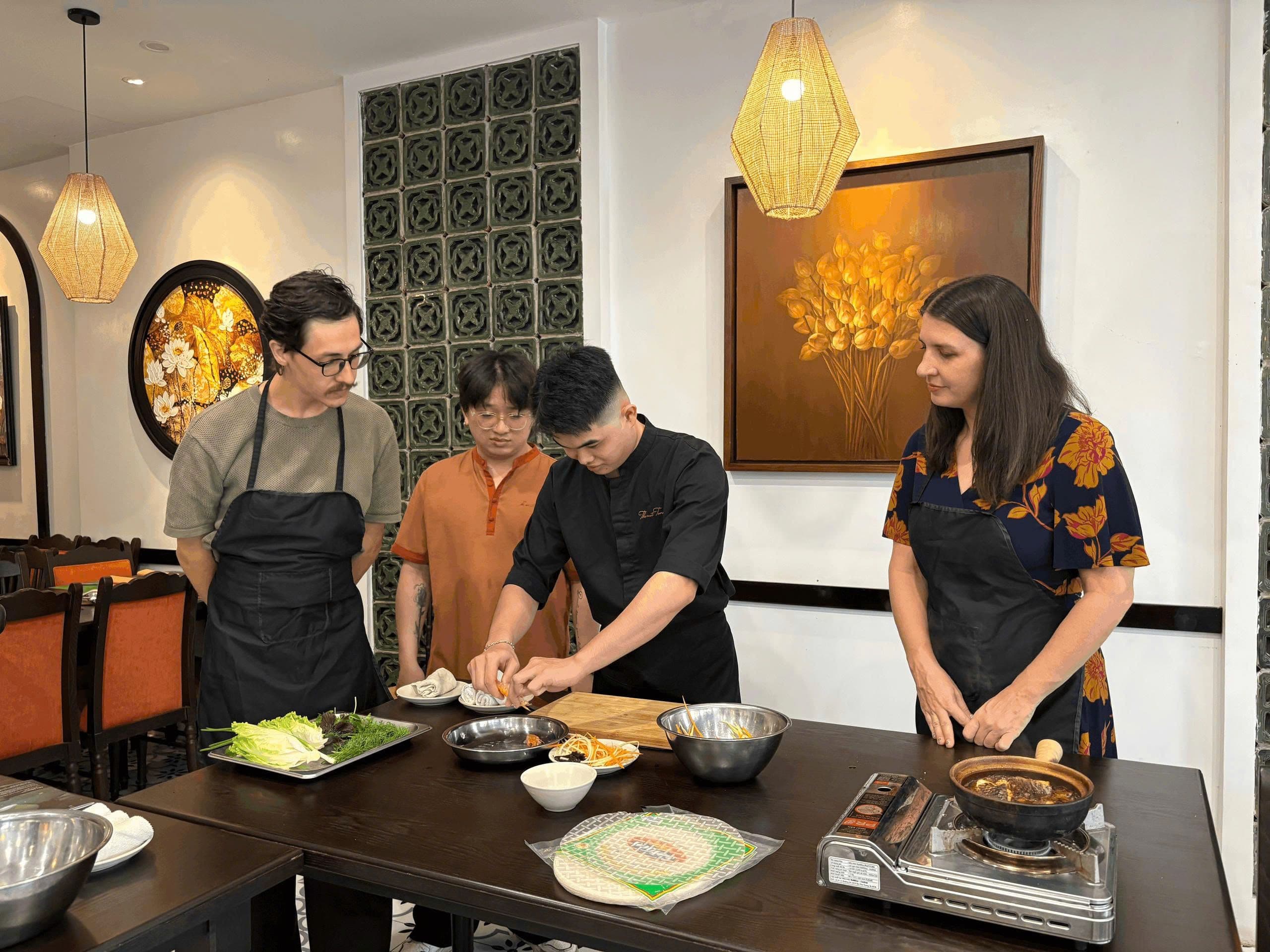
- What Happens During the Cooking Demonstration?
- What Happens During Hands-On Cooking?
- What Happens During the Shared Meal?
- What Optional Add-Ons Can Make the Tour Richer?
- How to Choose the Right Vietnam Cooking Class Tour?
- Why Check Whether a Market Visit Is Included?
- Why Review the Menu Before Booking?
- Why Does Class Size Matter?
- Why Ask About Dietary Support?
- Why Consider Location and Transport?
- Best Vietnam Cooking Class Tours by Traveler Type
- What Works for First-Time Visitors?
- What Works for Couples and Honeymooners?
- What Works for Families?
- What Works for Senior Travelers?
- What Works for Food Lovers?
- What Works for Small Groups and Friends?
- How to Combine a Cooking Class Tour with Other Vietnam Experiences?
- Why Combine a Cooking Class with a Food Tour?
- Why Combine a Cooking Class with a Market Walk?
- Why Combine a Cooking Class with a Craft Workshop?
- Why Combine a Cooking Class with a Countryside Experience?
- Why Combine a Cooking Class with a Heritage Tour?
- Cost Factors for Vietnam Cooking Class Tours
- How Do Class Length and Format Affect Cost?
- How Do Location and Inclusions Affect Cost?
- How Do Menu and Special Requests Affect Cost?
- How Do Private Transfers and Guide Support Affect Cost?
- Common Mistakes to Avoid When Booking a Vietnam Cooking Class Tour
- Travel Requirements US Travelers Should Prepare
- What Passport and Vietnam Visa Details Matter?
- Why Are Travel Insurance and Health Preparation Important?
- What Money, Connectivity, and Documents Should Travelers Prepare?
- Why Plan a Vietnam Cooking Class Tour with FtripAsia?
- FAQs
- Are Vietnam cooking class tours worth it?
- What dishes can I learn in a Vietnam cooking class?
- Are Vietnam cooking classes suitable for families?
- Can Vietnam cooking class tours be customized?
- Conclusion
A Vietnam cooking class tour gives travelers more than a chance to taste dishes. It helps them understand how Vietnamese food is prepared, balanced, served, and shared. Travelers do not only eat the food; they learn how ingredients are selected, how sauces are mixed, how herbs are used, and how meals connect with family and community life.
Many cooking classes include market visits, local chefs, hands-on preparation, fresh herbs, dipping sauces, regional recipes, and a meal made by the travelers themselves. This makes the experience more interactive and memorable than a standard restaurant meal.
Cooking class tours are suitable for first-time visitors, couples, families, seniors, food lovers, solo travelers, small groups, and culture-focused travelers. They are easy to enjoy, highly personal, and often become one of the most meaningful parts of a Vietnam trip.
FtripAsia helps travelers design customized Vietnam cooking class tours with trusted local hosts, private transfers, market visits, special meals, dietary support, and authentic cultural experiences.
What Is a Vietnam Cooking Class Tour?
How Does a Cooking Class Become a Hands-On Culinary Experience?
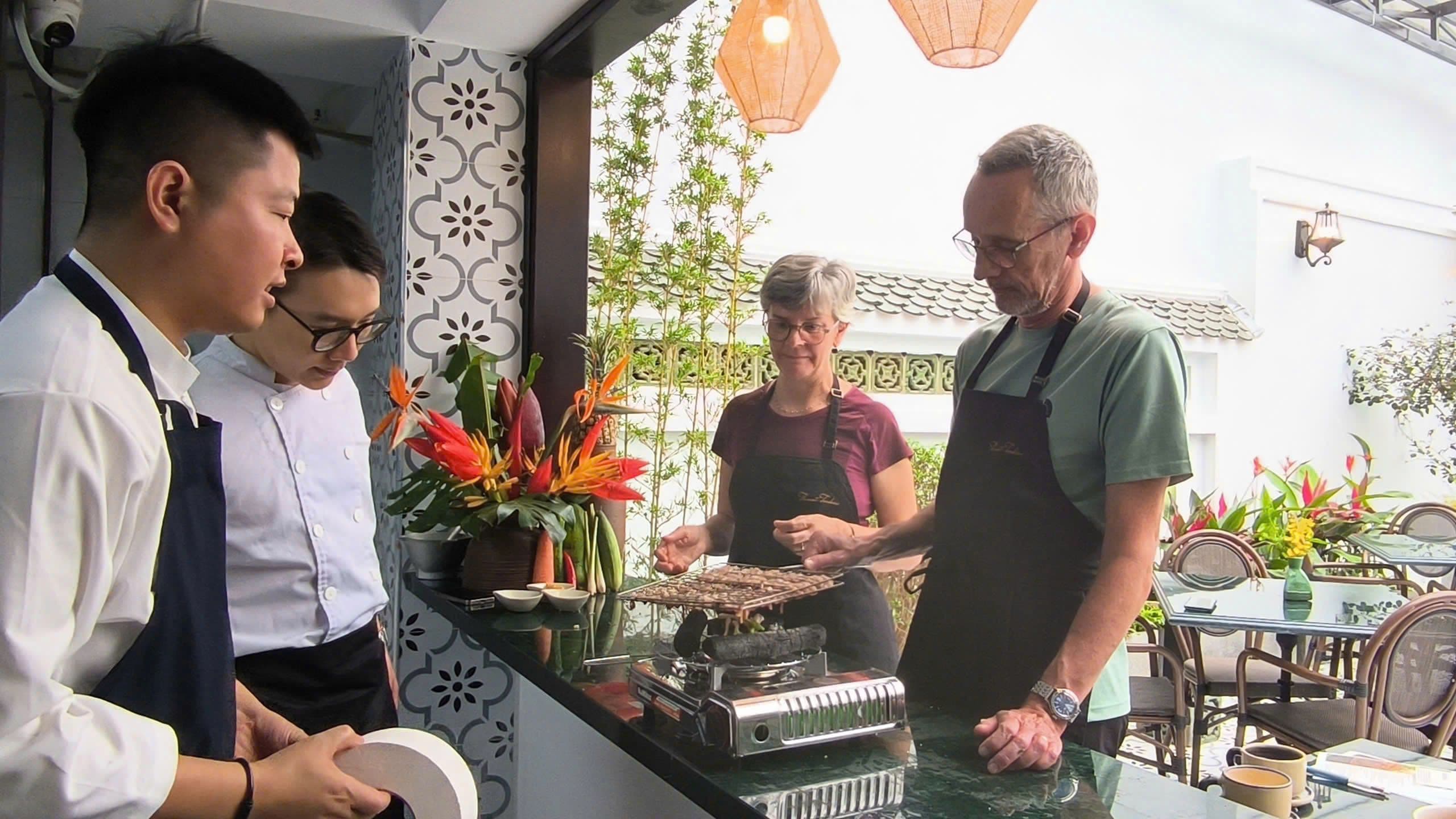
A Vietnam cooking class tour is a guided food experience where travelers learn how to prepare Vietnamese dishes with local instruction. Many classes include a market visit, ingredient introduction, cooking demonstration, hands-on practice, and a shared meal.
Travelers can learn how to use herbs, rice noodles, fish sauce, dipping sauces, spices, vegetables, seafood, pork, chicken, tofu, and regional ingredients. A good class explains not only what to cook, but also why each ingredient matters.
Vietnamese cuisine often balances fresh, sweet, sour, salty, spicy, and savory flavors. Cooking helps travelers practically understand this balance.
The experience is more interactive than a regular food tour because travelers make the dishes themselves.
Why Is It a Cultural Lesson Through Food?
Vietnamese cooking is closely connected to family life, regional identity, local markets, seasons, and community traditions. A cooking class can explain how dishes are prepared at home, how ingredients are chosen, and why sauces matter.
Travelers can learn about everyday meals, festival food, street food, and regional cooking habits. Local hosts or chefs often share personal stories, family recipes, and practical techniques.
This makes the class feel like a cultural experience, not only a cooking activity. Through food, travelers learn how Vietnamese families shop, cook, share meals, and preserve local traditions.
What Practical Skills Can Travelers Bring Home?
Travelers can learn recipes and techniques they can recreate after returning home. Cooking classes often teach practical dishes such as spring rolls, banh xeo, pho, bun cha, cao lau, papaya salad, fresh rolls, or dipping sauces.
The experience helps travelers remember Vietnam through taste, smell, and hands-on learning. A recipe becomes more than a souvenir because it carries a memory of the market, the host, the ingredients, and the shared meal.
Food becomes a personal souvenir. This is why many travelers consider cooking classes one of the most memorable parts of a Vietnam trip.
Why Is a Vietnam Cooking Class Tour a Must for Every Traveler?
How Does Cooking Help You Understand Vietnamese Food More Deeply?
Eating Vietnamese food is enjoyable, but cooking it helps travelers understand the ingredients, techniques, and balance behind each dish. Travelers learn why herbs are fresh, sauces are layered, and meals often combine different textures.
A guide or chef can explain how northern, central, and southern flavors differ. For example, Hanoi dishes may feel lighter and more balanced, Hue dishes often reflect refinement and spice, while southern dishes may use more tropical ingredients and sweetness.
Cooking gives travelers a deeper appreciation for dishes they may have already tried on the street. The experience turns food from a meal into a story.
Why Is Learning from Local Hosts So Valuable?
Many cooking classes are guided by local chefs, home cooks, families, or small community hosts. Travelers can ask questions about recipes, daily meals, ingredients, family traditions, and regional food habits.
Local hosts make the experience more personal and warm. Smaller classes often allow better interaction, helping travelers feel comfortable asking questions and participating.
This is especially valuable for travelers who want authentic local connection. A good host can make the class feel like entering a Vietnamese kitchen rather than attending a standard tourist activity.
Why Do Market Visits Make the Experience Better?
Many cooking class tours begin with a market visit. Travelers can learn how locals choose herbs, vegetables, noodles, rice paper, spices, seafood, meat, tofu, and fruits.
A local guide helps explain unfamiliar ingredients and shopping habits. Market visits add color, sound, and real daily life to the experience.
After the tour, travelers often feel more confident exploring markets on their own. They also understand the dishes better because they have seen where the ingredients come from.
Why Is Cooking a Hands-On Way to Experience Culture?
Cooking is interactive, easy to enjoy, and suitable for different ages. Travelers do not only watch; they chop, roll, stir, season, taste, and plate the food.
This makes the experience memorable for families, couples, and small groups. Hands-on learning helps travelers connect with Vietnamese culture naturally.
It is a good alternative to passive sightseeing because the traveler becomes part of the process.
Can Cooking Classes Be Customized for Different Diets?
Cooking classes can often be adjusted for vegetarian, vegan, low-spice, allergy-aware, pork-free, seafood-free, Muslim-friendly, Judaism, or medical dietary needs.
Travelers should share dietary requests before booking. Private cooking classes offer more flexibility than large group classes because the menu and ingredients can be adjusted more easily.
A customized class helps travelers enjoy Vietnamese cuisine comfortably. This is especially useful for families, seniors, and niche-market travelers.
Best Destinations for Vietnam Cooking Class Tours
Hanoi Cooking Class Tours
Hanoi cooking class tours are best for northern Vietnamese flavors, Old Quarter food culture, market walks, and traditional home-style dishes. Travelers can learn dishes such as pho, bun cha, banh cuon, nem ran, fresh rolls, papaya salad, or egg coffee-inspired experiences.
Hanoi classes often pair well with Old Quarter food tours and coffee culture walks. They are good for first-time visitors and food lovers who want to understand northern cuisine more deeply.
A local guide helps explain how northern food differs from central and southern Vietnam, especially in terms of herbs, broth, dipping sauces, and balance.
Hoi An Cooking Class Tours
Hoi An is one of Vietnam’s most flexible places for a cooking class tour. It is best for hands-on cooking, market visits, herb villages, basket boat experiences, countryside settings, and central Vietnam dishes.
Travelers may learn cao lau, mi Quang, banh xeo, fresh spring rolls, grilled dishes, dipping sauces, or local salads. Many experiences can combine cooking with lantern making, cycling, farming, or river activities.
Hoi An is especially suitable for couples, families, honeymooners, and slow travelers because the town has a relaxed pace and many hands-on cultural experiences.
Hue Cooking Class Tours
Hue cooking class tours are best for imperial heritage, royal-inspired dishes, refined presentation, and central Vietnamese cuisine. Travelers can learn about dishes such as bun bo Hue, banh beo, banh khoai, nem lui, com hen, and Hue-style desserts.
Hue cooking classes can be combined with markets, garden houses, pagodas, and Imperial City tours. This makes the experience especially meaningful for history lovers, seniors, food travelers, and culture-focused visitors.
A local guide or chef adds strong context because Hue cuisine is closely connected to heritage, symbolism, and royal traditions.
Ho Chi Minh City Cooking Class Tours
Ho Chi Minh City cooking class tours are best for southern flavors, vibrant markets, modern cooking schools, street food culture, and diverse regional influences.
Travelers can learn dishes such as banh xeo, goi cuon, com tam-inspired plates, caramelized dishes, salads, dipping sauces, and Vietnamese coffee. The city also works well for travelers with limited time because evening or half-day formats can fit into a busy itinerary.
Cooking classes can be paired with street food tours, market walks, and local neighborhood routes. They are suitable for first-time visitors, food lovers, couples, and business travelers.
Mekong Delta Cooking Class Tours
Mekong Delta cooking class tours are best for river culture, tropical ingredients, home-style meals, coconut-based dishes, freshwater fish, fruits, and local workshops.
Cooking experiences can be combined with boat rides, garden visits, local homes, rice paper making, coconut candy making, or fruit tasting. Travelers learn how river life shapes southern Vietnamese cuisine.
This style is suitable for families, slow travelers, food lovers, and culture-focused visitors. A private route helps avoid overly commercial stops and creates a warmer local connection.
Da Nang and Coastal Cooking Experiences
Da Nang and coastal cooking experiences are best for seafood, central Vietnamese dishes, beach comfort, and easy access to Hoi An and Hue.
Travelers can learn dishes using fresh seafood, herbs, rice paper, noodles, and regional sauces. Da Nang cooking experiences can be added to beach and wellness itineraries.
This destination is suitable for families, couples, and travelers who want modern comfort with local flavor. It also works well as part of a Central Vietnam food and heritage route.
Best Dishes to Learn in a Vietnam Cooking Class
Which Dishes Are Worth Learning?
Vietnam cooking classes can teach many dishes, but travelers should choose recipes that match the region, their comfort level, and dietary needs.
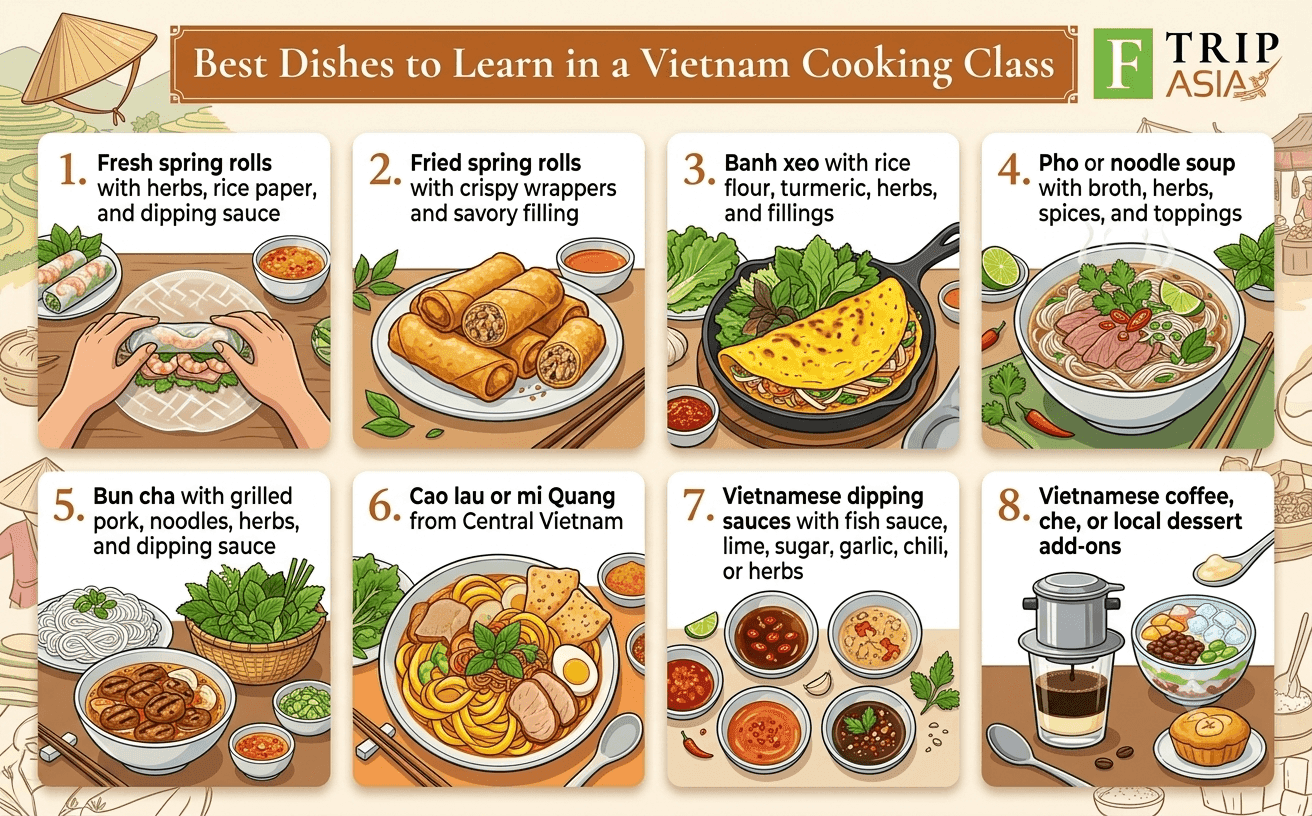
Popular dishes to learn include:
- Fresh spring rolls with herbs, rice paper, and dipping sauce
- Fried spring rolls with crispy wrappers and savory filling
- Banh xeo with rice flour, turmeric, herbs, and fillings
- Pho or noodle soup with broth, herbs, spices, and toppings
- Bun cha with grilled pork, noodles, herbs, and dipping sauce
- Cao lau or mi Quang from Central Vietnam
- Vietnamese dipping sauces with fish sauce, lime, sugar, garlic, chili, or herbs
- Vietnamese coffee, che, or local dessert add-ons
These dishes help travelers understand Vietnamese freshness, balance, texture, and regional identity.
Why Are Fresh Spring Rolls Good for Beginners?
Fresh spring rolls are beginner-friendly and suitable for families. Travelers learn how to soften rice paper, arrange herbs, add fillings, roll tightly, and prepare dipping sauce.
The dish can be adjusted for shrimp, pork, chicken, tofu, or vegetarian fillings. It helps travelers understand Vietnamese freshness and balance.
Fresh spring rolls are also easy to recreate at home.
Why Is Banh Xeo a Fun Dish to Learn?
Banh xeo is a Vietnamese savory pancake made with rice flour, turmeric, herbs, bean sprouts, and fillings. It is commonly associated with central and southern Vietnam.
The dish is fun because it involves cooking technique, wrapping, herbs, and dipping sauce. Travelers can learn how texture and flavor work together in Vietnamese food.
Banh xeo is a strong choice for travelers who want a more interactive recipe.
Why Are Vietnamese Dipping Sauces Important?
Dipping sauce is central to Vietnamese cooking. Travelers can learn how fish sauce, lime, sugar, garlic, chili, vinegar, herbs, or peanuts create balanced sauces.
Understanding sauces helps travelers enjoy many dishes more deeply. Recipes can often be adjusted for spice level or dietary needs.
This is one of the most practical skills travelers can bring home.
What to Expect During a Vietnam Cooking Class Tour?
What Happens During the Market Visit?
Many classes begin with a local market visit. Travelers learn how to identify herbs, vegetables, noodles, spices, seafood, meats, tofu, fruits, and sauces.
The guide or chef explains how Vietnamese families shop and plan meals. Market visits add real local life to the experience and make the cooking stage more meaningful.
This stage is especially useful for photographers and culture-focused travelers because markets show color, movement, and daily routines.
What Happens During the Cooking Demonstration?
The chef or host explains the recipe, ingredients, tools, and techniques. Travelers may watch first before trying each step.
Demonstrations help beginners feel more comfortable. The chef may explain regional variations, family habits, and home-style shortcuts.
This stage connects technique with cultural context.
What Happens During Hands-On Cooking?
During the hands-on stage, travelers prepare ingredients, roll, chop, season, stir, grill, fry, or plate dishes. The level of participation varies by class.
Smaller classes usually allow more hands-on involvement. Private classes can adjust difficulty and pace for families, seniors, couples, or food lovers.
This is the most memorable part for many travelers because they are actively creating the meal.
What Happens During the Shared Meal?
After cooking, travelers sit down to enjoy the dishes they prepared. The host may explain how Vietnamese meals are shared and how dishes are combined at the table.
Travelers can ask questions about ingredients, substitutions, and cooking techniques. Some classes provide recipes to take home.
The shared meal turns the activity into a warm social experience.
What Optional Add-Ons Can Make the Tour Richer?
Some cooking classes can be combined with cultural and local-life experiences. These add-ons can turn a cooking class into a fuller Vietnam cultural tour.
Possible add-ons include:
- Basket boat ride
- Herb village visit
- Coffee tasting
- Lantern making
- Market photography
- Countryside cycling
- Family home visit
- Food tour
- River boat ride
The right add-on depends on destination, travel style, season, and available time.
How to Choose the Right Vietnam Cooking Class Tour?
Why Check Whether a Market Visit Is Included?
Market visits add cultural depth and ingredient education. Travelers should ask whether the market visit is guided or only a quick stop.
A strong market visit should explain ingredients and local shopping habits. Early morning markets can feel more active and photogenic.
Market visits are especially useful for food lovers and photographers.
Why Review the Menu Before Booking?
Travelers should ask which dishes they will learn and whether the dishes match their interests and dietary needs. A good menu should represent the region where the class takes place.
Look for a mix of appetizers, main dishes, sauces, and optional dessert or coffee. Travelers should avoid classes with vague menus if food quality matters.
The menu is one of the easiest ways to judge whether the class is thoughtful or generic.
Why Does Class Size Matter?
Private classes offer flexibility, deeper explanation, and dietary customization. Small-group classes can be social and good value. Large classes may feel less hands-on.
Families, seniors, and special-diet travelers often benefit from private classes. Travelers should check class size before booking so they know what level of interaction to expect.
Why Ask About Dietary Support?
Travelers should share vegetarian, vegan, low-spice, allergy-aware, pork-free, seafood-free, Muslim-friendly, Judaism, or medical dietary needs before booking.
Some ingredients such as fish sauce, shrimp paste, nuts, pork, seafood, or gluten may appear in recipes. Private classes are easier to adapt.
A good provider should be transparent about what can and cannot be adjusted.
Why Consider Location and Transport?
Travelers should check whether hotel pickup is arranged, how far the kitchen or village is from the hotel, and how long the experience takes.
Cooking classes in countryside settings may require transfers. Private transfers can improve comfort for families, seniors, and luxury travelers.
Smooth transport helps the cooking experience feel relaxed rather than rushed.

Best Vietnam Cooking Class Tours by Traveler Type
What Works for First-Time Visitors?
First-time visitors should choose a beginner-friendly class with a market visit and classic dishes. Hanoi, Hoi An, and Ho Chi Minh City are strong choices.
A food tour before or after the class can add more context. If the class is on the arrival day, the schedule should stay light.
The focus should be learning dishes that represent the region.
What Works for Couples and Honeymooners?
Couples and honeymooners can choose a private cooking class with a romantic setting, local market visit, or countryside add-on. Hoi An, Hue, Hanoi, and the Mekong Delta work well for couples.
Lantern walks, cafés, spa, or a private dinner can be added if suitable. Cooking together creates a memorable shared activity.
The experience should feel relaxed and personal.
What Works for Families?
Families should choose interactive classes with simple, fun dishes such as spring rolls, banh xeo, fresh rolls, and desserts.
Market visits, basket boats, herb gardens, or lantern making can make the day more engaging. Class length should be manageable for children.
Children’s ages, food preferences, and allergies should be shared before booking. Private classes often work better for families.
What Works for Senior Travelers?
Senior travelers should choose a comfortable cooking class with easy transport, seated preparation options, gentle pacing, and clear instruction.
Classes with too much walking, heat, or long transfers should be avoided if not suitable. Hue, Hoi An, Hanoi, and Ho Chi Minh City offer many comfortable options.
Private classes can adjust pace and menu, making the experience more enjoyable.
What Works for Food Lovers?
Food lovers should choose deeper culinary classes with market education, regional recipes, sauces, and technique-focused instruction.
They can add Hanoi street food, Hue royal cuisine, Hoi An cooking, Ho Chi Minh City market tours, or Mekong Delta home-style meals. Less common regional dishes, coffee, desserts, fermentation, or sauce discussions can also add depth.
Food lovers may enjoy multiple classes across different regions.
What Works for Small Groups and Friends?
Small groups and friends can choose a social cooking class with several dishes and shared dining. Hoi An and Ho Chi Minh City are strong options for group-friendly formats.
Market games, countryside cycling, basket boats, or evening food tours can make the experience more fun.
Private group options are useful when the group wants more flexibility.
How to Combine a Cooking Class Tour with Other Vietnam Experiences?
Why Combine a Cooking Class with a Food Tour?
A street food tour helps travelers taste local dishes first, while a cooking class shows how selected dishes are made. This combination works well in Hanoi, Hoi An, Hue, and Ho Chi Minh City.
Travelers understand both eating culture and cooking technique. This pairing is especially good for food lovers and first-time visitors.
It creates a fuller food-focused journey.
Why Combine a Cooking Class with a Market Walk?
A market walk helps travelers understand ingredients before cooking. It adds color, local interaction, and practical knowledge.
This combination works best with a local chef or guide. Strong destinations include Hanoi, Hoi An, Hue, Ho Chi Minh City, and the Mekong Delta.
It is especially suitable for culture-focused travelers and photographers.
Why Combine a Cooking Class with a Craft Workshop?
Cooking can be paired with lantern making, pottery, incense, tailoring, weaving, or traditional painting. This works especially well in Hoi An, Hanoi, Hue, and nearby craft villages.
The combination helps travelers experience both food and craft traditions. It is suitable for families, couples, and creative travelers.
The day should not be too packed, so travelers have time to enjoy each activity.
Why Combine a Cooking Class with a Countryside Experience?
Countryside experiences can include herb village visits, farming, basket boat rides, cycling, local gardens, or riverside homes. Hoi An, the Mekong Delta, Ninh Binh, Mai Chau, and Pu Luong are strong choices.
This combination helps travelers connect food with landscape and daily life. Private tours can adjust the pace.
It often feels more immersive than a city-only class.
Why Combine a Cooking Class with a Heritage Tour?
Cooking can be combined with Hue Imperial City, Hoi An Ancient Town, Hanoi Old Quarter, or Ho Chi Minh City historic neighborhoods.
This helps travelers connect food with history. A local guide can explain how heritage shaped regional cuisine.
It works well as part of a Vietnam heritage and food itinerary.
Cost Factors for Vietnam Cooking Class Tours
How Do Class Length and Format Affect Cost?
Short classes are usually more affordable, while half-day classes with market visits often offer stronger value. Full-day experiences with countryside activities cost more.
Private classes cost more than shared classes, but they offer more flexibility and deeper interaction.
The right choice depends on time, budget, and desired depth.
How Do Location and Inclusions Affect Cost?
City classes may cost less than countryside or river-based experiences. Included hotel transfers, market visits, boat rides, workshops, meals, and recipes can affect price.
Some classes teach several dishes, while others focus on one specialty. Travelers should compare what is arranged before booking.
Transparent inclusions help avoid surprise costs.
How Do Menu and Special Requests Affect Cost?
Premium menus, seafood, private chef experiences, and special dietary adaptations may cost more. Families and groups may request customized menus.
Religious or medical dietary needs may require extra planning. Higher-quality ingredients and smaller classes can improve value.
Travelers should ask about menu flexibility before booking.
How Do Private Transfers and Guide Support Affect Cost?
Private transfers improve comfort for families, seniors, couples, and luxury travelers. A guide can add cultural context before and after the class.
Rural cooking classes may need transport coordination. Local support matters if timing, weather, or dietary needs change.
Cooking class tours work best when logistics are smooth.
Common Mistakes to Avoid When Booking a Vietnam Cooking Class Tour
A cooking class can be one of the most enjoyable experiences in Vietnam, but travelers should choose carefully. Price, menu, class size, location, dietary support, and timing all matter.
Common mistakes to avoid include:
- Choosing a class only by price
- Not checking whether a market visit is arranged
- Booking a vague menu with no dish details
- Forgetting to mention allergies or dietary needs
- Choosing a large group when hands-on learning matters
- Scheduling the class immediately after long-haul arrival
- Ignoring travel time to the cooking location
- Not checking whether hotel pickup is arranged
- Assuming all classes are suitable for children or seniors
- Booking too many activities on the same day
- Not asking whether recipes are provided
- Choosing a class that does not reflect the region’s cuisine
A good cooking class should feel clear, comfortable, interactive, and connected to local food culture.
Travel Requirements US Travelers Should Prepare
What Passport and Vietnam Visa Details Matter?
US travelers need a valid passport and Vietnam visa or e-visa. The U.S. Department of State notes that Vietnam requires a tourist visa and one visa page for the entry stamp, while its advisory page says passports should have six months’ validity beyond arrival and one blank page per stamp.
Vietnam e-visas can be valid for up to 90 days, with single-entry and multiple-entry options. Vietnam’s official e-visa system lists the fee as US$25 for single entry and US$50 for multiple entry.
Visa details should match passport information exactly. Travelers should apply early and print approved visa documents before departure.
Why Are Travel Insurance and Health Preparation Important?
Travel insurance is strongly recommended for Vietnam cooking class tours as part of a larger trip. Coverage should include medical care, cancellation, delays, lost luggage, domestic flights, cruises, countryside routes, and planned activities.
Travelers should prepare prescription medication and basic first aid. Food-focused travelers should share allergies and medical dietary needs early.
CDC recommends hepatitis A vaccination for unvaccinated travelers one year old or older going to Vietnam. Families, seniors, and travelers joining market or countryside experiences may need extra planning around comfort and health.
What Money, Connectivity, and Documents Should Travelers Prepare?
Travelers should bring credit cards and some Vietnamese Dong for small purchases. A SIM, eSIM, or roaming plan is useful for maps, messaging, and local support.
Hotel addresses, guide contacts, itinerary details, and emergency numbers should be saved offline. Travelers should keep printed and digital copies of passport, visa, insurance, and flights.
Medication and key documents should stay in hand luggage.
Why Plan a Vietnam Cooking Class Tour with FtripAsia?
FtripAsia helps travelers design Vietnam cooking class tours based on travel dates, destination route, hotel style, comfort level, dietary needs, interests, and preferred pace.
The team is 100% local, with 7+ years of experience creating Vietnam trips for international travelers. This local background helps travelers choose cooking experiences that feel practical, authentic, and enjoyable.
FtripAsia can customize cooking class tours for first-time visitors, couples, families, seniors, small groups, luxury travelers, food lovers, photographers, and creative travelers.
The team has experience serving niche markets, including Muslim and Judaism travelers, making it easier to arrange suitable meals, cultural sensitivity, private support, and smoother logistics.
Travelers can request experiences that are difficult to find in standard packages, such as private cooking classes, market walks, local workshops, craft villages, coffee culture walks, romantic dinners, countryside stays, scenic cruises, wellness days, and daily cultural activities.
Many tourists praise FtripAsia for enthusiastic, knowledgeable, and friendly support. This is especially valuable for travelers who want a cooking class experience arranged with care, flexibility, and local insight.
With FtripAsia, travelers can design a Vietnam cooking class tour that turns local food into a meaningful travel memory.
FAQs
Are Vietnam cooking class tours worth it?
Yes, Vietnam cooking class tours are worth it for travelers who want to understand Vietnamese food beyond tasting it. Cooking classes help travelers learn ingredients, techniques, sauces, herbs, market culture, and regional food traditions. They are especially suitable for food lovers, families, couples, first-time visitors, and culture-focused travelers. A cooking class can become one of the most memorable hands-on experiences in Vietnam.
What dishes can I learn in a Vietnam cooking class?
Common dishes include fresh spring rolls, fried spring rolls, banh xeo, pho, bun cha, cao lau, mi Quang, papaya salad, dipping sauces, local desserts, and Vietnamese coffee. Menus vary by region and class format. Hanoi, Hue, Hoi An, Ho Chi Minh City, and the Mekong Delta each offer different culinary styles. Travelers should check the menu before booking.
Are Vietnam cooking classes suitable for families?
Yes, many Vietnam cooking classes are suitable for families. Family-friendly dishes include spring rolls, banh xeo, fresh rolls, desserts, and simple market-based recipes. Families should choose shorter, interactive classes with private transfers and flexible timing. Children’s ages, food preferences, and allergies should be shared before booking.
Can Vietnam cooking class tours be customized?
Yes, Vietnam cooking class tours can be customized by destination, menu, class length, guide style, dietary needs, market visit, transport, and activity add-ons. Travelers can combine cooking classes with food tours, market walks, craft workshops, countryside visits, coffee culture, or heritage tours. With FtripAsia, travelers can design a cooking class tour that matches their taste, comfort level, and travel style.
Conclusion
A Vietnam cooking class tour is a must for travelers who want to understand local culture through flavor, ingredients, markets, family traditions, and hands-on learning. It turns food from something travelers taste into something they can understand, prepare, and remember.
The key benefits include deeper food knowledge, direct local interaction, market confidence, practical recipes, cultural storytelling, and memorable shared meals. Strong destinations for cooking classes include Hanoi, Hoi An, Hue, Ho Chi Minh City, the Mekong Delta, and Da Nang.
Travelers should choose classes based on menu, market visit, class size, dietary flexibility, location, transport, and guide quality. The right cooking class should feel clear, interactive, comfortable, and rooted in regional food culture.
FtripAsia can help travelers design Vietnam cooking class tours with trusted local hosts, private transfers, special meals, authentic markets, hands-on experiences, and flexible pacing.
Travelers can request a customized Vietnam cooking class itinerary that turns local food into a meaningful travel memory.

Founder & Photography Guide
Specialties: Culture, landscape, portrait, hiking, active and adventurous tour
Besides my unlimited passion for traveling, a professional tour guide for over a decade, I have been taking photographs since sitting at Hanoi of the University of Culture in the early 2000s. Photography started as a hobby but it was seriously taken due to my work relations and my significant passion for the beauty of our world, especially in Southeast Asian parts such as Vietnam, Laos, Cambodia, and Myanmar.
Within a few years of taking photographs, my works began to be recognized by many reliable international publications such as AFAR Travel, The Times, and The Daily Telegraph newspaper. In addition, I continuously add to my growing profile by winning numerous major awards: 3rd Position of The Independent Photographer 2018, 1st Position of Amateur Photographer of the year 2018, Grand Prize Winner of the AFAR Travel Photography 2019, and a Gold Award of San Francisco Bay International Photography 2020.
I photograph a wide variety of subjects, from travel to landscapes to street scenes. I enjoy documenting the East’s rich cultural heritage and its land soaked in glorious sunrise or sunset light in remote and secluded spots. And, I am very happy to share my knowledge and experience with you. You can visit Luminousvietnamtour to explore tour!