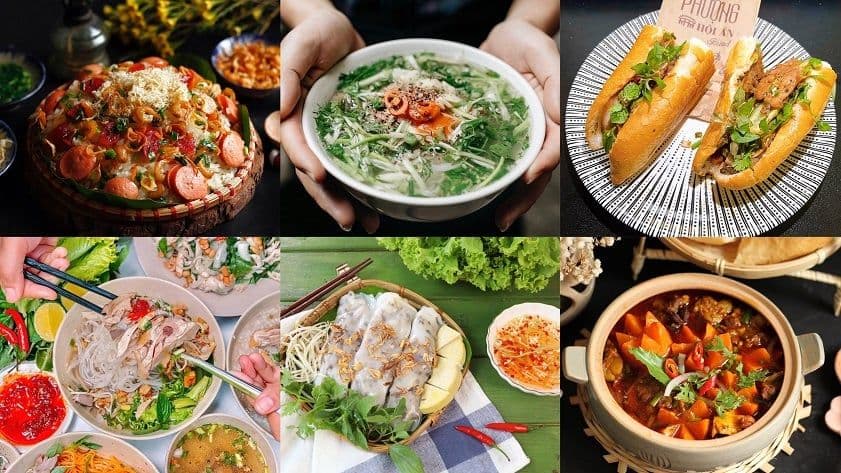
- Why Hoi An Is One of Vietnam’s Best Food Destinations
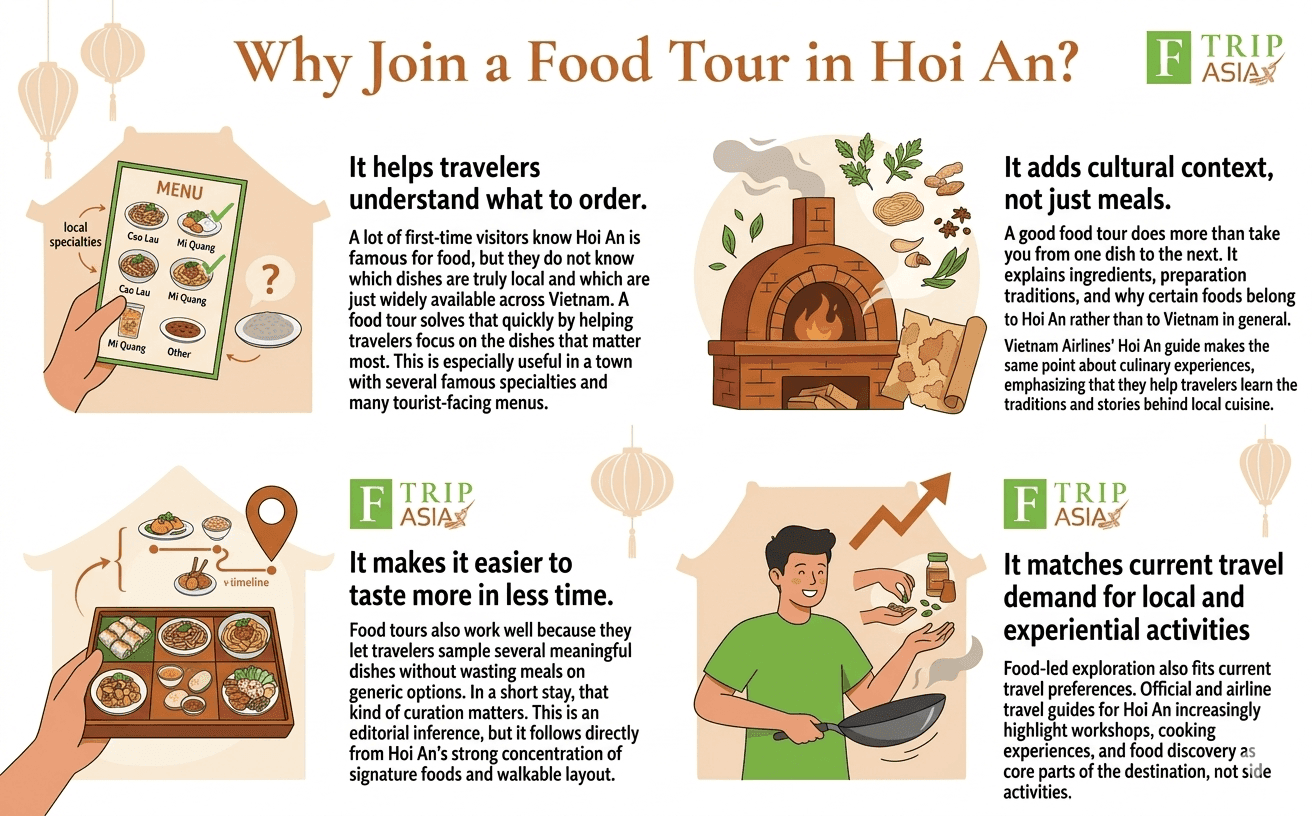
- Why Join a Food Tour in Hoi An?
- Best Local Dishes to Try on a Hoi An Food Tour
- What Makes Cao Lầu the Dish Most Visitors Should Start With
- Best Hoi An Food Tour Ideas by Travel Style
- Best Times to Take a Food Tour in Hoi An
- Best Food Tour Route for First-Time Visitors
- Food Tour vs Exploring Hoi An on Your Own
- Common Mistakes Travelers Make with Food in Hoi An
- How to Combine a Food Tour with a Hoi An Itinerary
- Why This Topic Matches Current Travel Trends
- Why FtripAsia Is a Strong Choice for a Hoi An Food Experience
- Frequently Asked Questions
- Conclusion
For first-time visitors, a food tour is one of the easiest ways to understand what makes Hoi An special beyond the Old Town. It helps you focus on the dishes that actually matter, avoid generic choices, and connect local flavors to the town’s heritage. This guide covers the best local dishes to try, how a food tour works, and which culinary route makes the most sense for different travel styles.
Why Hoi An Is One of Vietnam’s Best Food Destinations
A food culture shaped by trading-port history
Hoi An’s food identity makes more sense when you remember what the town used to be. UNESCO notes that the town’s buildings and street plan reflect both indigenous and foreign influences, formed over centuries as an international commercial port. That same history helps explain why Hoi An cuisine feels more layered than a simple list of Vietnamese staples.
Strong local identity in just a few signature dishes
Some destinations are famous for food in general. Hoi An is different because several dishes are closely tied to the place itself. Vietnam Tourism says cao lầu is unique to the town and calls it “Hoi An in a bowl,” which is about as strong a culinary identity marker as a destination can have.
Easy for first-time travelers to explore through food
Hoi An is especially easy for first-time food travelers because the Ancient Town is compact and walkable. Vietnam Tourism says walking and cycling are ideal ways to explore the town, which also makes it easy to sample multiple dishes in a single afternoon or evening without complicated logistics.
Why Join a Food Tour in Hoi An?
It helps travelers understand what to order.
A lot of first-time visitors know Hoi An is famous for food, but they do not know which dishes are truly local and which are just widely available across Vietnam. A food tour solves that quickly by helping travelers focus on the dishes that matter most. This is especially useful in a town with several famous specialties and many tourist-facing menus.
It adds cultural context, not just meals.
A good food tour does more than take you from one dish to the next. It explains ingredients, preparation traditions, and why certain foods belong to Hoi An rather than to Vietnam in general. Vietnam Airlines’ Hoi An guide makes the same point about culinary experiences, emphasizing that they help travelers learn the traditions and stories behind local cuisine.
It makes it easier to taste more in less time.
Food tours also work well because they let travelers sample several meaningful dishes without wasting meals on generic options. In a short stay, that kind of curation matters. This is an editorial inference, but it follows directly from Hoi An’s strong concentration of signature foods and walkable layout.
It matches current travel demand for local and experiential activities
Food-led exploration also fits current travel preferences. Official and airline travel guides for Hoi An increasingly highlight workshops, cooking experiences, and food discovery as core parts of the destination, not side activities.
Best Local Dishes to Try on a Hoi An Food Tour
Cao lầu
If you try only one dish in Hoi An, it should usually be cao lầu. Vietnam Tourism calls it “Hoi An in a bowl” and explains that it is unique to the town, made from local ingredients according to a highly specific tradition. The dish usually combines chewy noodles, pork, herbs, crispy elements, and just enough broth to bring everything together.
White rose dumplings
White rose dumplings are one of Hoi An’s best-known specialties and appear consistently in official food guidance for the town. Vietnam Airlines lists them among the must-try dishes in Hoi An Ancient Town and describes them as one of the destination’s signature flavors.
Hoành thánh
Hoành thánh is another key Hoi An specialty highlighted by Vietnam Tourism. It is a good option for travelers who want something crispier or dumpling-based rather than another noodle dish, and it helps round out a food route with more texture and variety.
Mì Quảng
Mì Quảng is a major Central Vietnam noodle dish and a strong regional add-on in Hoi An. It may not be as uniquely “Hoi An” as cao lầu, but it is still one of the most worthwhile dishes to try on a broader food-focused route through the town. Vietnam Airlines includes it among the standout local foods in Hoi An.
Bánh mì Hội An
Bánh mì Hội An is another easy but important stop on a food tour. Vietnam Airlines highlights it as one of the town’s signature flavors, known for its crisp bread, savory fillings, fresh herbs, and Hoi An-style sauces. It works especially well as a lighter street-food stop between heavier dishes.
Cơm gà Hội An
Cơm gà Hội An, or Hoi An chicken rice, is a strong local specialty for travelers who want something more meal-like and less snack-based. Vietnam Airlines describes it as fragrant rice with tender chicken, herbs, peanuts, and crispy shallots, and lists it among the must-try foods in the Ancient Town.
What Makes Cao Lầu the Dish Most Visitors Should Start With
Why it is considered the essential Hoi An dish
Vietnam Tourism is unusually direct about cao lầu. It says that if you try just one dish, this should be it. That alone makes it the clearest starting point for a first-time Hoi An food tour.
What makes it unique
Part of what makes cao lầu special is how local its production tradition is said to be. Vietnam Tourism links the noodles to calcium-rich water from the 10th-century Ba Le well and to local techniques involving wood ash and specific preparation methods. Other official Vietnam Tourism materials also emphasize that authentic cao lầu depends on distinctly local ingredients and processes.
Why it represent Hoi An better than a generic noodle dish
Cao lầu is not just famous in Hoi An. It is fundamentally tied to the place. That makes it more representative of the town than a generic noodle dish that can be found anywhere else in the country.
Best Hoi An Food Tour Ideas by Travel Style
For first-time visitors
For first-time visitors, the strongest food route usually starts with cao lầu, adds white rose dumplings, includes one street-food or market stop, and finishes with one evening dish. That structure gives a very good overview without becoming too heavy. This is an editorial recommendation based on the most important dishes highlighted in official guides.
For street food lovers
Street food lovers will usually get the most from a route focused on bánh mì, dumplings, noodles, and smaller casual stops. Hoi An is compact enough that this kind of tasting route feels rich rather than exhausting.
For culture-focused travelers
For culture-focused travelers, the best food route is one that connects dishes to the Ancient Town and to Hoi An’s trading-port past. Food makes more sense here when it is seen as part of the town’s layered history rather than as separate from it.
For couples
For couples, an evening food route through lantern streets works especially well. The town’s preserved architecture and lantern atmosphere make food stops feel more memorable than they would in a more generic urban setting. This is an inference, but it is strongly supported by official descriptions of Hoi An’s evening mood.
For families
For families, a lighter tasting route with simpler dishes and more flexible stops is usually best. Bánh mì, dumplings, and chicken rice are often easier than an aggressive tasting schedule built around too many full noodle dishes. This is a practical editorial inference based on dish formats and travel comfort.
Best Times to Take a Food Tour in Hoi An
Morning food route
Morning is a very good time for a Hoi An food route, especially for dishes like cao lầu. Vietnam Tourism specifically says fresh bowls of cao lầu are best sampled during morning walks in the Ancient Town.
Afternoon food route
Afternoon works well for market-based exploration and for travelers who want to combine food with sightseeing first. The pace can feel less rushed than trying to fit everything into the evening. This is an editorial inference based on how Hoi An is commonly explored on foot.
Evening food route
Evening is best for lantern atmosphere, street dining, and a more romantic or lively experience. Official tourism content highlights dining under Hoi An’s lantern glow as part of the destination’s charm.
Best Food Tour Route for First-Time Visitors
Start with one signature noodle dish.
For most first-time visitors, the clearest place to start is cao lầu, because it is the most place-specific dish in town.
Add one dumpling or snack stop.
After that, add one lighter specialty such as white rose dumplings or hoành thánh. This creates more variety without making the route too heavy too early.
Include one stronger local staple.
A stronger local staple, such as cơm gà Hội An or bánh mì Hội An, helps round out the route. Vietnam Airlines highlights both as key signature foods of the town.
End with an evening stroll and a casual food stop.
Ending with a lantern-lit stroll and one lighter casual stop usually works better than packing everything into a single heavy meal. This is an editorial recommendation based on the core dishes highlighted by official guides and the way Hoi An is best experienced on foot.
Food Tour vs Exploring Hoi An on Your Own
Why a guided food tour can be better
A guided food tour is usually better for first-time visitors because it adds local context, reduces guesswork, and makes it easier to prioritize meaningful dishes. In a destination with many tourist-oriented restaurants, that guidance can save both time and appetite. This is an inference supported by the number of distinct specialties official guides highlight.
When self-guided food exploration works
A self-guided route can work well for repeat visitors or travelers who already know the core local dishes they want to try. Hoi An’s compact and walkable layout makes self-guided tasting realistic.
What first-time visitors usually benefit from most
For most first-time visitors, what helps most is a clear route with fewer random choices and more storytelling behind each dish. That is usually what separates a memorable food experience from simply eating well. This is an editorial inference based on the role of context in local food discovery.
Common Mistakes Travelers Make with Food in Hoi An
Ordering only generic Vietnamese dishes
A common mistake is ordering only familiar Vietnamese dishes and missing the foods that are truly tied to Hoi An itself. Official food guidance makes clear that the town has several specialties that deserve priority.
Skipping cao lầu
Skipping cao lầu is probably the clearest culinary mistake for first-time visitors, since it is the local anchor dish and the most place-specific starting point.
Eating too much too early
Another mistake is filling up too quickly at the first stop. Hoi An works better as a tasting route than as one oversized meal. This is an editorial recommendation based on the number of signature dishes worth trying.
Treating Hoi An food as separate from Hoi An heritage
The food makes more sense when travelers understand the town’s mixed cultural influences as a trading port. The culinary story is part of the heritage story.
How to Combine a Food Tour with a Hoi An Itinerary
Food tour plus Ancient Town walk
This is one of the best first-day combinations in Hoi An. The heritage walk gives visual and historical context, while the food route makes the town feel more lived-in and local.
Food tour plus lantern evening
This pairing works especially well for couples and atmosphere-focused travelers, since the town becomes even more memorable after dark.
Food tour plus cooking class
This is a strong combination for travelers who want both tasting and hands-on learning. Vietnam Airlines explicitly highlights cooking classes as a way to understand the traditions and stories behind local food.
Food tour plus countryside or beach time
For longer stays, combining food with countryside or beach time can create a better balance between heritage and relaxation. This is an inference based on Hoi An’s compact layout and mixed appeal.
Why This Topic Matches Current Travel Trends
Travelers want local flavor, not just landmark checklists
Food is increasingly central to how travelers choose and remember destinations. In Hoi An, that is especially true because local dishes are so tightly tied to the place itself.
Experience-driven travel is growing.
Travelers are more interested in meaningful local activities than only sightseeing, and food tours fit that bill very well. This is reflected in the growing prominence of food and cooking experiences in Hoi An travel guides.
Compact food destinations are especially appealing.
Hoi An is small enough that a food route can feel rich without becoming exhausting. That makes it especially appealing for short-stay visitors. This is an editorial inference supported by the town’s walkable structure.
Why FtripAsia Is a Strong Choice for a Hoi An Food Experience
Completely customizable based on each client’s requests
FtripAsia can tailor the route around hotels, destinations, luxury travel style, food preferences, sightseeing pace, and private or small-group design.
100% local people with 7+ years of experience
That local expertise matters in food experiences because dish selection, host quality, and culinary context shape the value of the tour.
Experience with niche markets like Muslims and Judaism
This can be especially helpful for travelers with specific dining, cultural, or comfort requirements.
Unique tours that clients can’t find anywhere else.
Photography tours, curated culinary routes, and more personal local experiences can make a Hoi An food journey feel much more distinctive than a standard group program.
Cooperation with lots of workshops and daily experiences, like cooking classes
That makes it easy to combine tasting with hands-on food learning in one smoother itinerary.
High praises from tourists for enthusiastic, knowledgeable, and friendly attitude
For first-time travelers, that kind of local support can make the experience warmer and much easier to enjoy.
Frequently Asked Questions
What are the best local dishes to try in Hoi An?
For most first-time visitors, the key dishes are cao lầu, white rose dumplings, hoành thánh, mì Quảng, bánh mì Hội An, and cơm gà Hội An.
Is a food tour in Hoi An worth it?
Yes. A good food tour helps travelers understand which dishes are truly local and adds cultural context that ordinary restaurant hopping usually misses.
What dish is Hoi An most famous for?
The clearest answer is cao lầu. Vietnam Tourism presents it as the one dish visitors should try first and describes it as unique to Hoi An.
Is cao lầu better than mì Quảng for first-time visitors?
For a first-time visitor focused on Hoi An specifically, cao lầu is usually the better first choice because it is more tightly tied to the town itself. Mì Quảng is still an excellent Central Vietnam dish, but it is more regional than Hoi An.
What is the best time for a Hoi An food tour?
Morning is strong for noodles like cao lầu, while evening is strongest for atmosphere and lantern-lit dining.
Can I do a self-guided food tour in Hoi An?
Yes. Hoi An is compact enough for a self-guided route, especially if you already know the key local dishes to prioritize.
Are Hoi An food tours good for families or couples?
Yes. They work well for both, especially when the route is paced properly and matched to the group’s appetite and interests. This is an editorial inference based on the range of dish types and the town’s walkable format.
Conclusion
A Hoi An food tour is one of the best ways to experience the town because its local dishes are deeply tied to place, history, and everyday life. The most satisfying route usually includes cao lầu, white rose dumplings, one street-food staple like bánh mì or chicken rice, and one evening food moment under the lanterns.
Travelers who want a smoother and more personalized Hoi An food journey can benefit from working with FtripAsia, whose local experts can tailor the route around local dishes, comfort, dietary preferences, and unique cultural add-ons.


Founder & Photography Guide
Specialties: Culture, landscape, portrait, hiking, active and adventurous tour
Besides my unlimited passion for traveling, a professional tour guide for over a decade, I have been taking photographs since sitting at Hanoi of the University of Culture in the early 2000s. Photography started as a hobby but it was seriously taken due to my work relations and my significant passion for the beauty of our world, especially in Southeast Asian parts such as Vietnam, Laos, Cambodia, and Myanmar.
Within a few years of taking photographs, my works began to be recognized by many reliable international publications such as AFAR Travel, The Times, and The Daily Telegraph newspaper. In addition, I continuously add to my growing profile by winning numerous major awards: 3rd Position of The Independent Photographer 2018, 1st Position of Amateur Photographer of the year 2018, Grand Prize Winner of the AFAR Travel Photography 2019, and a Gold Award of San Francisco Bay International Photography 2020.
I photograph a wide variety of subjects, from travel to landscapes to street scenes. I enjoy documenting the East’s rich cultural heritage and its land soaked in glorious sunrise or sunset light in remote and secluded spots. And, I am very happy to share my knowledge and experience with you. You can visit Luminousvietnamtour to explore tour!