- What Is a Hoi An Cooking Class and Market Tour?
- Simple Definition for Travelers
- Cooking Class and Market Tour vs Standard Cooking Class
- Why Hoi An Is Perfect for Market-to-Table Experiences
- Why Take a Cooking Class and Market Tour in Hoi An?
- It Helps Travelers Understand Local Ingredients
- It Turns Food into Cultural Learning
- It Is More Interactive Than Regular Sightseeing
- It Works for Many Travel Styles
- Who Should Join a Hoi An Cooking Class and Market Tour?
- First-Time Visitors to Hoi An
- Food Lovers and Home Cooks
- Culture-Focused Travelers
- Couples and Honeymooners
- Families with Children
- Solo Travelers
- Muslim and Jewish Travelers
- What to Expect During a Hoi An Cooking Class and Market Tour
- Step 1: Meet Your Local Guide or Chef
- Step 2: Explore a Local Market
- Step 3: Learn About Central Vietnamese Flavors
- Step 4: Prepare Ingredients Hands-On
- Step 5: Cook Traditional Vietnamese Dishes
- Step 6: Enjoy the Meal You Prepared
- Best Dishes to Learn in a Hoi An Cooking Class
- Cao Lau
- Mi Quang
- White Rose Dumplings
- Banh Xeo
- Fresh Spring Rolls
- Fried Spring Rolls
- Green Papaya Salad or Banana Blossom Salad
- Vietnamese Dipping Sauce
- Best Markets to Visit During a Hoi An Cooking Class
- Central Hoi An Market
- Local Neighborhood Markets
- Morning Markets
- Countryside Market Experiences
- How to Choose the Right Market Tour
- Best Cooking Class Formats in Hoi An
- Half-Day Cooking Class and Market Tour
- Private Cooking Class and Market Tour
- Small-Group Market-to-Table Class
- Family-Friendly Hoi An Cooking Class
- Vegetarian Cooking Class and Market Tour
- Premium Private Culinary Experience
- Full Hoi An Cultural and Culinary Day
- Best Areas for Hoi An Cooking Classes and Market Tours
- Hoi An Ancient Town Area
- Cam Thanh Coconut Village
- Tra Que Vegetable Village
- Riverside Cooking Venues
- Local Residential Neighborhoods
- How to Choose the Best Hoi An Cooking Class and Market Tour
- Check Whether the Market Tour Is Truly Guided
- Review the Cooking Menu
- Ask About Hands-On Participation
- Review Group Size
- Confirm Dietary Flexibility
- Check Hygiene and Kitchen Comfort
- Consider Timing and Location
- Work with a Local Travel Planner
- Market Trends: Why Hoi An Cooking Classes and Market Tours Are Popular
- Travelers Want Hands-On Cultural Experiences
- Food Tourism Is Becoming a Core Travel Motivation
- Market-to-Table Travel Feels More Authentic
- Private and Small-Group Experiences Are in Demand
- Customization Matters More Than Fixed Activities
- Why Choose FtripAsia for a Hoi An Cooking Class and Market Tour?
- Sample Cost Factors for a Hoi An Cooking Class and Market Tour
- Best Time to Join a Hoi An Cooking Class and Market Tour
- Practical Tips Before Booking
- Plan Your Hoi An Cooking and Market Experience with FtripAsia
- A Cultural Food Experience Designed Around You
- Why Travelers Choose FtripAsia
- FAQs
- Conclusion
Hoi An is one of Vietnam’s most atmospheric cultural destinations, where food, markets, heritage streets, riverside life, countryside traditions, and family recipes come together in one memorable travel experience. The town is known for lantern-lit evenings and old houses, but its culinary culture is just as meaningful. Local markets, fresh herbs, rice noodles, family kitchens, and Central Vietnamese flavors all help shape the way travelers remember Hoi An.
For many visitors, a Hoi An cooking class and market tour is more than a simple cooking lesson. It is a chance to explore local ingredients, understand market culture, learn regional dishes, and connect with everyday life in Hoi An. Instead of only eating at restaurants, travelers can see how local meals begin, how ingredients are chosen, and how dishes are prepared.
This experience is ideal for travelers who want hands-on cultural immersion, not just sightseeing. A good class helps travelers participate in local food culture through market discovery, ingredient learning, cooking, tasting, and storytelling.
For travelers who want an authentic Hoi An culinary and cultural experience, FtripAsia can help arrange market tours, cooking classes, local workshops, private food experiences, and wider Vietnam itineraries based on schedule, taste, dietary needs, and travel style.
What Is a Hoi An Cooking Class and Market Tour?
Simple Definition for Travelers
A Hoi An cooking class and market tour is a hands-on culinary experience where travelers visit a local market with a guide, learn about Vietnamese ingredients, then cook traditional dishes with a local chef or instructor.
The experience usually includes market exploration, ingredient education, hands-on cooking, cultural storytelling, and a shared meal. Travelers can learn how local people shop, what ingredients are important in Central Vietnamese cuisine, and how dishes are prepared in a home-style or local kitchen setting.
This experience can be private, small-group, family-friendly, vegetarian-friendly, premium, or fully customized. Some travelers may prefer a social group class, while others may want a private format with more flexibility and personal instruction.
Cooking Class and Market Tour vs Standard Cooking Class
A standard cooking class may focus mainly on kitchen instruction. That can still be useful, especially for travelers who mainly want to learn recipes. However, it may not show the full food story behind the dishes.
A market tour adds cultural depth by showing how locals shop, choose fresh produce, identify herbs, compare ingredients, and prepare for daily meals. For culture-focused travelers, the market-to-table format often feels more authentic and educational.
You do not only learn how to cook. You also learn where the food comes from and how it fits into local life.
Why Hoi An Is Perfect for Market-to-Table Experiences
Hoi An is a strong place for market-to-table experiences because it combines ancient-town heritage, nearby farms, local markets, riverside life, and distinctive Central Vietnamese cuisine.
Travelers can connect food with history, agriculture, family meals, and local daily routines. The town is also compact enough to combine market touring, cooking, and other cultural experiences in one day.
This makes Hoi An especially suitable for travelers who want a cultural activity that feels relaxed, scenic, and practical.
Why Take a Cooking Class and Market Tour in Hoi An?
It Helps Travelers Understand Local Ingredients
A market visit introduces travelers to fresh herbs, vegetables, rice noodles, rice paper, turmeric, peanuts, sesame, fish sauce, chili, lime, tropical fruits, seafood, tofu, and local greens.
These ingredients help create the flavor balance found in Hoi An and Central Vietnamese cuisine. Travelers can learn how herbs bring freshness, how sauces add depth, how noodles create texture, and how local produce shapes daily meals.
The market is often the best place to understand how local food begins.
It Turns Food into Cultural Learning
Market visits reveal daily shopping habits, vendor interactions, seasonal produce, and family meal traditions. Travelers can observe how people choose ingredients and how markets serve as social spaces, not only shopping places.
Cooking classes then explain why certain dishes matter to Hoi An and Central Vietnam. A dish may connect to local history, geography, family life, or regional taste.
FtripAsia can help travelers add meaningful culinary experiences into a broader Hoi An cultural itinerary so the day feels balanced rather than rushed.
It Is More Interactive Than Regular Sightseeing
A Hoi An cooking class and market tour is more interactive than regular sightseeing because travelers do not only observe culture. They participate in it.
They walk through markets, ask questions, prepare ingredients, cook dishes, taste flavors, and share a meal. This makes the experience more memorable than simply visiting an attraction.
For many travelers, this kind of hands-on learning becomes one of the highlights of their time in Hoi An.
It Works for Many Travel Styles
This experience works well for food lovers, first-time visitors, couples, families, solo travelers, culture-focused travelers, luxury travelers, vegetarian travelers, and travelers with special dietary needs.
The format can be simple, private, premium, social, family-friendly, or fully customized depending on what the traveler wants from the day.
Who Should Join a Hoi An Cooking Class and Market Tour?
First-Time Visitors to Hoi An
First-time visitors can benefit a lot from a cooking class and market tour. It offers a practical and memorable introduction to local cuisine.
It is also useful early in the trip because travelers can better understand dishes they may see later in restaurants, markets, and street food stalls.
Food Lovers and Home Cooks
Food lovers and home cooks will enjoy learning recipes, ingredients, cooking techniques, food stories, and regional flavors.
The experience is especially helpful for travelers who want to recreate Vietnamese dishes after returning home. They can ask about recipe notes, ingredient substitutes, and practical cooking tips.
Culture-Focused Travelers
Culture-focused travelers often want to understand local life beyond historical landmarks. A market tour reveals the rhythm of everyday Hoi An, while the cooking class shows how food traditions continue through family meals and local recipes.
This type of experience makes culture feel personal and practical.
Couples and Honeymooners
Cooking together can feel interactive, romantic, and personal. Couples can explore a market, learn new recipes, cook side by side, and enjoy the meal they prepared.
Private classes can create a more intimate culinary experience, especially when paired with a calm riverside or countryside setting.
Families with Children
Market colors, simple cooking steps, and hands-on dishes can keep children engaged. Fresh spring rolls, dipping sauces, and simple local dishes can be fun for younger travelers.
Families should choose classes with safe preparation, flexible pacing, clean facilities, and child-friendly menus.
Solo Travelers
Small-group classes provide a social experience for solo travelers. They can meet other travelers while learning local food culture.
Private classes offer more focused instruction and deeper conversation with the chef or guide.
Muslim and Jewish Travelers
Travelers with specific dietary or cultural needs should plan food experiences carefully. Ingredient transparency, dietary planning, suitable menu adjustments, and cultural sensitivity are important.
FtripAsia has experience supporting niche markets such as Muslim and Jewish travelers, which can be helpful when arranging food-related activities in Hoi An.
What to Expect During a Hoi An Cooking Class and Market Tour
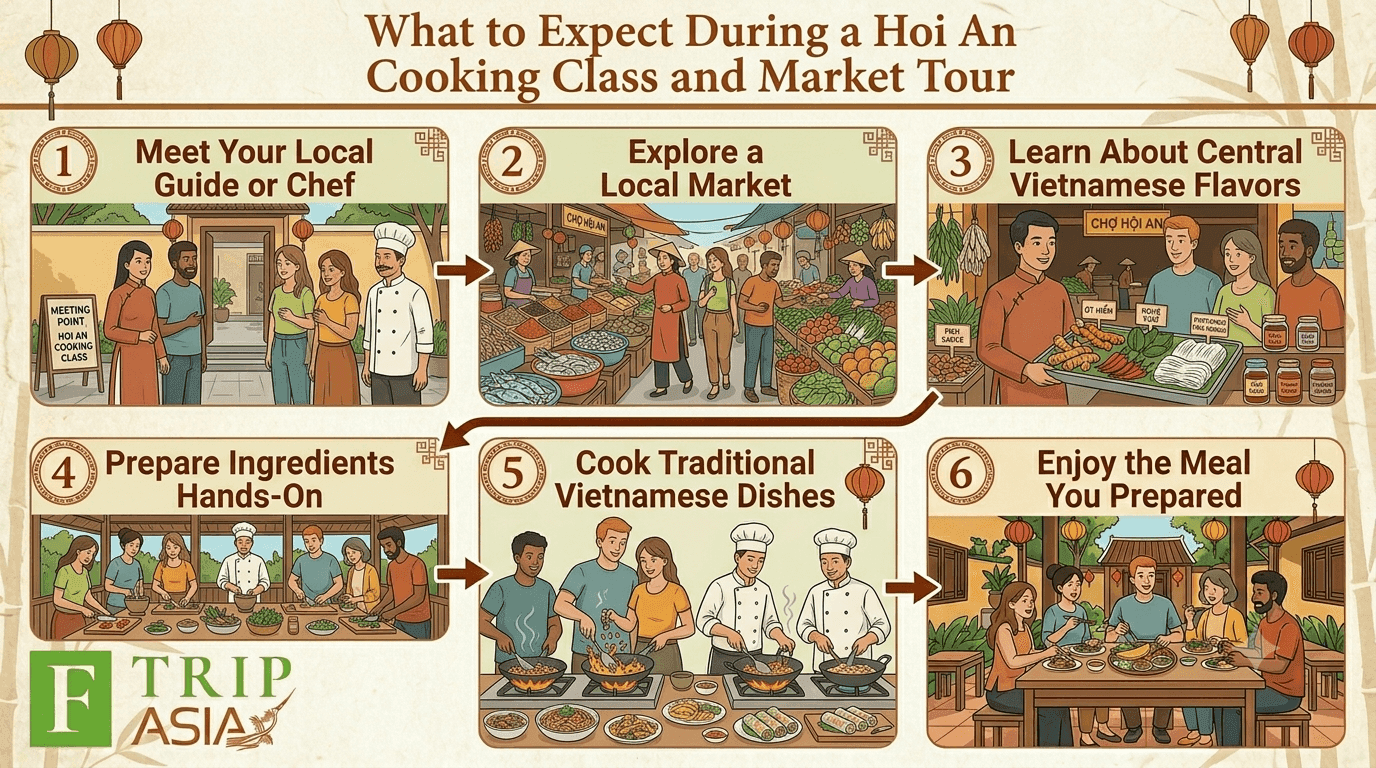
Step 1: Meet Your Local Guide or Chef
The experience usually begins with a short introduction to the class, menu, market route, and cooking plan. This is also the right time to discuss dietary needs, spice tolerance, food allergies, and cooking experience.
A good guide or chef may also explain what makes Hoi An cuisine different from northern and southern Vietnamese food. This gives travelers useful context before the market visit begins.
Step 2: Explore a Local Market
Next, travelers walk through stalls selling herbs, vegetables, rice noodles, seafood, tofu, meat, spices, sauces, fruits, and local snacks.
A guided market visit helps travelers learn how locals select fresh ingredients and plan daily meals. It is also a good chance to ask questions about unfamiliar produce, sauces, herbs, and cooking methods.
Travelers can take photos respectfully while observing daily market life.
Step 3: Learn About Central Vietnamese Flavors
Central Vietnamese cuisine often brings together savory, spicy, fresh, sweet, sour, and textured elements. Hoi An dishes may include herbs, sauces, rice crackers, noodles, vegetables, and rich local seasonings.
During the class, travelers can learn how local cuisine reflects geography, history, family traditions, and regional taste preferences.
This helps make each dish feel more meaningful.
Step 4: Prepare Ingredients Hands-On
After the market visit, travelers begin preparing ingredients. This may include washing herbs, chopping vegetables, slicing produce, marinating protein, seasoning mixtures, rolling rice paper, or preparing dipping sauce.
The instructor should explain each step clearly. Travelers should actively participate, not only watch.
Step 5: Cook Traditional Vietnamese Dishes
The cooking session may include techniques such as frying, grilling, steaming, rolling rice paper, mixing salads, or balancing dipping sauce.
Travelers can learn how home-style and regional dishes are prepared, and how small adjustments change the final flavor.
A good class should feel practical enough that travelers can recreate at least some dishes at home.
Step 6: Enjoy the Meal You Prepared
At the end of the class, travelers sit down to enjoy the finished dishes. This shared meal completes the experience.
It is also a good time to ask for recipe notes, cooking tips, and ingredient substitutes for cooking outside Vietnam.
Best Dishes to Learn in a Hoi An Cooking Class
Cao Lau
Cao lau is a signature Hoi An noodle dish with chewy noodles, herbs, greens, savory sauce, and protein.
It is one of the best dishes for understanding Hoi An’s local food identity because it is strongly connected to the town’s culinary heritage.
Mi Quang
Mi quang is a Central Vietnamese noodle dish made with turmeric noodles, herbs, peanuts, rice crackers, and rich broth or sauce.
It is a good choice for travelers who want deeper regional flavor and texture.
White Rose Dumplings
White rose dumplings are a delicate Hoi An specialty made with rice flour wrappers and savory filling.
They teach texture, folding, steaming, and local presentation.
Banh Xeo
Banh xeo is a crispy Vietnamese pancake served with herbs, rice paper, and dipping sauce.
It is fun, hands-on, and suitable for travelers who enjoy texture and technique.
Fresh Spring Rolls
Fresh spring rolls are beginner-friendly, colorful, and interactive. They are suitable for families, couples, and first-time cooks.
They are also easy to recreate at home with the right ingredient substitutions.
Fried Spring Rolls
Fried spring rolls teach filling preparation, wrapping, frying, and dipping sauce. They are popular in Vietnamese home-style meals and work well for travelers who want a practical recipe.
Green Papaya Salad or Banana Blossom Salad
Green papaya salad and banana blossom salad highlight freshness, crunch, herbs, acidity, and texture.
They are good for lighter menus or vegetarian-friendly formats.
Vietnamese Dipping Sauce
Vietnamese dipping sauce is essential for many Vietnamese dishes. A good class should teach how fish sauce, lime, sugar, garlic, chili, and water are balanced.
Travelers can also learn how dipping sauce changes by region, dish, and family preference.
Best Markets to Visit During a Hoi An Cooking Class
Central Hoi An Market
Central Hoi An Market is convenient for travelers staying near the Ancient Town. It offers fresh produce, seafood, spices, noodles, herbs, fruit, and local snacks.
It is a good option for first-time visitors who want an active market experience.
Local Neighborhood Markets
Local neighborhood markets are better for travelers who want a less touristy atmosphere. They offer a closer look at daily shopping habits and local community life.
These markets work well for private or more culturally focused experiences.
Morning Markets
Morning markets are usually more active and energetic. They are best for fresh ingredients and local vendor interaction.
Morning cooking classes often work well because the market visit can be followed by lunch.
Countryside Market Experiences
Countryside market experiences are suitable for travelers who want to combine cooking with local villages, gardens, or countryside activities.
They can be paired with Tra Que Vegetable Village, Cam Thanh Coconut Village, or riverside experiences depending on the itinerary.
How to Choose the Right Market Tour
When choosing a market tour, consider location, walking comfort, timing, crowd level, photography interest, hygiene expectations, and menu relevance.
FtripAsia can help match travelers with market-to-table experiences that fit their comfort level, schedule, and culinary interests.
Best Cooking Class Formats in Hoi An
Half-Day Cooking Class and Market Tour
Best for: First-time visitors and food lovers Main promise: Local market visit, hands-on cooking, and shared meal in one compact experience
This is a practical format for travelers who want a meaningful activity without using the full day.
Private Cooking Class and Market Tour
Best for: Couples, families, luxury travelers, and travelers with dietary needs Main promise: Flexible pace, personalized menu, direct instruction, and more privacy
A private format gives travelers more control over timing, menu, pace, and dietary needs.
Small-Group Market-to-Table Class
Best for: Solo travelers and social food lovers Main promise: Shared learning, local market discovery, and interactive cooking with other travelers
This format is friendly, social, and still hands-on.
Family-Friendly Hoi An Cooking Class
Best for: Parents with children Main promise: Simple recipes, safe participation, flexible pacing, and child-friendly dishes
A family-friendly format should be relaxed, safe, and interactive enough for children to enjoy.
Vegetarian Cooking Class and Market Tour
Best for: Plant-based travelers Main promise: Herbs, vegetables, tofu, mushrooms, noodles, rice paper, sauces, and fresh local produce
Vegetarian cooking can work beautifully in Hoi An because of the region’s herbs, vegetables, and fresh produce.
Premium Private Culinary Experience
Best for: Luxury travelers and serious food lovers Main promise: Private guide, curated market route, refined cooking venue, premium service, and polished dining
This format suits travelers who want a more comfortable and polished culinary experience.
Full Hoi An Cultural and Culinary Day
A full Hoi An cultural day can combine market tour, cooking class, lantern-making, coffee tasting, Ancient Town walk, basket boat experience, or evening food tour.
FtripAsia can customize a full Hoi An cultural day based on schedule, taste, dietary needs, and travel style.
Best Areas for Hoi An Cooking Classes and Market Tours
Hoi An Ancient Town Area
The Ancient Town area is convenient for travelers staying centrally. It is easy to combine with walking tours, cafés, tailor visits, riverside dining, and evening lantern walks.
It is a good option for first-time visitors.
Cam Thanh Coconut Village
Cam Thanh Coconut Village is good for travelers who want to add countryside scenery or basket boat activities.
It works well for families, couples, and travelers who want a playful cultural add-on.
Tra Que Vegetable Village
Tra Que Vegetable Village is a strong option for farm-to-table experiences. Travelers can learn about herbs, local farming, and fresh ingredients.
It is a good fit for culture-focused and food-focused travelers.
Riverside Cooking Venues
Riverside cooking venues are suitable for scenic and relaxed cooking experiences. They work well for couples, families, and travelers who want a slower atmosphere.
Local Residential Neighborhoods
Local residential neighborhoods are better for travelers seeking a more home-style, less touristy experience.
They are a good choice for private classes and deeper local interaction.
How to Choose the Best Hoi An Cooking Class and Market Tour
Check Whether the Market Tour Is Truly Guided
A strong guide should explain ingredients, local shopping habits, vendor culture, seasonal produce, and recipe connections.
Avoid experiences where the market visit feels like a quick photo stop. It should be part of the learning process.
Review the Cooking Menu
Look for Hoi An or Central Vietnamese dishes such as cao lau, mi quang, white rose dumplings, banh xeo, spring rolls, salads, and dipping sauces.
Avoid menus that feel too generic if authenticity is the goal.
Ask About Hands-On Participation
Travelers should prepare and cook the dishes themselves. Demonstration-only classes may feel less memorable.
Hands-on cooking helps travelers better understand the techniques and flavors.
Review Group Size
Smaller groups offer more interaction and better instruction. Private classes are better for couples, families, travelers with dietary needs, and luxury travelers.
Group size can make a big difference in the quality of the experience.
Confirm Dietary Flexibility
Ask about vegetarian, halal-friendly, kosher-conscious, allergy-related, gluten-free, spice-level, and child-friendly adjustments.
Special needs should be discussed before booking so the menu can be planned properly.
Check Hygiene and Kitchen Comfort
Choose clean cooking venues with organized workstations, safe tools, fresh ingredients, and comfortable seating.
This is especially important for families and travelers with sensitive stomachs.
Consider Timing and Location
Morning classes are ideal for lively market visits. Afternoon classes can work well after sightseeing.
Choose a location that avoids unnecessary transfer time and fits naturally into your day.
Work with a Local Travel Planner
A local planner can match the class to your taste, schedule, comfort level, and dietary needs.
FtripAsia is a 100% local team with 7+ years of experience helping travelers build authentic Vietnam experiences.

Market Trends: Why Hoi An Cooking Classes and Market Tours Are Popular
Travelers Want Hands-On Cultural Experiences
Modern travelers increasingly want to participate in local life instead of only visiting attractions.
Cooking classes and market tours provide a direct connection to food, people, and everyday culture.
Food Tourism Is Becoming a Core Travel Motivation
Travelers now plan trips around food markets, cooking lessons, street food, coffee culture, regional dishes, and local ingredients.
Hoi An is especially attractive because it combines cuisine, heritage, countryside, and visual charm.
Market-to-Table Travel Feels More Authentic
Travelers want to understand where food comes from before they cook and eat it.
Local markets add context, color, and human connection to culinary experiences.
Private and Small-Group Experiences Are in Demand
Travelers want more personal instruction, flexible timing, and less crowded activities.
This is especially valuable for couples, families, luxury travelers, and guests with dietary needs.
Customization Matters More Than Fixed Activities
Travelers want menus, market routes, dietary options, class formats, transfers, and cultural add-ons that fit their needs.
This trend fits FtripAsia, which can customize Hoi An cooking classes, market tours, and wider Vietnam itineraries.
Why Choose FtripAsia for a Hoi An Cooking Class and Market Tour?
Fully Customizable Based on Your Culinary Interests
FtripAsia can customize cooking classes, market tours, food walks, basket boat experiences, craft workshops, hotel arrangements, and wider Vietnam itineraries.
Travelers can request private formats, family-friendly menus, vegetarian options, premium settings, or combined cultural days.
100% Local People with 7+ Years of Experience
The team is operated by local people who understand Hoi An’s markets, food culture, countryside villages, travel timing, and visitor expectations.
With 7+ years of experience, FtripAsia can recommend experiences that feel authentic, smooth, and practical.
Experience with Niche Markets Like Muslims and Judaism
Support may include ingredient checks, dietary planning, cultural sensitivity, suitable menus, and itinerary adjustments.
This is especially useful for travelers who need careful food-related planning.
Unique Experiences Travelers Cannot Easily Find Elsewhere
Travelers can request photography tours, hidden local food routes, market-to-table cooking, craft and cooking workshops, seasonal cultural activities, and local countryside experiences.
These options help make the Hoi An culinary journey more personal.
Partnerships with Local Workshops and Daily Experiences
Daily experiences may include cooking classes, craft workshops, local market visits, coffee experiences, home-style dining, and basket boat activities.
These partnerships help make Hoi An food and culture experiences more immersive.
Enthusiastic, Knowledgeable, and Friendly Service
FtripAsia receives high praise from tourists for enthusiastic, knowledgeable, and friendly service. This matters because culinary experiences depend on clear communication, smooth timing, local insight, and thoughtful support.
Sample Cost Factors for a Hoi An Cooking Class and Market Tour
Group vs Private Format
Group classes are usually more affordable. Private classes cost more but offer flexibility, privacy, direct instruction, and better customization.
Market Tour Inclusion
A guided market tour may increase cost but adds cultural and ingredient value.
More detailed market routes may require more guide time.
Menu Complexity
More dishes, seafood, premium ingredients, or customized menus can affect pricing.
Travelers should choose a menu that matches their interests and cooking level.
Class Location
Central classes may be easier to access. Countryside or village-style classes may require private transfers.
The right location depends on whether travelers want convenience or deeper local atmosphere.
Dietary Customization
Special ingredient sourcing or custom menu planning may affect the final quote.
This is especially relevant for allergies, vegetarian needs, halal-friendly preferences, and kosher-conscious requests.
Add-On Activities
Basket boat rides, lantern-making, coffee tasting, food tours, herb village visits, photography, or private cultural walks can increase total cost.
These additions can turn the class into a fuller cultural day.
Best Time to Join a Hoi An Cooking Class and Market Tour
Morning Classes
Morning classes are best for lively market visits and fresh ingredient shopping. They usually end with lunch.
This timing works well for travelers who want the most active market atmosphere.
Afternoon Classes
Afternoon classes are good for travelers who prefer a slower morning. They often end with an early dinner.
This can pair well with an evening lantern walk in Hoi An Ancient Town.
Evening Classes
Evening classes are suitable for travelers with full daytime schedules. They are best for shorter or private cooking formats.
Market activity may be less lively than in the morning, so travelers should confirm what is included.
Best Season for Cooking Classes in Hoi An
Cooking classes work year-round. During hot months, choose classes with comfortable indoor or shaded cooking areas.
During rainy periods, cooking classes remain a good activity, while market tours should be planned with flexible timing.
Practical Tips Before Booking
Share Dietary Needs Early
Mention allergies, vegetarian needs, halal-friendly preferences, kosher-conscious requests, spice tolerance, disliked ingredients, and food safety concerns.
Advance communication helps the organizer prepare a suitable menu.
Choose a Menu That Reflects Hoi An
Ask whether the class includes local or Central Vietnamese dishes.
Choose menus that include dishes you genuinely want to understand and recreate.
Wear Comfortable Clothing
Choose clothes suitable for market walking and cooking. Comfortable shoes are helpful for wet markets or countryside paths.
Bring a Camera but Be Respectful
Markets, ingredients, cooking steps, and finished dishes are photogenic.
Ask before taking close-up photos of vendors, residents, or cooking staff.
Do Not Schedule It Too Close to Transfers
Cooking classes and market tours can take several hours. Avoid booking one right before airport transfers, train rides, cruises, or long road trips.
Leave enough time to enjoy the experience fully.
Ask for Recipe Notes
Recipe cards or written notes help travelers recreate dishes at home.
Ask about ingredient substitutes if you live outside Vietnam.
Combine It with Other Hoi An Experiences
A cooking class and market tour can be combined with an Ancient Town walk, lantern-making workshop, basket boat ride, herb village visit, coffee stop, tailor visit, or evening food tour.
FtripAsia can help build a Hoi An itinerary around the cooking class and market tour.
Plan Your Hoi An Cooking and Market Experience with FtripAsia
A Cultural Food Experience Designed Around You
FtripAsia is a strong choice for travelers who want a Hoi An cooking class and market tour that feels authentic, flexible, personal, and easy to arrange.
The team can design private cooking classes, market-to-table experiences, family-friendly classes, vegetarian options, premium culinary experiences, basket boat add-ons, herb village visits, food tours, cultural workshops, and full Vietnam itineraries.
Why Travelers Choose FtripAsia
Travelers choose FtripAsia for completely customizable experiences, a 100% local team, 7+ years of experience, experience with Muslim and Jewish travelers, unique tours such as photography tours, partnerships with local workshops and cooking classes, enthusiastic service, and practical local support before and during the trip.
FAQs
Is a Hoi An cooking class and market tour worth it?
Yes. It is worth it for travelers who want to explore local ingredients, learn Central Vietnamese dishes, understand market culture, and enjoy a hands-on culinary experience.
What is included in a Hoi An cooking class and market tour?
Most experiences include a guided market visit, ingredient explanation, hands-on cooking, recipes, and the meal you prepare. Some may also include transfers or add-on activities.
What dishes can I learn in a Hoi An cooking class?
Popular dishes include cao lau, mi quang, white rose dumplings, banh xeo, fresh spring rolls, fried spring rolls, salads, and Vietnamese dipping sauces.
Are Hoi An cooking classes suitable for families?
Yes. Many classes are family-friendly if the menu, pacing, safety level, and instructor style are suitable for children.
Can Hoi An cooking classes support vegetarian or special dietary needs?
Yes, with advance planning. Travelers should share vegetarian needs, allergies, halal-friendly preferences, kosher-conscious requests, spice tolerance, or other dietary requirements before booking.
How long does a Hoi An cooking class and market tour take?
Most experiences take around half a day. Private or extended formats may take longer if additional activities such as basket boat rides, herb village visits, or food tours are included.
Why choose FtripAsia for a Hoi An cooking class and market tour?
FtripAsia helps travelers arrange customized Hoi An culinary experiences with local insight, market-to-table activities, dietary support, workshop partnerships, and flexible planning.
Conclusion
A Hoi An cooking class and market tour is one of the best ways to experience the destination through food, culture, and daily local life. It gives travelers a deeper view of Hoi An beyond heritage streets and sightseeing stops.
The main benefits include market discovery, ingredient learning, hands-on cooking, Central Vietnamese flavors, cultural storytelling, practical recipes, and a memorable shared meal. For food lovers and culture-focused travelers, the experience can make Hoi An feel more personal, vivid, and meaningful.
For travelers who want Hoi An’s food culture to feel authentic, interactive, and easy to understand, FtripAsia can help design a cooking class and market tour based on your taste, schedule, dietary needs, comfort level, and dream Vietnam experiences.


Founder & Photography Guide
Specialties: Culture, landscape, portrait, hiking, active and adventurous tour
Besides my unlimited passion for traveling, a professional tour guide for over a decade, I have been taking photographs since sitting at Hanoi of the University of Culture in the early 2000s. Photography started as a hobby but it was seriously taken due to my work relations and my significant passion for the beauty of our world, especially in Southeast Asian parts such as Vietnam, Laos, Cambodia, and Myanmar.
Within a few years of taking photographs, my works began to be recognized by many reliable international publications such as AFAR Travel, The Times, and The Daily Telegraph newspaper. In addition, I continuously add to my growing profile by winning numerous major awards: 3rd Position of The Independent Photographer 2018, 1st Position of Amateur Photographer of the year 2018, Grand Prize Winner of the AFAR Travel Photography 2019, and a Gold Award of San Francisco Bay International Photography 2020.
I photograph a wide variety of subjects, from travel to landscapes to street scenes. I enjoy documenting the East’s rich cultural heritage and its land soaked in glorious sunrise or sunset light in remote and secluded spots. And, I am very happy to share my knowledge and experience with you. You can visit Luminousvietnamtour to explore tour!

 David and wife (Australia)
 Curious534121
 726hannes
 Planning a Trip to Vietnam from Canada? Start Here.
- Not supported render article type: page - Homepage
 14 Day Tour Ha Giang & Ha Long Bay for a Complete Northern Vietnam Discovery