- How Far Is Ha Giang from Hanoi?
- Hanoi to Ha Giang Distance
- How Long Does It Take to Travel from Hanoi to Ha Giang?
- How to Get from Hanoi to Ha Giang
- By Sleeper Bus or Limousine
- By Private Car – A More Comfortable Way to Travel
- Why Is Ha Giang Worth Visiting?
- Dramatic Mountain Landscapes
- Authentic Ethnic Culture
- A Destination Beyond the Usual Tourist Trail
- The Highlights of a Ha Giang Loop Journey
- Quan Ba Heaven Gate
- Sung La Valley
- Lung Cu Flag Tower
- Dong Van Ancient Town
- Ma Pi Leng Pass
- Meo Vac
- Exploring Ha Giang by Jeep or Private Car: A Luxury Alternative to Motorbike Tours
- The Freedom of a Jeep Adventure
- Comfort and Safety with a Private Car
- The Best of Both Worlds
- Suggested Itinerary: 4 Days 3 Nights Ha Giang Luxury Tour with Ftrip Asia
- Day 1 – Hanoi to Ha Giang City by Private Car (L, D)
- Day 2 – Ha Giang City – Quan Ba – Sung La – Lung Cu – Dong Van by Jeep (B, L, D)
- Day 3 – Dong Van – Ma Pi Leng Pass – Meo Vac – Quan Ba by Jeep (B, L, D)
- Day 4 – Quan Ba – Ha Giang City – Hanoi by Private Car (B, L)
- When Is the Best Time to Travel from Hanoi to Ha Giang?
- What to Prepare for a Luxury Ha Giang Tour
- Conclusion: Discover Ha Giang in Comfort with Ftrip Asia
Traveling from Hanoi to Ha Giang offers an opportunity to discover one of Vietnam’s most spectacular mountain regions. Located in the far north of the country, Ha Giang is known for dramatic limestone mountains, winding mountain passes, remote villages, and the diverse cultures of its ethnic communities.
For travelers seeking more than a conventional sightseeing trip, the Ha Giang Loop combines scenic road journeys with opportunities to experience local life. While motorbike tours are popular, exploring the region by private car and Jeep offers a more comfortable alternative without sacrificing the adventure.
This guide covers how to get from Hanoi to Ha Giang, the highlights of the Ha Giang Loop, the best time to visit, and how to plan a four-day, three-night luxury journey.
How Far Is Ha Giang from Hanoi?
Hanoi to Ha Giang Distance
The distance from Hanoi to Ha Giang City is approximately 300 km by road, depending on the route and your starting point in Hanoi. The journey takes travelers from Vietnam’s bustling capital through the northern countryside before reaching the mountainous landscapes of Ha Giang.
The first part of the journey typically follows major roads and highways before continuing along routes that become increasingly scenic as you approach the northern highlands. Along the way, the landscape gradually changes from urban areas and agricultural land to rolling hills, forested slopes, and mountain valleys.
Ha Giang City serves as a convenient starting point for exploring the wider region and beginning a Ha Giang Loop itinerary. From here, travelers can continue toward Quan Ba, Dong Van, Meo Vac, and other destinations known for their distinctive scenery.
It is worth distinguishing between the journey from Hanoi to Ha Giang City and the Ha Giang Loop itself. Reaching the city is only the first stage. Exploring the mountain region requires additional driving time, as many attractions are spread across winding roads and remote areas.
How Long Does It Take to Travel from Hanoi to Ha Giang?
Traveling from Hanoi to Ha Giang City generally takes around five to seven hours by road, depending on traffic, road conditions, weather, and the type of vehicle.
A sleeper bus or limousine may offer a convenient direct connection, while a private car provides more flexibility over departure times, rest stops, and the overall pace of the journey. During periods of heavy traffic or unfavorable weather, travel times can increase.
For a four-day, three-night trip, it is worth planning the Hanoi-to-Ha Giang transfer carefully. Departing at a suitable time allows travelers to arrive without feeling rushed and prepare for the mountain journey ahead.
Rather than trying to cover too much in a single day, a well-organized itinerary balances driving with sightseeing, meals, and time to enjoy the surroundings. This approach is particularly valuable for travelers who prefer a more relaxed experience.
How to Get from Hanoi to Ha Giang
By Sleeper Bus or Limousine
Sleeper buses and limousine vans are common options for traveling from Hanoi to Ha Giang. They connect the capital with Ha Giang City and are suitable for travelers who want a relatively straightforward transfer without arranging a private vehicle.
Sleeper buses generally provide reclining or sleeping berths, making them useful for overnight journeys. Limousine services usually offer more spacious individual seating than standard buses, although comfort and onboard facilities vary by operator.
The main advantage of shared transport is its convenience and affordability. Travelers can book a scheduled departure and leave the driving to a professional operator. This makes buses a practical choice for backpackers, independent travelers, and visitors working with a limited budget.
However, shared transport comes with certain limitations. Departure times are fixed, stops may be limited, and passengers have less control over the journey. After arriving in Ha Giang City, travelers must also arrange transportation for the mountain route, whether through a local tour, a motorbike rental, or a private vehicle.
For visitors planning a multi-day journey, these additional arrangements can take time and require coordination.
By Private Car – A More Comfortable Way to Travel
A private car offers greater flexibility for travelers who value comfort, privacy, and a more personalized itinerary. Instead of following a fixed bus schedule, passengers can arrange their departure time, take breaks when needed, and travel at a pace that suits their group.
This option is particularly suitable for couples, families, small groups, and travelers who prefer a premium travel experience. A private vehicle also makes it easier to manage luggage and accommodate individual preferences during the transfer.
The journey from Hanoi to Ha Giang is relatively long, so a comfortable vehicle and an experienced driver can make a meaningful difference. Travelers can rest during the drive and arrive ready to explore the region rather than having to organize another transfer after reaching the city.
A private car is also useful for connecting Hanoi with a multi-day Ha Giang itinerary. With transportation arranged in advance, travelers can focus on the landscapes, cultural experiences, and local destinations along the way.
For those seeking a more refined way to explore northern Vietnam, combining a private car transfer with a Jeep adventure through Ha Giang offers a practical balance between comfort and discovery.
Why Is Ha Giang Worth Visiting?
Dramatic Mountain Landscapes
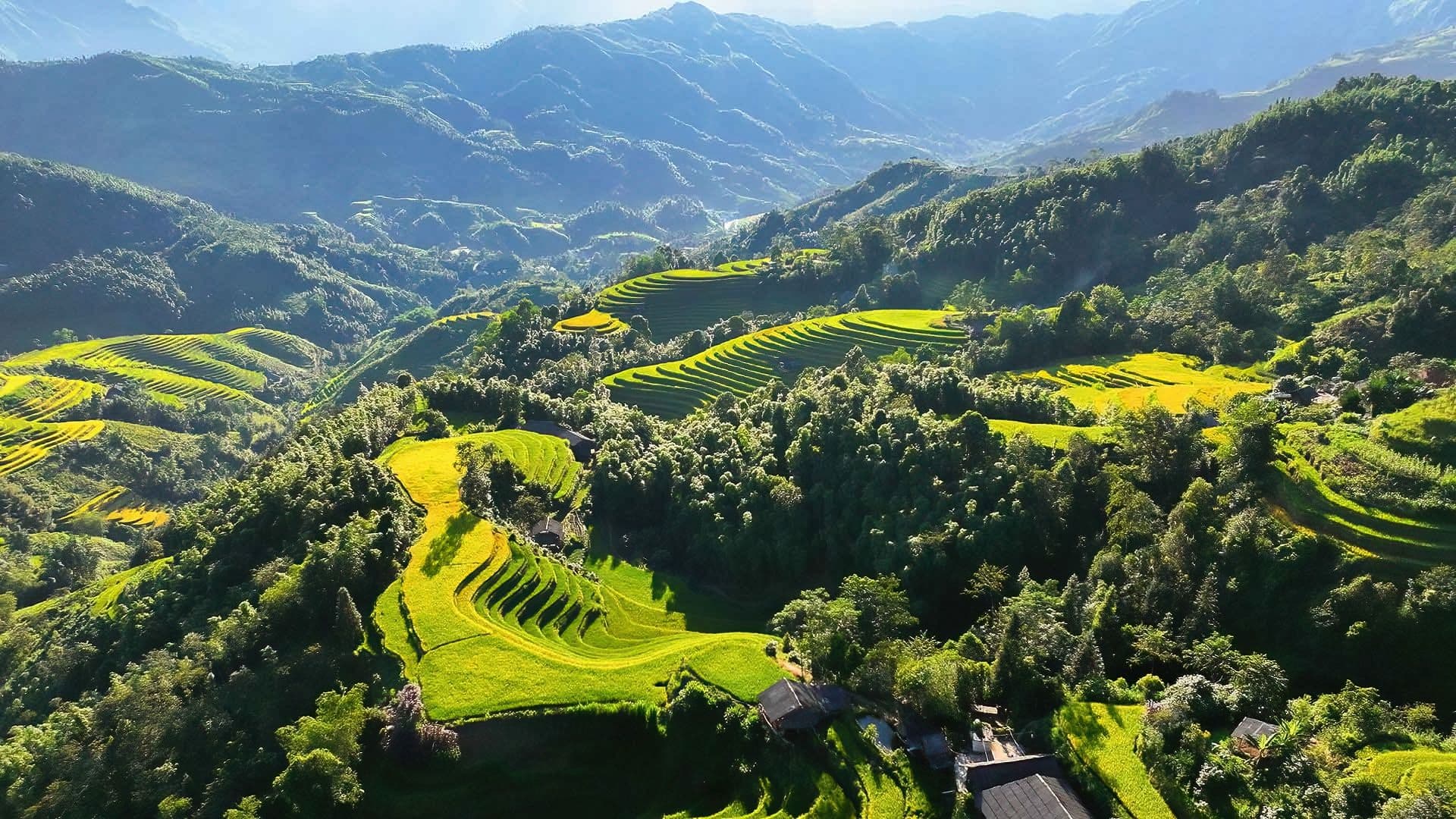
Ha Giang is one of northern Vietnam’s most striking destinations for mountain scenery. The region is characterized by towering limestone formations, deep valleys, winding roads, and viewpoints overlooking vast stretches of rugged terrain.
The Dong Van Karst Plateau is particularly notable for its distinctive geological landscape. Rather than a continuous range of green mountains, visitors encounter dramatic rock formations, steep slopes, and small settlements built into the valleys.
Traveling through the region reveals a succession of changing views. A bend in the road may open onto a broad valley, while a higher viewpoint offers a different perspective of the surrounding mountains. These landscapes make the journey itself one of the main attractions.
For photographers and nature enthusiasts, Ha Giang offers opportunities to capture mountain scenery, rural life, and the changing light throughout the day.
Authentic Ethnic Culture
Ha Giang is home to diverse ethnic communities, including Hmong, Tay, Dao, and Lo Lo people, among others. Their traditions are reflected in local architecture, traditional clothing, agricultural practices, markets, and everyday life.
Travelers may encounter villages built along mountain slopes, terraced fields cultivated by local families, and traditional houses that reflect generations of adaptation to the region’s terrain.
Local markets can provide insight into community life, particularly when residents gather to trade agricultural products, household goods, textiles, and regional specialties. Depending on the itinerary and travel dates, visitors may also have opportunities to observe traditional crafts or learn about local customs.
Responsible travel is important when visiting these communities. Asking permission before photographing people, respecting private homes, and purchasing local products directly from artisans where possible can help make the experience more considerate and meaningful.
A Destination Beyond the Usual Tourist Trail
Although Ha Giang has become increasingly popular among international visitors, much of the region retains a distinctly rural character. Small villages, quiet roads, and remote valleys offer a different perspective on Vietnam from the busy streets of Hanoi or the coastal resorts of the central and southern regions.
The journey also encourages a slower style of travel. Rather than focusing on a single attraction, visitors spend time moving between destinations, stopping at viewpoints, discovering local settlements, and appreciating the landscapes along the way.
Ha Giang is particularly rewarding for travelers who enjoy scenic road trips and cultural exploration. Its appeal lies not only in famous landmarks but also in the experiences between them.
With a thoughtfully planned itinerary, travelers can explore these remote landscapes while maintaining a comfortable pace and enjoying the convenience of professionally arranged transportation.
The Highlights of a Ha Giang Loop Journey
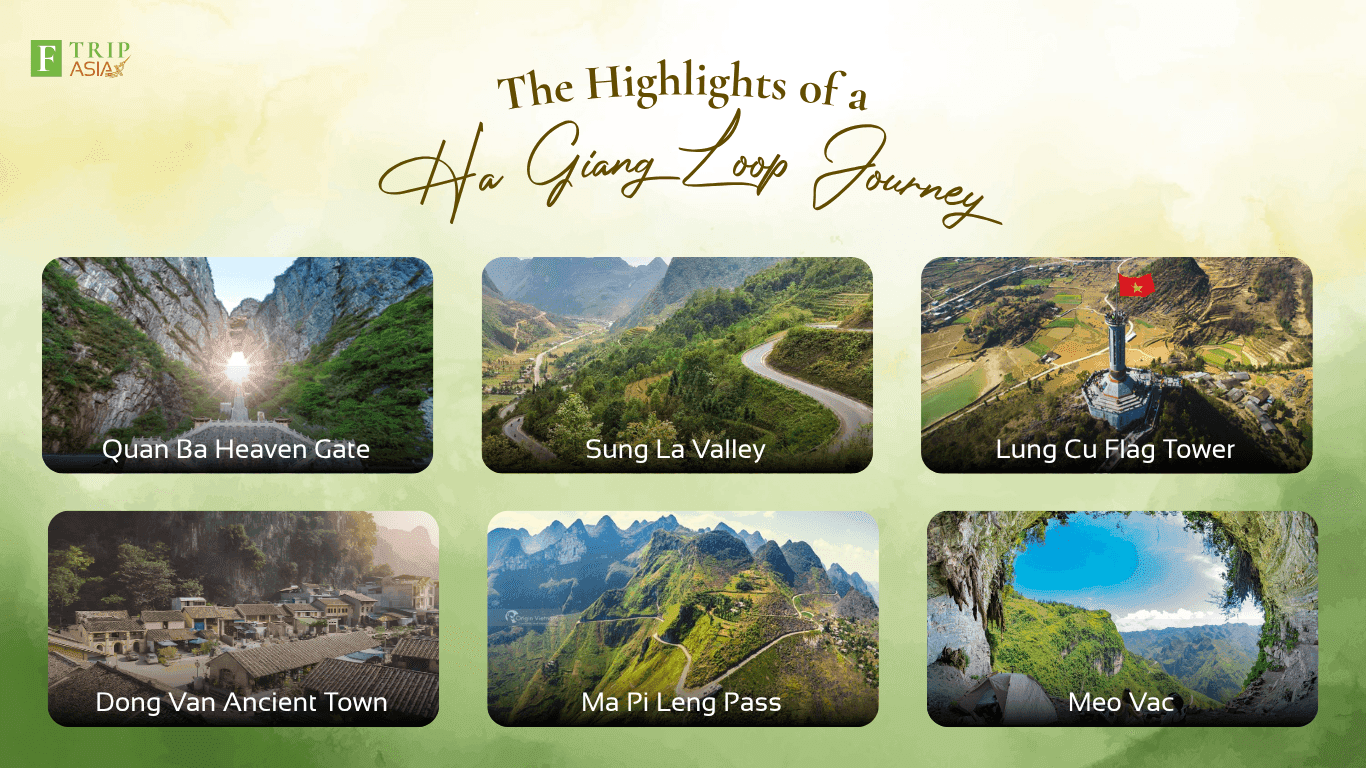
The Ha Giang Loop is a scenic route through the northern highlands, connecting mountain viewpoints, villages, historic settlements, and dramatic passes. The exact route varies according to trip duration and road conditions, but several destinations are central to many itineraries.
Quan Ba Heaven Gate
Quan Ba Heaven Gate is one of the first major scenic highlights when traveling north from Ha Giang City toward the Dong Van Karst Plateau. Located at a high mountain viewpoint, it offers expansive views of the surrounding valleys and limestone peaks.
One of the best-known sights in the area is the Twin Mountains, also called the Fairy Bosom Mountains. Their distinctive rounded shapes stand out against the surrounding terrain, creating a memorable landscape that is especially attractive for photography.
The area around Quan Ba also provides a glimpse of rural life in the northern highlands. Small settlements and cultivated fields sit among the mountains, illustrating how local communities make use of the available land.
Quan Ba is a worthwhile stop early in the journey, introducing travelers to the dramatic scenery that defines the Ha Giang Loop.
Sung La Valley
Sung La Valley is known for its traditional villages, mountain scenery, and distinctive local architecture. Surrounded by rocky hills, the valley offers a quieter atmosphere than the main mountain viewpoints and provides an opportunity to appreciate everyday life in the region.
The area is particularly associated with Hmong culture. Traditional houses, stone walls, and small courtyards create a strong sense of place, while the surrounding fields change in appearance with the seasons.
Travelers may also encounter traditional homes that have gained recognition through Vietnamese films and cultural storytelling. These sites offer an additional perspective on the region’s heritage, although access and visiting arrangements can vary.
Sung La is best explored without rushing. Taking time to walk around an accessible village area and observe the surroundings can make the stop more rewarding than simply photographing the landscape from the road.
Lung Cu Flag Tower
Lung Cu Flag Tower stands near Vietnam’s northernmost point in Ha Giang and is one of the region’s most recognizable landmarks. Positioned on a hilltop, the tower features a large Vietnamese national flag and overlooks the surrounding mountains and countryside.
The journey to Lung Cu passes through a remote landscape of rocky hills, small settlements, and agricultural land. Its location makes it a memorable destination for travelers interested in exploring the northern border region.
Visitors can take in broad views of the surrounding area and gain a better appreciation of the geography of Vietnam’s far north. The site also carries national significance, making it more than simply a scenic viewpoint.
Because Lung Cu is located near the international border, travelers should follow local regulations and carry any required identification or travel documents. Access arrangements and any applicable requirements should be confirmed before departure.
Dong Van Ancient Town
Dong Van Ancient Town offers a contrast to the remote mountain landscapes along the Ha Giang Loop. Its historic streets, traditional houses, and distinctive architecture create an inviting place to pause during the journey.
The old quarter includes buildings influenced by different periods of regional history, with traditional façades and courtyards reflecting the town’s long-standing role as a local trading center.
Visitors can explore the streets on foot, enjoy regional food, and observe the rhythm of daily life. Depending on the time of day, the town may feel lively around its central areas or quieter as travelers settle in for the evening.
Dong Van is also a practical overnight stop on many Ha Giang itineraries. Staying here allows travelers to explore the town at a more relaxed pace rather than treating it as a brief stop between mountain attractions.
Ma Pi Leng Pass
Ma Pi Leng Pass is widely regarded as one of the most spectacular sections of the Ha Giang Loop. Its winding road follows steep mountain slopes above the Nho Que River, creating dramatic views of deep valleys and towering limestone cliffs.
The scenery changes with the light and weather. On clear days, the river may appear as a striking turquoise ribbon far below the road, while mist can give the mountains a more atmospheric appearance.
Several viewpoints along the pass allow travelers to stop safely and appreciate the scale of the landscape. The road itself is an important part of the experience, with successive bends revealing new perspectives of the surrounding mountains.
Ma Pi Leng is also a reminder that the Ha Giang Loop requires careful driving. Steep terrain, narrow sections, and changing weather conditions make an experienced driver and sensible travel pace especially important.
Meo Vac
Meo Vac is a mountain town surrounded by rugged limestone landscapes and remote communities. It is often included in Ha Giang Loop itineraries because of its location near Ma Pi Leng Pass and its role as a gateway to the surrounding highlands.
The town provides an opportunity to experience a different side of the region, from local markets and everyday commerce to the rural settlements scattered across nearby valleys.
On market days, the area can become particularly lively as residents from surrounding communities gather to exchange goods and socialize. Market schedules and activities vary, so travelers should check local arrangements when planning a visit.
Meo Vac also offers access to scenic roads and viewpoints that reveal the scale and character of the northern mountains. Whether stopping for a meal, exploring the town, or continuing through the countryside, it adds another dimension to the journey beyond Ha Giang’s best-known landmarks.
Exploring Ha Giang by Jeep or Private Car: A Luxury Alternative to Motorbike Tours
The Freedom of a Jeep Adventure
Motorbike tours are closely associated with the Ha Giang Loop, but they are not the only way to experience its mountain roads. A Jeep adventure offers a distinctive alternative for travelers who want to enjoy the scenery without riding a motorbike themselves.
The open-air or elevated viewing experience available in some Jeep configurations can make the surrounding landscape feel more immediate. Travelers can enjoy panoramic mountain views, take photographs at designated stops, and experience the winding roads while leaving the driving to a professional.
A Jeep journey also suits travelers who enjoy adventure but prefer not to ride a motorbike for several hours each day. It provides a different way to experience the region while retaining the excitement of traveling through mountain terrain.
Vehicle configurations and weather protection vary, so travelers should confirm the type of Jeep used for their tour and whether the arrangement suits their comfort requirements.
Comfort and Safety with a Private Car
A private car is a practical choice for longer transfers and sections of the itinerary where comfort is a priority. It offers a more enclosed environment, protection from changing weather, and space to relax between sightseeing stops.
For families, couples, and travelers who are less comfortable with mountain roads, a private car can make the experience more accessible. A professional driver familiar with the route can also help manage challenging road conditions and select appropriate stopping points.
Safety still depends on road conditions, weather, vehicle maintenance, and responsible driving. Travelers should follow the driver's guidance, use seat belts, and avoid unnecessary stops in unsafe locations.
The Best of Both Worlds
Combining a private car transfer from Hanoi with a Jeep journey through Ha Giang offers a balance of comfort and adventure. Travelers can enjoy a more relaxed journey to the region before switching to a vehicle suited to scenic exploration.
This arrangement also helps separate the longer transfer from the main sightseeing experience. Instead of spending the entire trip on a single type of transportation, visitors can choose the most suitable vehicle for each stage.
For travelers seeking a premium Ha Giang Loop experience, this combination provides flexibility without losing the sense of discovery that makes the northern highlands so appealing.
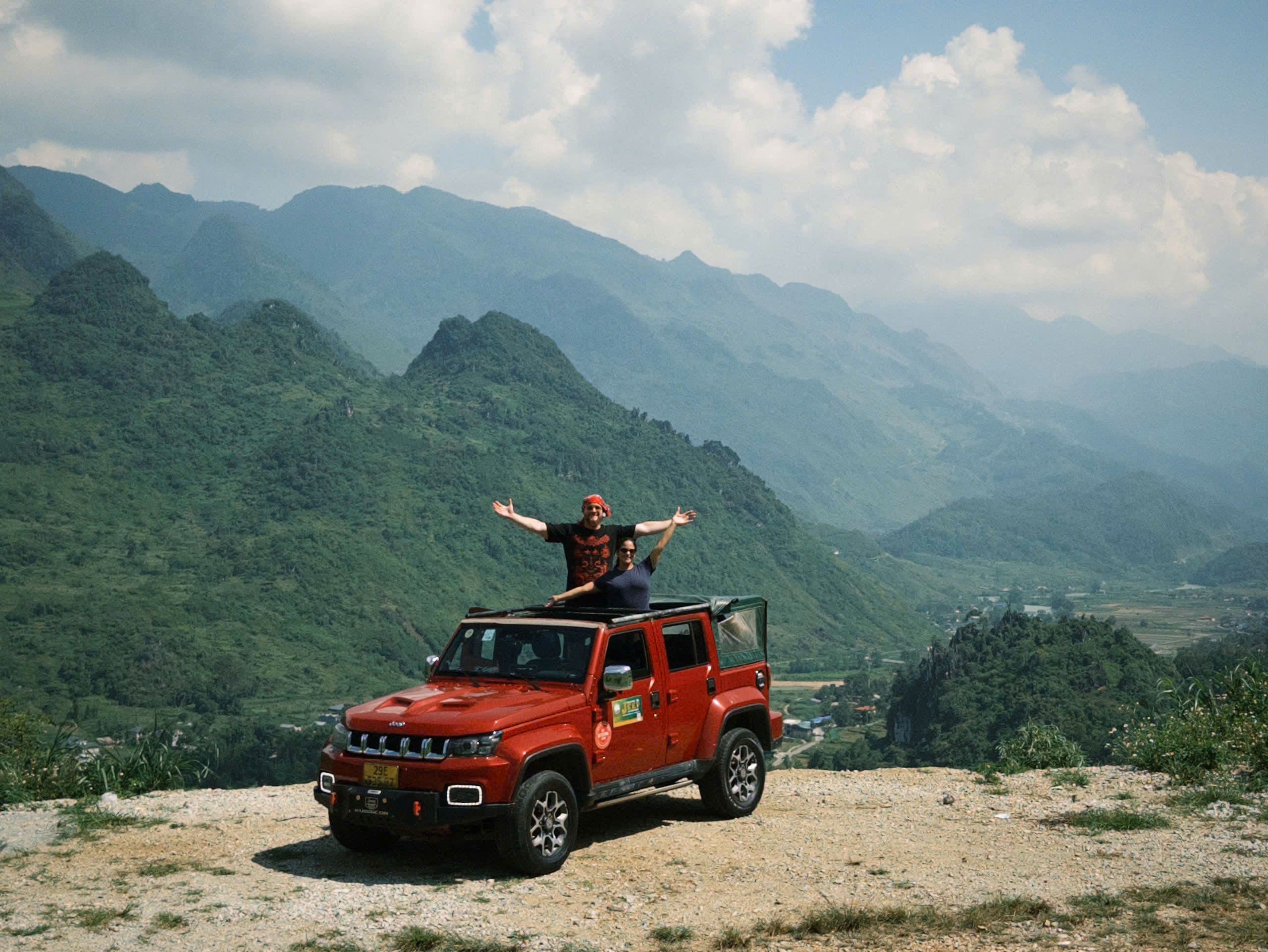
Suggested Itinerary: 4 Days 3 Nights Ha Giang Luxury Tour with Ftrip Asia
A four-day, three-night itinerary allows travelers to experience the highlights of the Ha Giang Loop without having to rush through every destination. With private transportation between Hanoi and Ha Giang, Jeep sightseeing, and overnight stays along the route, the journey combines scenic exploration with a more comfortable travel arrangement.
The following itinerary outlines the experience offered by Ftrip Asia's Ha Giang Luxury Tour.
Day 1 – Hanoi to Ha Giang City by Private Car (L, D)
The journey begins in Hanoi, where a private car transfer takes you toward Ha Giang. Leaving the capital behind, you travel through the northern countryside as the scenery gradually changes from urban surroundings to greener hills and mountainous terrain.
Along the way, scheduled breaks provide time to stretch, enjoy a meal, and appreciate the changing landscape. The private transfer also allows for a more flexible pace than a fixed-schedule shared service.
After arriving in Ha Giang City, check in to your accommodation and take some time to rest before dinner. Depending on your arrival time, you may have an opportunity to explore nearby areas or simply relax after the road journey.
Dinner offers a chance to sample regional dishes and prepare for the mountain adventure ahead. With transportation and the first overnight stay arranged, you can begin the following day ready to explore the Ha Giang Loop.
Meals: Lunch and dinner.
Day 2 – Ha Giang City – Quan Ba – Sung La – Lung Cu – Dong Van by Jeep (B, L, D)
After breakfast, begin the mountain journey by Jeep, heading toward Quan Ba Heaven Gate. The route introduces the spectacular landscapes of the northern highlands, with limestone mountains, winding roads, and valleys opening up along the way.
Stop at Quan Ba to admire the Twin Mountains and surrounding scenery. Continue through the region toward Sung La Valley, where traditional villages and local architecture offer a glimpse into the cultural character of Ha Giang.
The journey then proceeds toward Lung Cu Flag Tower, one of the most significant landmarks in Vietnam's far north. Enjoy the views of the surrounding countryside and learn more about the region's geographical setting.
Later, continue to Dong Van Ancient Town. After a day of scenic driving and sightseeing, check in to your accommodation and enjoy dinner.
If time allows, take a short walk through the old quarter to appreciate its traditional buildings and quieter evening atmosphere. Staying overnight in Dong Van makes it easier to explore the town without squeezing the experience into a short daytime stop.
Meals: Breakfast, lunch, and dinner.
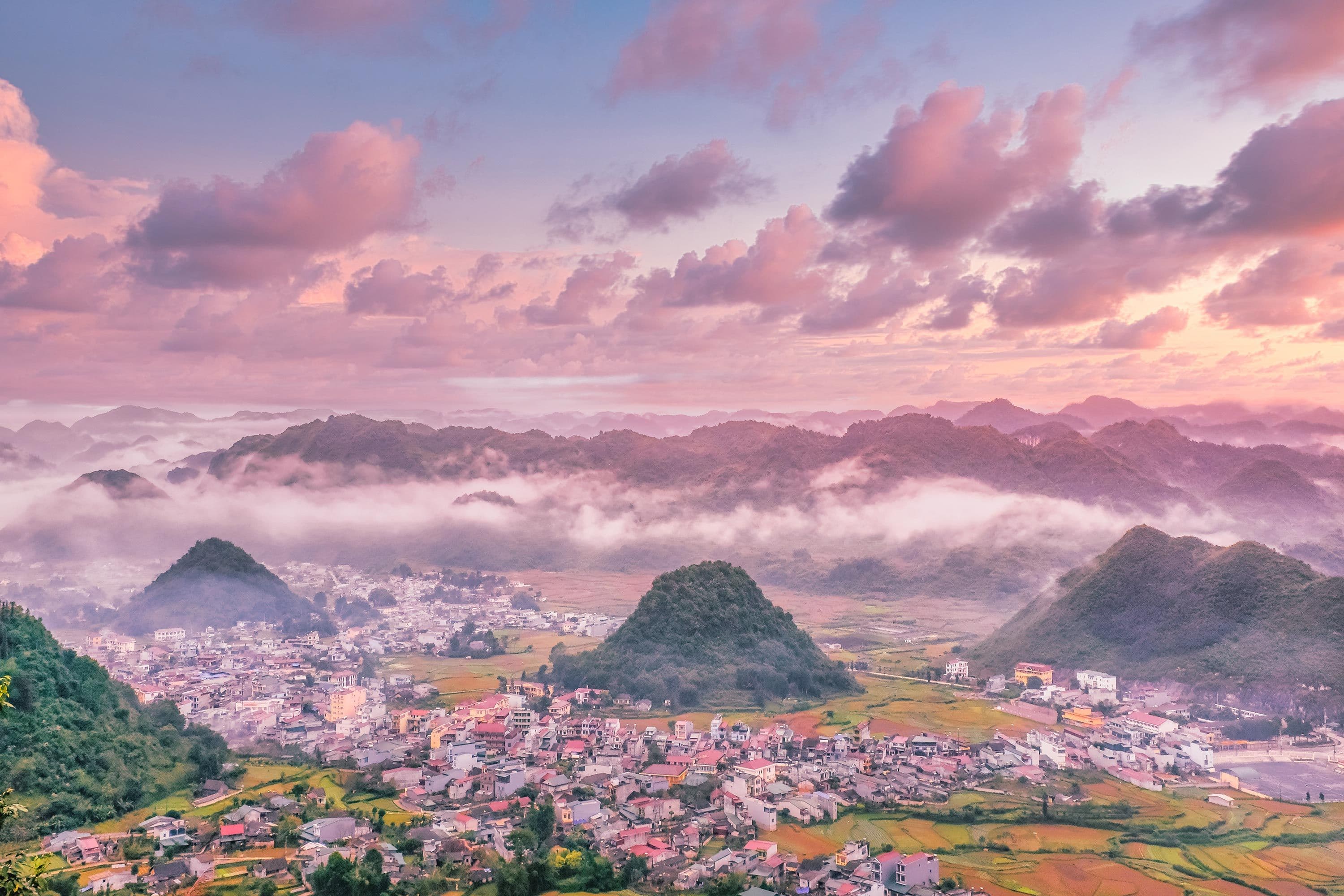
Day 3 – Dong Van – Ma Pi Leng Pass – Meo Vac – Quan Ba by Jeep (B, L, D)
After breakfast, continue the journey through the northern highlands, with Ma Pi Leng Pass as one of the day's main highlights.
Travel along the winding mountain road and stop at suitable viewpoints to admire the dramatic limestone cliffs and deep valleys. On clear days, the Nho Que River provides a striking contrast to the surrounding mountains. Weather conditions may change the visibility, adding a different atmosphere to the landscape.
Continue toward Meo Vac, a mountain town known for its local communities and rugged surroundings. Depending on the itinerary and timing, there may be opportunities to explore parts of the town or observe local life.
After lunch, begin the return journey toward Quan Ba. The drive offers another perspective on the region, with changing mountain views and opportunities to appreciate the scenery at a more relaxed pace.
Arrive in Quan Ba and settle into your accommodation for the evening. Dinner and an overnight stay provide time to rest after a full day on the mountain roads.
Meals: Breakfast, lunch, and dinner.

Day 4 – Quan Ba – Ha Giang City – Hanoi by Private Car (B, L)
Enjoy breakfast before leaving Quan Ba and returning to Ha Giang City. The morning journey provides a final opportunity to take in the landscapes of the northern highlands.
Upon reaching Ha Giang City, transfer to a private car for the return journey to Hanoi. Along the way, take scheduled breaks for refreshments and lunch before continuing toward the capital.
The drive offers time to relax and reflect on the journey, from the limestone mountains and scenic passes to the villages and historic town explored over the previous days.
Arrival time in Hanoi depends on traffic, road conditions, and the timing of stops. Travelers with onward flights or other fixed commitments should allow sufficient time for the transfer and avoid scheduling tight connections.
By the end of the four-day journey, you will have experienced several of Ha Giang's best-known highlights while enjoying the convenience of arranged transportation throughout the trip.
Meals: Breakfast and lunch.
Discover Ftrip Asia's Ha Giang Luxury Tour for a mountain journey combining private car transfers, Jeep exploration, and the distinctive landscapes of northern Vietnam.
When Is the Best Time to Travel from Hanoi to Ha Giang?
Ha Giang can be visited throughout the year, but each season offers different landscapes and travel conditions. The best time depends on whether you prefer comfortable sightseeing weather, seasonal flowers, lush greenery, or a quieter mountain atmosphere.
September–November: This is one of the most popular periods for visiting Ha Giang. The weather is often relatively favorable for road trips, and autumn brings attractive mountain scenery. Buckwheat flowers typically bloom in autumn, although exact timing varies by location and year.
March–May: Spring brings milder conditions, greener landscapes, and fresh growth across the valleys and mountains. It is a rewarding season for scenic drives and cultural exploration.
June–August: Summer brings lush vegetation, but it is also part of the rainy season. Heavy rain, fog, and slippery roads can affect visibility and travel conditions, so a flexible itinerary is advisable.
December–February: Winter can be cold, especially at higher elevations, with occasional dense fog and chilly mornings. Travelers who visit during this period should bring warm clothing and prepare for changing conditions.
For a luxury Ha Giang tour, September–November and March–May are often attractive choices. However, weather in the mountains can change quickly in any season, so check the forecast and local road conditions before departure.
What to Prepare for a Luxury Ha Giang Tour
A little preparation helps make a multi-day journey through the northern mountains more comfortable.
- Clothing: Bring layers, including a warm jacket for early mornings and evenings. Temperatures can vary significantly between Hanoi and the higher mountain areas.
- Footwear: Choose comfortable walking shoes with a good grip for village visits, viewpoints, and uneven paths.
- Essentials: Pack sunscreen, sunglasses, personal medication, and any items you need for the journey.
- Photography: Bring a camera or smartphone to capture mountain views, traditional villages, and scenic stops. Keep devices secure when near roads or viewpoints.
- Travel documents: Carry valid identification and check any requirements that may apply to travel near border areas. Confirm current arrangements with your tour operator before departure.
- Advance booking: Reserve your tour, transportation, and accommodation ahead of time, particularly during peak travel periods and major holidays.
For additional comfort, consider bringing a small day bag with water, snacks, and essential items so that you do not need to access your main luggage at every stop.
Conclusion: Discover Ha Giang in Comfort with Ftrip Asia
Traveling from Hanoi to Ha Giang is more than a long-distance transfer. It is an opportunity to discover one of Vietnam's most distinctive regions, where dramatic limestone mountains, winding passes, and diverse ethnic cultures shape the experience.
A four-day, three-night journey provides time to explore key highlights, from Quan Ba Heaven Gate and Dong Van Ancient Town to Ma Pi Leng Pass and Meo Vac. With private car transfers and Jeep exploration, travelers can experience the Ha Giang Loop with a balance of comfort and adventure.
Explore the Ha Giang Luxury Tour with Ftrip Asia and plan a more comfortable journey through Vietnam's northern highlands.


Founder & Photography Guide
Specialties: Culture, landscape, portrait, hiking, active and adventurous tour
Besides my unlimited passion for traveling, a professional tour guide for over a decade, I have been taking photographs since sitting at Hanoi of the University of Culture in the early 2000s. Photography started as a hobby but it was seriously taken due to my work relations and my significant passion for the beauty of our world, especially in Southeast Asian parts such as Vietnam, Laos, Cambodia, and Myanmar.
Within a few years of taking photographs, my works began to be recognized by many reliable international publications such as AFAR Travel, The Times, and The Daily Telegraph newspaper. In addition, I continuously add to my growing profile by winning numerous major awards: 3rd Position of The Independent Photographer 2018, 1st Position of Amateur Photographer of the year 2018, Grand Prize Winner of the AFAR Travel Photography 2019, and a Gold Award of San Francisco Bay International Photography 2020.
I photograph a wide variety of subjects, from travel to landscapes to street scenes. I enjoy documenting the East’s rich cultural heritage and its land soaked in glorious sunrise or sunset light in remote and secluded spots. And, I am very happy to share my knowledge and experience with you. You can visit Luminousvietnamtour to explore tour!