
- Where Is Mu Cang Chai in Vietnam?
- Location and Geography
- What Makes Mu Cang Chai Special?
- Why Are Mu Cang Chai Rice Terraces Famous?
- Spectacular Terraced Landscapes
- A Living Cultural Heritage
- A Photographer's Paradise
- Best Time to Visit Mu Cang Chai Rice Terraces
- May to Early June – The Water Pouring Season
- June to August – The Green Season
- September to Early October – The Golden Rice Season
- November to April – The Quiet Mountain Season
- Best Places to See Rice Terraces in Mu Cang Chai
- La Pan Tan – The Iconic Rice Terrace Viewpoint
- Che Cu Nha – Dramatic Mountain Terraces
- De Xu Phinh – A More Peaceful Landscape
- Khau Pha Pass – A Scenic Mountain Journey
- How to Get to Mu Cang Chai from Hanoi
- Distance and Travel Time
- Transportation Options
- Why Choose a Private Tour?
- Suggested 3-Day Northern Vietnam Itinerary: Duong Lam, Long Coc & Mu Cang Chai
- Day 1: Hanoi – Duong Lam Ancient Village – Long Coc Tea Hills
- Day 2: Long Coc – Nghia Lo – Tu Le – Khau Pha Pass – Mu Cang Chai
- Day 3: Explore Mu Cang Chai – Return to Hanoi
- What to Know Before Visiting Mu Cang Chai
- What to Pack
- Travel Tips
- Explore Mu Cang Chai with Ftrip Asia
Where Is Mu Cang Chai in Vietnam?
Location and Geography
Mu Cang Chai is a mountainous district in Yen Bai Province, in northern Vietnam, approximately 300 km northwest of Hanoi. Located along the scenic route connecting Nghia Lo and Lai Chau, this remote destination is surrounded by the Hoang Lien Son mountain range, with winding roads, deep valleys, and dramatic mountain slopes.
The journey to Mu Cang Chai takes travelers through some of northern Vietnam's most beautiful landscapes. Along the way, you will pass traditional villages, lush tea hills, peaceful valleys, and mountain passes that offer panoramic views of the countryside.
What Makes Mu Cang Chai Special?
What makes Mu Cang Chai truly special is its spectacular system of terraced rice fields, carefully shaped along steep mountain slopes over generations. These terraces are not simply agricultural land but an important part of the local landscape and way of life.
The area is also home to ethnic minority communities, particularly the Hmong people, whose traditional farming practices, architecture, clothing, and customs contribute to the region's cultural identity.
Unlike some of Vietnam's more developed tourist destinations, Mu Cang Chai retains a peaceful, rural atmosphere. It is an ideal destination for travelers looking to experience northern Vietnam beyond its major cities and discover a closer connection with nature and local communities.
Why Are Mu Cang Chai Rice Terraces Famous?
Spectacular Terraced Landscapes
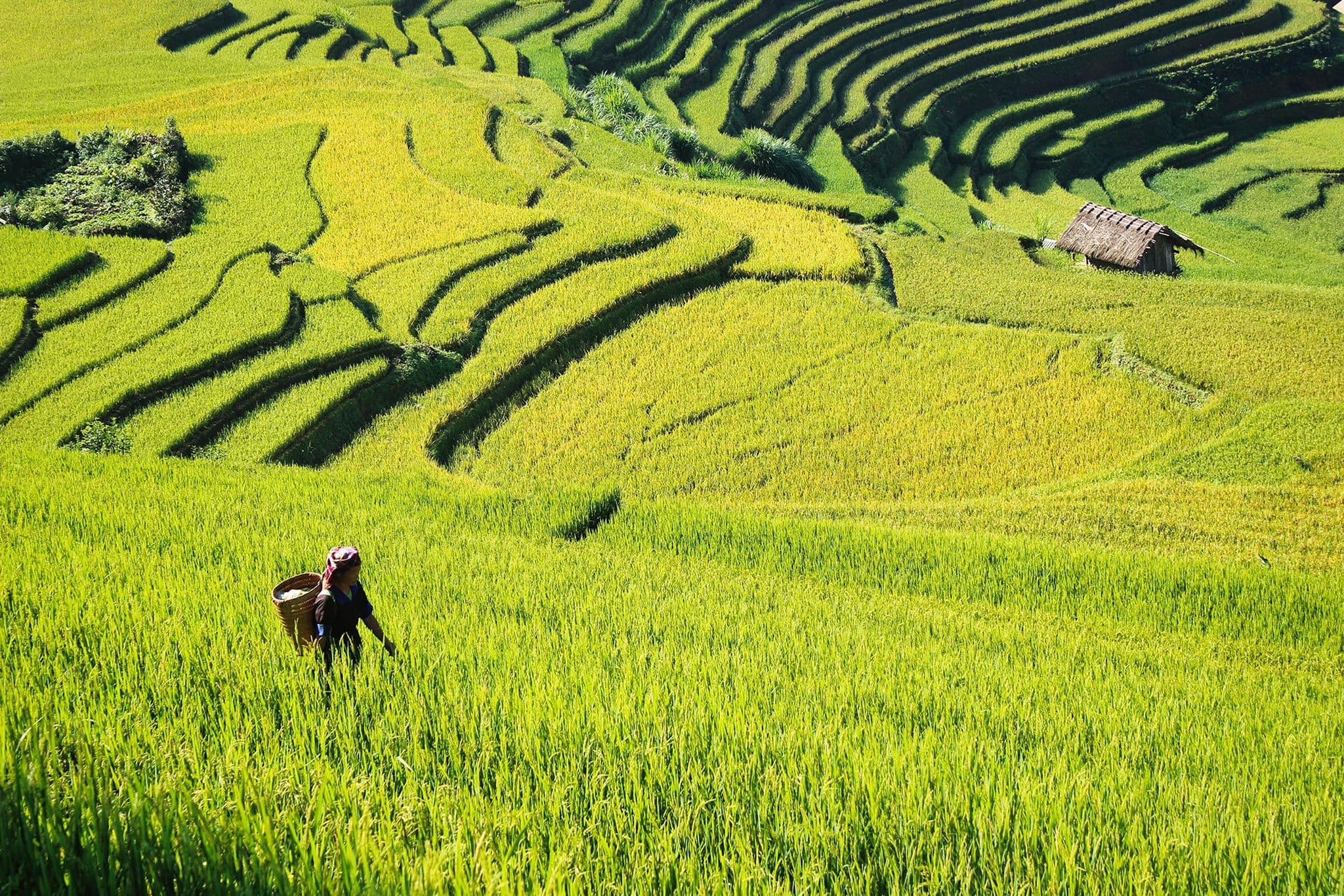
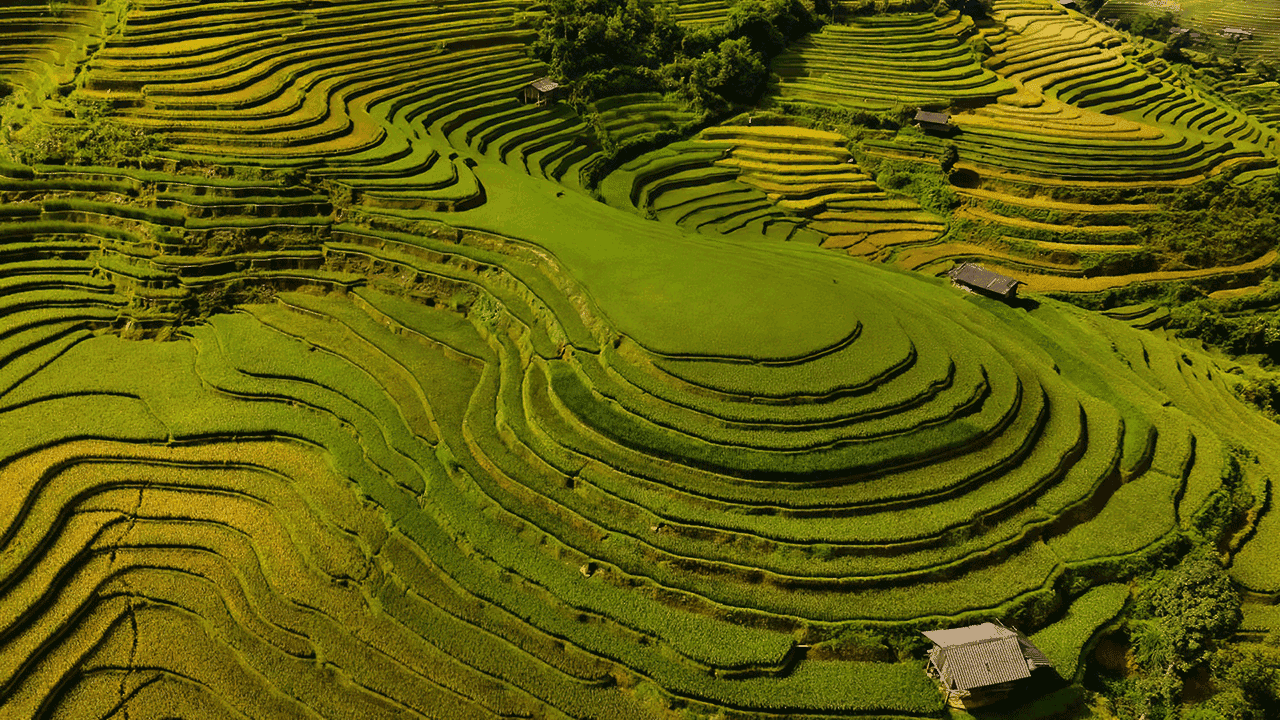
Mu Cang Chai is widely recognized for its magnificent rice terraces, which stretch across mountain slopes and follow the natural contours of the landscape. From a distance, the fields resemble enormous curved staircases carved into the mountains.
The terraces change throughout the year, creating different colors and scenery with each season. During the water-pouring season, they reflect the sky like natural mirrors. In summer, the slopes turn vibrant green, while September and early October bring golden rice fields just before harvest.
The most impressive landscapes can be found in areas such as La Pan Tan, Che Cu Nha, and De Xu Phinh, where entire mountainsides are covered with layers of rice terraces.
A Living Cultural Heritage
The rice terraces of Mu Cang Chai represent generations of agricultural knowledge and adaptation to mountainous terrain. Local communities have developed sophisticated irrigation systems and farming techniques to cultivate rice on steep slopes where flat farmland is limited.
In 2007, the terraced fields in La Pan Tan, Che Cu Nha, and De Xu Phinh were recognized as National Scenic Landscapes of Vietnam. This recognition highlights not only their natural beauty but also their cultural and historical significance.
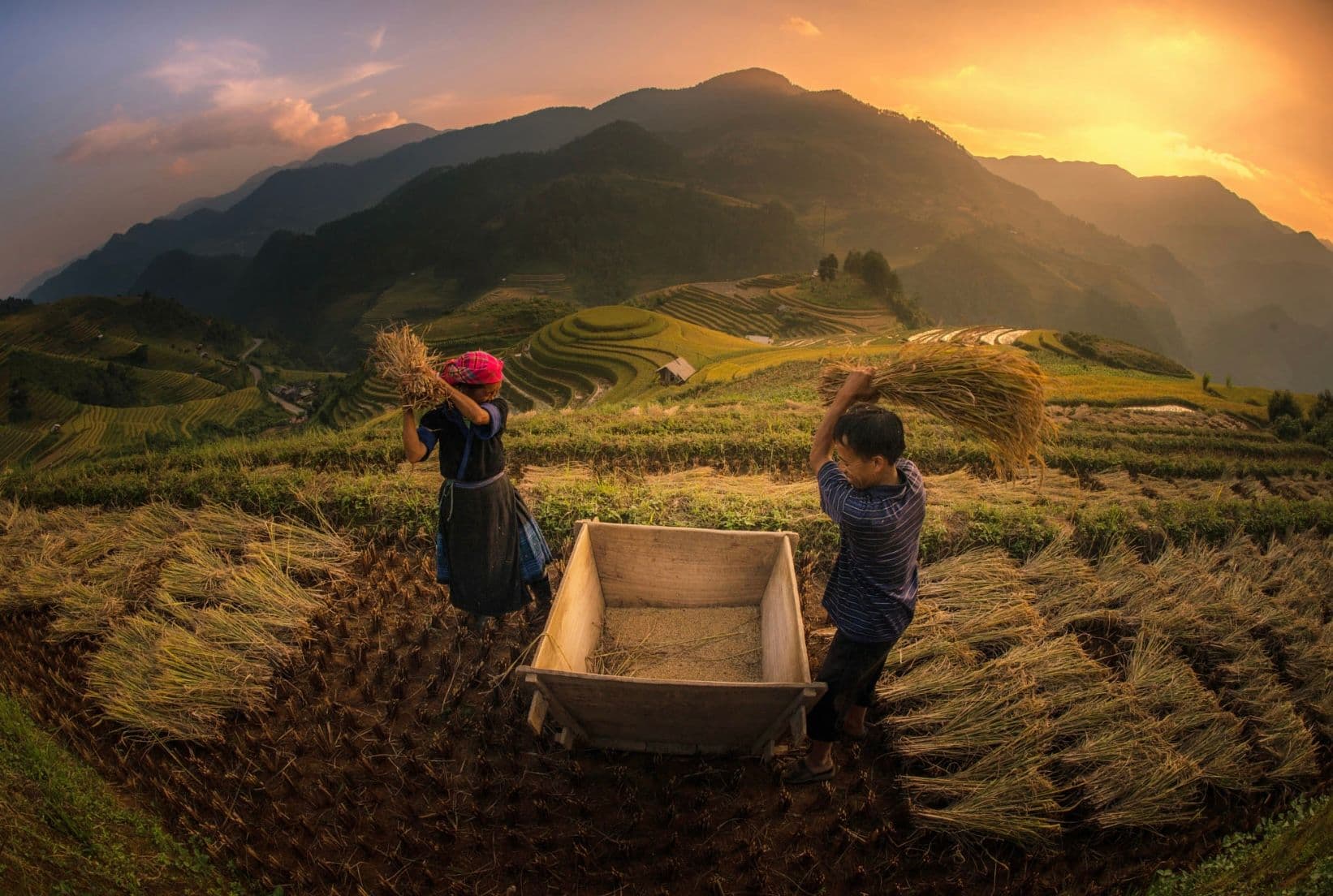
Visiting Mu Cang Chai offers an opportunity to observe the traditional lifestyle of the Hmong people, from farming activities to local markets and everyday village life.
A Photographer's Paradise
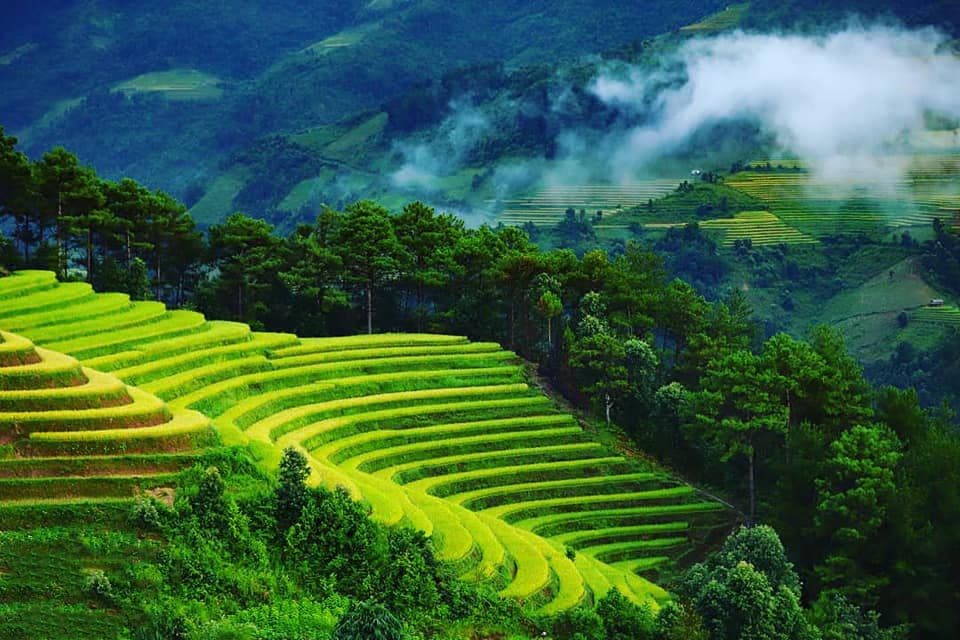
For photography enthusiasts, Mu Cang Chai offers beautiful scenery throughout the day. Early morning is particularly rewarding, when mist settles over the valleys and soft sunlight gradually illuminates the mountain slopes.
During the golden rice season, the contrast between yellow terraces, green forests, and traditional wooden houses creates especially striking compositions. Photographers can also capture everyday moments of rural life, including farmers working in the fields and local people walking along mountain paths.
Whether you enjoy landscape photography, cultural photography, or simply capturing memorable travel moments, Mu Cang Chai provides countless opportunities.
Best Time to Visit Mu Cang Chai Rice Terraces
Mu Cang Chai is a year-round destination, but the landscape changes significantly with the seasons. The best time to visit depends on whether you want to see flooded terraces, green rice fields, golden harvest landscapes, or quieter mountain scenery.
May to Early June – The Water Pouring Season
The water pouring season, locally associated with the beginning of the rice-growing cycle, is one of the most fascinating times to visit Mu Cang Chai.
As farmers prepare their fields for planting, water flows into the terraces, creating reflective surfaces across the mountainsides. Under the sunlight, the flooded fields mirror the sky, surrounding forests, and distant clouds.
This period is particularly attractive for photographers who want to capture the distinctive patterns of the terraces before the rice begins to grow. You can also observe local farmers preparing the land and planting rice, offering a glimpse into traditional agricultural practices.
June to August – The Green Season
From June through August, the rice terraces gradually transform into vibrant green landscapes. Young rice plants cover the mountainsides, creating beautiful layers of green that contrast with the surrounding forests and blue skies.
This is a rewarding period for travelers who enjoy nature, scenic drives, and outdoor activities. The countryside feels particularly lively, while the mountain valleys are often covered in lush vegetation.
However, this is also part of the rainy season in northern Vietnam. Rainfall can make mountain roads slippery, and occasional heavy showers may affect travel plans. It is advisable to allow some flexibility in your itinerary and check local weather conditions before setting out.
September to Early October – The Golden Rice Season
September to early October is generally considered the best time to visit Mu Cang Chai rice terraces, especially for travelers hoping to see the famous golden harvest landscapes.
As the rice ripens, the green terraces gradually turn shades of yellow and gold. Entire mountainsides appear to glow under the sunlight, creating one of the most spectacular rural landscapes in Vietnam.
This is also harvest time for local communities, making it an excellent opportunity to observe traditional farming activities and experience the region's agricultural culture.
The annual Mu Cang Chai Terraced Fields Festival is often organized around this period, with cultural performances, local activities, and paragliding events depending on the year's program.
Since this is the most popular visiting season, accommodation and transportation can become busier. Booking in advance is recommended, particularly if you plan to travel during weekends or festival dates.
November to April – The Quiet Mountain Season
From November to April, the rice fields are generally harvested, and the terraces take on a more understated appearance. Instead of golden rice, visitors will see layers of earth, mountain vegetation, and peaceful rural villages.
Although this period is not ideal for seeing the famous rice landscapes at their most colorful, it offers a different perspective on Mu Cang Chai. The quieter atmosphere is suitable for travelers who prefer fewer crowds and a slower pace.
Winter can bring cold temperatures, mist, and occasional fog, especially in higher areas. During spring, the surrounding mountains and countryside begin to show signs of new growth.
If your main priority is photography of the rice terraces, consider visiting between May and early October. For a quieter cultural journey, the winter and spring months can also be rewarding.
Best Places to See Rice Terraces in Mu Cang Chai
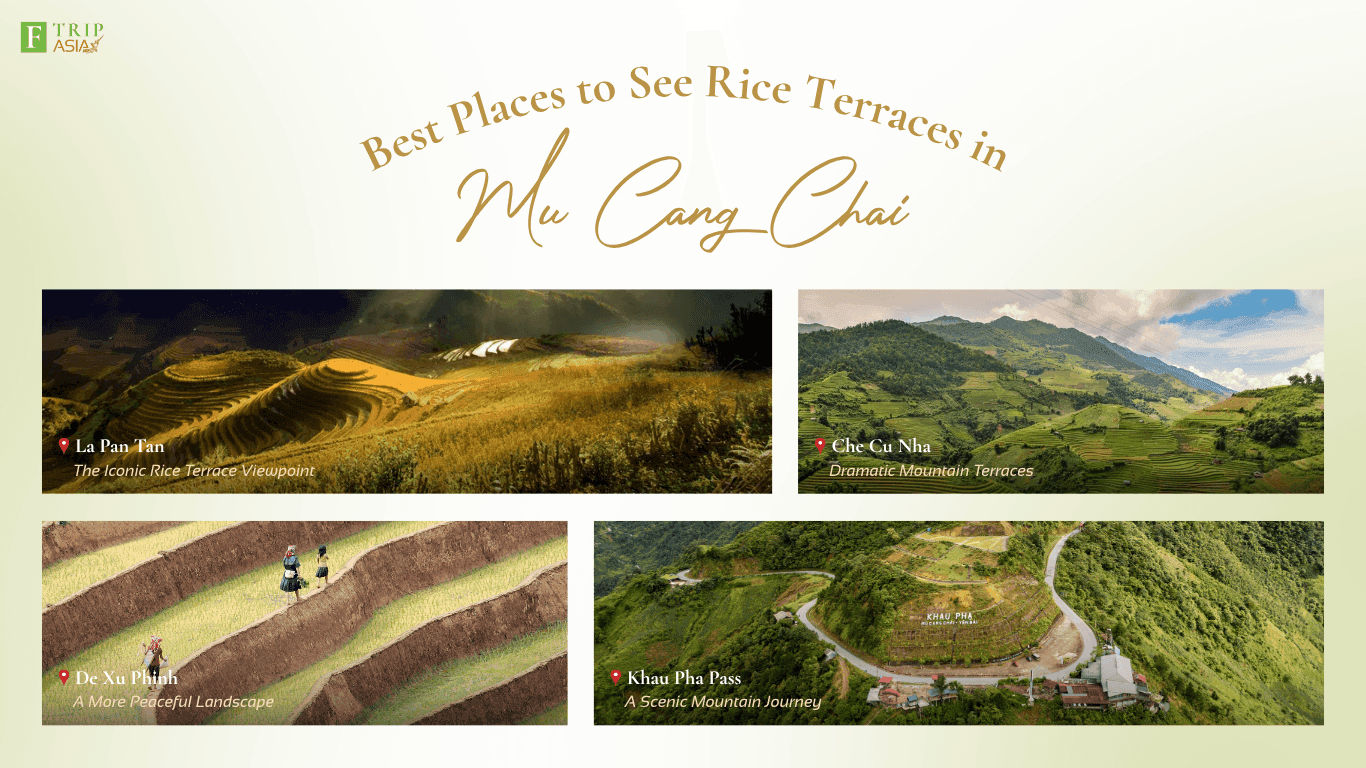
Mu Cang Chai has several scenic areas where visitors can admire its famous rice terraces. Each location offers a different perspective, from iconic panoramic viewpoints to quieter countryside landscapes.
La Pan Tan – The Iconic Rice Terrace Viewpoint
La Pan Tan is one of the most famous places to see rice terraces in Mu Cang Chai. The area is particularly well known for its impressive horseshoe-shaped terraces, locally called Mam Xoi Hill.
The curved fields create a distinctive pattern across the mountainside, making this one of the region's most photographed landscapes. During the golden rice season, the terraces become especially beautiful.
Visitors can reach the main viewpoint by local motorbike taxi or other suitable local transportation, depending on road conditions.
Che Cu Nha – Dramatic Mountain Terraces
Che Cu Nha is another highlight for anyone exploring Mu Cang Chai. The area features steep mountain slopes covered with extensive rice terraces, creating dramatic views of the surrounding valleys.
Its winding mountain roads and traditional Hmong villages add to the experience. Travelers can stop at different viewpoints along the way to admire the scenery and observe local life.
The landscape is particularly impressive during the water pouring and golden rice seasons.
De Xu Phinh – A More Peaceful Landscape
For travelers who prefer quieter surroundings, De Xu Phinh offers a more peaceful way to experience Mu Cang Chai's rural beauty.
The area is known for its expansive rice terraces, traditional villages, and less crowded viewpoints. It provides an opportunity to enjoy the mountain scenery at a slower pace while observing the agricultural lifestyle of local communities.
De Xu Phinh is a worthwhile addition to an itinerary for visitors who want to explore beyond the region's most popular photography spots.
Khau Pha Pass – A Scenic Mountain Journey
Khau Pha Pass is one of the most spectacular mountain passes in northern Vietnam, connecting Tu Le with the Mu Cang Chai area.
The road winds through high mountain terrain, offering panoramic views of valleys, forests, and terraced fields. Its name is often translated as the "Horn of Heaven", reflecting the dramatic appearance of the surrounding mountain peaks.
During the rice season, the views from the pass are particularly impressive. The area is also known for paragliding activities, especially during the annual harvest season events.
Even if you are not planning any outdoor activities, driving through Khau Pha Pass is an unforgettable part of the journey to Mu Cang Chai.
How to Get to Mu Cang Chai from Hanoi
Distance and Travel Time
Mu Cang Chai is approximately 300 km from Hanoi by road, and the journey usually takes around 6–8 hours, depending on the route, traffic, weather, and road conditions.
The drive is a scenic experience in itself, passing through mountainous landscapes, rural villages, and several attractive stops along the way. However, some sections involve winding roads and steep mountain passes, so travelers should allow enough time for the journey.
Transportation Options
There are several ways to travel from Hanoi to Mu Cang Chai, depending on your budget, comfort preferences, and travel style.
By Bus: Sleeper buses and other bus services operate between Hanoi and Mu Cang Chai or nearby destinations. This is generally a more affordable option, although schedules and routes may vary. Travelers may need additional local transportation to reach specific viewpoints or accommodation.
By Motorbike: For experienced riders, traveling by motorbike offers greater flexibility and the opportunity to explore scenic stops along the way. However, the long distance, mountain roads, and changing weather conditions require careful preparation. This option is not recommended for inexperienced riders.
By Private Car: A private car with a driver provides a more comfortable and flexible way to explore the region. You can stop at scenic viewpoints, visit local villages, and adjust your schedule without depending on fixed bus services.
Why Choose a Private Tour?
A private tour is an excellent choice for travelers who want to explore Mu Cang Chai comfortably without worrying about navigating unfamiliar mountain roads or coordinating multiple transportation connections.
With private transportation, you can enjoy scenic stops along the route, spend more time at your favorite viewpoints, and travel at a pace that suits your interests.
It also makes it easier to combine Mu Cang Chai with other destinations in northern Vietnam, such as Duong Lam Ancient Village, Long Coc Tea Hills, and Nghia Lo.
For couples, families, or small groups, a customized private journey offers a more relaxed and personal way to discover the region.
Suggested 3-Day Northern Vietnam Itinerary: Duong Lam, Long Coc & Mu Cang Chai
If you are looking for a short journey through northern Vietnam's countryside, this 3-day itinerary combines cultural heritage, scenic tea hills, and spectacular mountain landscapes. Starting from Hanoi, the route gradually takes you from traditional villages to the highlands of Mu Cang Chai.
Day 1: Hanoi – Duong Lam Ancient Village – Long Coc Tea Hills
Leave Hanoi in the morning and head towards Duong Lam Ancient Village, one of the most well-preserved traditional villages in northern Vietnam.
Located in Son Tay, approximately 50 km from Hanoi, Duong Lam is known for its centuries-old houses, narrow village lanes, laterite walls, and traditional architecture. Walking through the village offers an opportunity to experience a quieter side of Vietnamese life and learn about the region's history and customs.
You can visit Mong Phu Village, explore traditional houses, and discover local specialties. The village is also a great place to enjoy a traditional Vietnamese lunch.
In the afternoon, continue your journey to Long Coc Tea Hills in Phu Tho Province. Often described as one of the most beautiful tea-growing areas in northern Vietnam, Long Coc is famous for its rolling hills covered in layers of lush green tea bushes.
The rounded tea hills create a distinctive landscape, especially beautiful in the early morning when mist settles between the hills. After exploring the area and enjoying the peaceful surroundings, spend the night at a local accommodation nearby.
Day 2: Long Coc – Nghia Lo – Tu Le – Khau Pha Pass – Mu Cang Chai
Start the day with the refreshing scenery of Long Coc Tea Hills before continuing towards Nghia Lo, a peaceful valley surrounded by mountains and known for its Thai ethnic communities.
As you travel further into the highlands, the landscape gradually becomes more dramatic. Continue to Tu Le, a beautiful valley famous for its sticky rice, traditional villages, and terraced fields.
Tu Le is an ideal place to stop for lunch and enjoy local specialties. Depending on the season, you may also see rice-growing activities across the surrounding fields.
In the afternoon, travel across Khau Pha Pass, one of northern Vietnam's most impressive mountain roads. From the pass, enjoy panoramic views of deep valleys, forested mountains, and terraced rice fields stretching across the slopes.
Continue to Mu Cang Chai, where you can explore the surrounding countryside or simply relax and enjoy the mountain atmosphere. Spend the night in Mu Cang Chai to prepare for a full day of exploration.
Day 3: Explore Mu Cang Chai – Return to Hanoi
Dedicate the morning to exploring the spectacular rice terraces of Mu Cang Chai. Depending on the season and your interests, visit La Pan Tan, Che Cu Nha, or De Xu Phinh to admire the landscapes and discover the traditional farming practices of local communities.
During the golden rice season, the mountain slopes are covered in beautiful shades of yellow, offering excellent opportunities for photography. In other months, you can enjoy the reflective flooded terraces or vibrant green rice fields.
Take time to explore local villages, meet residents, and appreciate the region's distinctive cultural heritage. Your guide can also help you find suitable viewpoints and arrange local experiences depending on the weather and travel conditions.
After lunch, begin the return journey to Hanoi. The drive usually takes around 6–8 hours, so an afternoon departure is recommended to allow sufficient time for the journey.
This itinerary offers a varied introduction to northern Vietnam, combining traditional architecture, tea-growing landscapes, ethnic culture, and some of the country's most impressive mountain scenery.
What to Know Before Visiting Mu Cang Chai
What to Pack
Mu Cang Chai's mountainous location means that temperatures and weather conditions can change throughout the day. Pack comfortable walking shoes with good grip, lightweight clothing, and a warm jacket, especially if traveling during the cooler months.
A raincoat or waterproof jacket is useful during the rainy season. If you enjoy photography, bring your camera, extra batteries, and a suitable lens for capturing the wide mountain landscapes.
Travel Tips
- Check the season: Choose your travel dates based on the landscape you want to see, especially if you are visiting for the golden rice season.
- Allow enough travel time: Mountain roads can be winding, and weather conditions may affect driving times.
- Respect local communities: Ask permission before photographing residents, particularly in private spaces.
- Bring cash: Cash is useful for small purchases and local services in remote areas.
- Book early: Reserve accommodation and private transportation in advance during the peak harvest season.
Explore Mu Cang Chai with Ftrip Asia
Mu Cang Chai offers much more than beautiful rice terraces. From traditional villages and peaceful tea hills to spectacular mountain passes, every part of the journey reveals a different side of northern Vietnam.
With Ftrip Asia, you can enjoy a private journey tailored to your travel interests, schedule, and comfort preferences. Our local team can arrange transportation, accommodation, guided experiences, and additional stops along the way.
Discover Northern Vietnam at Your Own Pace – Plan Your Private Journey with Ftrip Asia.


Founder & Photography Guide
Specialties: Culture, landscape, portrait, hiking, active and adventurous tour
Besides my unlimited passion for traveling, a professional tour guide for over a decade, I have been taking photographs since sitting at Hanoi of the University of Culture in the early 2000s. Photography started as a hobby but it was seriously taken due to my work relations and my significant passion for the beauty of our world, especially in Southeast Asian parts such as Vietnam, Laos, Cambodia, and Myanmar.
Within a few years of taking photographs, my works began to be recognized by many reliable international publications such as AFAR Travel, The Times, and The Daily Telegraph newspaper. In addition, I continuously add to my growing profile by winning numerous major awards: 3rd Position of The Independent Photographer 2018, 1st Position of Amateur Photographer of the year 2018, Grand Prize Winner of the AFAR Travel Photography 2019, and a Gold Award of San Francisco Bay International Photography 2020.
I photograph a wide variety of subjects, from travel to landscapes to street scenes. I enjoy documenting the East’s rich cultural heritage and its land soaked in glorious sunrise or sunset light in remote and secluded spots. And, I am very happy to share my knowledge and experience with you. You can visit Luminousvietnamtour to explore tour!
 David and wife (Australia)
 Curious534121
 726hannes
 Planning a Trip to Vietnam from Canada? Start Here.
 Hanoi to Mu Cang Chai: A Scenic Journey Through Northern Vietnam
 14 Day Tour Ha Giang & Ha Long Bay for a Complete Northern Vietnam Discovery