- Who This 2-Night Ha Giang Loop Is Best For?
- What Makes a 2-Night Loop Work?
- Day 1 — Ha Giang City to Quan Ba to Yen Minh
- Day 2 — Yen Minh to Dong Van to Lung Cu to Ma Pi Leng to Meo Vac
- Day 3 — Meo Vac back to Ha Giang City
- Small Group vs Private for a 2-Night Loop
- Best Time to Do a Short Ha Giang Loop
- Permits and Checkpoints
- Safety and Comfort Notes
- What to Pack for a 2-Night Ha Giang Loop?
- Booking Checklist
- FAQs
- Is 3D2N enough for the Ha Giang Loop?
- What is the best 3D2N Ha Giang Loop route?
- Do I need a permit for Ha Giang Loop checkpoints?
- When is the best season for clear views on the Loop?
- Can I include Nho Que River in a 2-night itinerary?
- Conclusion
The Ha Giang Loop is one of Vietnam’s most cinematic road journeys: limestone peaks, high passes, deep valleys, and borderland towns packed into a short but intense route. The good news is that a 2-night Ha Giang Loop can still feel unforgettable if you pace it properly. Vietnam Tourism’s official four-day Loop article starts with Ha Giang City to Yen Minh on Day 1, then builds through Dong Van, Ma Pi Leng, and Meo Vac, which is exactly why the shorter 3D2N version works so well when you keep the structure focused.
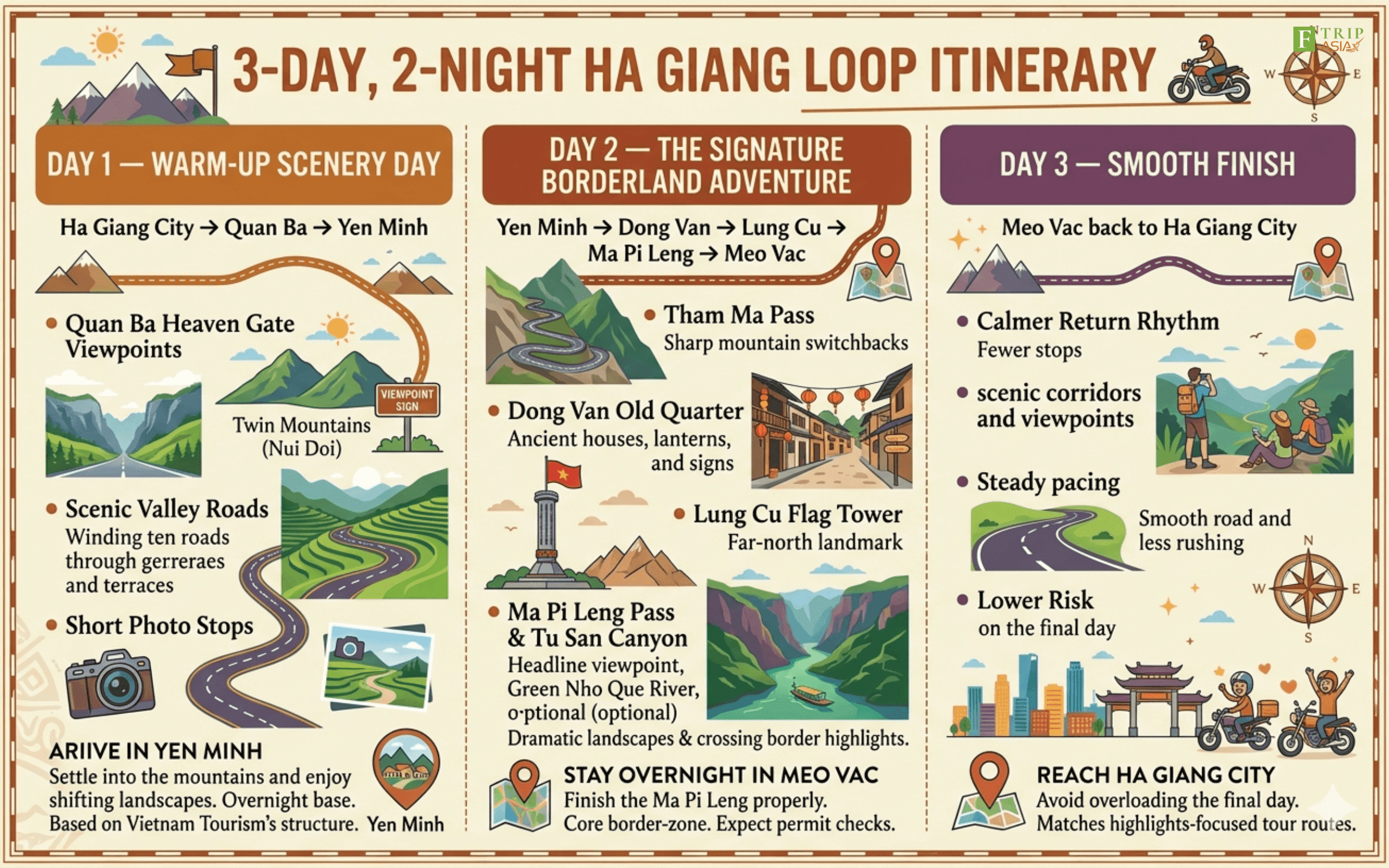
A classic 3 days 2 nights Ha Giang Loop usually follows this shape: Day 1 Ha Giang City to Quan Ba to Yen Minh, Day 2 Yen Minh to Dong Van to Lung Cu to Ma Pi Leng to Meo Vac, Day 3 Meo Vac back toward Ha Giang City. That route is popular because it covers the Loop’s signature landscapes without forcing every stop into a sprint. One practical point matters for foreign travelers: several current Ha Giang permit guides say major parts of this route sit in regulated border areas, and foreigners may need a border travel permit and may encounter checkpoints.
Who This 2-Night Ha Giang Loop Is Best For?
A 2 night Ha Giang Loop is best for first-timers who want the signature scenery without committing to four or more days on the road. It suits travelers who are happy with long but rewarding riding days, especially if they choose an easy rider or a small guided group instead of self-riding. That balance matters because the Loop’s mountain roads are demanding: Vietnam Tourism describes the route as full of dramatic curves, steep mountain roads, and deep abysses, not something to treat casually.
It is also a good fit for travelers who care more about seeing the iconic parts of the route well than trying to stop everywhere. Three days is enough for the headline version of Ha Giang, but only if you accept that the trip works best when you protect the major moments rather than chasing every minor detour. This is consistent with how current 3D2N tour products package the route around the core highlights of Quan Ba, Dong Van, Ma Pi Leng, and Meo Vac.

What Makes a 2-Night Loop Work?
The key to making a short Loop feel good is simple: treat Day 2 as the epic day. That is the day where you stack the best scenery and biggest landmarks, so it needs to stay protected from delays and overloading. Vietnam Tourism’s official Loop route and most 3D2N tour structures both place the most dramatic section around Dong Van, Ma Pi Leng, and Meo Vac, which is why that middle day matters most.
The second rule is to start early. Early departures help you lock in viewpoints before traffic builds, keep photo stops calmer, and reduce
The 3-Day, 2-Night Itinerary
Day 1 — Ha Giang City to Quan Ba to Yen Minh
The first day should feel like a warm-up scenery day, not a race. Vietnam Tourism’s official four-day route uses Ha Giang City to Yen Minh as Day 1, which is exactly why this structure works so well in a shorter 3D2N version.
The classic highlights on this opening stretch are:
- Quan Ba / Heaven Gate viewpoints
- scenic valley roads
- a handful of short photo stops rather than constant stopping
The goal is to settle into the mountains, enjoy the shift in landscape, and still arrive in Yen Minh with energy for the much bigger second day. Yen Minh works well as an overnight base because it naturally positions you for the Dong Van section the next morning. Vietnam Tourism’s official day-by-day structure supports Yen Minh as the logical end to the first riding day.
Day 2 — Yen Minh to Dong Van to Lung Cu to Ma Pi Leng to Meo Vac
This is the signature day and the reason the 2-night Loop can still feel unforgettable. It is the day that combines the best landscapes with the strongest sense of crossing through Ha Giang’s borderland highlands.
Typical stops on this day include:
- Tham Ma Pass area
- Dong Van for a town break and old-quarter feel
- Lung Cu Flag Tower, the far-north landmark
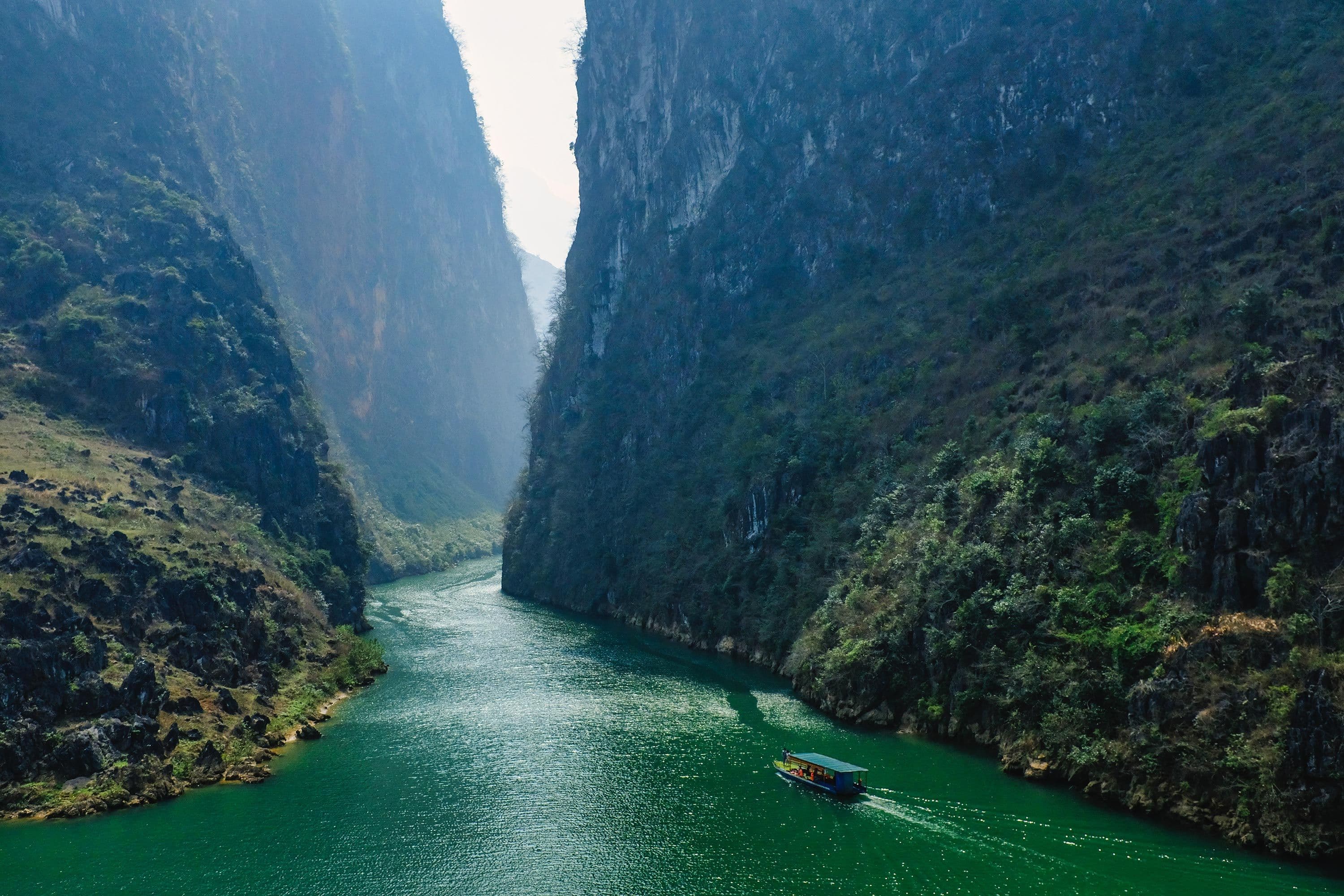
- Ma Pi Leng Pass, the Loop’s headline viewpoint
- optional Nho Que River add-on if timing works
Vietnam Tourism’s north-Vietnam guide highlights Ma Pi Leng Pass, Tu San Canyon, and the Sunday Meo Vac market as standout attractions in the region, while current permit guidance also treats Dong Van and Meo Vac as core border-zone districts where foreign travelers should expect permit checks.
The overnight stop in Meo Vac makes sense because it lets you finish the dramatic Ma Pi Leng section properly rather than hurrying it just to reach somewhere farther away. That pacing choice is one of the biggest reasons a short Loop can still feel complete.
Day 3 — Meo Vac back to Ha Giang City
The third day should feel like a smooth finish, not another attempt to force in too much. Most itineraries return through the main scenic corridors with shorter breaks, simpler photo stops, and a calmer rhythm before reaching Ha Giang City. This matches the general structure of tour routes that use 3D2N as a highlights-focused version of the Loop rather than a second full epic day.
A calmer return is important because it lowers risk on the final day and makes the trip feel better overall. After a huge Day 2, most travelers remember the return more positively when it is scenic and steady, not overloaded.
Small Group vs Private for a 2-Night Loop
A small group is usually the better-value option. It gives you the built-in social side of the Loop and a ready-made structure, which is why current 3D2N products often market the route in small-group format. One recent GetYourGuide listing even specifies max 9 people, which gives a good sense of what “small group” can look like in practice.
A private tour is the stronger choice for photographers, couples, families, or travelers who want more control over pacing. On a short 3D2N loop, private can feel dramatically less rushed because you can protect your key stops, stay longer at vthe stress that comes from running late on mountain roads. The third rule is to aim for two or three high-value stops per day, not ten rushed ones. That is what keeps the trip feeling like a journey instead of a chase.
Best Time to Do a Short Ha Giang Loop
Several current Ha Giang travel guides point to spring from March to May and autumn from September to November as the strongest seasons for riding comfort and clearer conditions. Those windows are repeatedly highlighted because temperatures are milder and visibility is usually better than in the wetter summer period.
Autumn is especially strong if you want golden rice-field scenery, while spring is a safer all-round choice for comfortable riding and cleaner weather windows. Rainier months can still be beautiful and lush, but they are less forgiving. Wet roads and lower visibility matter much more on the Ha Giang Loop than in a city itinerary, so if you travel in summer, choose an operator with clear safety and weather policies.
iewpoints, and avoid the operational delays that come with regrouping larger parties.
Permits and Checkpoints
This is the part many first-timers underestimate. Multiple recent Ha Giang permit guides say foreigners often need a border travel permit for districts commonly included on Loop routes, especially Quan Ba, Yen Minh, Dong Van, and Meo Vac, and that checkpoints can ask to see it.
Current guidance also says permits can often be arranged by local accommodations or tour operators, though some sources mention the Ha Giang immigration office as another route. Exact process, hours, and cost can vary by source, so the practical move is to ask your operator directly whether they handle the permit for you and what documents you need to carry.
Safety and Comfort Notes
Mountain roads on the Loop mean sharp curves, steep drop-offs, and constant weather swings. That is why operator quality matters more here than on easier tourist routes. Vietnam Tourism’s description of the Loop makes clear that the roads themselves are part of the challenge, not just the scenery.
If you are not very confident riding, the safest and most relaxed choice is usually an easy rider. Riding as a passenger lets you focus on the views, avoids the pressure of handling difficult roads, and makes the 3D2N version feel much more enjoyable.
What to Pack for a 2-Night Ha Giang Loop?
Pack for mountain variation, not city comfort. The short-trip essentials are:
- a light rain layer
- a warm layer for mornings
- shoes with grip
- gloves
- eye protection for wind or dust
- a power bank
- a waterproof phone pouch
- motion-sickness support, even if you are a passenger
These small items matter more on the Loop than many travelers expect because conditions change quickly and long road days feel much easier when basic comfort is handled well.
Booking Checklist
Before you book, confirm:
- your exact overnight bases, ideally Yen Minh and Meo Vac for this route structure
- when the tour expects to reach Ma Pi Leng, because golden-hour timing feels very different from a rushed midday stop
- whether Nho Que River is included and how much time it takes
- who handles the permit for foreign travelers
- actual group size and guide support
These details are what separate a short but meaningful trip from a short trip that feels overpacked.
FAQs
Is 3D2N enough for the Ha Giang Loop?
Yes, if your goal is the highlights-focused version of the Loop. Three days is enough for the classic structure of Ha Giang City → Yen Minh → Dong Van / Ma Pi Leng / Meo Vac → return, but it works best when you keep the pacing disciplined.
What is the best 3D2N Ha Giang Loop route?
The most practical 3D2N route is usually Ha Giang City → Quan Ba → Yen Minh on Day 1, Yen Minh → Dong Van → Lung Cu → Ma Pi Leng → Meo Vac on Day 2, then Meo Vac back to Ha Giang City on Day 3. That structure matches the region’s natural story and the way operators usually package the highlights.
Do I need a permit for Ha Giang Loop checkpoints?
Many current guides say yes for foreigners on the standard Loop route, especially because several key districts lie in regulated border areas.
When is the best season for clear views on the Loop?
March to May and September to November are the strongest windows mentioned in recent Ha Giang guides.
Can I include Nho Que River in a 2-night itinerary?
Yes, but only if timing is managed carefully. It can fit as an add-on to the Day 2 Ma Pi Leng / Meo Vac section, but it should not eat too much of your best viewpoint time.
Conclusion
A 2 night Ha Giang Loop can absolutely be unforgettable if you protect the rhythm. The winning structure is simple: Day 1 warms up toward Yen Minh, Day 2 for Dong Van plus Lung Cu plus Ma Pi Leng, and Day 3 for a calmer return. That pacing aligns with the way the Loop’s own geography works and with how current 3D2N routes are commonly built.
For the best result, go in spring or autumn, keep the itinerary focused, and choose safety over squeezing in every possible stop. Done that way, the short version of the Loop still feels like a real mountain journey, not a sprint.


Founder & Photography Guide
Specialties: Culture, landscape, portrait, hiking, active and adventurous tour
Besides my unlimited passion for traveling, a professional tour guide for over a decade, I have been taking photographs since sitting at Hanoi of the University of Culture in the early 2000s. Photography started as a hobby but it was seriously taken due to my work relations and my significant passion for the beauty of our world, especially in Southeast Asian parts such as Vietnam, Laos, Cambodia, and Myanmar.
Within a few years of taking photographs, my works began to be recognized by many reliable international publications such as AFAR Travel, The Times, and The Daily Telegraph newspaper. In addition, I continuously add to my growing profile by winning numerous major awards: 3rd Position of The Independent Photographer 2018, 1st Position of Amateur Photographer of the year 2018, Grand Prize Winner of the AFAR Travel Photography 2019, and a Gold Award of San Francisco Bay International Photography 2020.
I photograph a wide variety of subjects, from travel to landscapes to street scenes. I enjoy documenting the East’s rich cultural heritage and its land soaked in glorious sunrise or sunset light in remote and secluded spots. And, I am very happy to share my knowledge and experience with you. You can visit Luminousvietnamtour to explore tour!