- What “Small Group” Should Mean?
- Why Do Small Group Tours Feel More Meaningful?
- You get more real time and less waiting time
- Guides can tell stories, not just manage movement
- Stops feel human instead of staged
- Safer decisions are easier to enforce
- You still get camaraderie without party pressure
- Smaller groups usually create a lower impact
- The Meaningful Loop Map: What the Journey Builds Toward
- Small Group Itinerary Templates
- 3D2N: Deep highlights for limited time
- 4D3N: Most meaningful pace
- Best Time to Go
- What to Look for When Booking a Small Group Tour?
- Group design
- Safety and support
- Culture and ethics
- Permits and checkpoints
- How to Make the Journey Feel Real
- Packing Checklist for Small-Group Comfort
- FAQs
- Is a small group Ha Giang Loop tour safer than going solo?
- How many days do you need for a meaningful Ha Giang Loop experience?
- What’s the best time of year to ride the Ha Giang Loop?
- Do foreigners need a permit for Ha Giang Loop checkpoints?
- Is 3D2N enough, or should I do 4D3N?
- Conclusion
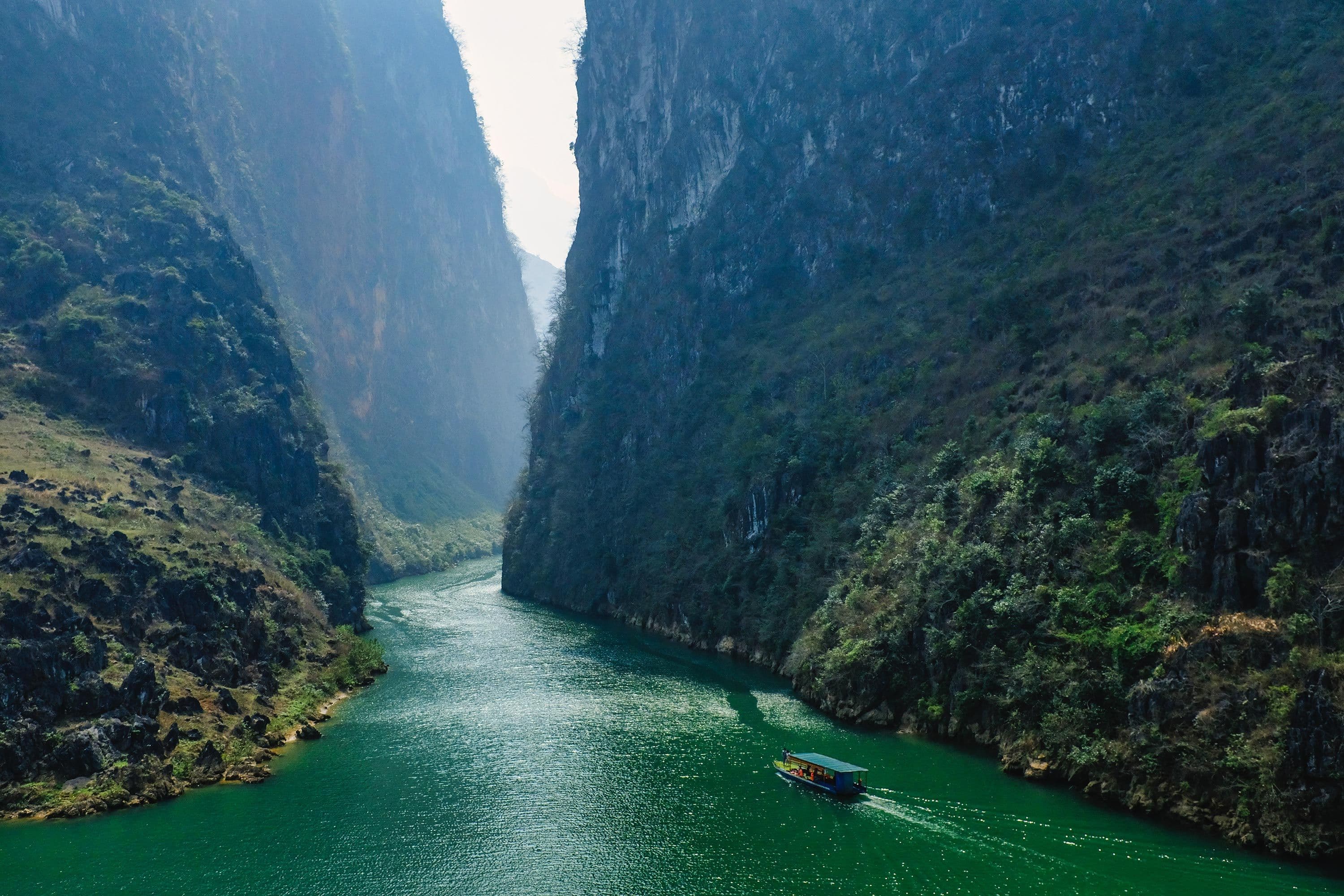
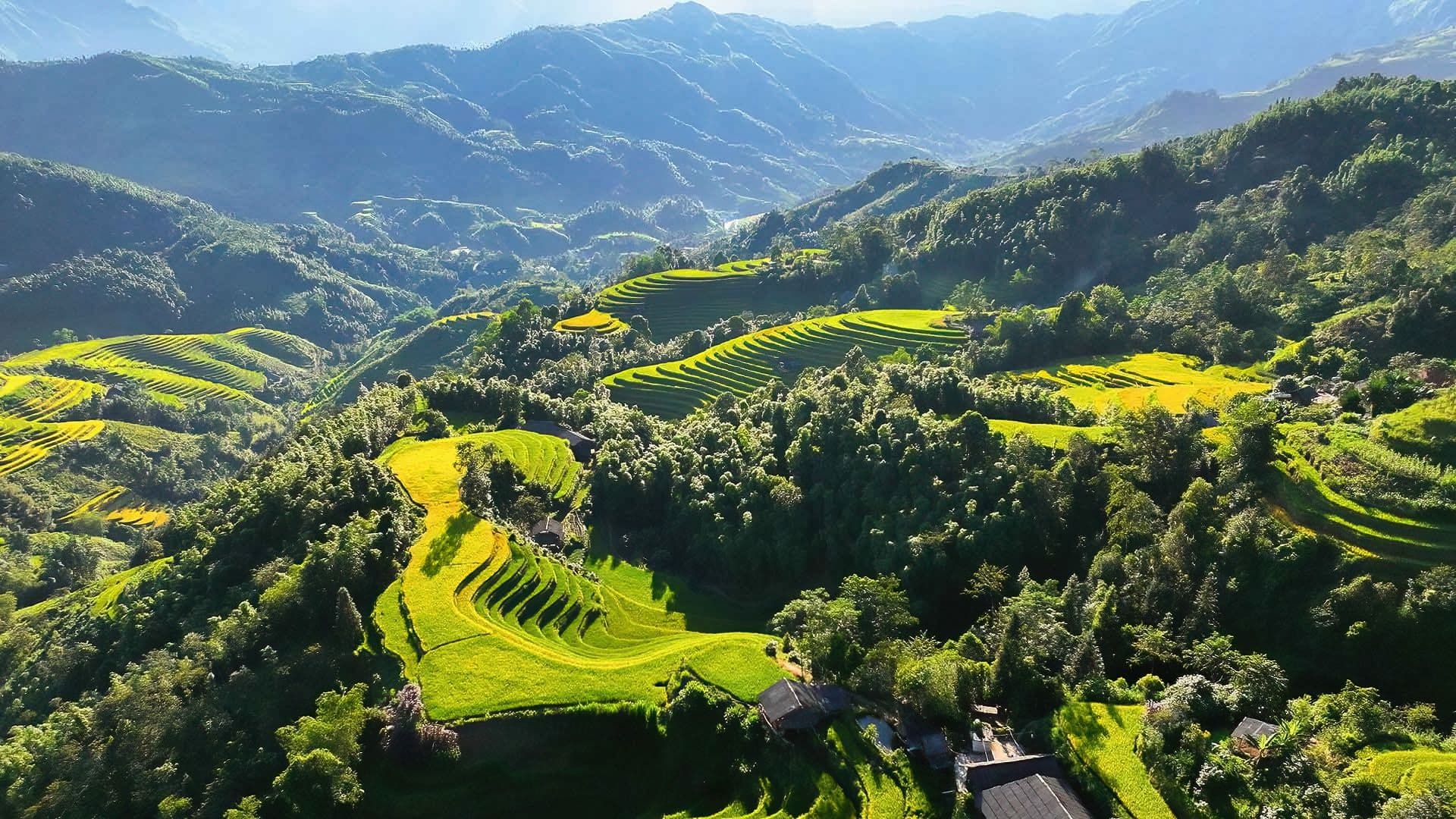
The Ha Giang Loop is not just a scenic ride. It is one of Vietnam’s most dramatic overland journeys, crossing the Dong Van Karst Plateau Geopark, winding through Quan Ba, Yen Minh, Dong Van, and Meo Vac, and revealing a landscape of limestone peaks, deep valleys, river canyons, and highland communities. Vietnam Tourism and Vietnam Airlines both frame the region as one of the country’s most visually striking road-trip destinations, with Ma Pi Leng Pass, local markets, and the Nho Que River among its signature highlights.
What often decides whether the trip feels merely impressive or genuinely unforgettable is how you travel it. A Ha Giang Loop small group tour usually creates a more meaningful journey because it gives you more time at stops, more room for cultural context, better safety control, and a calmer atmosphere than large convoys or party-style groups. It also helps with practical realities: the Loop runs through sensitive border-region districts where foreign travelers may need a travel permit and can encounter checkpoints, so organized support reduces friction.
What “Small Group” Should Mean?
A really small group tour should feel like a guided ride with limited riders, clearer riding rules, and enough time for stops. It should not feel like a rolling convoy of 30 to 60 bikes. That difference matters because the Ha Giang Loop is not an easy urban route. Vietnam Tourism describes it as a road crossing high passes and deep abysses, with endless curves that require strong steering and careful handling.
Small group tours also often give you two different ways to join:
- easy rider, where you ride as a passenger behind a local driver
- self-ride, where you ride yourself
If you plan to self-ride, legal requirements matter. Recent Ha Giang-specific guidance and operator resources consistently note that foreign riders are expected to have a valid motorcycle license, and checkpoint enforcement is a real issue.
Why Do Small Group Tours Feel More Meaningful?
You get more real time and less waiting time
The biggest difference is simple: smaller groups waste less time regrouping. Meal stops are faster, photo stops are easier, and roadside pauses do not become long operational delays. That means you spend more time in the actual landscapes and communities that make Ha Giang special. Vietnam Tourism’s own Ha Giang content emphasizes that what people appreciate most are the viewpoints, refreshment stops, markets, and roadside experiences between the headline places.
Guides can tell stories, not just manage movement
In a smaller group, a guide can explain more than directions. They can give context on the geopark, local ethnic communities, borderland geography, market culture, and how the scenery changes from Quan Ba to Yen Minh to Dong Van to Meo Vac. The geopark covers four districts and is home to many ethnic minority communities, which makes interpretation part of what turns the ride into a meaningful journey rather than just a transport experience.
Stops feel human instead of staged
A small group can stop for roadside tea, a market wander, a village coffee, or a quiet photo break without turning every pause into a logistical event. That matters on a route where the best moments are often not the named attractions, but the unplanned edges of the day. Vietnam Tourism’s Ha Giang pieces repeatedly highlight these roadside experiences, village markets, and small refreshment stops as part of the real appeal.
Safer decisions are easier to enforce
Road discipline is easier in a smaller group. Speed control, spacing, overtaking decisions, weather calls, and regrouping all become more manageable when there are fewer riders. That is especially important because the Loop’s mountain roads are steep, narrow, and weather-sensitive. Vietnam Tourism explicitly describes the route as demanding and full of sharp, loop-like curves, not something to treat casually.
You still get camaraderie without party pressure
One of the best parts of the Loop is sharing sunrise coffee, mountain passes, viewpoints, and dinner stories with other travelers. A small group keeps that sense of shared experience, but usually without the forced energy and noise of a party-oriented convoy. The result is often more grounded and more memorable.
Smaller groups usually create a lower impact
This is not just about comfort. Smaller groups are also easier on villages, viewpoints, and homestays. Less noise, less crowding, and less convoy disruption generally create a more respectful cultural tone. That matters in a region where local hospitality is part of what makes the trip special.
The Meaningful Loop Map: What the Journey Builds Toward
Vietnam Tourism’s official four-day Ha Giang Loop route follows a strong natural story arc through the region, moving from Ha Giang City into Quan Ba and Yen Minh, then deeper into Dong Van, Ma Pi Leng, Meo Vac, and back through scenic return roads.
This route works so well because it layers both scenery and culture. The landscapes shift from gentler valleys to hard limestone karst, then into the drama of Ma Pi Leng Pass and the Nho Que River. At the same time, the social texture changes too: mountain towns, proper village markets, roadside communities, and different ethnic minority cultures. Vietnam Tourism’s north-Vietnam guide specifically highlights Twin Hills, Ma Pi Leng Pass, Tu San Canyon, and the Sunday Meo Vac market as standout parts of the route.
That is exactly why a smaller group works better here. The Loop is not one view repeated for four days. It is a sequence, and smaller groups let that sequence breathe.
Small Group Itinerary Templates
3D2N: Deep highlights for limited time
A three-day route can still feel meaningful if it is paced well.
Day 1: Ha Giang to Quan Ba area to Yen Minh
This is the ease-in day. You want enough time for scenery, food stops, and slower pacing rather than trying to “make up distance.”
Day 2: Yen Minh to Dong Van to Ma Pi Leng Pass to Meo Vac
This is the biggest day visually, and it is where small-group pacing matters most. Ma Pi Leng and Nho Que deserve time, not rushed photos. Vietnam Tourism and regional guides consistently present this section as one of the most exhilarating parts of the whole Loop.
Day 3: Scenic return toward Ha Giang
This day works best with market stops, coffee breaks, and a softer finish.
Three days is enough for strong highlights, but it is still a tighter version of the journey.
4D3N: Most meaningful pace
This is the better choice if you want the Loop to feel like more than a checklist. Vietnam Tourism’s official four-day route structure supports this pace, and it gives enough time to let places feel distinct.
A good small-group 4D3N rhythm looks like this:
Day 1: Ease into the route with shorter walks and photo stops
Day 2: Karst plateau focus, with more time in Dong Van-area culture and landscapes
Day 3: Ma Pi Leng and Meo Vac with protected time for viewpoints and river scenery
Day 4: Scenic return day with a more reflective, less hurried close
This is the version that usually feels most meaningful because it protects the exact things that create memory: time, energy, and attention.
Best Time to Go
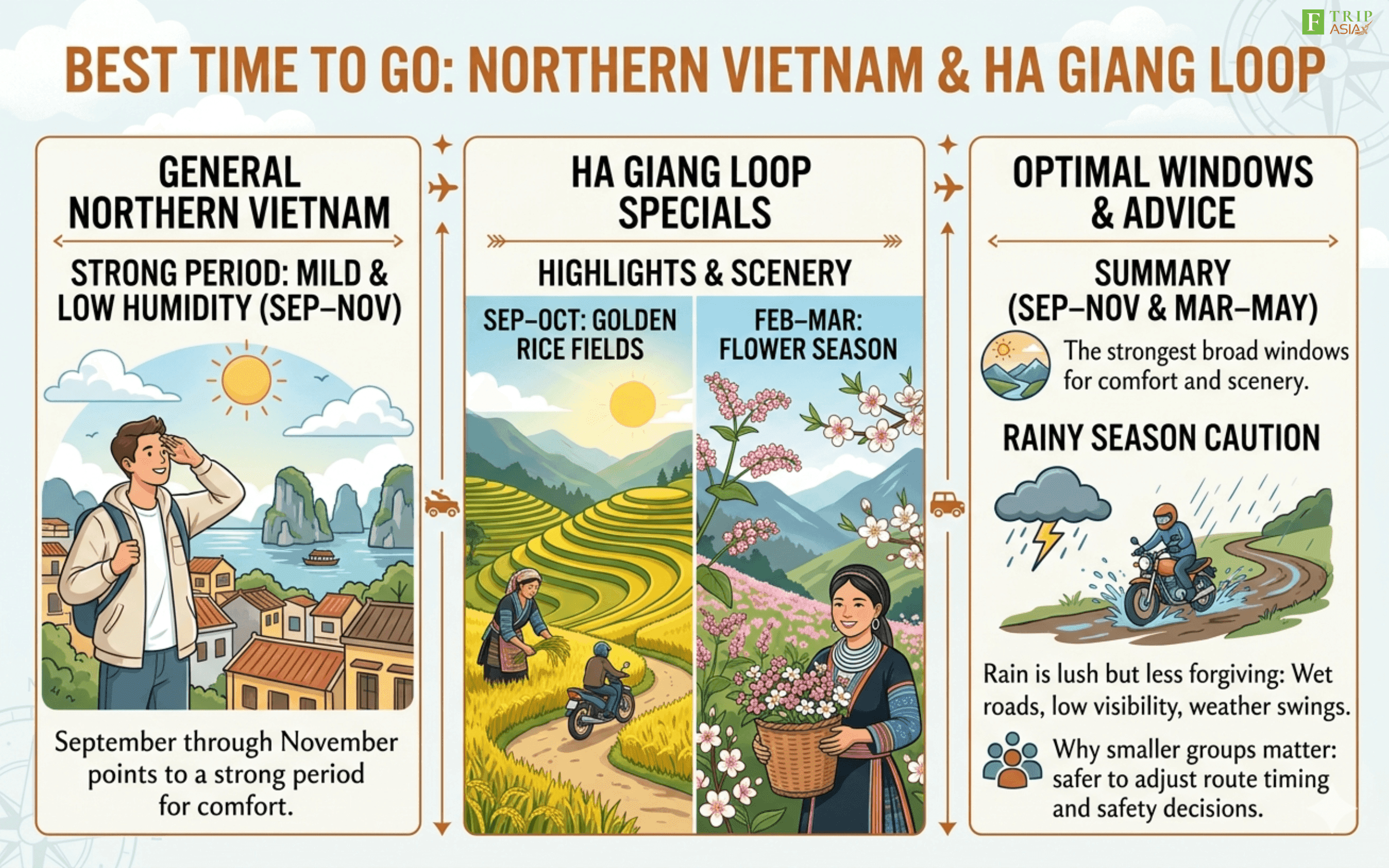
Vietnam Tourism points to September through November as a strong period for mild weather and lower humidity in northern Vietnam, while the Ha Giang Loop page highlights September and October for golden rice fields and February to March for the flower season. That makes September–November and March–May the strongest broad windows for comfort and scenery.
Rainier months can still be lush and beautiful, but they are less forgiving. Wet roads, lower visibility, and weather swings matter much more on the Loop than they do in city travel. That is why smaller groups become even more valuable in less stable weather: they can adjust route timing and safety decisions more realistically.
What to Look for When Booking a Small Group Tour?
Group design
Ask the operator:
- what the maximum rider count is
- whether the group splits by confidence or skill level
- how many guides support the group
A group described as “small” should actually feel small in practice.
Safety and support
This is the most important booking filter. Look for:
- clear riding rules
- quality helmets and protective gear
- weather contingency planning
- realistic route pacing
The Loop is beautiful, but it is not a casual route. Safety promises should sound specific, not generic.
Culture and ethics
A meaningful trip also depends on how the operator behaves locally. Strong signs include:
- respectful homestays
- clear pricing
- no forced shopping stops
- some kind of village etiquette or cultural briefing
Permits and checkpoints
This is a major trust signal. Several current Ha Giang resources state that foreign travelers often need a border travel permit for districts such as Quan Ba, Yen Minh, Dong Van, and Meo Vac, and that checkpoints may request it. A good operator should be able to explain clearly whether they arrange it and what documents you need to carry.
How to Make the Journey Feel Real
A few small choices make a big difference:
Choose one market stop that is not rushed. Vietnam Tourism specifically highlights the Sunday Meo Vac market as a proper village market with villagers and livestock, not just a tourist photo stop.
Add one short walk. The Loop should not be only riding. Even a brief walk changes how you experience the landscape.
Protect one sunrise or sunset moment from schedule creep.
Ask for one quiet family-run meal or homestay dinner rather than only larger group-stop restaurants.
These are the kinds of details that turn a famous route into a personal memory.
Packing Checklist for Small-Group Comfort
Bring:
- layers for temperature swings
- a rain shell
- gloves
- shoes with grip
- a waterproof phone pouch
- a power bank
- motion-sickness support if you are riding as a passenger
A small cash buffer is also useful for personal purchases or tips where culturally appropriate.
FAQs
Is a small group Ha Giang Loop tour safer than going solo?
Usually, yes. Smaller guided groups make speed control, spacing, weather decisions, and route support easier, especially on roads that Vietnam Tourism describes as steep, winding, and demanding.
How many days do you need for a meaningful Ha Giang Loop experience?
4D3N is the best pace if you want the journey to feel unhurried and layered. 3D2N can still work for highlights, but it is more compressed. Vietnam Tourism’s official loop article is built around a four-day route, which supports the longer version as the more complete experience.
What’s the best time of year to ride the Ha Giang Loop?
The strongest windows are generally September–November and March–May for comfortable riding and strong scenery. September and October are especially good for golden rice landscapes.
Do foreigners need a permit for Ha Giang Loop checkpoints?
Often, yes for key border-region districts. Multiple Ha Giang-focused sources state that foreign travelers may need a border travel permit for areas such as Quan Ba, Yen Minh, Dong Van, and Meo Vac, and should carry it through checkpoints.
Is 3D2N enough, or should I do 4D3N?
Do 4D3N if you can. It gives the landscapes and stops more room, which is exactly what makes a small group tour worthwhile in the first place.
Conclusion
A Ha Giang Loop small group tour becomes more meaningful because it protects the things that create real memory: time, safety, cultural respect, and quiet shared moments. It gives guides space to explain, gives riders space to breathe, and gives the route space to feel like a story instead of a race. The Loop itself is already extraordinary. The real question is whether you experience it as a blur or as a journey.
If you can, choose a 4D3N pace, travel in one of the clearer seasons, and book a group that is genuinely small, safety-conscious, and respectful in villages and homestays. That is usually the difference between “I did the Loop” and “I will remember this forever.”

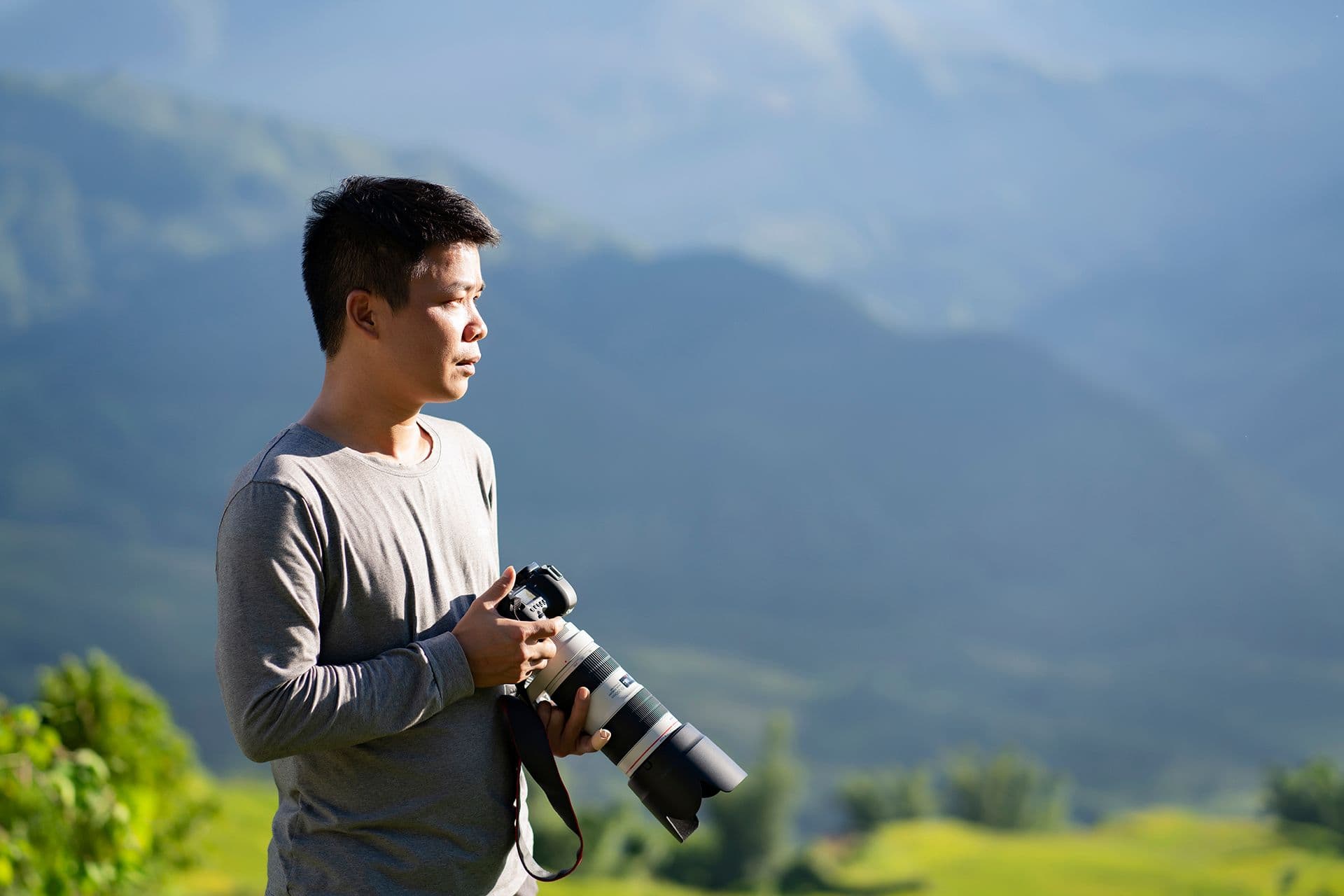
Founder & Photography Guide
Specialties: Culture, landscape, portrait, hiking, active and adventurous tour
Besides my unlimited passion for traveling, a professional tour guide for over a decade, I have been taking photographs since sitting at Hanoi of the University of Culture in the early 2000s. Photography started as a hobby but it was seriously taken due to my work relations and my significant passion for the beauty of our world, especially in Southeast Asian parts such as Vietnam, Laos, Cambodia, and Myanmar.
Within a few years of taking photographs, my works began to be recognized by many reliable international publications such as AFAR Travel, The Times, and The Daily Telegraph newspaper. In addition, I continuously add to my growing profile by winning numerous major awards: 3rd Position of The Independent Photographer 2018, 1st Position of Amateur Photographer of the year 2018, Grand Prize Winner of the AFAR Travel Photography 2019, and a Gold Award of San Francisco Bay International Photography 2020.
I photograph a wide variety of subjects, from travel to landscapes to street scenes. I enjoy documenting the East’s rich cultural heritage and its land soaked in glorious sunrise or sunset light in remote and secluded spots. And, I am very happy to share my knowledge and experience with you. You can visit Luminousvietnamtour to explore tour!