- Sapa is variable even in the best months
- The three things you are really optimizing for
- The Best Times to Visit Sapa by Goal
- Best for Golden Rice Terraces: September to October
- Best for Clear Views and Comfortable Trekking: April to May
- Best for Fewer Crowds: March and November
- Best for Moody Mountains: November to March
- Months to Be Cautious About
- Rainy Season: May to September
- What this means in practice
- The smart rainy-season strategy
- Month-by-Month Quick Picks
- September to October: Top Choice for Most People
- April to May: Best Easy-Weather Window
- June to August: Warm but Less Predictable
- November to March: Cold-Season Sapa
- What to Do in Sapa by Season?
- April to May: Trekking and Viewpoints
- September to October: Terrace Wow Season
- Rainy Season: Softer Adventure
- Winter: Cozy Sapa
- Planning Rules That Improve Any Season
- The Morning-First Rule
- Build a Fog-Day Backup
- What to Pack by Season
- April to May and September to October
- May to September
- November to March
- Plug-and-Play Itineraries
- 2 Days: Best in April–May or September–October
- 3 Days: Best for First-Timers
- FAQs
- What is the best month to visit Sapa for rice terraces?
- Is April or May better for clear views in Sapa?
- When is Sapa’s rainy season?
- Is Sapa worth visiting in winter?
Sapa can be jaw-dropping—or completely hidden behind fog. The best time to visit depends on what you want most: golden rice terraces, clear mountain views, comfortable trekking weather, or a quieter mountain atmosphere. Vietnam’s official tourism site says the strongest windows are September–October, when the rice terraces are at their most splendid, and April–May, when the weather is ideal and skies are clear. Vietnam Airlines also points to March–May and September–November as especially good periods overall.
For most travelers, the fast answer is simple: choose September–October for the headline terrace experience, or April–May for the safest balance of trekking comfort and clearer views. Be more cautious from May to September, when rain risk rises and trails can get slippery, and expect November–March to feel colder and often mistier, which can be beautiful but less reliable for wide panoramas.
Sapa is variable even in the best months
Mountain weather changes fast. You can get sun and fog on the same day, so the most practical rule is to put viewpoints, panoramic walks, and big-photo moments early in the morning, then keep the rest of the day flexible. That is an inference from official guidance favoring certain seasons for clearer skies rather than promising all-day visibility.
The three things you are really optimizing for
When travelers ask for the best time to visit Sapa, they are usually optimizing for three different things:
- Visibility: clearer skies and lower fog risk
- Trail conditions: drier paths versus slippery routes
- Landscape look: golden harvest terraces, bright green terraces, or misty mountain mood
Those tradeoffs are reflected across Vietnam Tourism, Vietnam Airlines, and Topas Ecolodge’s climate notes.
The Best Times to Visit Sapa by Goal
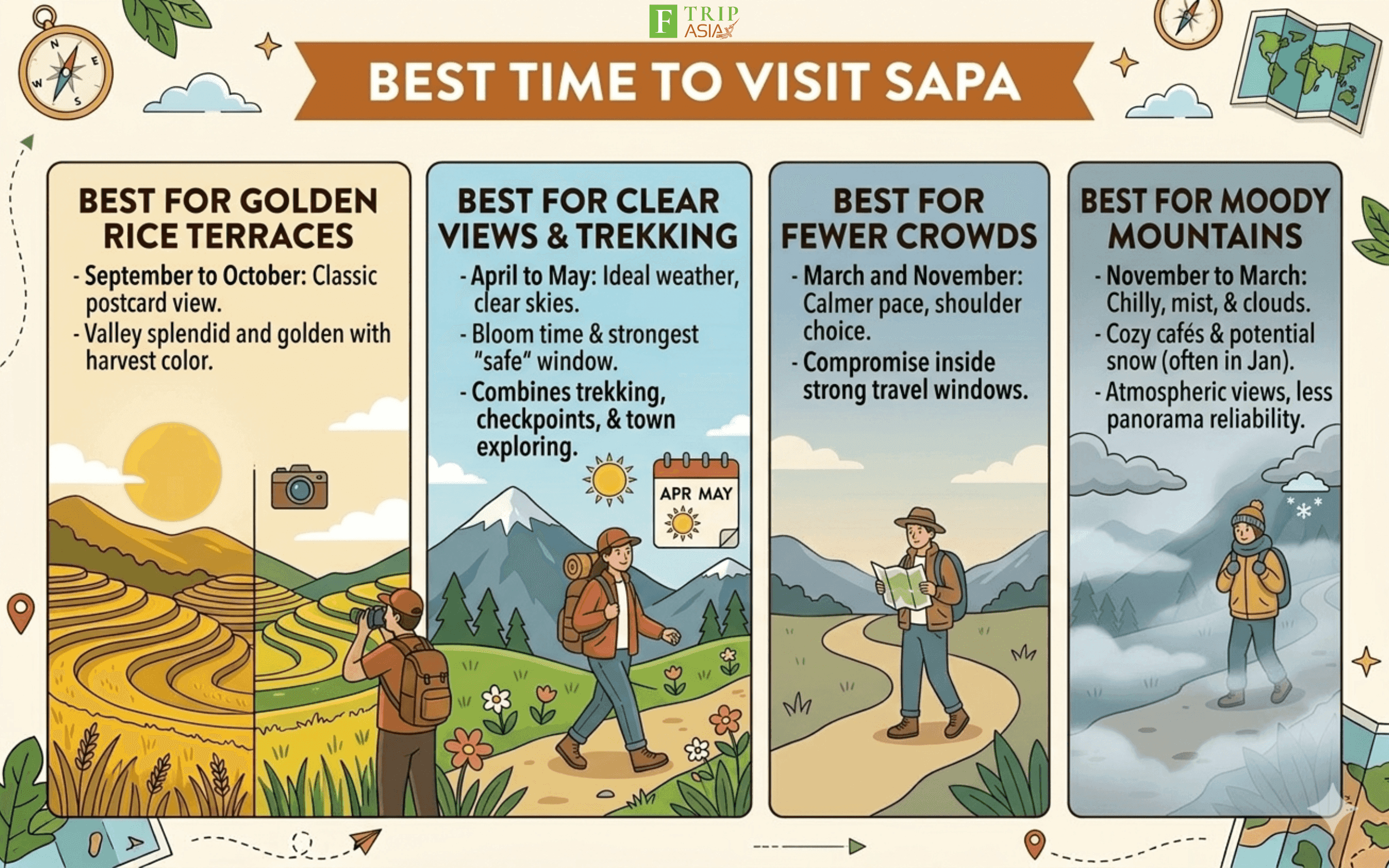
Best for Golden Rice Terraces: September to October
This is the clearest top pick if your number one goal is the classic Sapa postcard view. Vietnam’s official tourism site says September and October are the best months when the rice terraces are at their most splendid. Vietnam Airlines also highlights September–November as an ideal season when the valley turns golden with harvest-time color.
A useful rule is to think of September as peak harvest energy and October as continued terrace beauty with cooler evenings. The exact timing can shift slightly from year to year, but both months are strong. That is an inference based on the official terrace-season guidance.
Best for Clear Views and Comfortable Trekking: April to May
If you want a first-timer-safe window, April–May is one of the best choices. Vietnam Tourism explicitly says this is when the weather is ideal and skies are clear, and the broader climate guide says Sapa is near-perfect in late April, when flowers bloom and skies are clear.
This is the easiest season for travelers who want to combine trekking, viewpoints, and town exploring without the higher rain disruption of summer.
Best for Fewer Crowds: March and November
There is less official precision around “quietest” months, but March and November work well as shoulder choices for travelers who prefer a calmer pace. Vietnam Airlines places March–May and September–November inside Sapa’s strongest travel windows, which supports both months as good compromise options.
Best for Moody Mountains: November to March
Vietnam’s official tourism site says to expect chilly weather from November to March, and the broader Vietnam climate guide adds that northern destinations such as Sapa are much cooler from late December until March, with occasional snowfall in January. This period can be beautiful for mist, cloud, and cozy cafés, but it is less reliable for wide-open panoramas.
Months to Be Cautious About
Rainy Season: May to September
Topas Ecolodge’s climate guide says Sapa’s rainy season lasts from May to September. That matters because rain does not just affect comfort—it also makes trails more slippery and can reduce valley visibility.
What this means in practice
If you travel in the rainy season, expect:
- more slippery trekking routes
- more overcast or foggy stretches
- a higher chance of adjusting plans on the day
That is a practical inference from the rainy-season timing and humidity/rainfall profile Topas describes.
The smart rainy-season strategy
If those are your travel dates anyway, the best approach is:
- Do viewpoints at sunrise or early morning
- Choose shorter, safer walks over steeper routes
- Stay somewhere with a good rainy-day backup such as a view café or comfortable hotel
Month-by-Month Quick Picks
September to October: Top Choice for Most People
Best for terraces, trekking, and classic Sapa photo conditions. These months align with Vietnam Tourism’s strongest seasonal recommendation. One tradeoff is higher demand, especially around terrace season.
April to May: Best Easy-Weather Window
Best for comfortable hiking and better odds of clearer views. This is one of the easiest windows for first-timers who want a low-risk planning choice.
June to August: Warm but Less Predictable
Vietnam Tourism says June to August can still be fine for travelers who do not mind hot weather, but this sits inside the broader rainy-season window described by Topas. That makes it more weather-dependent than spring or terrace season.
November to March: Cold-Season Sapa
Best for atmosphere, cozy stays, and misty mountain mood. Watch out for colder mornings, damp air, and less reliable panorama days.
What to Do in Sapa by Season?
April to May: Trekking and Viewpoints
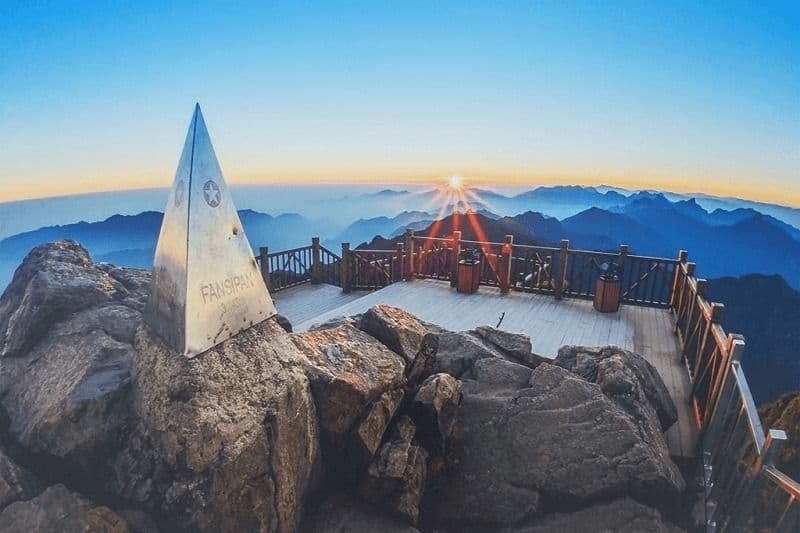
This is the best period for Muong Hoa Valley walks, village routes, and sunrise viewpoints. It is also a strong time for Fansipan, especially on clear mornings. Official tourism emphasizes clearer skies in April–May, and Vietnam Airlines’ Fansipan timing guidance also treats spring as one of the strongest seasons.
September to October: Terrace Wow Season
This is the season for terrace photography, valley trekking, and homestay nights. If you visit then, include at least one full valley day instead of staying only in town. That recommendation follows directly from the official emphasis on terrace season as Sapa’s visual peak.
Rainy Season: Softer Adventure
From May to September, shorter treks, scenic cafés, and flexible routes are smarter than rigid plans. The goal becomes enjoying Sapa without forcing unsafe or frustrating trail conditions.
Winter: Cozy Sapa
From November to March, lean into café hopping, town wandering, warm food, and light hikes during clear windows. Official tourism’s note about chilly weather in these months supports packing and planning for a colder, moodier trip.
Planning Rules That Improve Any Season
The Morning-First Rule
For the best chance of usable visibility, do Fansipan, panoramic viewpoints, and wide-angle photography before 10 a.m. Then leave afternoons for cafés, markets, town walking, or flexible activities. This is an inference from Sapa’s variable mountain weather and the stronger emphasis on clear-sky windows rather than all-day clarity.
Build a Fog-Day Backup
If the view disappears, switch to:
- village food
- craft stops
- scenic cafés
- a slow town day
That flexibility matters more in Sapa than in flat-city destinations because weather genuinely changes the value of a viewpoint-based plan.
What to Pack by Season
April to May and September to October
Bring light layers, a light rain shell, and shoes with grip. These are the best windows, but mountain weather still shifts quickly.
May to September
Bring a waterproof jacket or poncho, quick-dry clothing, and better-tread shoes because of rainy-season trail risk.
November to March
Bring warm layers, optional gloves or a hat, and warmer sleepwear. Official tourism guidance says this period is chilly, and the broader northern-climate guide warns that Sapa can even see occasional snowfall in January.
Plug-and-Play Itineraries
2 Days: Best in April–May or September–October
Day 1: Arrive, town walk, sunset viewpoint if visible
Day 2: Full valley trek, then depart
This short format works best in Sapa’s more reliable seasons because you have less room to absorb bad weather.
3 Days: Best for First-Timers
Day 1: Arrive and settle into town
Day 2: Full valley trek through terraces and villages
Day 3: Fansipan morning if skies are clear, then depart
This is the best balance because it separates the main trek from the main mountain-view day.
FAQs
What is the best month to visit Sapa for rice terraces?
September or October. Vietnam’s official tourism site says these are the months when the rice terraces are at their most splendid.
Is April or May better for clear views in Sapa?
Both are strong, but April usually has a slightly safer feel if your main goal is clearer skies and trekking comfort. That is a reasonable inference from Vietnam Tourism’s April–May recommendation and the broader rainy-season timing beginning in May.
When is Sapa’s rainy season?
Topas Ecolodge’s climate guide says the rainy season lasts from May to September.
Is Sapa worth visiting in winter?
Yes, if you want a cozy, misty mountain atmosphere rather than guaranteed wide-open views. Vietnam Tourism notes that November to March is chilly, and the northern climate guide says Sapa is much cooler in late December through March.
If you want the headline Sapa experience, choose September–October for golden terraces or April–May for the most reliable combination of comfortable trekking and clearer skies. Those are the two strongest windows supported by both Vietnam Tourism and Vietnam Airlines.
If you travel in the rainy season, plan viewpoints in the morning and keep your itinerary flexible. If you travel in winter, expect more of a mood and atmosphere than guaranteed panoramas. Pick the season that matches your goal, and Sapa becomes much easier to get right.

Founder & Photography Guide
Specialties: Culture, landscape, portrait, hiking, active and adventurous tour
Besides my unlimited passion for traveling, a professional tour guide for over a decade, I have been taking photographs since sitting at Hanoi of the University of Culture in the early 2000s. Photography started as a hobby but it was seriously taken due to my work relations and my significant passion for the beauty of our world, especially in Southeast Asian parts such as Vietnam, Laos, Cambodia, and Myanmar.
Within a few years of taking photographs, my works began to be recognized by many reliable international publications such as AFAR Travel, The Times, and The Daily Telegraph newspaper. In addition, I continuously add to my growing profile by winning numerous major awards: 3rd Position of The Independent Photographer 2018, 1st Position of Amateur Photographer of the year 2018, Grand Prize Winner of the AFAR Travel Photography 2019, and a Gold Award of San Francisco Bay International Photography 2020.
I photograph a wide variety of subjects, from travel to landscapes to street scenes. I enjoy documenting the East’s rich cultural heritage and its land soaked in glorious sunrise or sunset light in remote and secluded spots. And, I am very happy to share my knowledge and experience with you. You can visit Luminousvietnamtour to explore tour!