- What People Mean by “Amazing Ha Giang Tours”?
- Reason 1: The Scenery Is Genuinely Elite
- Reason 2: The Loop Is Structured Enough to Feel Easy to Plan
- Reason 3: “Adventure” Comes in Multiple Comfort Levels
- Reason 4: Tours Reduce the Two Biggest Risks — Time Pressure and Admin Surprises
- Reason 5: It Is Not Only About Landscapes
- How to Choose the Right Ha Giang Tour
- Tour Duration Guide
- What to Confirm Before Booking
- FAQs
- Conclusion
Ha Giang tours keep attracting adventure lovers because they make one of Vietnam’s wildest regions feel achievable. Instead of piecing together transport, routes, overnights, and checkpoint logistics yourself, a good tour turns the far north into a clear multi-day journey through Quan Ba, Yen Minh, Dong Van, and Meo Vac. Vietnam’s official tourism site presents the Ha Giang Loop as a structured four-day road trip, which is a big reason it feels adventurous without being impossible to plan.
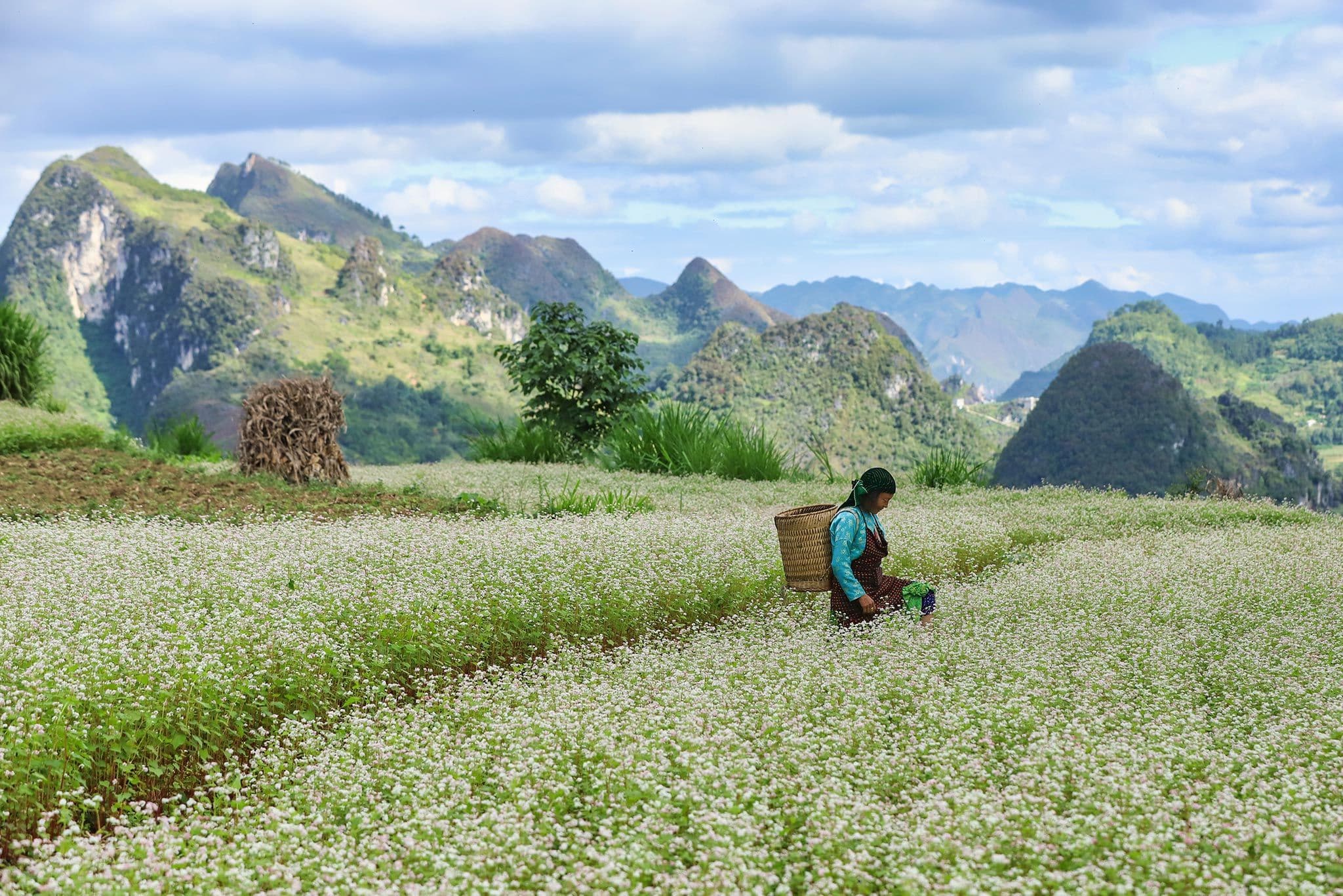
What makes these tours genuinely compelling is not just the road. Much of the scenery sits in the Dong Van Karst Plateau UNESCO Global Geopark, a UNESCO-recognized landscape in Ha Giang Province known for limestone karst, deep valleys, and high mountain terrain. That gives the trip more than just “nice views” — it gives it real geological weight.
What People Mean by “Amazing Ha Giang Tours”?
Usually, people mean a guided or semi-guided version of the Ha Giang Loop: a multi-day route with planned overnights, transport support, key viewpoints, and cultural stops. These tours are commonly sold as 3D2N, 4D3N, or 5D4N+, often with Hanoi transfer options included or addable. That packaging is a big part of why the trip keeps trending — it feels like a remote adventure with a usable framework.
Reason 1: The Scenery Is Genuinely Elite
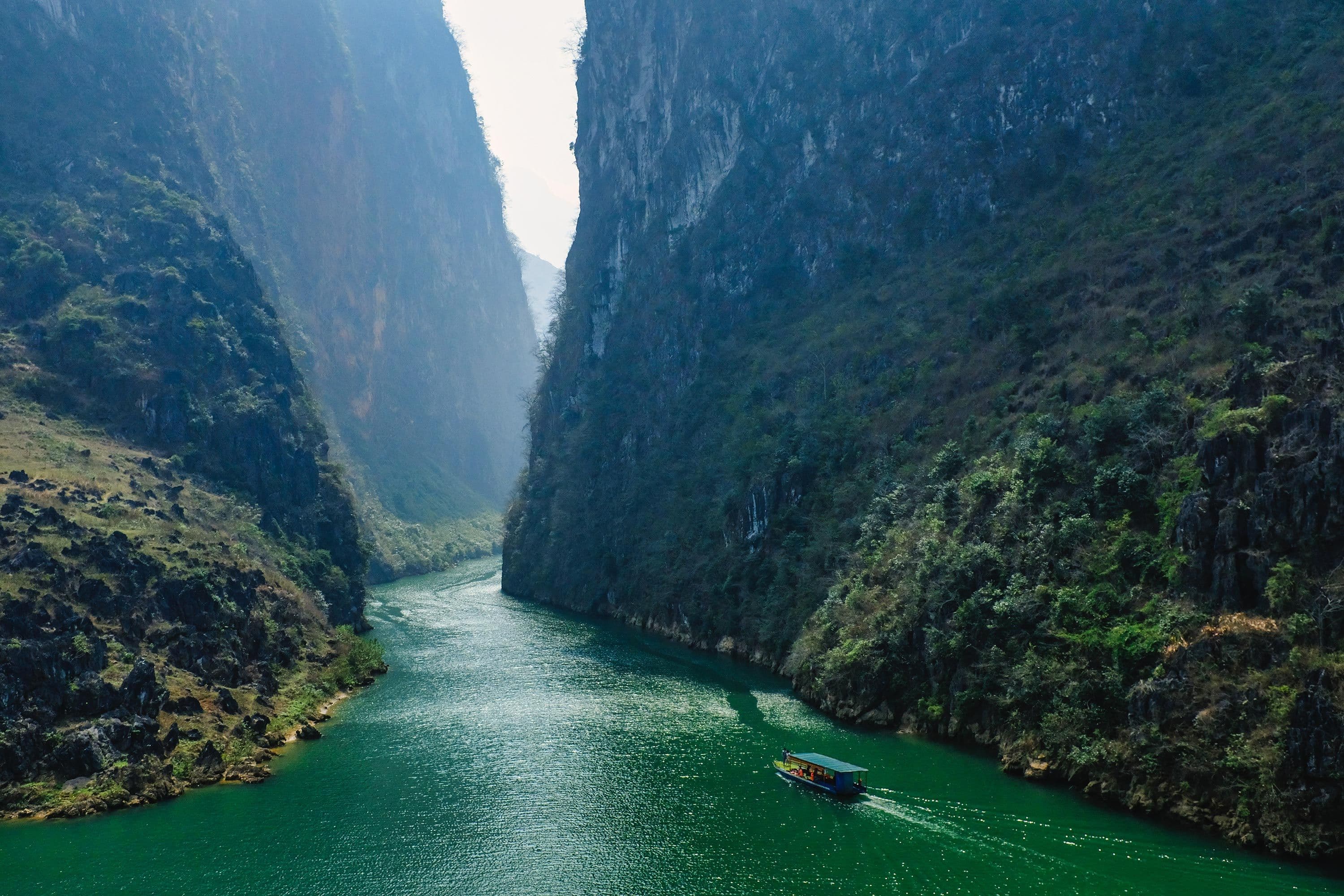
The biggest draw is simple: the landscape is extraordinary. The route passes through a limestone world of ridges, canyons, and karst plateaus that look very different from the rest of Vietnam. UNESCO identifies the Dong Van Karst Plateau as a Global Geopark in Ha Giang, and official tourism coverage consistently treats it as the visual heart of the Loop.
The segment that usually sells the trip is Dong Van → Meo Vac via Ma Pi Leng. Vietnam Tourism describes this stretch as the most exhilarating part of the route, with giant peaks, canyons, and nonstop views. That is the day most travelers remember best, and it is the reason so many Ha Giang tours market the Loop as Vietnam’s ultimate mountain-road adventure.

Reason 2: The Loop Is Structured Enough to Feel Easy to Plan
A big part of Ha Giang’s appeal is that it is adventurous, but not random. Vietnam’s official tourism site outlines a clear four-day structure: ride out on QL4C, sleep in the main mountain towns, cross the Ma Pi Leng section, and return on QL34. That clear route logic makes it easy for tour operators to build strong itineraries and easy for travelers to understand what they are booking.
The usual overnight anchors — Yen Minh, Dong Van, and Meo Vac — also reduce stress. Instead of improvising every day, travelers move town to town through a route that already matches the terrain. That makes the trip feel accessible even for people who have never done a mountain loop before.
Reason 3: “Adventure” Comes in Multiple Comfort Levels
One reason Ha Giang tours attract such a wide range of travelers is that you do not need to self-ride a motorbike to do the Loop. Many tours offer an easy rider format, where you ride as a passenger behind a local driver. That makes the route accessible to non-riders, nervous riders, and travelers who want the scenery without the stress of handling steep curves and changing weather themselves. Current operator pages and recent guides consistently present easy rider as one of the most common formats.
There are also jeep and car tours, which appeal to families, comfort-focused travelers, and photographers carrying more gear. Those formats trade some of the raw motorbike feeling for more stability, easier stops, and less road fatigue. That flexibility is a major reason Ha Giang tours keep widening beyond just backpackers.
Reason 4: Tours Reduce the Two Biggest Risks — Time Pressure and Admin Surprises
The Ha Giang Loop is spectacular, but it is still real mountain travel. Vietnam’s tourism site notes that the Loop crosses high passes and deep abysses, which means weather and fatigue are not side issues. They are core planning factors. A guided tour helps by controlling pace, knowing where to stop, and building the route around realistic mountain timing rather than flat-road assumptions.
Tours also help with the administrative side. Several current Ha Giang permit guides say foreign travelers are commonly advised to carry a border travel permit on the classic route, because headline sights like the Dong Van plateau, Lung Cu, and Ma Pi Leng sit inside regulated border areas where checkpoints may ask for documents. Good operators either arrange this or at least guide travelers through it clearly.
Reason 5: It Is Not Only About Landscapes
The best Ha Giang tours are not just road-and-viewpoint packages. They also include the human side of the region: homestays, markets, small-town evenings, and village culture. Vietnam Tourism’s Loop guide itself includes more than scenery — it weaves in local markets, Lung Cu, and time in Dong Van and Meo Vac, which helps explain why the route feels richer than a pure scenic drive.
That balance matters. It is one thing to pass through beautiful mountains. It is another to have dinner in a homestay, walk through a market morning, and see how the landscape and local life fit together. That is the difference between a scenic ride and a memorable trip.
How to Choose the Right Ha Giang Tour
If you want the classic experience with breathing room, choose 4D3N. That is the most natural fit for the route and the one most aligned with the official road-trip structure.
If you want the most accessible non-rider option, choose a small-group easy rider tour. That gives you the Loop without needing to manage the technical riding yourself.
If you want comfort and photography, choose a jeep or car tour. That is especially useful if you want to stop more calmly, carry gear, or reduce physical fatigue.
If you are traveling in rainier months, choose a guided or easy rider format and keep expectations more flexible. Current seasonal guidance commonly treats May–September as wetter and more challenging, while March–May and September–November are the most recommended windows for comfort and scenery.
Tour Duration Guide
3D2N is the highlights-first version. It can work, but it is more intense and less forgiving if weather shifts or you want longer stops.
4D3N is the best overall duration for most travelers. It gives enough room for the classic QL4C / QL34 logic, better pacing, and a properly protected Ma Pi Leng day.
5D+ is the best version for slower travelers, culture-focused itineraries, or photographers who want more village time, better light windows, and less daily pressure. Some operators market this by adding quieter stops, waterfalls, caves, or extra village nights.
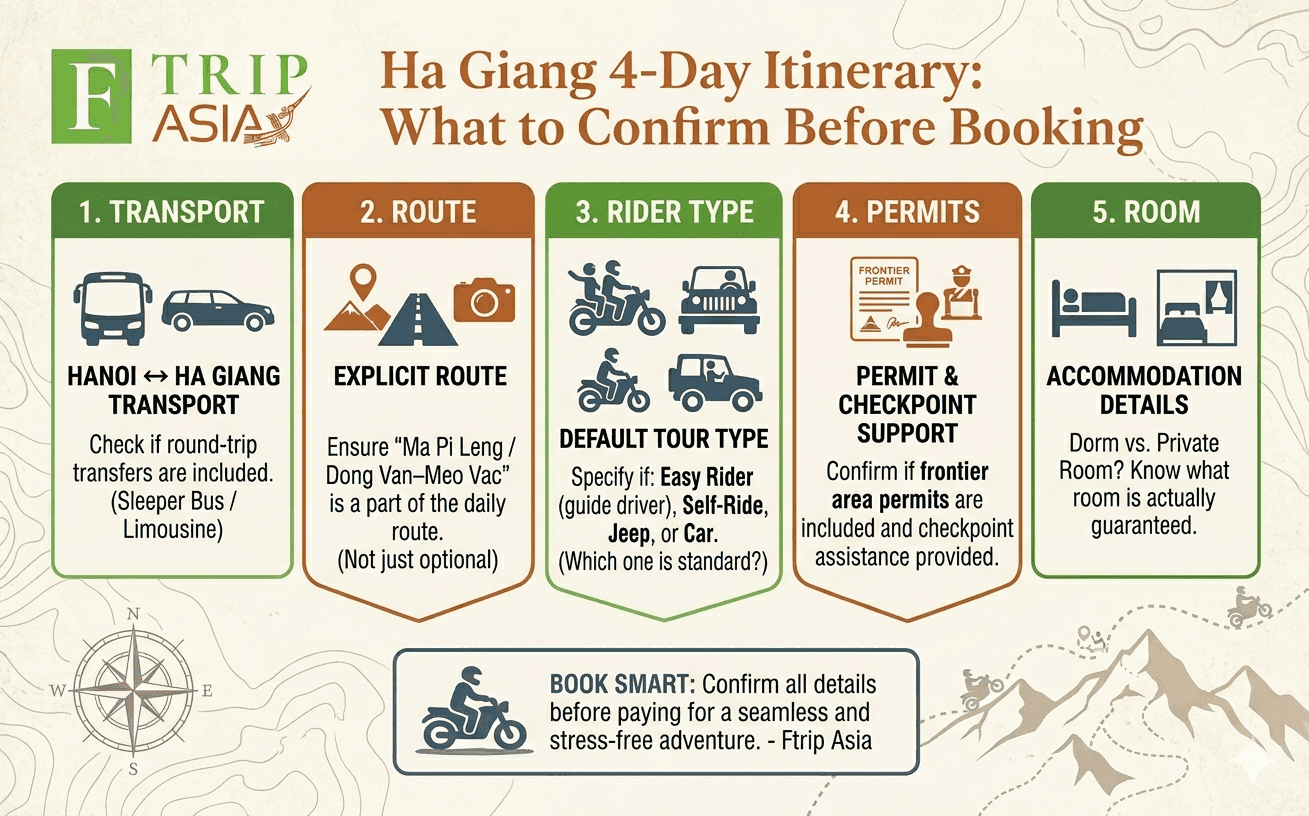
What to Confirm Before Booking
Before paying, check:
-
whether Hanoi ↔ Ha Giang transport is included
-
whether Ma Pi Leng / Dong Van–Meo Vac is explicitly part of the route
-
whether the tour is easy rider, self-ride, jeep, or car by default
-
whether permit/checkpoint support is included or explained
-
whether your room is dorm or private, and what is actually guaranteed
Those details matter more than the marketing headline because they change the real experience. Tour pages and permit guides vary enough that it is worth checking each point directly.
FAQs
Why is Ha Giang considered Vietnam’s top adventure road trip?
Because it combines a dramatic karst landscape, a clear multi-day route, and iconic stretches like Ma Pi Leng Pass, all inside one of Vietnam’s most visually extreme mountain regions.
What’s the best duration for a first-time Ha Giang tour — 3D2N or 4D3N?
For most first-timers, 4D3N is better because it matches the classic route logic and gives the scenery more room. 3D2N works if time is tight and you accept a faster pace.
Do I need to ride a motorbike myself to enjoy the Ha Giang Loop?
No. Easy rider and jeep/car formats make the Loop accessible to non-riders too.
When is the best season to ride for safer roads and clearer views?
The most commonly recommended windows are March–May and September–November. Autumn is especially popular for clear skies and golden rice scenery.
Do foreigners need permits for checkpoints on the Loop?
Current Ha Giang permit guides commonly advise yes for the classic route, because foreign travelers may be asked for a border travel permit at checkpoints in the regulated border region.
Conclusion
Ha Giang tours keep attracting adventure lovers because they offer a rare mix: UNESCO-recognized limestone landscapes, a clear multi-day route you can actually complete, and flexible formats that let you choose your own comfort and risk level. That is why the region feels both wild and doable at the same time.
If you want the best balance, choose 4D3N, go in one of the stronger weather windows, and book an operator that is clear about transport, permits, and riding format. Once those pieces are handled, it becomes very easy to understand why Ha Giang keeps sitting at the top of so many Vietnam bucket lists.


Founder & Photography Guide
Specialties: Culture, landscape, portrait, hiking, active and adventurous tour
Besides my unlimited passion for traveling, a professional tour guide for over a decade, I have been taking photographs since sitting at Hanoi of the University of Culture in the early 2000s. Photography started as a hobby but it was seriously taken due to my work relations and my significant passion for the beauty of our world, especially in Southeast Asian parts such as Vietnam, Laos, Cambodia, and Myanmar.
Within a few years of taking photographs, my works began to be recognized by many reliable international publications such as AFAR Travel, The Times, and The Daily Telegraph newspaper. In addition, I continuously add to my growing profile by winning numerous major awards: 3rd Position of The Independent Photographer 2018, 1st Position of Amateur Photographer of the year 2018, Grand Prize Winner of the AFAR Travel Photography 2019, and a Gold Award of San Francisco Bay International Photography 2020.
I photograph a wide variety of subjects, from travel to landscapes to street scenes. I enjoy documenting the East’s rich cultural heritage and its land soaked in glorious sunrise or sunset light in remote and secluded spots. And, I am very happy to share my knowledge and experience with you. You can visit Luminousvietnamtour to explore tour!