- Why Ninh Binh Looks Unreal?
- The Landscapes That Define Ninh Binh
- The classic water-and-karst scenes
- The rice-field valleys
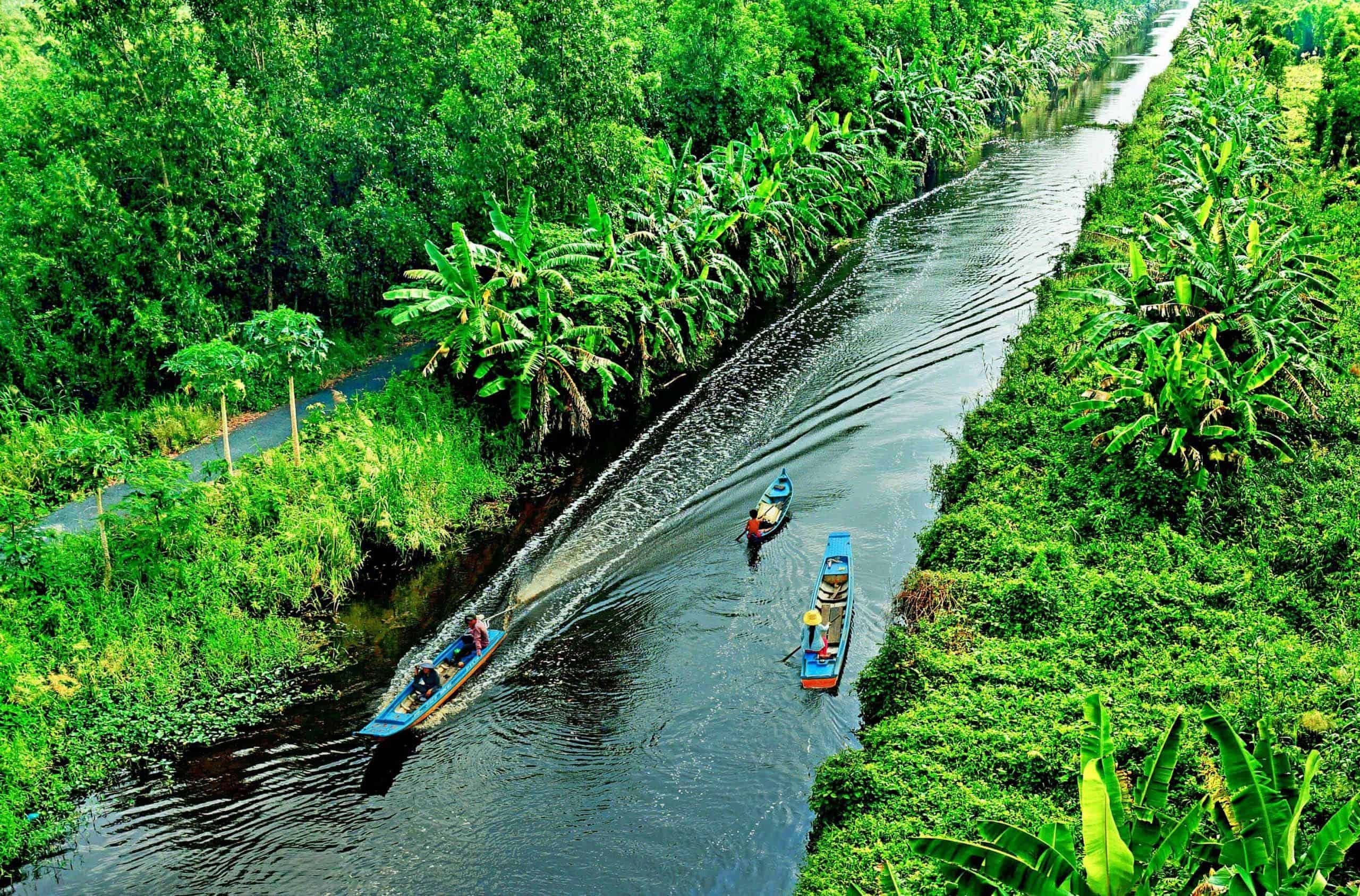
- The quiet wetlands
- Best Time to Visit Ninh Binh for Scenery
- For golden rice and postcard views
- For lush green landscapes
- For cooler, easier exploration
- Where to Go Beyond the Obvious?
- Van Long Wetland Nature Reserve
- Cuc Phuong National Park
- Photography and Viewpoint Strategy
- Plug-and-Play Landscape Itineraries
- 1-day “Landscape essentials”
- 2-day “Beauty without burnout”
- 3-day “Full landscape spectrum”
- Practical Planning Notes
- FAQs
- Conclusion
Ninh Binh is not just “Ha Long Bay on land.” What makes it exceptional is the way limestone karst towers, submerged valleys, cave systems, wetlands, and rice-field basins all sit close together in one compact region. UNESCO describes the Trang An Landscape Complex as a spectacular landscape of limestone peaks, partly submerged valleys, steep cliffs, and cave systems with long traces of human history.
If you want to experience the Ninh Binh landscape at its best, the smartest structure is simple: do one main water-and-karst route, add one high viewpoint, then balance it with one quieter nature stop such as Van Long or Cuc Phuong. That gives you contrast instead of repeating the same scenery rhythm throughout the trip. For rice-field color, current guides commonly point to late May to early June for Tam Coc’s golden season, while broader green-to-gold rice visuals can extend across parts of May to October depending on the area and harvest timing.
Why Ninh Binh Looks Unreal?
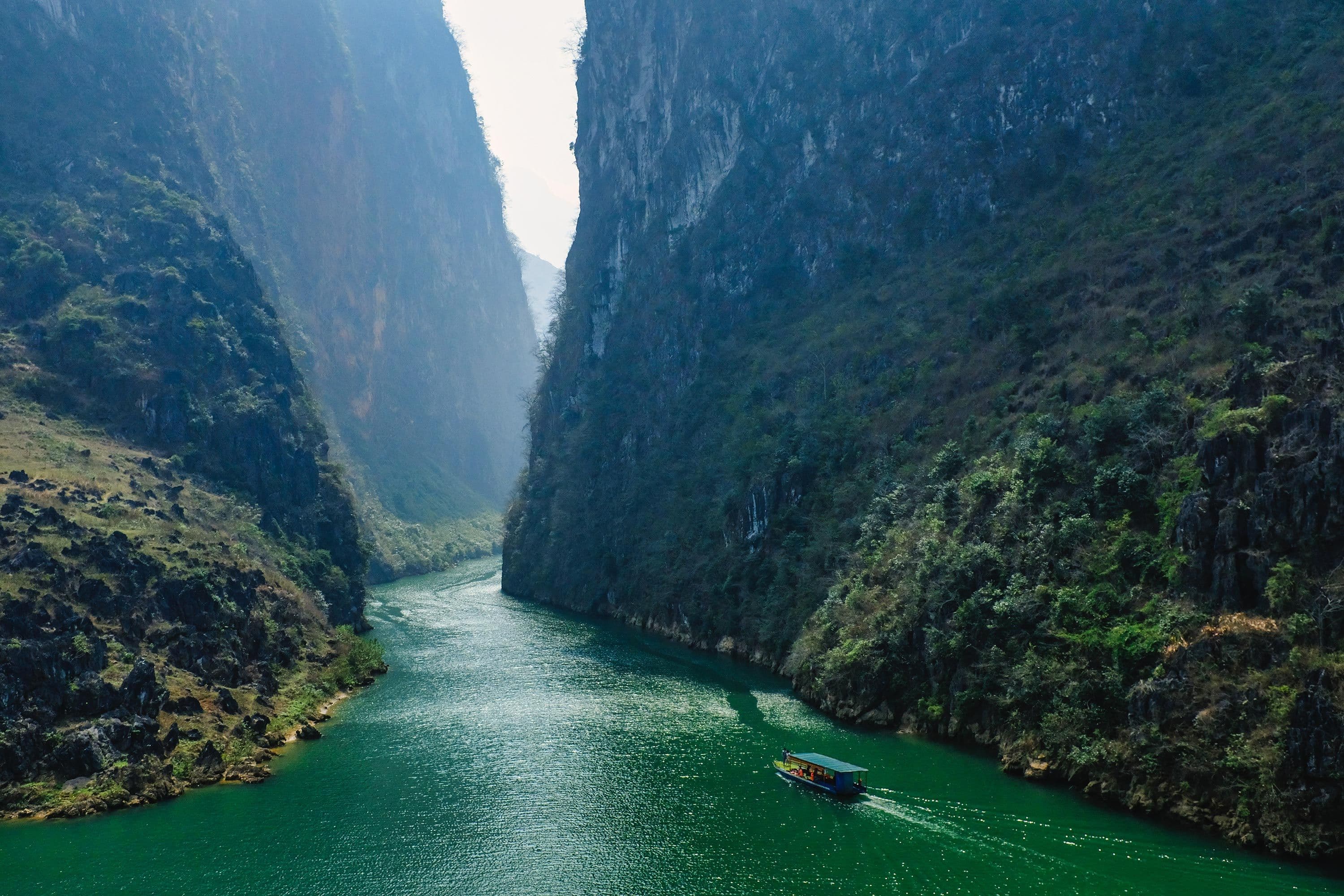
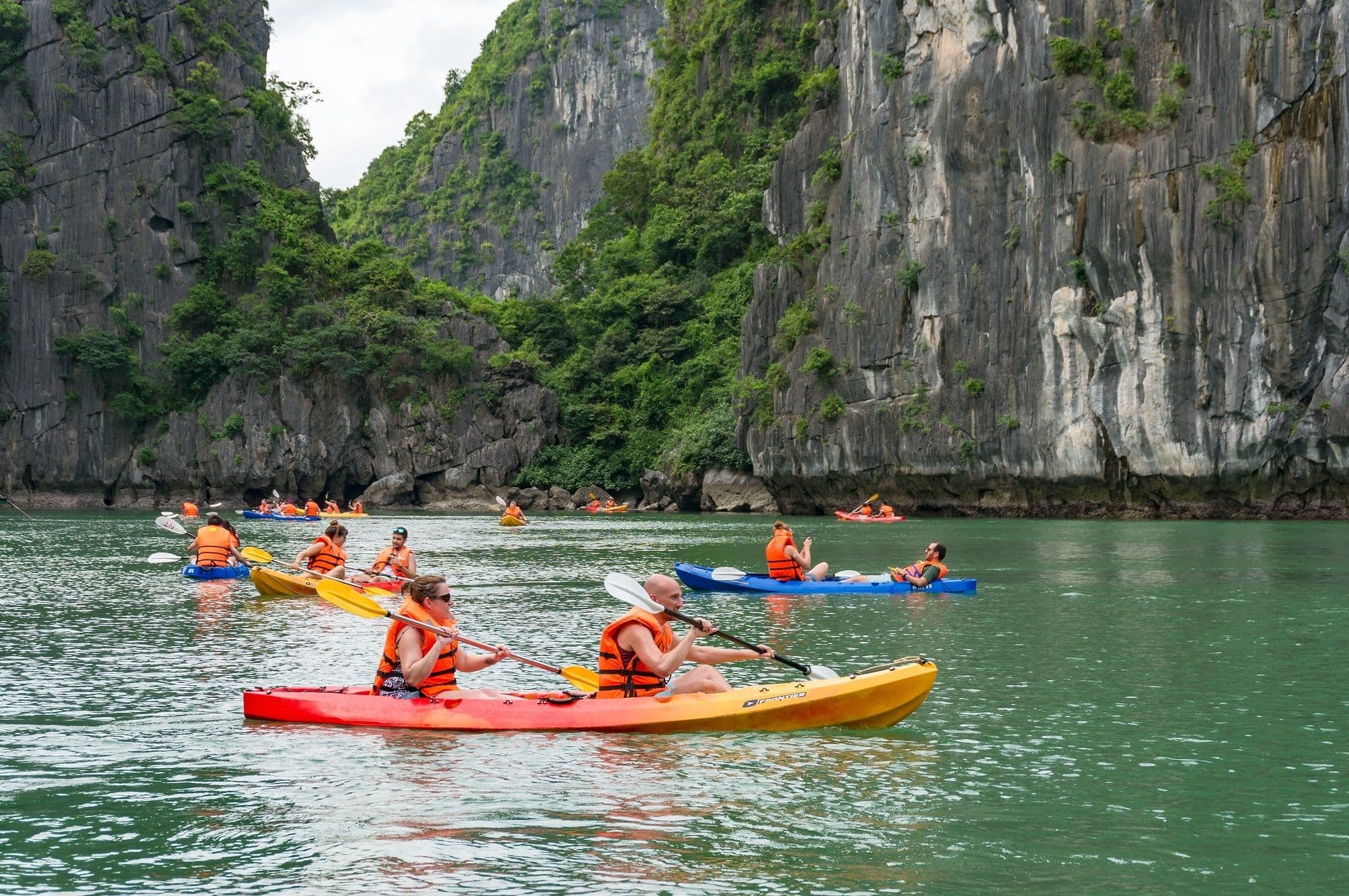
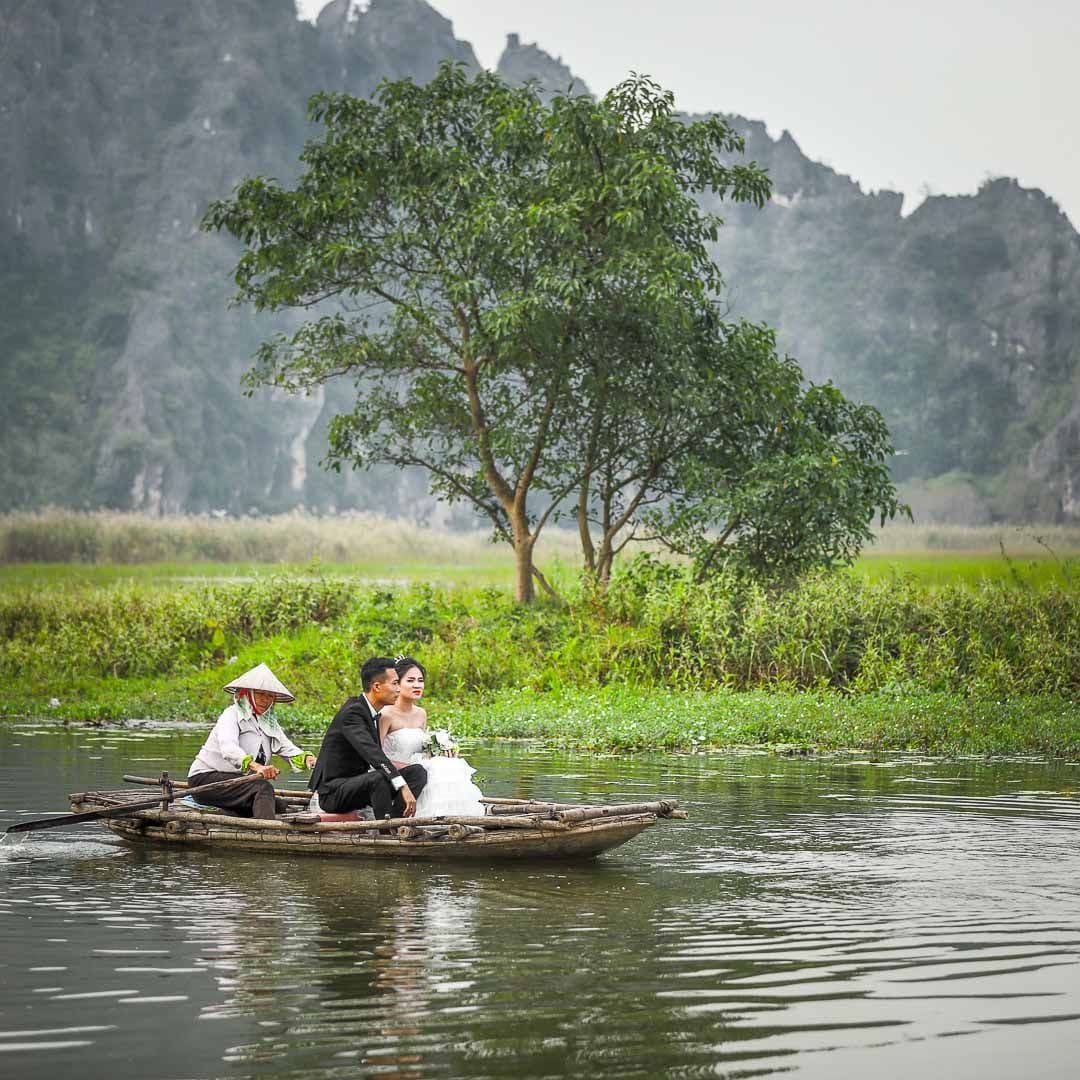
The landscape feels unusual because the karst does not sit far away from the water. Instead, the cliffs, caves, rivers, and rice valleys all overlap. UNESCO specifically highlights limestone karst peaks, submerged valleys, and cave systems, plus archaeological evidence from caves at different elevations, which adds another layer of significance beyond the scenery alone.
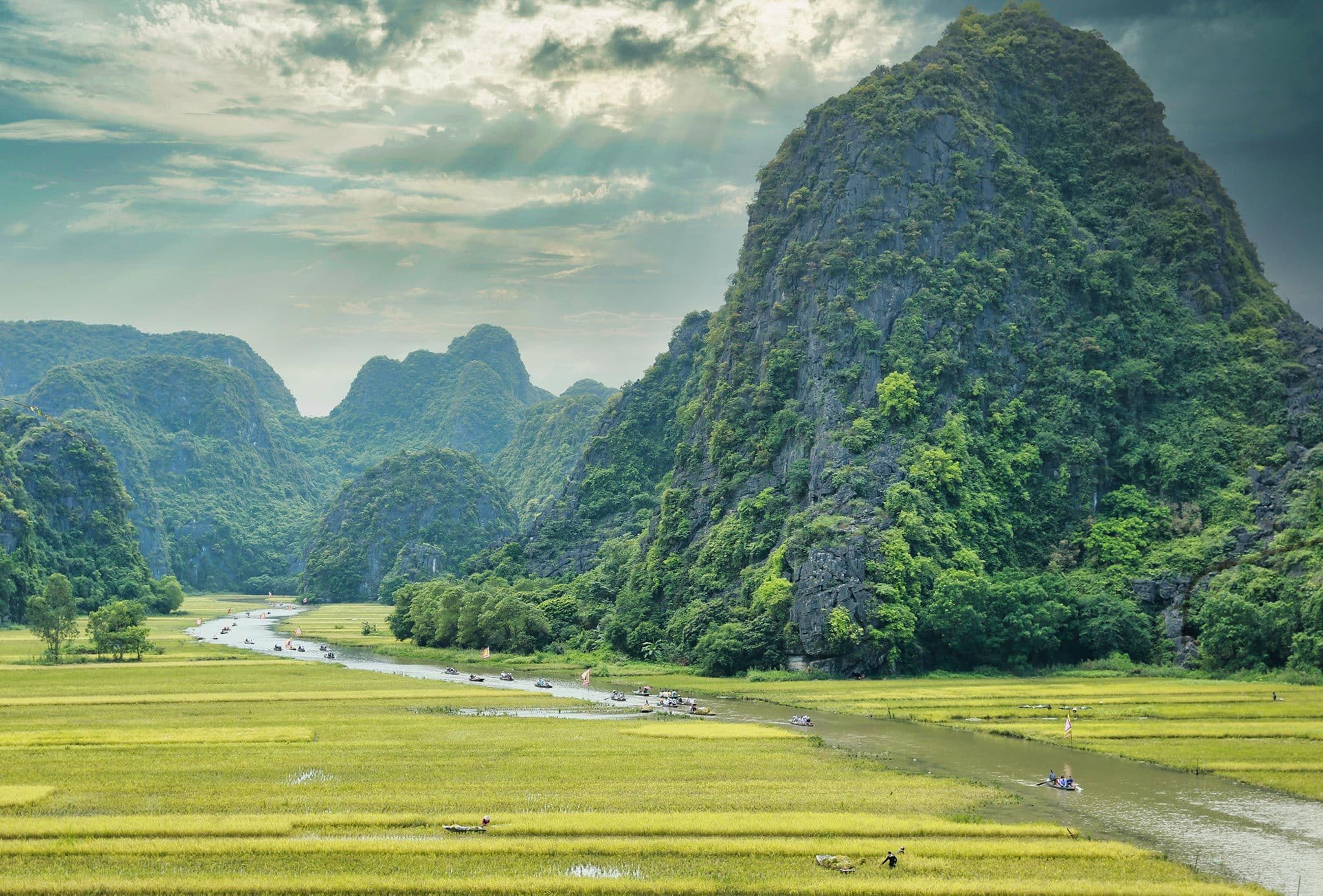
That is also why the same place can look completely different by season. Rice paddies shift the palette from vivid green to warm gold, especially along river corridors such as Tam Coc. Travel sources repeatedly note that the famous golden Tam Coc look usually peaks around late May to early June, while other rice visuals in the region vary later by district and crop cycle.
The Landscapes That Define Ninh Binh
The classic water-and-karst scenes
This is the image most people come for: drifting by boat between limestone walls, through cave openings, and around bends where cliffs and water seem to close in around you. UNESCO’s description of Trang An fits this exact experience, which is why one main boat route is usually enough to understand the core visual identity of Ninh Binh.
The smartest move is to choose one main boat experience rather than duplicating similar routes back to back. That gives you more visual variety elsewhere in the itinerary.
The rice-field valleys
Rice fields are what make Ninh Binh feel seasonally alive. In Tam Coc especially, the same river corridor changes dramatically depending on whether the fields are bright green or ready for harvest. Current travel sources commonly highlight late May to early June as the iconic golden window for Tam Coc, while broader rice coverage continues through parts of May to October depending on planting and harvest cycles.
The quiet wetlands
For a calmer version of Ninh Binh’s beauty, Van Long Wetland Nature Reserve is one of the best alternatives. Ninh Binh Tourism describes it as the largest wetland nature reserve in the region and a habitat for the largest remaining population of Delacour’s langur, while Vietnam tourism sources also highlight its biodiversity and conservation value.
This is the place to go if you want more silence, more open water, and a stronger nature-first mood than the busiest sightseeing circuits.
Best Time to Visit Ninh Binh for Scenery
For golden rice and postcard views
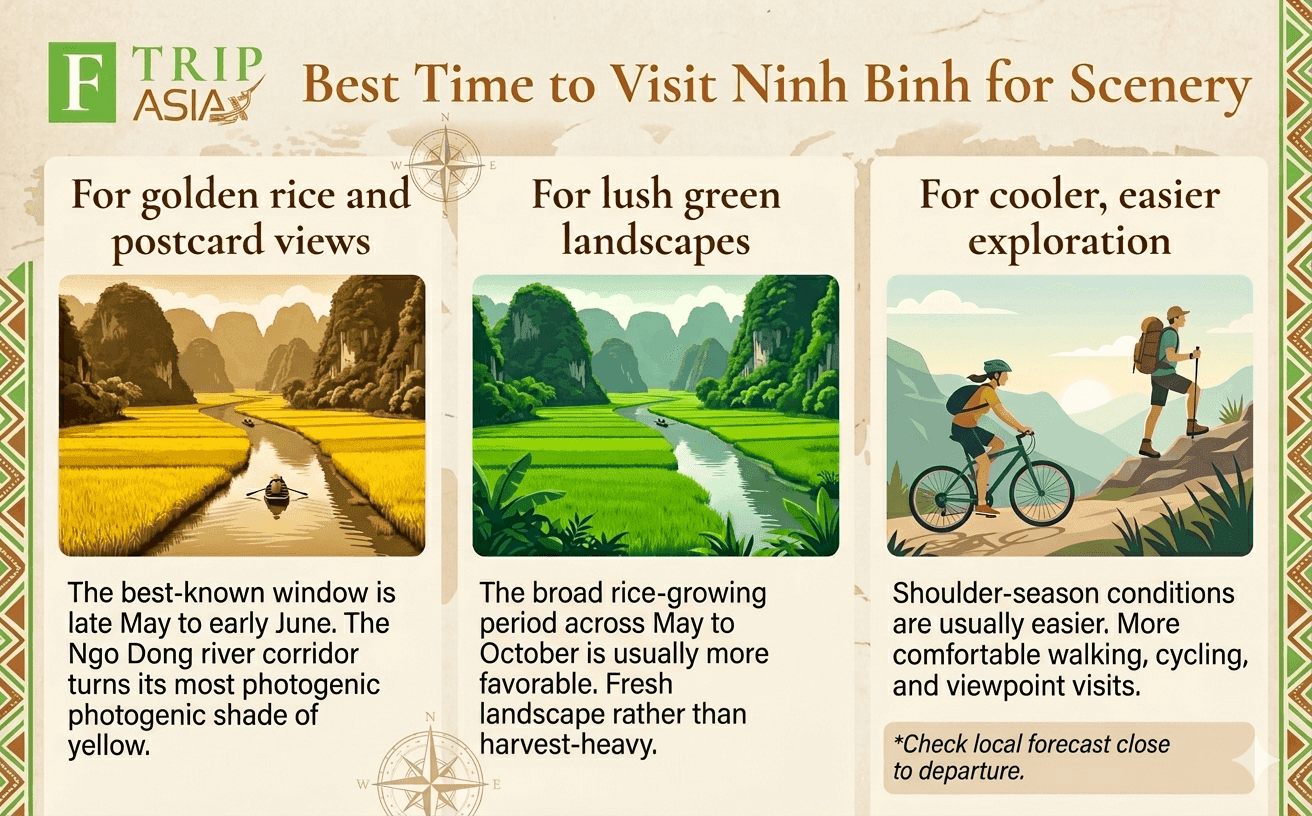
If your priority is the iconic Tam Coc gold, the best time is usually late May to early June. Multiple travel sources, including tourism-oriented guides, point to this as the season when the Ngo Dong river corridor turns its most photogenic shade of yellow.
For lush green landscapes
If you prefer saturated green scenery, the broader rice-growing period across May to October is usually more favorable, although exact field conditions vary by place and year. That makes shoulder timing useful if you want the landscape to feel fresh rather than harvest-heavy.
For cooler, easier exploration
For more comfortable walking, cycling, and viewpoint visits, shoulder-season conditions are usually easier than the hottest months. I would still check the specific local forecast close to departure if viewpoint light and haze matter a lot to you.
Where to Go Beyond the Obvious?
Van Long Wetland Nature Reserve
Van Long is one of the best quieter alternatives in Ninh Binh because it still feels cinematic but often calmer. Ninh Binh Tourism emphasizes its wide wetland scenery, rare biodiversity, and Delacour’s langur habitat, which makes it attractive for both landscape travelers and wildlife-curious visitors.
Go here if you want a slower boat ride and a better chance of feeling immersed in the landscape rather than processed through it.
Cuc Phuong National Park
If you want a completely different version of Ninh Binh’s beauty, go to Cuc Phuong National Park. Official park sources say it was established in 1962 and is the oldest national park in Vietnam. That matters because it gives you a forest-and-biodiversity contrast to the karst waterways.
This is a strong add-on for travelers who want trails, biodiversity, and a day that feels less boat-centered.
Photography and Viewpoint Strategy
The simplest way to make Ninh Binh look better in real life is also the simplest way to photograph it better: do the big visuals early or late, not at midday. Thung Nham’s own visitor guidance and other travel resources consistently recommend late afternoon for bird activity, which reflects a broader truth across the region: timing changes the experience.
A strong daily pattern is:
- one hero viewpoint
- one water route
- one quieter stop
That gives you variety without burning the day on repetitive sightseeing.
Plug-and-Play Landscape Itineraries
1-day “Landscape essentials”
Morning: one main water-and-karst route
Afternoon: one high viewpoint
Sunset: short countryside cycling or a slow drive through rice-field lanes
This works best if you want the essence of Ninh Binh in one day without trying to “finish” it.
2-day “Beauty without burnout”
Day 1: the UNESCO karst-water core plus a viewpoint
Day 2: Van Long plus slower village time
This is one of the best balances if you want both the famous landscape and a quieter second day. Van Long’s wetland character gives you contrast rather than repetition.
3-day “Full landscape spectrum”
Day 1: karst-water core
Day 2: rice-field valleys plus wetlands
Day 3: Cuc Phuong forest contrast day
This is the best version if you want the landscape to feel multidimensional rather than just photogenic. Cuc Phuong changes the mood of the whole trip.
Practical Planning Notes
Midday crowds can flatten the magic at headline stops, so shift your biggest visuals to early morning or late afternoon whenever possible. Also, do not duplicate the same type of boat ride on consecutive days unless you truly want subtle differences rather than broader contrast. That is especially important in a destination where water-and-karst routes can feel visually similar if stacked too tightly.
If rice fields are your number-one goal, check timing closer to departure. Even though late May to early June is the best-known golden window for Tam Coc, crop timing can still vary a bit year to year.
FAQs
Why is Trang An considered a UNESCO World Heritage landscape?
UNESCO recognizes it as a mixed cultural and natural landscape of limestone karst peaks, partly submerged valleys, caves, and a long human history preserved in cave systems.
When is the best time to see golden rice fields in Ninh Binh?
For Tam Coc, the best-known golden period is usually late May to early June.
Is Van Long worth it for scenery and wildlife compared to the busiest routes?
Yes. It is one of the best quieter alternatives for wetland scenery and wildlife potential, including Delacour’s langur habitat.
What is a good nature add-on beyond karst boat rides?
Cuc Phuong National Park is the strongest contrast day because it shifts the trip from karst waterways to deep forest and biodiversity.
Conclusion
Few places rival the beauty of the Ninh Binh Vietnam landscape because it compresses UNESCO-level karst scenery, cave valleys, wetlands, and rice-field waterways into a region you can actually experience well in 1–3 days. If you want the smartest version of that beauty, build your trip around one iconic water-and-karst day, one viewpoint, and one quieter nature add-on like Van Long or Cuc Phuong.
That combination gives you contrast, better pacing, and a much better chance of feeling the place rather than just passing through it.


Founder & Photography Guide
Specialties: Culture, landscape, portrait, hiking, active and adventurous tour
Besides my unlimited passion for traveling, a professional tour guide for over a decade, I have been taking photographs since sitting at Hanoi of the University of Culture in the early 2000s. Photography started as a hobby but it was seriously taken due to my work relations and my significant passion for the beauty of our world, especially in Southeast Asian parts such as Vietnam, Laos, Cambodia, and Myanmar.
Within a few years of taking photographs, my works began to be recognized by many reliable international publications such as AFAR Travel, The Times, and The Daily Telegraph newspaper. In addition, I continuously add to my growing profile by winning numerous major awards: 3rd Position of The Independent Photographer 2018, 1st Position of Amateur Photographer of the year 2018, Grand Prize Winner of the AFAR Travel Photography 2019, and a Gold Award of San Francisco Bay International Photography 2020.
I photograph a wide variety of subjects, from travel to landscapes to street scenes. I enjoy documenting the East’s rich cultural heritage and its land soaked in glorious sunrise or sunset light in remote and secluded spots. And, I am very happy to share my knowledge and experience with you. You can visit Luminousvietnamtour to explore tour!