- Ha Long Bay Cruise 2 Nights (3 Days 2 Nights) Review: What It’s Really Like, Who It’s For, and Which Route to Choose
- Quick review snapshot (typical 3D2N experience)
- Choose your route first: Ha Long vs Lan Ha vs Bai Tu Long
- Ha Long Bay (classic icons, more boats)
- Lan Ha Bay (often paired with Cát Bà + Viet Hai Village day)
- Bai Tu Long Bay (quieter, more remote energy)
- What’s usually included on a 2-night cruise (and what often costs extra)
- Common inclusions (varies by operator/package)
- Often extra (always confirm)
- The detailed 3D2N experience review (day-by-day)
- Before you go: the 10-minute booking checklist
- Day 1: Embarkation + the first “wow” moment
- Day 2: The real reason you booked 2 nights
- Morning rhythm
- Choose-your-style Day 2 routes
- Second-night vibe (calmer, more personal)
- Day 3: One last sunrise + checkout
- What the cruise is really like (review chapters)
- Cabin comfort review: what matters most
- Food & dining review: what to expect
- Activities review: what’s fun vs what feels “checkbox”
- Crowd level & pace: why 3D2N feels different
- Is a 2-night cruise worth it? (honest comparison)
- Day cruise
- 2D1N
- 3D2N (2 nights)
- Safety & reliability checklist (what to pay attention to)
- What to pack for 2 nights (practical checklist)
- Photo tips for a 3D2N cruise
- Ftrip Asia services (built for 3D2N travelers)
- FAQs (AI Overview-friendly)
- Is a 2-night Ha Long Bay cruise worth it compared to 1 night?
- Which route is best for 3D2N: Ha Long, Lan Ha, or Bai Tu Long?
- What activities are included on most 3D2N cruises?
- Do 3D2N cruises visit Viet Hai Village or fishing villages?
- What should I pack for an overnight cruise in Vietnam?
- Conclusion
Ha Long Bay Cruise 2 Nights (3 Days 2 Nights) Review: What It’s Really Like, Who It’s For, and Which Route to Choose
Two nights in Ha Long Bay is where the magic happens: the crowds thin out, the sunrises hit harder, and you finally stop “doing activities” and start feeling the bay.
This is a realistic, review-style guide to a 3D2N (2-night) Ha Long Bay cruise—covering cabin comfort, food, activities, crowd levels, value, and the routes (Ha Long vs Lan Ha vs Bai Tu Long) that change the whole experience.
Quick review snapshot (typical 3D2N experience)
Use this as a fast “should I book it?” filter.
Best for
- Couples and honeymoons (more downtime, more golden hours)
- Photographers (two sunrises + two sunsets)
- Slow-travelers who hate being rushed
- Families with older kids (more space/time, calmer rhythm)
Not ideal for
- Tight schedules (the travel time isn’t worth it for some)
- People who dislike boats or get motion sick easily
- Travelers chasing nightlife (the evenings are quiet)
Quick verdict
- Book 2 nights if you want real relaxation + deeper cruising day (Day 2 remote route).
- Book 1 night if you mainly want a classic overview (sunset + sunrise once, quicker pace).
-

Choose your route first: Ha Long vs Lan Ha vs Bai Tu Long
Ha Long Bay–Cát Bà is a UNESCO World Heritage seascape of limestone islands and islets rising from the sea—spectacular in any route you choose.
Ha Long Bay (classic icons, more boats)
Feel: most famous sights, most traffic Best for: first-timers who want the “name-brand” visuals Reality: you’ll share viewpoints and kayak zones with more boats in peak seasons.
Lan Ha Bay (often paired with Cát Bà + Viet Hai Village day)
Feel: calmer water, activity-friendly pacing Day 2 hallmark: day boat to deeper Lan Ha + Viet Hai Village cycling (or e-cart alternative on some cruises).
Bai Tu Long Bay (quieter, more remote energy)
Feel: more tranquil, fewer boats in view Day 2 hallmark: deeper areas like Cong Dam and cultural stops like Vung Vieng fishing village on many itineraries.
What’s usually included on a 2-night cruise (and what often costs extra)
Common inclusions (varies by operator/package)
- Cabin accommodation (2 nights)
- Meals on board (set menu or buffet depending on ship)
- Entrance/sightseeing fees for listed stops
- Activities often listed: sunrise tai chi, cave visit, kayaking or bamboo boat, cooking demo, squid fishing
Often extra (always confirm)
- Premium drinks, cocktails, wine pairings
- Spa services (if available)
- Tips
- Some transfer types (limousine/private car upgrades)
-
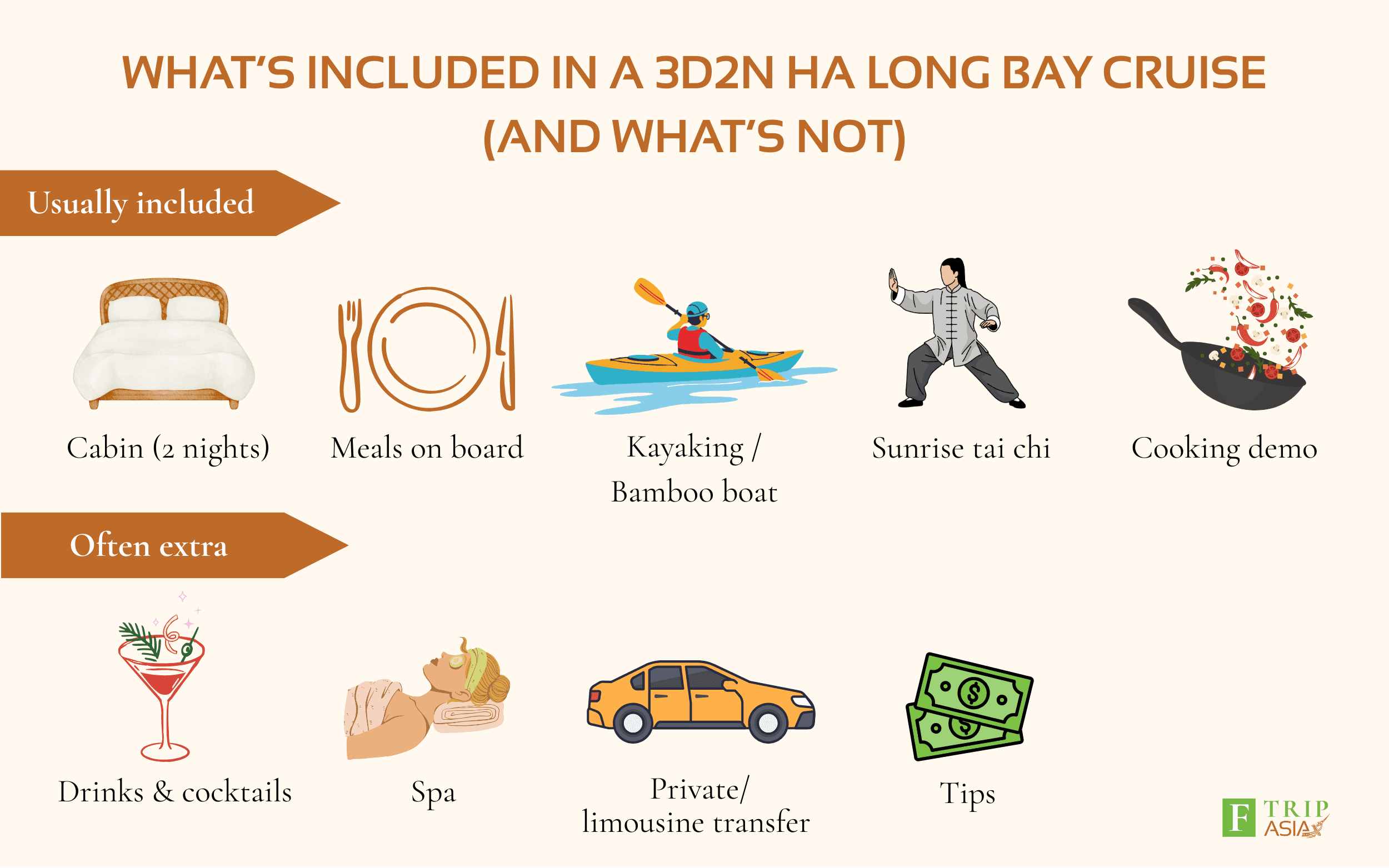
Pro booking rule: ask for an “inclusions list” in writing and check whether kayaking, entrance tickets, and Hanoi transfers are included or add-ons.
The detailed 3D2N experience review (day-by-day)
Before you go: the 10-minute booking checklist
These questions save you from “great photos, rushed reality.”
Ask before you book
- Which bay route is it really (Ha Long / Lan Ha / Bai Tu Long)?
- Is there a day boat on Day 2 (and what stops does it reach)?
- How long is kayaking/swimming time (minutes vs real blocks)?
- What are the exact embark/disembark times?
- What’s the weather policy (storms, rescheduling, refunds)?
Cabin selection tips (sleep + comfort)
- Upper deck cabins often get better light and may reduce engine noise (varies by ship layout).
- Balcony cabins are worth it if you value quiet sunrise coffee and private views.
- Light sleeper? Ask for a cabin away from the engine room and away from dining/bar areas.
Day 1: Embarkation + the first “wow” moment
What it feels like: excitement, fresh sea air, and that first reveal of limestone towers.
Typical flow:
- Pickup/arrival at the harbor, check-in, welcome briefing
- Lunch while cruising into the bay
- First excursion block (often a lagoon/cave + kayaking or bamboo boat)
- Sunset deck time (this is when the bay starts to feel cinematic)
- Dinner
- Night options: squid fishing or quiet stargazing on the sundeck (varies)
Crowd reality: Day 1 has the most “shared itinerary timing” with other boats—sunset feels calmer once excursions end.
Day 2: The real reason you booked 2 nights
This is the day that separates “nice cruise” from “I actually lived in the bay.”
Morning rhythm
- Sunrise (often with tai chi on deck)
- Breakfast
- Transfer to a day boat to go deeper into quieter zones on many 3D2N plans
Choose-your-style Day 2 routes
Option A: Lan Ha / Cát Bà style (active + village culture)
Common highlights:
- Viet Hai Village: cycling (or e-cart) through the island valley and rural lanes
- Kayaking in quieter lagoons, more swimming time
- Lunch served on the day boat
Why it works: it breaks up the trip with a real land experience and gives you longer water blocks than typical 2D1N.
Option B: Bai Tu Long style (quiet water + fishing village character)
Common highlights:
- Stops often listed around Vung Vieng fishing village and deeper areas like Cong Dam
- Kayaking and calm cruising in less crowded zones
- Lunch on the day boat, return late afternoon
Why it works: this is the “anti-crowd” route for travelers who want the bay to feel spacious.
Second-night vibe (calmer, more personal)
Many cruises repeat on-board activities such as cooking demo/sunset time across nights, but plenty of travelers treat Night 2 as the “slow night”: spa, deck quiet, early sleep, longer conversations.
Day 3: One last sunrise + checkout
Typical flow:
- Sunrise moment (often tai chi again)
- Light breakfast
- Final short excursion (often a cave or viewpoint, depending on route)
- Brunch/early lunch
- Disembark + return to Hanoi
What you’ll remember: the last morning is usually the most peaceful—boats are spaced out and the bay feels softer.
What the cruise is really like (review chapters)
Cabin comfort review: what matters most
What tends to be great
- Waking up to limestone views (especially balcony cabins)
- AC and private bathrooms on most mid-range+ boats
What can surprise people
- Shower water pressure can vary
- Boat acoustics: footsteps above you, hallway chatter, and engine hum depending on cabin position
Best cabins for light sleepers
- Mid-ship, away from engine + away from dining/bar zones
- Higher deck if you want more light and fewer “dock-level” noises
Food & dining review: what to expect
Most 3D2N cruises run a predictable rhythm:
- Lunch Day 1 (arrival meal)
- Dinner Day 1 (more formal pacing)
- Breakfast Day 2, lunch on day boat, dinner Day 2
- Breakfast + brunch/early lunch Day 3
Dietary needs
- Vegetarian/allergies are usually manageable if you message ahead (don’t rely on last-minute notes at check-in).
Don’t-miss dining moments
- Sunset drink on deck
- Breakfast with morning mist and quiet water
-
Activities review: what’s fun vs what feels “checkbox”
Kayaking
- Typically beginner-friendly; the difference is how long you’re on the water (short loops vs real exploration blocks).
Cave visits
- Expect stairs and humidity—wear shoes with grip.
Swimming
- Usually controlled swim zones; follow crew guidance on tides and weather.
Village stops
- Viet Hai cycling feels more immersive on many Lan Ha routes
- Fishing village visits are more common on several Bai Tu Long itineraries
Crowd level & pace: why 3D2N feels different
Compared with 2D1N, 3D2N gives you:
- A full “deep day” (often via day boat) into calmer areas
- More time when the bay is quiet (early morning and late afternoon)
- Less pressure to treat every stop as mandatory
Is a 2-night cruise worth it? (honest comparison)
Day cruise
- Pros: quick, scenic
- Cons: limited golden hour; feels like a tour block, not a journey
2D1N
- Pros: best value for most people; sunset + sunrise once
- Cons: still a “highlights pace” on many boats
3D2N (2 nights)
- Pros: the most relaxing; deeper routes; best for couples/photographers
- Cons: costs more and needs more vacation time
Value checklist: what the extra night should buy you
- Day boat to remote areas (Lan Ha Viet Hai or Bai Tu Long deeper zones)
- Longer kayaking/swimming blocks
- Two sunrises + two sunsets
- More downtime (spa, deck reading, slow meals)
Safety & reliability checklist (what to pay attention to)
After a deadly storm-related capsizing in Ha Long Bay in 2026, travelers should take weather policy and operator discipline seriously.
Use this shortlist:
- Clear safety briefing (not rushed)
- Life jackets accessible and in good condition
- Transparent weather reschedule/cancellation rules
- Reviews that mention cleanliness and crew professionalism (not only “beautiful view”)
What to pack for 2 nights (practical checklist)
Essentials:
- Swimwear
- Light jacket (breezy evenings)
- Sun protection (hat, sunscreen)
- Sandals + grippy walking shoes
- Dry bag/waterproof pouch for kayaking
- Motion-sickness medication (if needed)
- Small daypack
Nice-to-have:
- One “nice dinner” outfit for photos
- Power bank (outlets vary by cabin/ship)
Photo tips for a 3D2N cruise
Best light windows:
- Sunrise: soft mist + layered silhouettes
- Late afternoon: side light adds texture to limestone cliffs
How to avoid “boats in every shot”
- Choose Lan Ha or Bai Tu Long routes for a calmer feel
- Shoot early (before excursion waves converge)
Ftrip Asia services (built for 3D2N travelers)
If you want a cruise that matches your vibe—not just a random “best price” listing:
- Cruise matching by travel style: Lan Ha (activity-focused) vs Bai Tu Long (quieter) vs classic Ha Long
- Cabin selection help: balcony vs window, upper deck vs quiet-zone recommendations
- End-to-end logistics: Hanoi transfers, tight timing, dietary notes, celebration setups
- Backup planning: flexible alternatives if weather shifts your route
FAQs (AI Overview-friendly)
Is a 2-night Ha Long Bay cruise worth it compared to 1 night?
Yes—if you want a slower pace and a deeper Day 2 route (often via day boat). If you just want the classic bay snapshot, 1 night is usually enough.
Which route is best for 3D2N: Ha Long, Lan Ha, or Bai Tu Long?
Lan Ha is often favored for activity flow and Viet Hai-style day trips; Bai Tu Long is commonly positioned as the quieter alternative; Ha Long is the iconic classic.
What activities are included on most 3D2N cruises?
Commonly listed: sunrise tai chi, cave visit, kayaking/swimming, cooking demo, and sometimes squid fishing.
Do 3D2N cruises visit Viet Hai Village or fishing villages?
Many Lan Ha itineraries include Viet Hai cycling (or e-cart), while several Bai Tu Long itineraries include fishing village stops like Vung Vieng plus deeper zones such as Cong Dam.
What should I pack for an overnight cruise in Vietnam?
Swimwear, sun protection, a light jacket for breezy nights, grippy shoes for cave steps, and a waterproof pouch/dry bag for kayaking.
Conclusion
A 2-night Ha Long Bay cruise is for travelers who want the bay to feel spacious, slow, and cinematic—not like a checklist. The extra night matters because it unlocks Day 2’s deeper route, longer water time, and the kind of quiet sunrise that makes the trip feel truly special.
If you tell me your travel month, budget range, and whether you prefer Lan Ha (more activity) or Bai Tu Long (quieter), I can turn this into a tight “recommended itinerary + booking checklist” section customized for your website.


Founder & Photography Guide
Specialties: Culture, landscape, portrait, hiking, active and adventurous tour
Besides my unlimited passion for traveling, a professional tour guide for over a decade, I have been taking photographs since sitting at Hanoi of the University of Culture in the early 2000s. Photography started as a hobby but it was seriously taken due to my work relations and my significant passion for the beauty of our world, especially in Southeast Asian parts such as Vietnam, Laos, Cambodia, and Myanmar.
Within a few years of taking photographs, my works began to be recognized by many reliable international publications such as AFAR Travel, The Times, and The Daily Telegraph newspaper. In addition, I continuously add to my growing profile by winning numerous major awards: 3rd Position of The Independent Photographer 2018, 1st Position of Amateur Photographer of the year 2018, Grand Prize Winner of the AFAR Travel Photography 2019, and a Gold Award of San Francisco Bay International Photography 2020.
I photograph a wide variety of subjects, from travel to landscapes to street scenes. I enjoy documenting the East’s rich cultural heritage and its land soaked in glorious sunrise or sunset light in remote and secluded spots. And, I am very happy to share my knowledge and experience with you. You can visit Luminousvietnamtour to explore tour!