
- What makes Ninh Binh special?
- The honest pros
- The scenery is genuinely top-tier
- It is easy to reach from Hanoi
- You can match it to your energy
- The honest cons
- Crowds can flatten the magic
- Boat rides are not for everyone
- Heat and humidity matter more than people expect
- Who Ninh Binh is best for?
- What to do if you decide to go?
- Choose one main boat experience
- Add Hang Mua for the “wow from above” moment
- Add a quieter nature stop if you stay longer
- Best time to visit so it actually feels worth it
- Easy itinerary options
- If you only have 1 day from Hanoi
- If you have 2 days
- If you have 3 days
- Cost and value reality
- FAQs
- Conclusion
Ninh Binh is worth visiting for most travelers, but not for every travel style. The honest version is this: if you like dramatic landscapes, gentle outdoor travel, boat-and-viewpoint days, and easy escapes from Hanoi, Ninh Binh delivers unusually high value in a short amount of time. UNESCO recognizes the Trang An Landscape Complex for its limestone karst peaks, partly submerged valleys, caves, and long human history, which explains why the scenery feels so distinctive.
It is less worth it if you hate crowds, humid weather, long slow boat rides, or rushed day trips. The most famous parts can feel busy at the wrong hour, and if you cram too much into one day, Ninh Binh can feel more like queue-to-queue sightseeing than a beautiful countryside escape.
What makes Ninh Binh special?
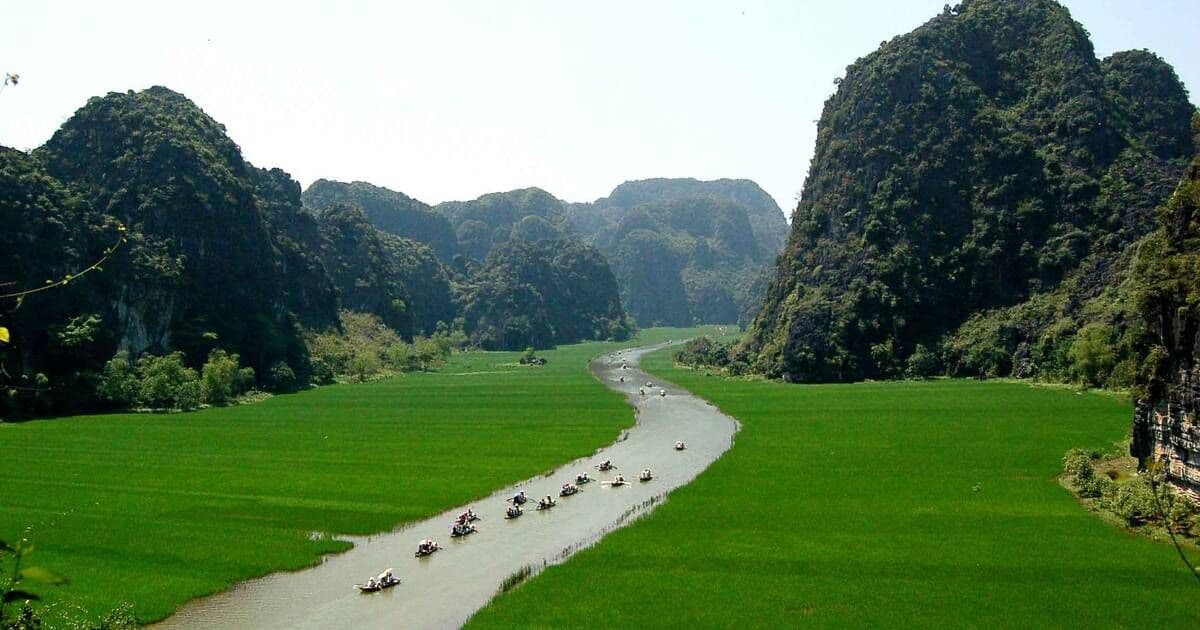
Ninh Binh is not just pretty. What makes it stand out is the mix: limestone karst towers, cave waterways, rice-field valleys, viewpoints, temples, and countryside cycling, all packed into a compact region. UNESCO describes Trang An as a spectacular landscape of karst peaks and partly submerged valleys, not just a single attraction.
That means you can build a satisfying trip without heavy logistics. From Hanoi, the journey by car is commonly described as about 1.5–2 hours, which gives Ninh Binh a very high “wow-per-hour” return for travelers based in the capital.
The honest pros
The scenery is genuinely top-tier
If you want landscapes that feel cinematic without flying elsewhere in Vietnam, Ninh Binh is one of the strongest choices. The karst peaks, river corridors, caves, and valley viewpoints are photogenic even on an ordinary day, especially in early or late light. UNESCO recognition here is not marketing fluff; it reflects real landscape value.
It is easy to reach from Hanoi
This is one of Ninh Binh’s biggest advantages. Most current guides place Hanoi to Ninh Binh by car at around 1.5–2 hours, which makes it realistic as a day trip and even better as a short overnight trip.
You can match it to your energy
Ninh Binh works as:
-
a simple day trip with one boat ride and one viewpoint
-
a 2-day slow trip with cycling and quieter wetlands
-
a 3-day trip with a forest day at Cuc Phuong
That flexibility is a big reason so many travelers find it worth the stop.
The honest cons
Crowds can flatten the magic
This is the main downside. The most famous places, especially at midday or on weekends, can feel far less peaceful than the photos suggest. If you arrive late and do the busiest route at the busiest hour, Ninh Binh can feel overrated. Peak travel periods in Vietnam also tend to cluster from November to April, which can increase crowd pressure.
Boat rides are not for everyone
Some travelers love slow scenic rides. Others find them repetitive. If you already know you do not enjoy sitting on a boat for an extended stretch, your satisfaction will drop fast. Trang An routes are commonly described as lasting 2–4 hours, depending on route choice, which is a meaningful time block, not a quick stop.
Heat and humidity matter more than people expect
If you are sensitive to heat, steep steps, or midday sun, Ninh Binh can feel much less enjoyable in the wrong season or time slot. Hang Mua especially is better early or late, not when the stone steps are baking.
Who Ninh Binh is best for?
Ninh Binh is most worth it for:
-
first-time Vietnam visitors who want iconic scenery without long travel
-
couples or friends who enjoy viewpoints and slow scenic experiences
-
photographers who can plan around morning and late-afternoon light
-
travelers who like relaxed nature, cycling, and short countryside escapes
It is less worth prioritizing for:
-
travelers who hate crowds and cannot start early
-
people who dislike slow boat rides
-
travelers who want remote wilderness rather than popular scenic access
-
anyone trying to cram everything into one rushed day
Those tradeoffs are not flaws in the place itself; they are mostly about matching the destination to your style.
What to do if you decide to go?
Choose one main boat experience
For most first-timers, Trang An is the better all-round choice because it gives the strongest UNESCO-core landscape feel: caves, karst corridors, and submerged valley scenery.
Choose Tam Coc if your number-one goal is rice-field river scenery, especially during the golden season. Current guides often point to mid-May to early June as the strongest Tam Coc rice-harvest window.
The key rule for a short trip is simple: do one boat ride, not both.
Add Hang Mua for the “wow from above” moment
Hang Mua is widely described as a climb of about 486 steps, often rounded to around 500. The payoff is the panoramic view over the Tam Coc valley and surrounding karsts.
Add a quieter nature stop if you stay longer
If you have extra time, Van Long Wetland Nature Reserve is one of the best “worth it” add-ons because it offers a calmer atmosphere and wildlife value, including habitat for Delacour’s langur.
For a bigger contrast, Cuc Phuong National Park works well as a forest day, giving you something very different from the boat-and-karst rhythm. (I did not verify the “established in 1962” detail from an official park source in this search, so I’m leaving that date out here.)

Best time to visit so it actually feels worth it
If your goal is golden rice fields, Tam Coc is often strongest from late May to early June.
If your goal is more comfortable weather, late October to November is often a stronger choice for easier cycling, hiking, and general exploring, while broader seasonal guides also describe spring as pleasant.
If you only have one day, timing matters more than the month. Go early, keep the plan simple, and avoid building your whole day around noon crowds.
Easy itinerary options
If you only have 1 day from Hanoi
Leave Hanoi early. Plan about 1.5–2 hours by car. Do one boat ride and then Hang Mua later in the day. That is the cleanest first-timer version.
If you have 2 days
This is often the best-value version.
Day 1: boat ride + viewpoint
Day 2: cycling + a quieter nature stop such as wetlands or bird park
If you have 3 days
Day 1: UNESCO-core landscapes
Day 2: viewpoint + countryside cycling + one culture stop
Day 3: Cuc Phuong or another slower nature contrast
That is where Ninh Binh usually stops feeling like a day trip and starts feeling like a place.
Cost and value reality
Ninh Binh is most worth it when you avoid the rushed trap. One boat route, one viewpoint, and breathing room usually creates a much better day than trying to do Trang An, Tam Coc, Hang Mua, and Bai Dinh all at once.
It becomes less worth it when you spend most of your time in transport, lines, and transfers instead of actually enjoying the landscape.
FAQs
Is Ninh Binh worth visiting if I only have one day?
Yes, if you start early and keep it simple: one boat route and one viewpoint is enough for a satisfying first visit.
Why is Trang An UNESCO-listed?
Because UNESCO recognizes it for its limestone karst peaks, partly submerged valleys, cave systems, and long archaeological record of human activity.
How long is the Hang Mua climb?
It is commonly described as about 486 steps, often rounded to around 500.
When is the best time for golden rice fields in Tam Coc?
Many guides point to mid-May to early June.
How far is Ninh Binh from Hanoi by car?
Travel guides commonly estimate around 1.5–2 hours in normal conditions.
Conclusion
Yes, Ninh Binh is worth visiting for most travelers. It gives you UNESCO-level karst scenery, easy access from Hanoi, and a flexible trip shape that can work as a day trip or a slower short stay.
The honest caveat is that it works best when you travel smart: choose one boat route, add one viewpoint, go early, and do not try to force too much into one day. Planned that way, Ninh Binh usually feels much better than the hype.


Founder & Photography Guide
Specialties: Culture, landscape, portrait, hiking, active and adventurous tour
Besides my unlimited passion for traveling, a professional tour guide for over a decade, I have been taking photographs since sitting at Hanoi of the University of Culture in the early 2000s. Photography started as a hobby but it was seriously taken due to my work relations and my significant passion for the beauty of our world, especially in Southeast Asian parts such as Vietnam, Laos, Cambodia, and Myanmar.
Within a few years of taking photographs, my works began to be recognized by many reliable international publications such as AFAR Travel, The Times, and The Daily Telegraph newspaper. In addition, I continuously add to my growing profile by winning numerous major awards: 3rd Position of The Independent Photographer 2018, 1st Position of Amateur Photographer of the year 2018, Grand Prize Winner of the AFAR Travel Photography 2019, and a Gold Award of San Francisco Bay International Photography 2020.
I photograph a wide variety of subjects, from travel to landscapes to street scenes. I enjoy documenting the East’s rich cultural heritage and its land soaked in glorious sunrise or sunset light in remote and secluded spots. And, I am very happy to share my knowledge and experience with you. You can visit Luminousvietnamtour to explore tour!