- Why Choose a Hanoi City Tour for Culture and History?
- Hanoi Is a Living Timeline of Vietnam
- A Guided Tour Helps Travelers Avoid Surface-Level Sightseeing
- Culture-Focused Travel Is Becoming More Experience-Led
- What Historical Attractions Should Be Included in a Hanoi City Tour?
- Ho Chi Minh Mausoleum Complex - Understanding Modern Vietnam
- Temple of Literature - Vietnam’s First University and Confucian Heritage
- Imperial Citadel of Thang Long - The Ancient Political Center
- Hoa Lo Prison Relic - Colonial History and Wartime Memory
- Hoan Kiem Lake and Ngoc Son Temple - Legend, Spirituality, and Local Life
- Hanoi Old Quarter - Trade, Architecture, and Everyday Heritage
- Vietnam Museum of Ethnology or Vietnamese Women’s Museum - Broader Cultural Context
- Suggested Hanoi City Tour Itinerary for First-Time Visitors
- Morning: Political and Educational Heritage
- Midday: Local Lunch and Cultural Pause
- Afternoon: Ancient Capital, Colonial Memory, and Old Quarter Life
- Optional Evening Add-Ons
- What Will Travelers Get from a Hanoi City Tour?
- Clear Historical Storytelling
- Smoother Logistics
- More Cultural Confidence
- Better Photo and Experience Balance
- Personalized Experience Based on Interests
- Private vs Group Hanoi City Tour: Which One Is Better?
- Private Hanoi City Tour
- Group Hanoi City Tour
- Recommendation
- Who Is This Hanoi City Tour Best For?
- First-Time Visitors to Vietnam
- Culture and History Lovers
- Families with Children
- Senior Travelers
- Muslim and Jewish Travelers
- Photographers and Content Creators
- How to Make a Hanoi City Tour More Meaningful
- Do Not Rush Every Landmark
- Combine Famous Places with Local Experiences
- Ask Your Guide Questions
- Respect Sensitive Historical Sites
- Why Plan Your Hanoi City Tour with FtripAsia?
- Fully Customizable Tour Planning
- Local Experts with Real Experience
- Support for Niche Traveler Needs
- Unique Tours Beyond Standard Sightseeing
- Friendly and Knowledgeable Service
- Plan a Hanoi City Tour That Matches Your Travel Style
- FAQs
- Is a Hanoi city tour worth it?
- What are the best historical attractions in Hanoi?
- How long does a Hanoi city tour take?
- Should I book a private Hanoi city tour?
- Can a Hanoi city tour include food or local workshops?
- Is Hanoi suitable for Muslim or Jewish travelers?
- Conclusion
Hanoi is one of Vietnam’s most rewarding cities for travelers who want to understand the country beyond food, streets, and scenery. The capital is not only a place of busy markets, lakes, cafés, and local life. It is also a city where Vietnam’s feudal history, Confucian education, colonial period, revolutionary years, spiritual traditions, and modern identity can be seen within one carefully planned journey.
A Hanoi city tour is not only about visiting famous landmarks. It is about connecting the dots between places, people, events, beliefs, and daily life. Travelers looking for a Hanoi city tour usually want to know which historical attractions are worth visiting, how much they can see in one day, what stories each place tells, and whether a guided or private tour is better than exploring alone.
Many travelers now prefer slower, more meaningful cultural experiences instead of rushing through photo stops. Vietnam Tourism also highlights Hanoi attractions such as Hoan Kiem Lake and the Temple of Literature among the city’s must-see places. FtripAsia helps travelers create a Hanoi city tour based on their interests, pace, hotel location, cultural preferences, food needs, and preferred travel style.
Why Choose a Hanoi City Tour for Culture and History?
Hanoi Is a Living Timeline of Vietnam
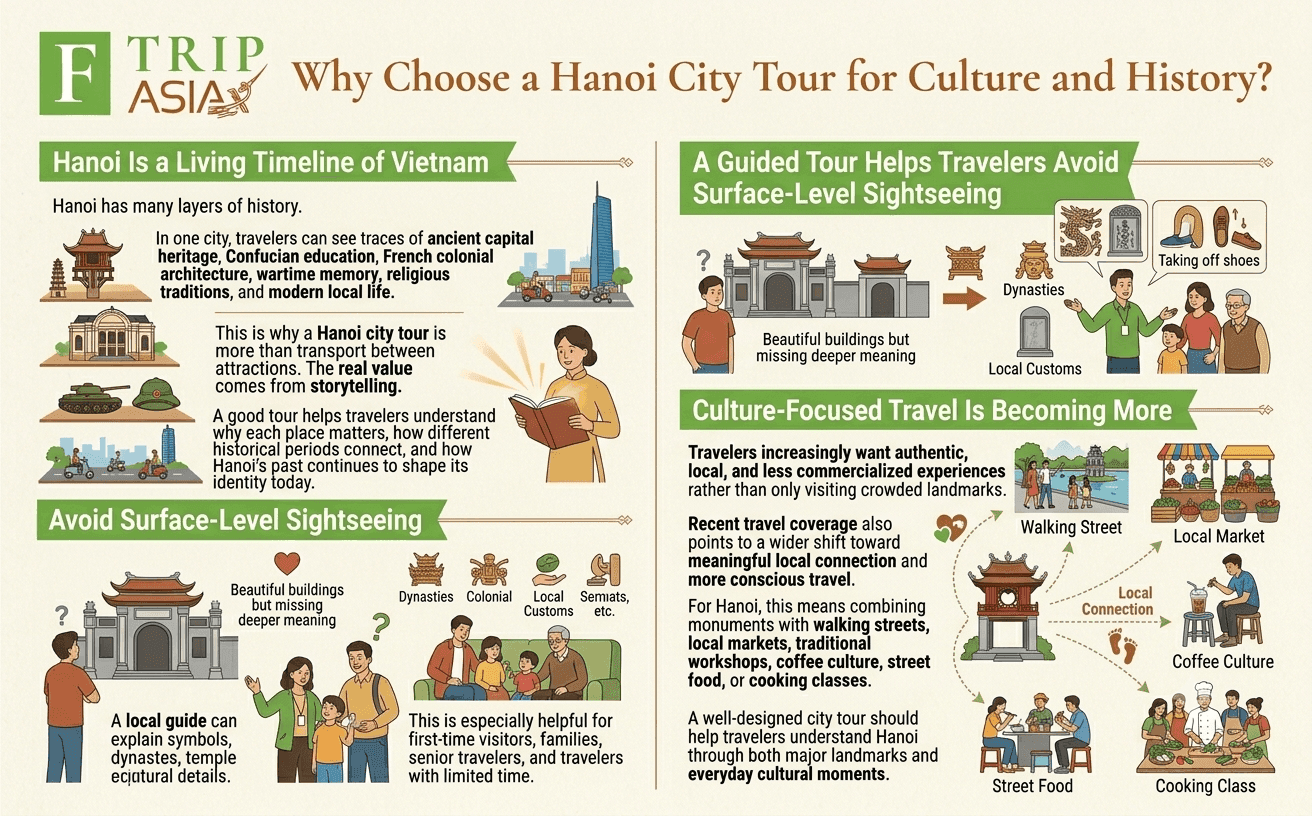
Hanoi has many layers of history. In one city, travelers can see traces of ancient capital heritage, Confucian education, French colonial architecture, wartime memory, religious traditions, and modern local life.
This is why a Hanoi city tour is more than transport between attractions. The real value comes from storytelling. A good tour helps travelers understand why each place matters, how different historical periods connect, and how Hanoi’s past continues to shape its identity today.
A Guided Tour Helps Travelers Avoid Surface-Level Sightseeing
Many historical sites in Hanoi are meaningful only when visitors understand the context. Without a guide, travelers may see beautiful buildings, temples, statues, courtyards, and relics, but miss the deeper meaning behind them.
A local guide can explain symbols, dynasties, colonial influences, wartime events, local customs, temple etiquette, and cultural details. This is especially helpful for first-time visitors, families, senior travelers, and travelers with limited time.
Culture-Focused Travel Is Becoming More Experience-Led
Travelers increasingly want authentic, local, and less commercialized experiences rather than only visiting crowded landmarks. Recent travel coverage also points to a wider shift toward meaningful local connection and more conscious travel.
For Hanoi, this means combining monuments with walking streets, local markets, traditional workshops, coffee culture, street food, or cooking classes. A well-designed city tour should help travelers understand Hanoi through both major landmarks and everyday cultural moments.
What Historical Attractions Should Be Included in a Hanoi City Tour?
Ho Chi Minh Mausoleum Complex - Understanding Modern Vietnam
The Ho Chi Minh Mausoleum Complex is one of Hanoi’s most symbolic historical sites. It helps travelers understand modern Vietnam through the legacy of Ho Chi Minh and the country’s independence history.
The complex may include the Ho Chi Minh Mausoleum, Presidential Palace area, Ho Chi Minh’s stilt house, One Pillar Pagoda, and Ba Dinh Square. Each stop gives travelers a different angle on Vietnam’s political and historical identity.
Ba Dinh Square is especially important because it is connected to Vietnam’s modern national history. Visiting this area with a guide helps travelers understand why it remains such a meaningful place for Vietnamese people.
Travelers can receive practical guidance on dress code, respectful behavior, opening hours, security procedures, and how to move through the area smoothly. This is useful because the complex can feel confusing for first-time visitors.
Temple of Literature - Vietnam’s First University and Confucian Heritage
The Temple of Literature is one of Hanoi’s most important cultural attractions. It was built to honor Confucius and later became associated with Vietnam’s first university and scholarly tradition.
This site helps travelers understand education in ancient Vietnam, Confucian influence, the role of examinations, and the cultural respect for learning. The courtyards, stone steles, architecture, and symbols of scholarship make the visit both peaceful and meaningful.
For many travelers, the Temple of Literature is also one of the most photogenic stops in Hanoi. With a guide, visitors can better understand the layout, symbolism, and why education has long held such an important place in Vietnamese culture.
Imperial Citadel of Thang Long - The Ancient Political Center
The Imperial Citadel of Thang Long is one of Hanoi’s most important historical sites and a major heritage attraction in Ba Dinh District.
This site offers a deeper view of Hanoi before the colonial and modern periods. It was once a royal and political center connected to different Vietnamese dynasties. Archaeological remains, old foundations, gates, and exhibition areas reveal layers of power through centuries.
The Imperial Citadel is a strong fit for travelers interested in archaeology, heritage, architecture, dynastic history, and political culture. It helps visitors understand Hanoi not only as a modern capital, but also as a long-standing center of Vietnamese civilization.
Hoa Lo Prison Relic - Colonial History and Wartime Memory
Hoa Lo Prison Relic is one of Hanoi’s most emotional historical attractions. It is often linked to French colonial rule and later wartime history.
The site introduces travelers to the French colonial prison system, Vietnamese revolutionaries, resistance movements, and later associations with American prisoners of war. It is a sobering stop, but it gives important context for understanding Vietnam’s struggle for independence and the emotional weight of the country’s modern history.
Hanoi tourism authorities have also developed more creative visitor experiences around historical sites such as Hoa Lo Prison and the Imperial Citadel, including nighttime tourism products. A guide can help visitors approach this site respectfully and understand its sensitive historical layers without reducing it to a simple tourist stop.
Hoan Kiem Lake and Ngoc Son Temple - Legend, Spirituality, and Local Life
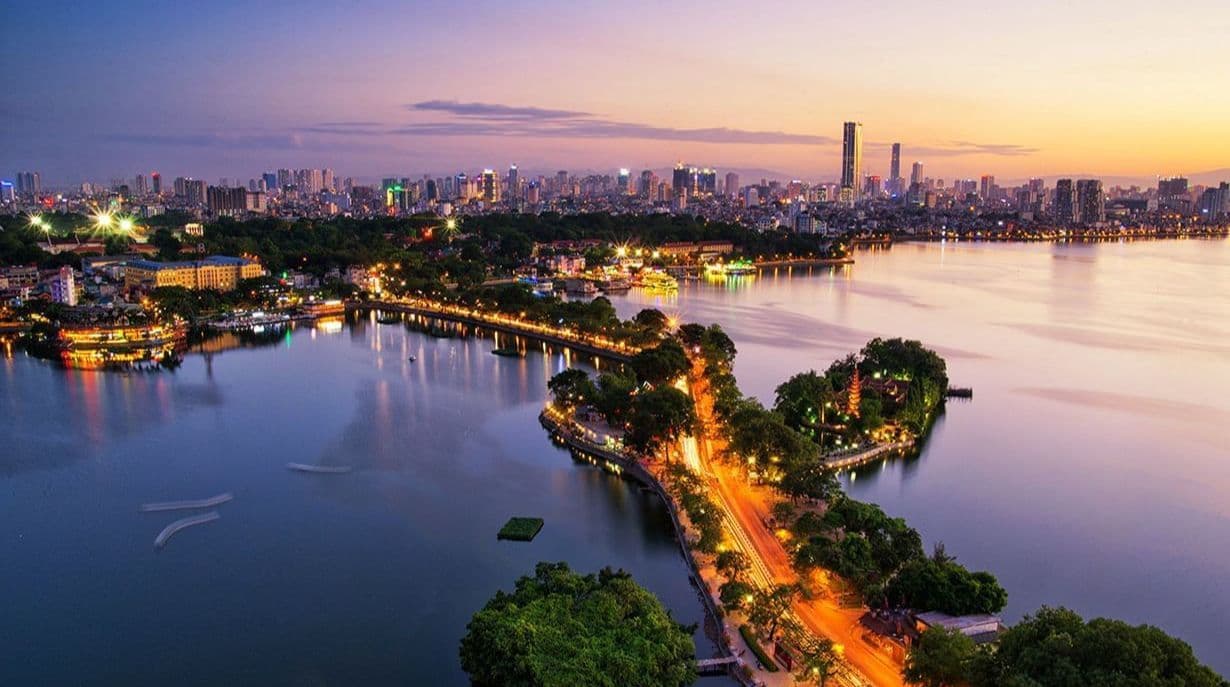
Hoan Kiem Lake is both a landmark and a cultural symbol. It is one of the best places to see how legend, spirituality, and everyday Hanoi life come together.
The lake is connected to the legend of the returned sword, while Ngoc Son Temple introduces visitors to local spiritual practices and traditional architecture. Around the lake, travelers can also see morning exercise, weekend walking streets, cafés, families, students, and community life.
This stop works well after heavier historical attractions because it brings a softer cultural rhythm to the day. It offers beautiful photo opportunities while still giving travelers meaningful insight into Hanoi’s identity.
Hanoi Old Quarter - Trade, Architecture, and Everyday Heritage
The Hanoi Old Quarter is not only a shopping or food area. It is a living heritage zone shaped by traditional craft streets, merchant culture, tube houses, local shops, markets, and mixed French-Vietnamese architecture.
The “36 streets” concept reflects Hanoi’s old guild and trade structure, where different streets were associated with different crafts or products. Today, the Old Quarter still shows how Hanoi’s past continues inside modern daily life.
A walking route through the Old Quarter can include local streets, markets, shops, cafés, hidden alleys, old houses, and street food stops. Optional add-ons may include egg coffee, a cyclo ride, a street food walk, or a photography-focused route.
Vietnam Museum of Ethnology or Vietnamese Women’s Museum - Broader Cultural Context
Travelers who want broader cultural context can add a museum stop depending on their interests.
The Vietnam Museum of Ethnology is suitable for travelers who want to understand Vietnam’s ethnic diversity, traditional houses, costumes, customs, and cultural practices. It helps visitors see Vietnam as a diverse country, not just one city or one culture.
The Vietnamese Women’s Museum is a strong choice for travelers interested in family life, women’s roles, war history, fashion, social culture, and everyday stories. It can add a human and emotional layer to a Hanoi city tour.
Suggested Hanoi City Tour Itinerary for First-Time Visitors
Morning: Political and Educational Heritage
A strong morning route can include the Ho Chi Minh Mausoleum Complex, One Pillar Pagoda, and the Temple of Literature.
Morning is often ideal because of opening hours, weather, and route flow. It also helps travelers begin the day with Hanoi’s political and educational heritage before moving into other historical layers.
This part of the tour gives travelers a clear foundation: modern Vietnam through Ho Chi Minh’s legacy, spiritual architecture through One Pillar Pagoda, and Confucian education through the Temple of Literature.
Midday: Local Lunch and Cultural Pause
After a history-heavy morning, a local lunch gives travelers time to rest and enjoy Hanoi through its food.
Suggested dishes may include pho, bun cha, fresh spring rolls, local rice dishes, or vegetarian/custom meals. The lunch stop can be casual, premium, family-friendly, or dietary-specific depending on the traveler.
FtripAsia can adjust meal choices for families, luxury travelers, Muslims, Jewish travelers, vegetarians, or guests with food restrictions.
Afternoon: Ancient Capital, Colonial Memory, and Old Quarter Life
The afternoon can include the Imperial Citadel of Thang Long, Hoa Lo Prison, Hoan Kiem Lake, and an Old Quarter walking route.
This order gives travelers a balanced view of Hanoi: royal past, colonial struggle, spiritual symbol, and daily life. It also prevents the tour from becoming only a list of monuments by ending with local streets, lakeside culture, and everyday Hanoi rhythm.
Optional Evening Add-Ons
Travelers who want a deeper experience can add an evening activity after the main city tour.
Options may include a water puppet show, Hanoi night food tour, Old Quarter photography tour, cooking class, local workshop, or a night tour at selected historical sites when available.
FtripAsia can help travelers combine a standard city tour with deeper local experiences instead of following a fixed route.
What Will Travelers Get from a Hanoi City Tour?
Clear Historical Storytelling
Travelers do not just see monuments. They understand what happened, why it matters, and how it shaped modern Vietnam.
This is especially useful for visitors who are unfamiliar with Vietnamese history. A good guide can turn buildings, courtyards, statues, lakes, and old streets into a connected story.
Smoother Logistics
A Hanoi city tour can include hotel pickup and drop-off, route planning to reduce backtracking, help with attraction rules, dress codes, ticketing, and timing.
This makes the day easier for families, older travelers, first-time visitors, and travelers who want to avoid confusion.
More Cultural Confidence
Travelers can receive guidance on temple etiquette, respectful behavior at memorial sites, local communication, and what to avoid.
This helps visitors feel more comfortable and respectful while visiting sensitive historical places.
Better Photo and Experience Balance
Hanoi is highly photogenic, but a city tour should not become only a check-in trip.
A good Hanoi city tour should balance photography, historical explanation, local interaction, and rest time. This creates stronger memories and helps travelers understand what they are photographing.
Personalized Experience Based on Interests
Some travelers may prefer history-heavy routes. Others may want a softer mix of culture, food, architecture, and local life.
FtripAsia can customize the tour based on traveler style, from relaxed family sightseeing to luxury private touring or culture-focused exploration.
Private vs Group Hanoi City Tour: Which One Is Better?
Private Hanoi City Tour
A private Hanoi city tour is best for families, couples, senior travelers, luxury travelers, first-time visitors, and travelers with special dietary or cultural needs.
The benefits include flexible timing, a custom attraction list, easier hotel pickup, more time for questions, and better pacing. Private tours are especially useful when travelers want deeper storytelling or need adjustments for comfort, food, mobility, or interests.
Group Hanoi City Tour
A group Hanoi city tour can work well for budget travelers, solo travelers, and visitors who want a simple introduction.
However, group tours usually have less flexibility, fixed routes, less time at each attraction, and fewer options for food, religious needs, or personal interests.
Recommendation
For culture and historical attractions, a private or customized tour often gives better value because the experience depends heavily on storytelling and pacing.
This is where FtripAsia can be helpful for travelers who want a route designed around personal interests, not only a standard checklist.
Who Is This Hanoi City Tour Best For?
First-Time Visitors to Vietnam
First-time visitors can get a complete introduction to Hanoi’s most important cultural and historical layers.
A city tour helps them understand Vietnam’s capital before continuing to other destinations such as Ha Long Bay, Ninh Binh, Hoi An, Da Nang, or Ho Chi Minh City.
Culture and History Lovers
Culture and history lovers can focus more deeply on the Temple of Literature, Imperial Citadel, Hoa Lo Prison, museums, heritage architecture, and traditional neighborhoods.
For these travelers, a Hanoi city tour should include enough time for context, questions, and meaningful observation.
Families with Children
Families can adjust the route to avoid overload, include breaks, and add interactive activities.
A family-friendly Hanoi city tour may include shorter site visits, local snacks, water puppet shows, hands-on workshops, or easy walking routes.
Senior Travelers
Senior travelers may prefer a private tour with reduced walking pressure, comfortable transfers, slower pacing, and carefully selected attractions.
A good tour should consider stairs, heat, rest stops, seating, and hotel pickup.
Muslim and Jewish Travelers
Some travelers need support with meals, timing, prayer considerations, or attraction selection.
FtripAsia has experience with niche markets like Muslims and Judaism, helping travelers enjoy Hanoi with more comfort and fewer concerns.
Photographers and Content Creators
Hanoi is ideal for cultural photography: old streets, temples, lakes, colonial buildings, local life, markets, and historical sites.
FtripAsia can arrange unique photography-style tours that many standard operators do not offer.
How to Make a Hanoi City Tour More Meaningful
Do Not Rush Every Landmark
Travelers should choose fewer sites and spend enough time understanding them.
For a full-day city tour, 4-6 key attractions are often better than trying to fit in every famous stop. This allows enough time for stories, photos, questions, lunch, and local moments.
Combine Famous Places with Local Experiences
A meaningful Hanoi city tour can include a coffee stop, market walk, cooking class, craft workshop, or local lunch.
This reflects the current travel preference for hands-on and memorable experiences. It also helps travelers see Hanoi as a living city, not only a collection of historic buildings.
Ask Your Guide Questions
Travelers should ask their guide about Vietnamese dynasties, French colonial influence, Confucian education, local religion, daily life in the Old Quarter, and modern Hanoi changes.
The more travelers ask, the more personal and useful the tour becomes.
Respect Sensitive Historical Sites
Sites like Ho Chi Minh Mausoleum and Hoa Lo Prison require respectful behavior.
Travelers should avoid treating war-related or memorial locations only as photo spots. A thoughtful approach helps visitors better understand the emotional and historical importance of these places.
Why Plan Your Hanoi City Tour with FtripAsia?
Fully Customizable Tour Planning
FtripAsia can customize the Hanoi city tour based on hotel location, preferred attractions, travel pace, comfort level, luxury requests, food needs, and special interests.
This is ideal for travelers who do not want a one-size-fits-all itinerary.
Local Experts with Real Experience
FtripAsia is built by 100% local people with 7+ years of experience in Vietnam travel planning.
This helps travelers receive practical advice, not generic destination descriptions.
Support for Niche Traveler Needs
FtripAsia has experience serving niche markets such as Muslim and Jewish travelers.
This can include food planning, cultural sensitivity, flexible timing, and route adjustments.
Unique Tours Beyond Standard Sightseeing
Travelers can request special experiences such as photography tours, cooking classes, local workshops, market visits, or family-friendly cultural activities.
This turns a Hanoi city tour from a simple sightseeing day into a more personal travel memory.
Friendly and Knowledgeable Service
Travelers often value enthusiastic, knowledgeable, and friendly local support.
This is important because the guide’s storytelling can strongly affect how travelers understand Hanoi.
Plan a Hanoi City Tour That Matches Your Travel Style
For travelers who want to explore Hanoi’s cultural and historical attractions without rushing through a fixed route, FtripAsia can help design a private city tour around interests, hotel location, food preferences, and travel pace.
From the Temple of Literature and Imperial Citadel to Hoa Lo Prison, Hoan Kiem Lake, and the Old Quarter, FtripAsia helps travelers experience Hanoi with deeper stories, smoother logistics, and local insight.
FAQs
Is a Hanoi city tour worth it?
Yes. A Hanoi city tour is worth it for travelers who want to understand Vietnam’s history, culture, architecture, and local life in a short time.
What are the best historical attractions in Hanoi?
The best historical attractions include the Temple of Literature, Ho Chi Minh Mausoleum Complex, Imperial Citadel of Thang Long, Hoa Lo Prison, Hoan Kiem Lake, Ngoc Son Temple, and the Old Quarter.
How long does a Hanoi city tour take?
A half-day tour can cover 2-3 highlights, while a full-day tour is better for travelers who want both cultural and historical depth.
Should I book a private Hanoi city tour?
A private tour is recommended if you want flexible timing, deeper explanations, hotel pickup, customized attractions, or special meal arrangements.
Can a Hanoi city tour include food or local workshops?
Yes. A Hanoi city tour can be combined with local lunch, egg coffee, street food, cooking classes, craft workshops, or photography experiences.
Is Hanoi suitable for Muslim or Jewish travelers?
Yes, but planning helps. Travelers may need support with suitable meals, timing, and cultural preferences. A customized planner like FtripAsia can make the experience smoother.
Conclusion
A Hanoi City Tour for Culture and Historical Attractions is one of the best ways for travelers to understand the soul of Vietnam’s capital through its temples, ancient university, royal citadel, wartime sites, colonial traces, lakes, and Old Quarter streets.
Travelers will not only visit famous landmarks, but also gain clearer historical context, smoother logistics, local cultural guidance, better pacing, and a more meaningful connection with Hanoi.
The best Hanoi city tour should not feel rushed or generic. It should be adjusted based on each traveler’s interests, whether they prefer history, architecture, photography, food, family-friendly stops, spiritual sites, or hands-on local experiences.
For travelers who want a Hanoi city tour designed around their own travel style, FtripAsia can help create a customized itinerary with local insight, flexible pacing, cultural sensitivity, and unique experiences that go beyond standard sightseeing.


Founder & Photography Guide
Specialties: Culture, landscape, portrait, hiking, active and adventurous tour
Besides my unlimited passion for traveling, a professional tour guide for over a decade, I have been taking photographs since sitting at Hanoi of the University of Culture in the early 2000s. Photography started as a hobby but it was seriously taken due to my work relations and my significant passion for the beauty of our world, especially in Southeast Asian parts such as Vietnam, Laos, Cambodia, and Myanmar.
Within a few years of taking photographs, my works began to be recognized by many reliable international publications such as AFAR Travel, The Times, and The Daily Telegraph newspaper. In addition, I continuously add to my growing profile by winning numerous major awards: 3rd Position of The Independent Photographer 2018, 1st Position of Amateur Photographer of the year 2018, Grand Prize Winner of the AFAR Travel Photography 2019, and a Gold Award of San Francisco Bay International Photography 2020.
I photograph a wide variety of subjects, from travel to landscapes to street scenes. I enjoy documenting the East’s rich cultural heritage and its land soaked in glorious sunrise or sunset light in remote and secluded spots. And, I am very happy to share my knowledge and experience with you. You can visit Luminousvietnamtour to explore tour!